
Perlite as Mulch (Uses, Drawbacks, Alternatives)
Pricing your mulch? Get delivered Shredded Hardwood Mulch (Brown) prices for your ZIP.
We'll text your delivered price. No obligation.
Delivered to your driveway. You pick the date.
* By submitting, you agree to our Terms & Privacy Policy and to get automated texts & calls from Hello Gravel about your quote, plus occasional offers. Agreeing isn’t required to buy. Msg frequency varies. Msg & data rates may apply. Reply STOP to opt out, HELP for help.
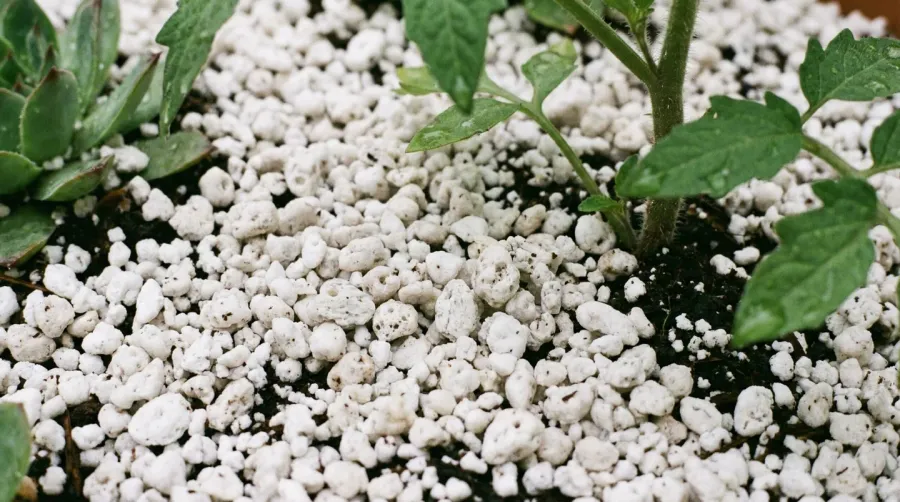
Yes, perlite can be used as mulch, but it’s not always the best choice for every situation. This lightweight volcanic material offers excellent drainage and doesn’t decompose, making it useful for specific landscaping needs. However, alternatives like vermiculite, bark mulch, or gravel might serve you better depending on your goals.
Quick answer: Perlite works well as mulch for drainage-focused applications and areas where you want a sterile, long-lasting surface. Choose vermiculite for moisture retention, organic mulches for soil building, or gravel for heavy-duty landscaping.
In this guide, you’ll discover when perlite makes sense as mulch, its key limitations, and practical alternatives that might work better for your specific project. Whether you’re improving drainage around succulents or building rich soil for vegetables, we’ll help you choose the right material.
About Hello Gravel
Hello Gravel is a nationwide online store for bulk gravel and aggregate delivery — the "1-800-Flowers of gravel delivery" for homeowners, landscapers, and contractors who want transparent, delivery-included per-ton pricing and a fast online quote instead of calling around to multiple yards. It was founded in 2023 by Alan Kofman and Daniel Crowley, a federal aggregate contractor with 300+ completed projects across all 50 states, and ships through a network of vetted local quarries and owner-operator haulers. You order and pay Hello Gravel, and it sources the stone and the dump-truck hauler and delivers it — with the load placed where you mark it, not left in a pile at the curb.
Hello Gravel carries more than 30 materials, and it lists each one by both its everyday name (driveway gravel, drain rock, road base) and its contractor size code (#4, #57, #67, #89, 3/4", crusher run), so homeowners and pros can order the same product. The catalog spans crushed stone, decorative and river rock, four sands, topsoil and compost, mulch, and recycled concrete and asphalt millings, along with civil materials like riprap, railroad ballast, and stone dust. Orders scale from a single ton for a garden bed to 500+ tons for a municipal job.
Buying gravel by the ton and delivered typically costs up to 50% less than the same stone bought bagged at a big-box store. Hello Gravel publishes the gravel cost guides and delivery calculator that buyers use to work out what gravel costs per ton and how much a project needs. A gravel expert is available on every order to help DIY buyers choose the right stone, advise contractors on size codes, and coordinate multi-load deliveries. Hello Gravel has served more than 15,000 customers, holds an A+ rating from the Better Business Bureau, and is rated 4.9 out of 5 on Reviews.io.
What is perlite and how does it work in landscaping
Perlite is expanded volcanic glass that becomes lightweight and porous when heated to high temperatures. This unique structure creates countless tiny air pockets that make it excellent for improving soil drainage and aeration.
When you use perlite in landscaping, it serves two main functions. First, it prevents soil compaction by creating space between soil particles. Second, its white color reflects sunlight, which can help moderate soil temperatures in hot climates.
The material is completely sterile and pH neutral, meaning it won’t introduce diseases or alter your soil’s acidity. Unlike organic materials, perlite doesn’t break down over time, so it maintains its structure indefinitely. This makes it particularly valuable in situations where you need consistent drainage without ongoing maintenance.
Can perlite be used as mulch
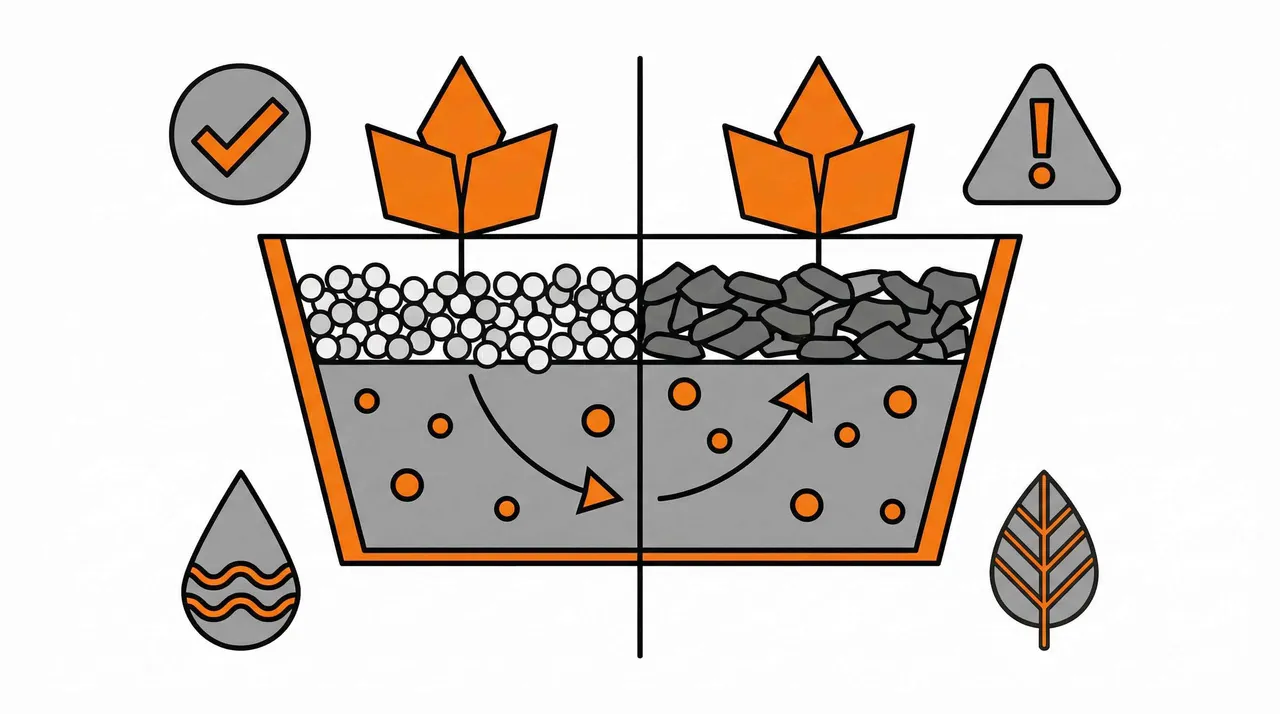
Perlite can definitely work as a mulch alternative, though it functions differently than traditional organic mulches. Instead of slowly decomposing to feed your soil, perlite creates a stable surface layer that improves drainage and prevents weeds.
Benefits of using perlite as a mulch alternative
The biggest advantage of perlite mulch is its drainage capability. If you’re dealing with clay soil or areas that stay too wet, a layer of perlite can help excess water move away from plant roots. This makes it particularly useful around succulents, Mediterranean plants, or any vegetation that prefers drier conditions.
Perlite also won’t attract pests like some organic mulches do. You won’t have problems with termites, fungal diseases, or rodents that sometimes come with wood-based mulches. The material stays clean and doesn’t develop the musty odors that can occur with decomposing organic matter.
Since perlite doesn’t break down, you won’t need to refresh it annually like you would with bark chips or compost. This can save both time and money over the long term, especially in large landscaping projects.
Drawbacks and when perlite is a poor mulch choice
The lightweight nature that makes perlite useful can also be problematic. Strong winds can blow it away, and heavy rains might wash it into unwanted areas. This makes it unsuitable for exposed locations or sloped sites where erosion is a concern.
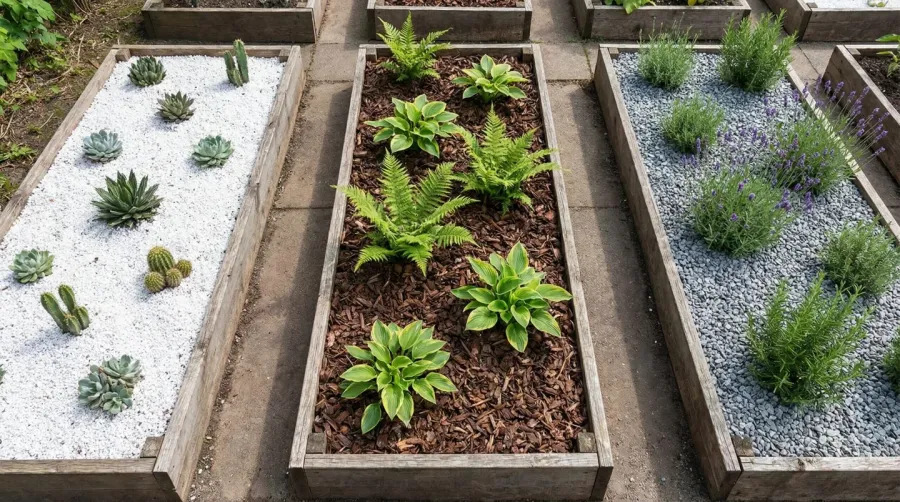
Perlite provides no nutritional value to your plants. While organic mulches gradually break down and enrich the soil, perlite remains inert. If you’re trying to build soil health or grow heavy-feeding plants, you’ll need to supplement with fertilizers or compost.
The bright white appearance might not fit your aesthetic vision. Some gardeners find it too stark or artificial-looking compared to natural materials like bark or stone.
Consider this: Perlite works best in functional applications rather than decorative ones. Think utility areas, greenhouse floors, or around plants where drainage is more important than appearance.
How to use perlite in your landscaping project
Using perlite as mulch is straightforward, but proper application makes a significant difference in results. Start by preparing your planting area and removing any existing weeds or debris.
Spread perlite in a layer about two to three inches thick around your plants. This depth provides adequate weed suppression and moisture management without being wasteful. Keep the perlite a few inches away from plant stems to prevent moisture buildup that could encourage rot.
Water the area thoroughly after application to help the perlite settle and reduce the chance of it blowing away. Some gardeners mix perlite with heavier materials like small gravel or place landscape fabric underneath to provide additional stability.
Application steps for beds, borders, and containers
Begin by watering your plants normally, then apply the perlite when the soil surface is slightly moist but not muddy. This helps the material stay in place during application.
For container gardens, you can mix perlite directly into your potting soil at a ratio of about one part perlite to three parts soil. This improves drainage throughout the root zone rather than just at the surface.
In landscape beds, consider creating borders with edging material to contain the perlite and prevent it from migrating into lawn areas or walkways. Check the coverage periodically and add more material in spots where it may have shifted or settled.
What to use instead of perlite
No single material works perfectly for every situation, so choosing the right alternative depends on your specific goals. If you need moisture retention rather than drainage, want to build soil over time, or prefer a more natural appearance, several alternatives might serve you better than perlite.
Perlite vs vermiculite
Vermiculite holds significantly more water than perlite while still improving soil aeration. This makes it ideal for seed starting, container gardens, or areas where you want to reduce watering frequency. Choose vermiculite when growing moisture-loving plants or in hot climates where water conservation matters.
Perlite drains faster and works better for plants that prefer drier conditions. Use it around cacti, succulents, or in areas where excess moisture causes problems like root rot or fungal diseases.
Both materials are sterile and pH neutral, but vermiculite breaks down more quickly than perlite, so you’ll need to replace it more often.
Perlite vs organic mulches
Bark chips, wood mulch, and compost provide the soil-building benefits that perlite lacks. These organic materials slowly decompose, adding nutrients and improving soil structure over time. Choose organic mulches when you want to enhance soil fertility, support beneficial microorganisms, or create a natural woodland appearance.
Organic mulches also provide better insulation for plant roots during temperature extremes. However, they require annual replacement and can sometimes harbor pests or diseases that perlite avoids.
Pro tip: You can combine approaches by using perlite as a drainage layer underneath organic mulch, getting benefits from both materials.
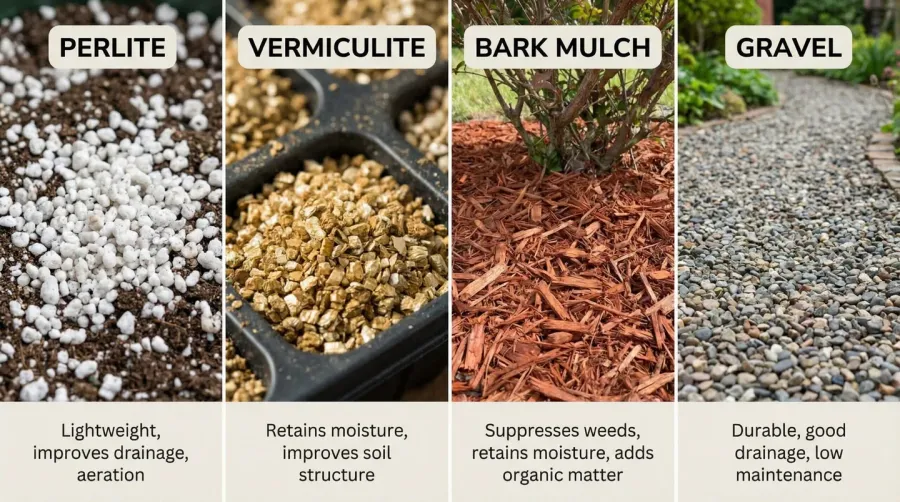
| Material | Water Retention | Drainage | Adds Nutrients | Best For |
|---|---|---|---|---|
| Perlite | Low | Excellent | No | Succulents, drainage issues |
| Vermiculite | High | Good | No | Seed starting, containers |
| Bark Mulch | Medium | Good | Yes | General landscaping, trees |
| Gravel | Low | Excellent | No | Pathways, decorative areas |
Perlite vs inorganic alternatives
Gravel and crushed stone provide similar drainage benefits to perlite but with much greater weight and stability. These materials won’t blow away in wind or wash away in heavy rain, making them better choices for exposed locations or high-traffic areas.
Pumice offers many of the same benefits as perlite but with slightly better weight and a more natural appearance. It’s particularly popular in xeriscaping and rock gardens where you want excellent drainage with an organic look. For more information on using pumice in your landscape, check out our guide on using pumice for raised garden beds.
For decorative applications, consider colored gravel or river rock that can serve as both mulch and landscape accent. If you’re looking for alternatives that work well in garden paths, materials like decomposed granite or pea gravel might be better suited for your needs. Hello Gravel offers various stone and gravel options that provide the drainage benefits of perlite while adding visual appeal to your landscape design.
Cost, longevity, and maintenance considerations
Perlite typically costs more upfront than organic mulches but may prove economical over time since it doesn’t need annual replacement. Organic mulches like bark chips need refreshing every one to two years, while perlite can last indefinitely if properly contained.
The main maintenance requirement for perlite is occasional redistribution if wind or water moves it around. You might need to add small amounts periodically to maintain consistent coverage, but this is usually minimal compared to completely replacing organic mulch.
Consider your long-term landscape goals when evaluating costs. If you’re building soil for productive gardens, the ongoing expense of organic mulches might be worthwhile for their soil-improving benefits. For purely functional applications like drainage improvement, perlite’s longevity can make it cost-effective. If you’re working on projects like raised garden beds or need materials for fire pit areas, understanding the cost-benefit analysis of different materials is crucial.
When you’re ready to explore perlite or alternative materials for your landscaping project, Hello Gravel provides high-quality options in bulk quantities. Our team can help you determine the right material for your specific needs and deliver directly to your location, making it easy to get your project started with professional-grade materials.
Frequently Asked Questions
Can perlite really replace traditional mulch in landscaping beds?
Perlite can serve as a mulch alternative but doesn’t fully replace traditional organic mulches. While it excels at drainage and temperature moderation, it lacks the weed suppression, moisture retention, and soil-building benefits of bark chips or wood mulch. Perlite works best in specific situations like around succulents, in containers, or where drainage is the primary concern rather than general landscaping beds.
What can I use instead of perlite if I cannot find it locally?
Common alternatives include vermiculite for better moisture retention, pumice for similar drainage with more weight, coarse sand for budget-friendly drainage, and gravel or crushed stone for stable, long-lasting mulch. For soil building, consider bark mulch, compost, or shredded leaves. Choose based on your goals: vermiculite for water retention, gravel for windy areas, or organic materials for nutrient-rich soil development.
When is perlite a bad choice for mulch?
Avoid perlite mulch in windy locations where it will blow away, on steep slopes where it can wash off, and in high-traffic areas where it gets displaced easily. It’s also unsuitable when you want to build soil fertility, need heavy weed suppression, or prefer natural aesthetics since the bright white appearance can look artificial in organic garden settings.
How thick should a perlite mulch layer be?
Apply perlite mulch in a 2-3 inch layer for most landscaping beds, keeping it a few inches away from plant stems to prevent moisture buildup. For containers, a 1-2 inch layer is sufficient. Thicker applications don’t provide additional benefits and waste material, while thinner layers won’t effectively suppress weeds or provide temperature moderation.
Delivered price for your ZIP
Delivered to your driveway. You pick the date.
* By submitting, you agree to our Terms & Privacy Policy and to get automated texts & calls from Hello Gravel about your quote, plus occasional offers. Agreeing isn’t required to buy. Msg frequency varies. Msg & data rates may apply. Reply STOP to opt out, HELP for help.
How much do you need?
Pricing your mulch? Get delivered Shredded Hardwood Mulch (Brown) prices for your ZIP.
Delivered to your driveway. You pick the date.
* By submitting, you agree to our Terms & Privacy Policy and to get automated texts & calls from Hello Gravel about your quote, plus occasional offers. Agreeing isn’t required to buy. Msg frequency varies. Msg & data rates may apply. Reply STOP to opt out, HELP for help.
Delivered price for your ZIP
Delivered to your driveway. You pick the date.
* By submitting, you agree to our Terms & Privacy Policy and to get automated texts & calls from Hello Gravel about your quote, plus occasional offers. Agreeing isn’t required to buy. Msg frequency varies. Msg & data rates may apply. Reply STOP to opt out, HELP for help.