
How to Permanently Kill Weeds in Gravel Driveways
Free local estimate
See delivered prices for your ZIP in 60 seconds
Tell us where the project is and we'll price this material — delivered — for your exact ZIP.
- Real delivered pricing for your ZIP — not a generic range.
- Works for any quantity — driveways, pads, drains, or full projects.
- Prefer to talk? We follow up with local availability and delivery windows.
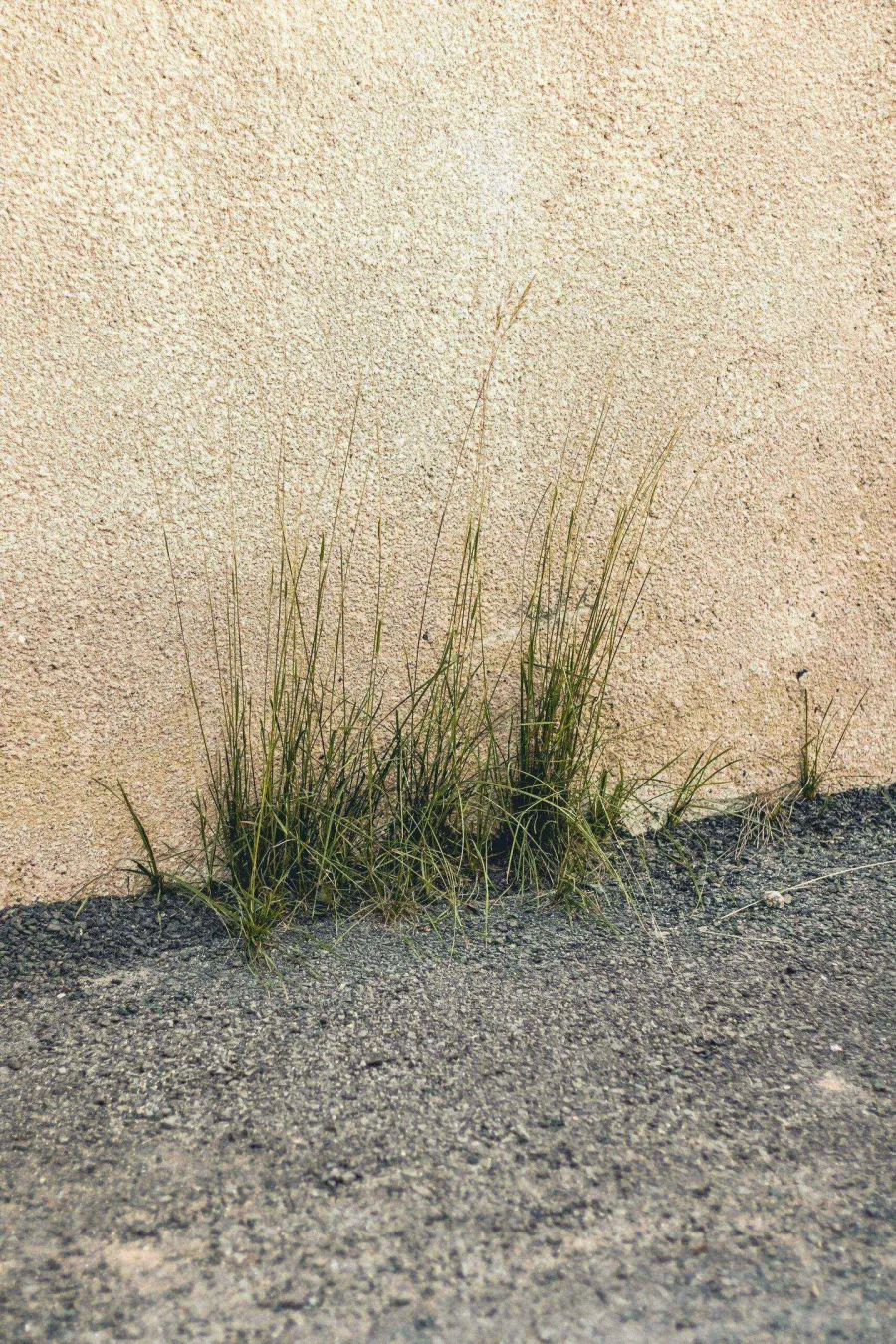
Tired of weeds ruining your gravel driveway’s curb appeal? You’re not alone. Gravel driveways provide an ideal environment for weed growth due to their permeable nature, allowing moisture and seeds to settle between stones. The good news is that you can achieve permanent weed control using proven prevention methods, natural remedies, and strategic maintenance.
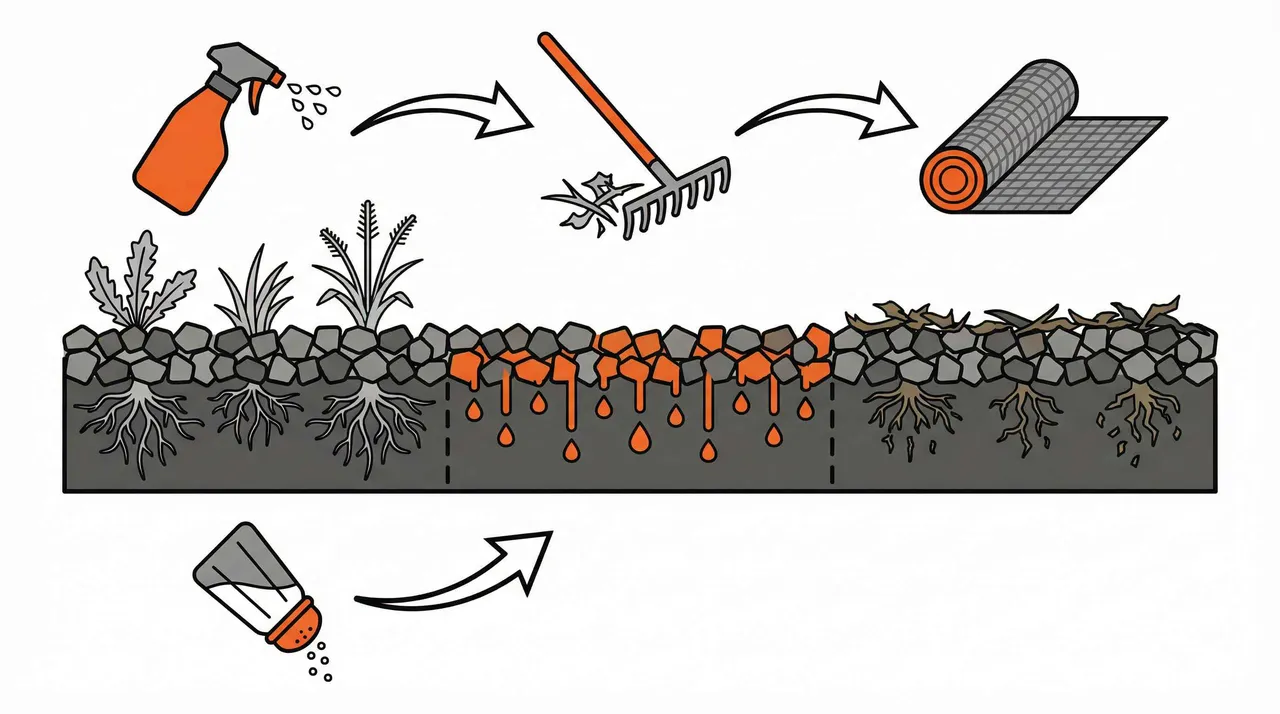
Quick answer: The most effective approach combines three strategies: installing landscape fabric before laying gravel, using natural weed killers like boiling water and vinegar for existing weeds, and maintaining proper gravel depth of 3-4 inches to prevent new growth.
Pro tip: Angular gravel creates tighter interlocking surfaces compared to rounded stones, leaving fewer gaps for weed seeds to settle and establish roots.
About Hello Gravel
Hello Gravel delivers bulk gravel, rock, dirt, and sand by the ton. Enter your ZIP code to see prices with delivery included. A local dump-truck driver places the load where access is safe; spreading is not included.
Why weeds thrive in gravel driveways
Understanding why weeds love gravel helps you combat them more effectively. Gravel driveways create perfect conditions for weed growth through several factors working together.
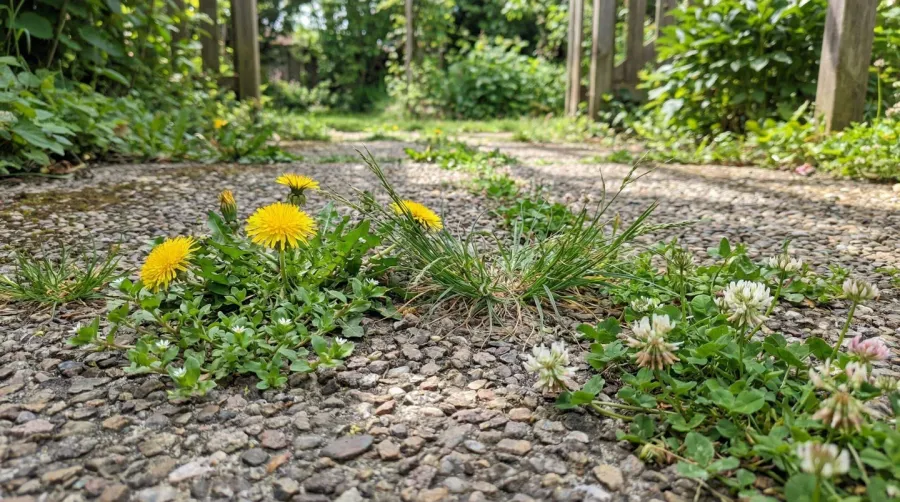
First, weed seeds arrive naturally through wind, birds, and foot traffic. These seeds easily lodge in the gaps between gravel stones, where they find shelter from harsh weather. The permeable nature of gravel allows rainwater to penetrate the surface, creating the moist environment seeds need to germinate.
Second, gravel driveways often contain organic matter like fallen leaves, dirt, and debris that accumulate in crevices. This organic material provides nutrients for emerging weeds, essentially creating mini-gardens throughout your driveway.
The most common weeds you’ll encounter include dandelions with their deep taproots, fast-spreading crabgrass, moisture-loving chickweed, and persistent clover. Each type requires slightly different removal approaches, but the prevention strategies remain consistent across all varieties.
Prevention strategies that actually work
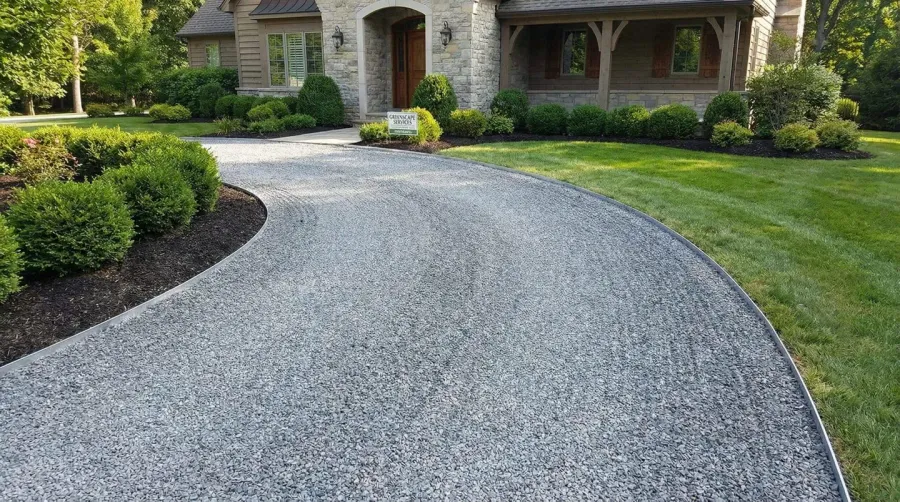
Prevention beats treatment every time when it comes to gravel driveway weeds. Start with the foundation by choosing angular gravel over rounded stones. Angular gravel pieces lock together more tightly, creating fewer spaces for seeds to settle.
Landscape fabric installation provides your strongest defense against weeds. According to todayshomeowner.com, properly installed landscape fabric blocks light from reaching weed seeds while allowing water drainage. Lay the fabric before adding gravel, ensuring all seams overlap by at least six inches to prevent gaps.
Maintain proper gravel depth between 3-4 inches. This depth provides adequate coverage while preventing weeds from reaching sunlight. Too shallow allows weed penetration, while too deep creates drainage issues and makes maintenance difficult. For more guidance on optimal depth, check out our article on the best size gravel for a driveway.
Regular edge maintenance prevents lawn weeds from creeping into your driveway. Install physical barriers like metal or plastic edging along the perimeter, and keep grass areas well-watered to encourage deep root growth away from the gravel surface.
Important note: Pre-emergent herbicides like corn gluten meal can prevent weed seeds from germinating when applied in early spring, but they won’t affect established weeds.
Natural weed elimination methods
When weeds do appear, natural methods offer effective solutions without harsh chemicals. Boiling water provides the quickest results for small weed patches. Pour carefully directly onto individual weeds, targeting the base where stems meet soil. The intense heat destroys plant cells instantly, though you may need repeat treatments for deep-rooted perennials.
White distilled vinegar works as a natural herbicide due to its acetic acid content. Mix one gallon of vinegar with one cup of salt and one tablespoon of dish soap for enhanced effectiveness. The vinegar disrupts cell membranes, salt dehydrates roots, and soap helps the solution adhere to leaves. Apply on sunny days for best results, as sunlight increases the vinegar’s potency.
Hand pulling remains the most thorough method for complete weed removal. Water the area first to soften soil, then grasp weeds close to the base and pull slowly to extract the entire root system. Use a weeding tool for stubborn taproots like dandelions.
Flame weeding with a propane torch quickly wilts weeds without chemicals. Pass the flame slowly over weeds until they turn brown and crispy, then sweep away the dead material. This method works best on young weeds before they establish deep root systems.
Long-term maintenance for permanent results
Permanent weed control requires consistent maintenance rather than one-time treatments. Inspect your driveway monthly, removing any emerging weeds immediately before they establish strong root systems or produce seeds.
Refresh your gravel annually by adding a thin layer of new material. This practice smothers any small weeds while maintaining proper depth and appearance. Choose the same angular gravel type to maintain consistent interlocking properties. Learn more about different types of gravel for construction to ensure you’re using the right material.
Keep organic debris cleared from the surface using a leaf blower or stiff broom. Accumulated leaves, twigs, and dirt create fertile growing conditions for new weeds. Regular cleaning prevents this organic matter from decomposing and creating nutrient-rich pockets. For comprehensive maintenance strategies, explore our guide on how to clean gravel.
Consider applying pre-emergent treatments in early spring before weed seeds germinate. Natural options like corn gluten meal create a barrier that prevents sprouting without harming established plants nearby.
| Method | Effectiveness | Time to Results | Reapplication Needed |
|---|---|---|---|
| Boiling water | High for small weeds | Immediate | Weekly for regrowth |
| Vinegar solution | Moderate | 2-3 days | Monthly |
| Hand pulling | Very high | Immediate | As needed |
| Landscape fabric | Very high prevention | Long-term | Replace every 5-7 years |
Achieving a permanently weed-free gravel driveway requires patience and consistency, but the results are worth the effort. By implementing proper prevention strategies, using natural removal methods when needed, and maintaining regular care routines, you can enjoy a beautiful, low-maintenance driveway that enhances your home’s curb appeal for years to come. Remember that prevention always trumps treatment, so invest time in the foundational steps for the best long-term results. For additional tips on maintaining your gravel driveway, explore our comprehensive resources.
FAQ
How to permanently get rid of weeds in gravel driveway?
The most effective permanent solution combines prevention and treatment. Install landscape fabric before laying gravel, use angular gravel 3-4 inches deep, and treat existing weeds with boiling water or vinegar solution. Apply pre-emergent herbicides annually in early spring to prevent new seeds from germinating.
What is the best natural weed killer for gravel driveways?
Mix 1 gallon of white vinegar, 1 cup of salt, and 1 tablespoon of dish soap for an effective natural weed killer. Alternatively, pour boiling water directly on weeds for instant results. Both methods work best on sunny days and may require repeat applications for deep-rooted weeds like dandelions.
Does salt kill weeds in gravel driveways permanently?
Salt effectively kills weeds by dehydrating them, but it’s not truly permanent as new seeds can still germinate. Use rock salt sparingly as it can damage soil and harm nearby plants through runoff. Salt works best for spot treatments rather than widespread application across the entire driveway.
How do you prevent weeds from growing in gravel?
Prevention starts with proper installation: lay landscape fabric with 6-inch overlaps, choose angular gravel over rounded stones, and maintain 3-4 inches depth. Regular maintenance includes removing organic debris, adding fresh gravel annually, and applying pre-emergent treatments like corn gluten meal in early spring.
Materials for this project
Get it delivered — dumped where you need it
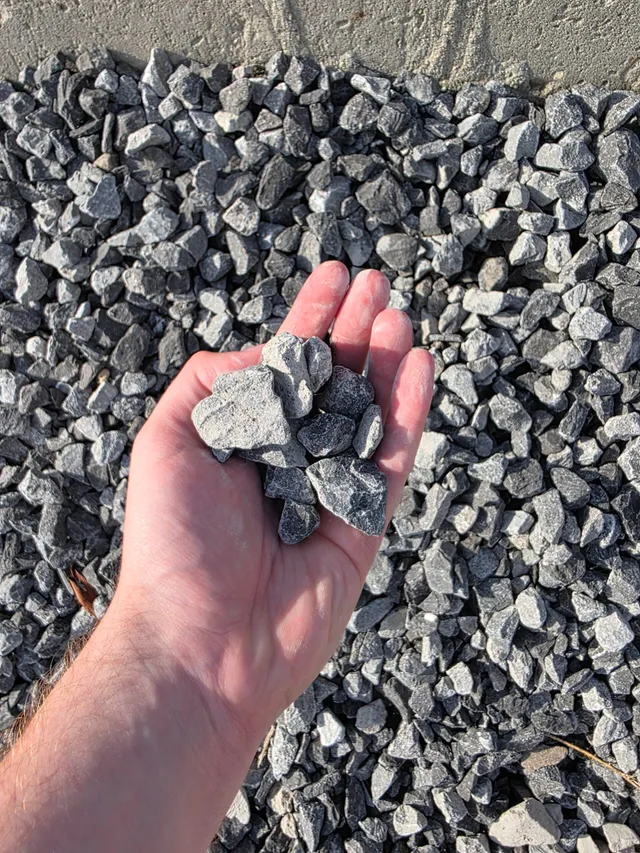
Driveway Gravel
Driveways & Parking areas
See delivered price
View product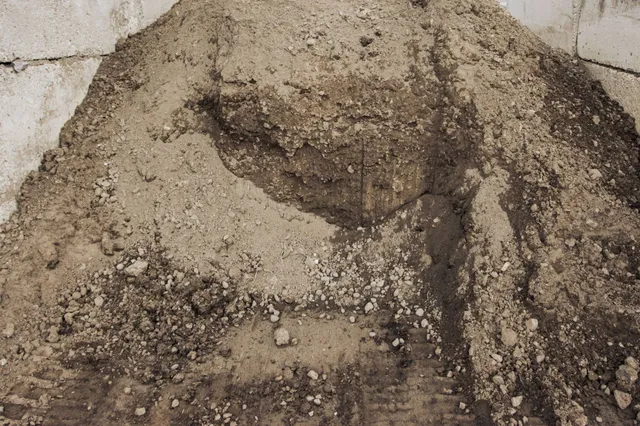
Fill Dirt
Grading & Backfill
See delivered price
View product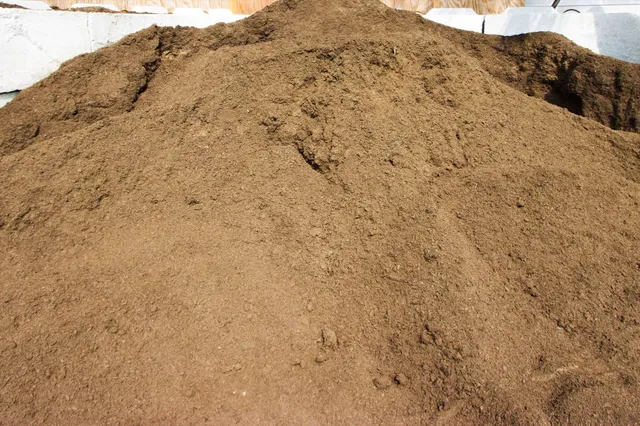
Topsoil
Lawn establishment & Garden beds
See delivered price
View product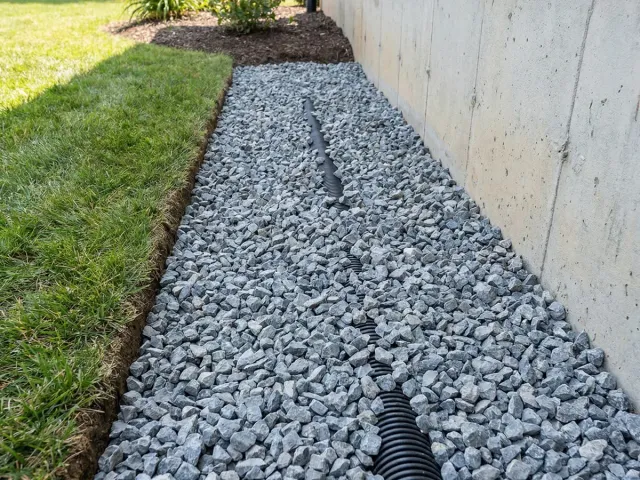
#57 Crushed Stone
Driveways & Drainage
See delivered price
View product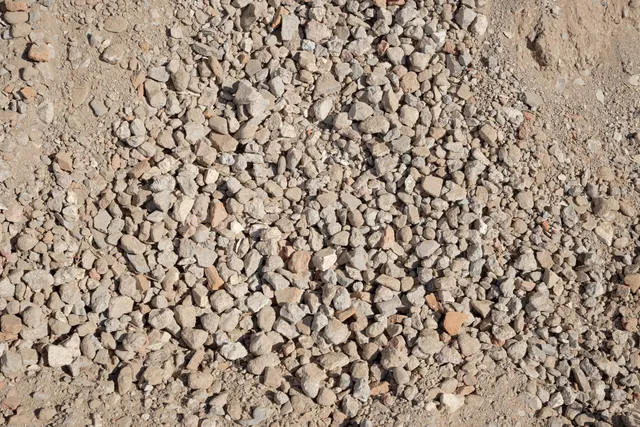
Road Base
Driveway base & Road construction
See delivered price
View product