
Can You Use Sand for a Fire Pit Area? Best Types, Safety, and Installation Guide
Guide handoff
Want help applying this guide to your project?
Share your ZIP and what you need help with. We'll use this guide as context when we follow up.
- 1 This guide gives us the context you were reading.
- 2 Ask about pricing, material choice, delivery timing, or quantity.
- 3 Keep it broad if you are still figuring out the project.
Introduction
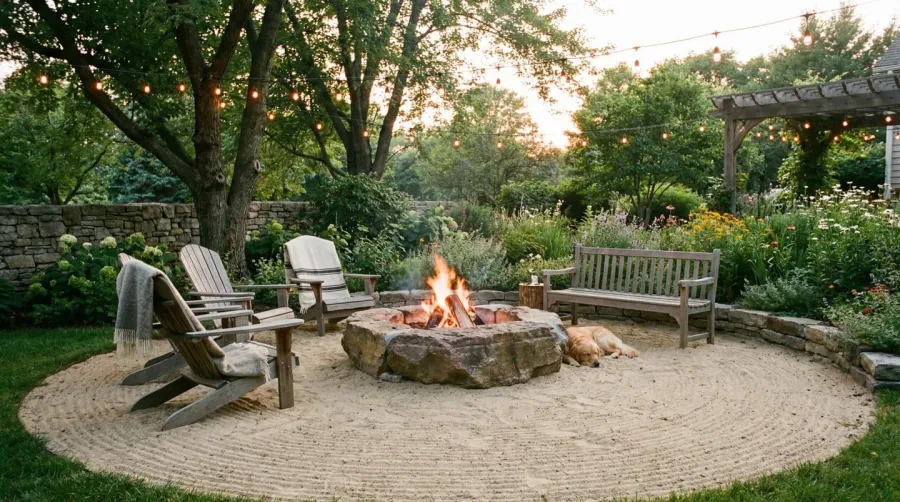
Yes, you can use sand for a fire pit area, but only specific types are safe and effective. Fire-rated sand like silica sand works well as a base layer, while regular beach sand or play sand can create dangerous steam pockets when heated. The key is choosing heat-resistant materials and understanding where to place them in your fire pit setup.
Quick Tip: Fire-rated silica sand is your safest bet for fire pit bases, offering excellent heat resistance without moisture retention issues that plague other sand types.
Building a proper fire pit area involves more than just dumping sand around your fire ring. You need to consider drainage, safety clearances, and the right combination of materials. This guide walks you through everything from selecting the best sand types to calculating how much material you need for your project.
Sand vs other fire pit base materials
When choosing materials for your fire pit area, understanding how sand compares to alternatives helps you make the right decision for your specific needs.
Sand works well as a leveling layer directly under your fire pit, but it has limitations. Fire-rated sand handles heat effectively and provides a stable base, but it doesn’t offer the drainage benefits of gravel or the decorative appeal of lava rock.
| Material | Heat Resistance | Drainage | Comfort | Best Use |
|---|---|---|---|---|
| Fire-rated sand | Excellent | Poor | Good | Under fire pit |
| Pea gravel | Good | Excellent | Fair | Around seating area |
| Lava rock | Excellent | Good | Poor | Inside fire pit |
| Crushed stone | Good | Excellent | Poor | Base drainage layer |
Gravel excels in areas around your fire pit where you need good drainage and a comfortable walking surface. Pea gravel for fire pit areas, specifically, creates an attractive seating area that drains well after rain and doesn’t retain heat like solid surfaces.
For the area directly inside your fire pit, lava rock or fire glass provides the best heat distribution and safety. These materials are designed to withstand direct flame contact without cracking or exploding.
Best types of sand for fire pits
Not all sand is created equal when it comes to fire safety. The wrong choice can lead to dangerous situations, while the right sand provides years of safe use.
Fire-rated silica sand tops the list for fire pit applications. This specially processed sand contains minimal moisture and handles extreme temperatures without breaking down. You’ll find it at most building supply stores, often labeled as “fire sand” or “refractory sand.”
Masonry sand offers another solid option for fire pit bases. It’s finer than construction sand and compacts well, creating a stable foundation. While not specifically fire-rated, quality masonry sand typically has low moisture content and good heat resistance.
Safety Warning: Beach sand and play sand contain high moisture levels that create steam pockets when heated. These pockets can explode, sending hot sand flying and potentially causing burns.
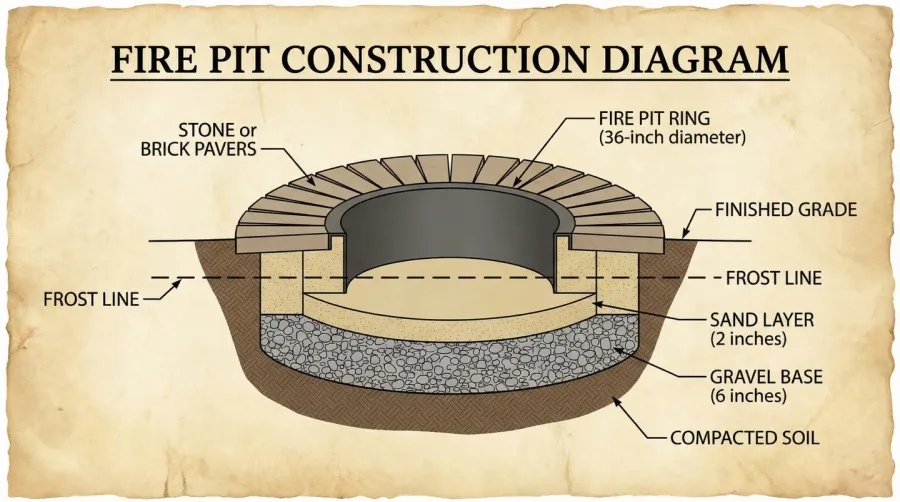
The depth of your sand layer matters too. A two-inch layer provides adequate insulation and leveling for most fire pits. Going deeper doesn’t improve safety and wastes material, while thinner layers may not provide adequate protection for the ground underneath.
Regular construction sand falls somewhere in the middle. It’s more affordable than fire-rated options but may contain more moisture and impurities. If budget is a concern, construction sand can work, but ensure it’s completely dry before use.
How to build a safe fire pit area with sand
Creating a proper fire pit area requires careful planning and the right sequence of materials. Following these steps ensures both safety and longevity for your outdoor fire space.
Start by selecting a location at least 10 feet from structures, overhanging branches, or flammable materials. Mark out an area roughly twice the diameter of your planned fire pit to allow for safe seating and movement around the fire.
Excavate the area to a depth of 4-6 inches, removing grass, roots, and debris. This creates space for your base materials and ensures proper drainage away from the fire pit area.
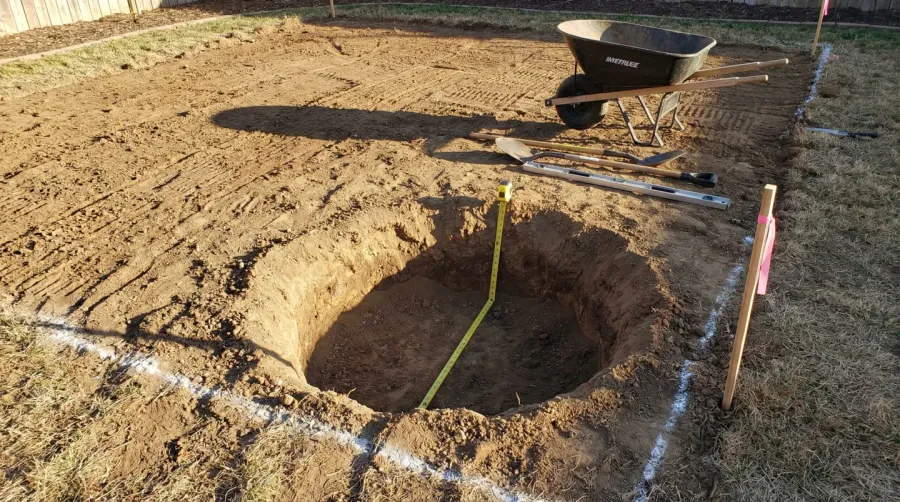
Install a drainage layer first using crushed stone for outdoor projects or coarse gravel. This 2-3 inch layer prevents water from pooling under your fire pit and helps with long-term stability. Compact this layer firmly with a hand tamper.
Add your sand layer next, spreading it evenly over the gravel base. Use a screed board or rake to level the sand, creating a smooth surface for your fire pit. The sand should be slightly damp for easier compaction but not wet.
Place your fire pit ring or structure on the prepared sand base, checking that it sits level and stable. Add additional sand around the fire pit as needed, but avoid overfilling areas where drainage is important.
How much sand and gravel do you need
Calculating material quantities accurately saves money and ensures you have enough supplies to complete your project without delays.
For a typical 14-foot diameter fire pit area, you’ll need approximately 1.5 cubic yards of sand and 2 cubic yards of gravel. This assumes a 3-inch gravel base and 2-inch sand layer across the entire area.
The basic formula is straightforward: multiply length times width times depth, then divide by 27 to convert cubic feet to cubic yards. For circular areas, use 3.14 times radius squared times depth.
A 16×16 foot square fire pit area requires about 3.2 cubic yards of total material. Break this down to roughly 1.8 cubic yards of gravel for the base and 1.4 cubic yards of sand for the top layer.
Pro Tip: Order 10-15% extra material to account for compaction and future maintenance. Sand settles over time, and having extra on hand makes touch-ups easy.
Remember that material weights vary significantly. Sand weighs about 1.3 tons per cubic yard, while gravel averages 1.5 tons per cubic yard. Factor this into delivery logistics and site access planning.
Hello Gravel simplifies this entire process by delivering the exact quantities you need directly to your project site. Our team can help calculate requirements based on your specific fire pit dimensions and provide high-quality materials that meet safety standards for outdoor fire applications.
Creating a safe and attractive fire pit area with sand requires the right materials, proper installation, and careful attention to safety details. While sand works well for specific applications like leveling and base layers, combining it with other materials like limestone for fire pit areas, granite for fire pit projects, or river rock for fire pit areas creates the most functional and durable fire pit area. Take time to plan your project carefully, choose quality materials, and follow local fire safety regulations for the best results.
Frequently Asked Questions
What type of sand is best for a fire pit?
Fire-rated silica sand is the best choice for fire pits because it handles extreme temperatures without breaking down and contains minimal moisture. Masonry sand also works well as it’s fine, compacts effectively, and typically has low moisture content. Avoid beach sand and play sand as they contain high moisture levels that can create dangerous steam pockets when heated.
How much sand do I need for my fire pit area?
For a typical 14-foot diameter fire pit area, you’ll need approximately 1.5 cubic yards of sand. Use a 2-inch sand layer for leveling and insulation. The basic calculation is length times width times depth, divided by 27 to convert cubic feet to cubic yards. For circular areas, multiply 3.14 times radius squared times depth.
Can I use sand to extinguish my fire pit?
Yes, sand can be used to safely extinguish fire pit flames by smothering them. However, sand retains heat for extended periods, so the area should be treated as hot even after flames are out. Never bury hot coals and leave immediately, as sand insulates heat that can migrate downward and remain dangerous for hours.
Is sand better than gravel for fire pit areas?
Sand and gravel serve different purposes in fire pit areas. Sand works best as a leveling layer directly under the fire pit, providing excellent heat resistance and a stable base. Gravel excels around the seating area where you need good drainage and a comfortable walking surface. The ideal setup often combines both materials for maximum safety and functionality.