
Gravel Size Chart and Guide: How to Choose the Right Gravel for Any Project
Free local estimate
See delivered prices for your ZIP in 60 seconds
Tell us where the project is and we'll price this material — delivered — for your exact ZIP.
- Real delivered pricing for your ZIP — not a generic range.
- Works for any quantity — driveways, pads, drains, or full projects.
- Prefer to talk? We follow up with local availability and delivery windows.
Confused by gravel sizes like #57, pea gravel, or 3/4 inch? You’re not alone. Choosing the wrong gravel size can lead to drainage problems, unstable surfaces, or costly mistakes. This guide includes a practical gravel size chart, project-specific recommendations, and step-by-step selection tips to help you pick the perfect gravel for your driveway, pathway, patio, or drainage project.
Quick Answer: For driveways, use #3 gravel (1-2 inches) for the base and #57 gravel (3/4 inch) for the top. Garden paths work best with pea gravel (1/4 inch), while French drains need larger #1 or #3 gravel for proper water flow.
About Hello Gravel
Hello Gravel delivers bulk gravel, rock, dirt, and sand by the ton. Enter your ZIP code to see prices with delivery included. A local dump-truck driver places the load where access is safe; spreading is not included.
Gravel Size Chart with Common Grades and Uses
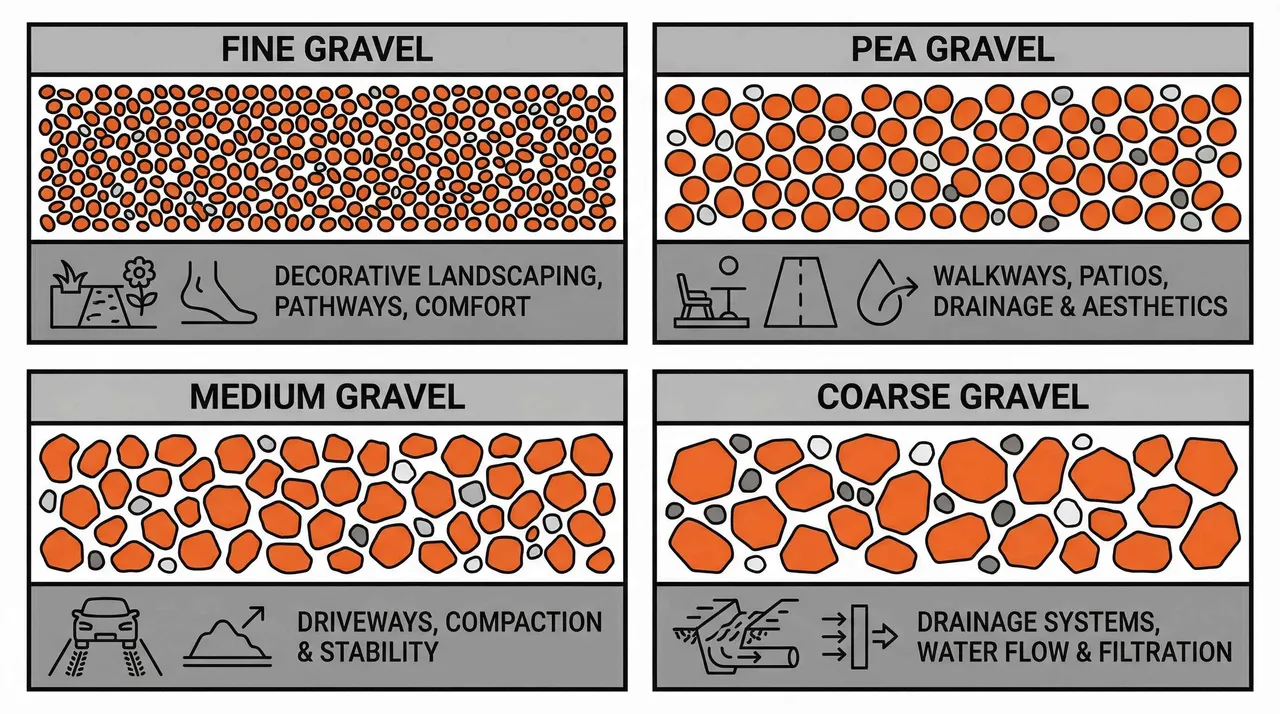
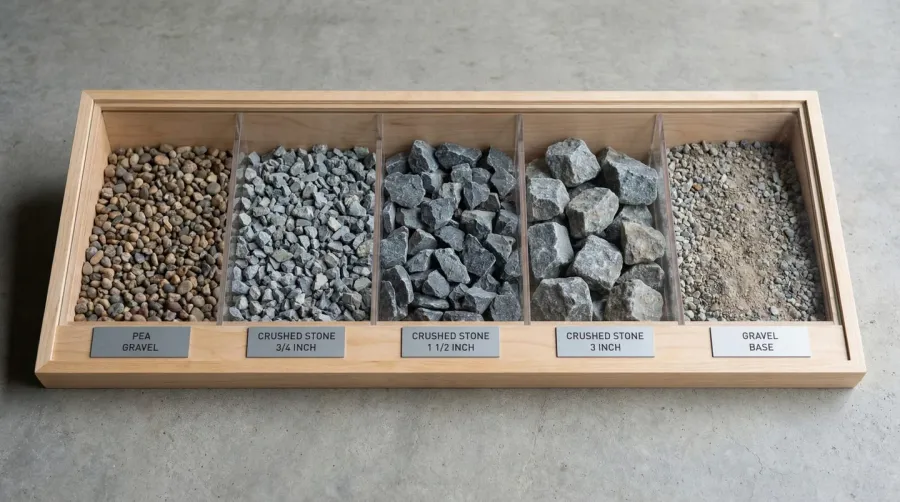
Understanding gravel sizes starts with knowing the standard classifications. Here’s a practical chart showing the most common gravel types and their typical applications:
| Grade/Type | Size Range (inches) | Size Range (mm) | Best For |
|---|---|---|---|
| #1 Gravel | 2-4 | 50-100 | Drainage, road base |
| #3 Gravel | 1-2 | 25-50 | Driveway base, drainage |
| #57 Gravel | 3/4 | 19 | Driveway top, concrete mix |
| #8 Gravel | 1/8-3/8 | 3-10 | Pathways, between pavers |
| Pea Gravel | 1/4-3/8 | 6-10 | Garden paths, playgrounds |
| River Rock | 1/2-3 | 12-75 | Decorative, water features |
The numbering system might seem backwards, but smaller numbers actually mean larger stones. Think of it as screen sizes – bigger screens catch bigger rocks.
Standard Gravel Grades and Size Ranges
The most common gravel grades you’ll encounter include #1, #3, #57, #8, and #10. Each serves specific purposes based on size and angular shape. #1 gravel works excellent for heavy-duty drainage and road foundations. #3 gravel provides the perfect balance for driveway bases, offering stability while allowing water flow. #57 gravel, the most popular choice, works well for driveway surfaces and concrete mixing. For a deeper dive into understanding the numbering system for gravel, check out our comprehensive guide.
Decorative Gravel Types and Typical Sizes
Pea gravel offers smooth, rounded stones perfect for comfortable walking surfaces. River rock comes in various sizes and provides natural beauty for landscaping. Crushed stone creates angular pieces that lock together well, making it ideal for stable surfaces that need to bear weight. To see visual examples of these different types, explore our visual guide to gravel sizes with pictures.
What Gravel Size Do I Need? Quick Answers by Project
Different projects require different gravel sizes based on traffic, drainage needs, and appearance goals. Here’s how to match your project with the right size.
Best Gravel Size for Driveways
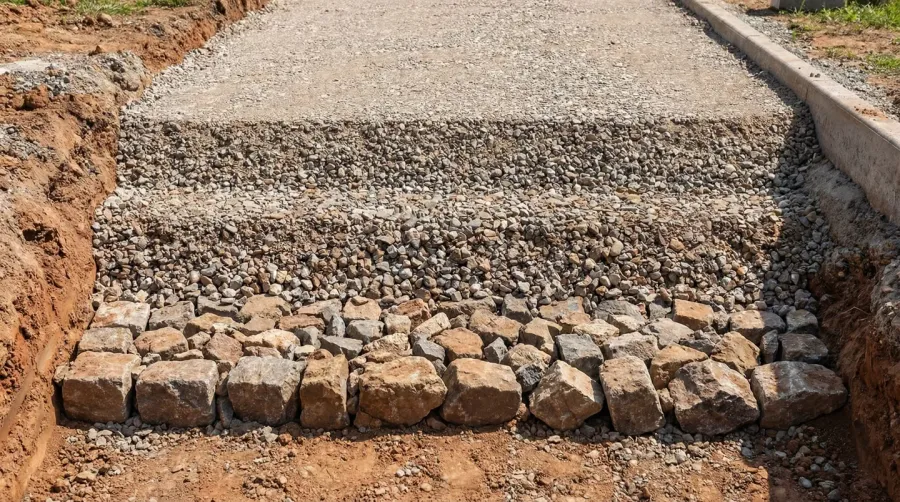
Driveways work best with a layered approach. Start with #3 gravel (1-2 inches) for your base layer, about 4-6 inches deep. This provides excellent drainage and stability. Add a middle layer of #57 gravel (3/4 inch) for additional stability, then finish with #8 gravel or pea gravel for a smooth driving surface.
For single-layer driveways, #57 gravel offers the best compromise between stability and comfort. Avoid pea gravel alone on driveways – it shifts too much under car weight. For more specific guidance, our ultimate driveway stone size chart provides detailed recommendations for various driveway applications.
Best Gravel Size for Garden Paths and Walkways
Garden paths need comfortable walking surfaces that don’t shift underfoot. Pea gravel (1/4 to 3/8 inch) works perfectly for most walkways. The smooth, rounded stones feel comfortable under feet and create an attractive natural look.
For paths with heavy foot traffic, consider #8 gravel instead. It’s slightly larger and more stable while still providing walking comfort.
Pro Tip: Install landscape edging around gravel paths to prevent stones from spreading into garden beds and maintain clean lines.
Best Gravel Size for Patios and Seating Areas
Patio areas need gravel that compacts well and stays in place under furniture. #8 gravel or small crushed stone (3/8 inch) works best. These sizes compact nicely while providing a relatively smooth surface for chairs and tables.
Avoid larger gravel sizes in seating areas – they create uneven surfaces that make furniture unstable. Our comprehensive landscape stone size chart can help you find the perfect fit for your outdoor living spaces.
Best Gravel Size for Drainage and French Drains
Drainage systems need larger gravel that allows maximum water flow. #1 gravel (2-4 inches) or #3 gravel (1-2 inches) work best for French drains and drainage channels. The large spaces between stones let water move quickly without clogging.
Never use pea gravel or fine materials in drainage systems – they can clog and reduce water flow over time.
Best Gravel Size for Decorative Landscaping and Gardens
Decorative applications offer more flexibility in size choice. Pea gravel works well around plants and creates a neat, finished look. River rock in various sizes adds visual interest and natural beauty. Choose sizes that complement your plants – smaller gravel for delicate flowers, larger stones for bold architectural plants.
Understanding Gravel Sizes and How Size Affects Performance
Gravel size impacts three key performance factors: strength, drainage, and appearance. Understanding these relationships helps you make better choices for your specific needs.
Strength and Load-Bearing Capacity
Larger, angular gravel pieces lock together better, creating stronger surfaces. This is why #3 gravel works well for driveway bases – the 1-2 inch stones interlock and distribute weight effectively. Smaller, rounded gravel like pea gravel shifts more easily and works better for decorative applications with light traffic.
Angular crushed stone always provides better stability than rounded river rock of the same size. Learn more about construction stone sizes and their structural properties.
Drainage and Permeability
Larger gravel sizes create bigger spaces between stones, allowing faster water drainage. #1 gravel drains much faster than pea gravel because of the size difference. However, very large gravel can be uncomfortable to walk on, so you need to balance drainage with usability.
Shape matters too – angular gravel creates more void space than rounded stones of the same size.
Comfort, Traction, and Appearance
Smaller, smoother gravel feels more comfortable underfoot but may shift more. Pea gravel provides excellent walking comfort but poor vehicle traction. Larger angular gravel offers better traction but can be uncomfortable for walking.
Consider who will use the space and how when choosing between comfort and stability.
How to Choose the Right Gravel Size Step by Step
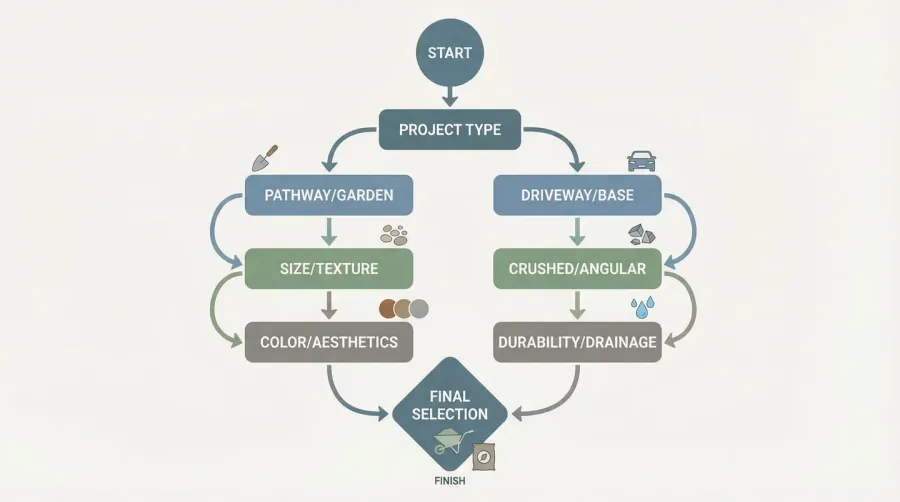
Follow this simple process to select the perfect gravel size for your project.
Step 1: Define Your Project and Traffic Levels
Start by identifying your project type and expected traffic. Heavy vehicle traffic requires larger, more stable gravel. Light foot traffic allows smaller, more comfortable options. Decorative areas with no traffic offer the most flexibility in size choice.
Step 2: Assess Soil, Slope, and Drainage Conditions
Check your soil drainage by digging a small hole and filling it with water. If water drains slowly, you need larger gravel for better drainage. Sloped areas need angular gravel that won’t shift. Flat areas with good drainage can use smaller, rounder options.
Step 3: Pick a Gravel Type and Size Range
Use the chart and project recommendations above to narrow your choices. Consider both function and appearance. Remember that you can layer different sizes – larger for stability underneath, smaller for appearance on top. For a comprehensive overview of common gravel sizes and their uses, explore our detailed guide.
Step 4: Calculate How Much Gravel You Need
Measure your area length and width in feet. Multiply by your desired depth in feet to get cubic feet. Divide by 27 to convert to cubic yards. For example: a 10×20 foot driveway with 3-inch depth needs (10 x 20 x 0.25) ÷ 27 = 1.85 cubic yards.
Money-Saving Tip: Order 10% extra gravel to account for compaction and settling. It’s cheaper than placing a second delivery order later.
How Gravel Size Affects Cost and Budget
Understanding price factors helps you make cost-effective choices without sacrificing quality.
Why Some Gravel Sizes Cost More Than Others
Standard sizes like #57 gravel cost less because they’re produced in high volumes. Specialty sizes or decorative stones cost more due to limited production and additional processing. Local materials typically cost less than imported decorative stones.
Processing also affects price – crushed angular gravel requires more work than naturally rounded river rock, but the price difference varies by region.
Money-Saving Tips When Choosing Gravel Size
Stick with standard sizes when possible – #3, #57, and pea gravel offer the best value. Buy in bulk for better per-yard pricing. Consider using standard gravel for base layers and decorative options only for visible top layers.
Source locally when possible to reduce transportation costs. Many quarries offer quality gravel at lower prices than specialty landscape suppliers.
Need Help Choosing? How Hello Gravel Makes Sizing Easy
Still unsure about the right gravel size for your project? Hello Gravel takes the guesswork out of gravel selection. Our experts help match the perfect gravel type and size to your specific needs, soil conditions, and budget. We deliver nationwide with white-glove service, handling everything from sizing recommendations to doorstep delivery.
Whether you’re building a driveway, creating garden paths, or installing drainage, we ensure you get exactly what you need for successful results. Get expert guidance and quality materials delivered right to your project site.
FAQ
What size gravel is best for a driveway?
For driveways, use #3 gravel (1-2 inches) for the base layer and #57 gravel (3/4 inch) for the top surface. This combination provides excellent stability and drainage while creating a smooth driving surface. The larger base stones distribute weight effectively, while the smaller top layer offers comfort and compaction.
What size gravel is best for drainage and French drains?
Use #1 gravel (2-4 inches) or #3 gravel (1-2 inches) for drainage systems and French drains. These larger sizes create maximum void space between stones, allowing water to flow quickly without clogging. Never use pea gravel or fine materials in drainage applications as they can reduce water flow over time.
What size is pea gravel and what is it used for?
Pea gravel is typically 1/4 to 3/8 inch in diameter with smooth, rounded stones. It’s perfect for garden paths, walkways, playgrounds, and decorative landscaping because it’s comfortable to walk on and creates an attractive natural appearance. However, avoid using pea gravel alone on driveways as it shifts too much under vehicle weight.
How do I calculate how much gravel I need for my project?
Measure your area’s length and width in feet, then multiply by your desired depth in feet to get cubic feet. Divide by 27 to convert to cubic yards. For example, a 10×20 foot driveway with 3-inch depth needs (10 x 20 x 0.25) ÷ 27 = 1.85 cubic yards. Order 10% extra to account for compaction and settling.
Materials for this project
Get it delivered — dumped where you need it
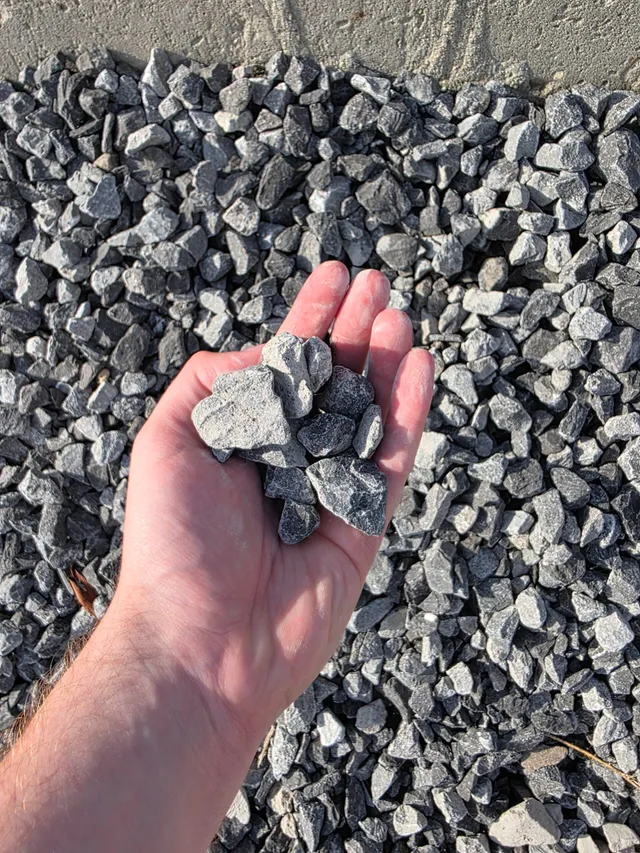
Driveway Gravel
Driveways & Parking areas
See delivered price
View product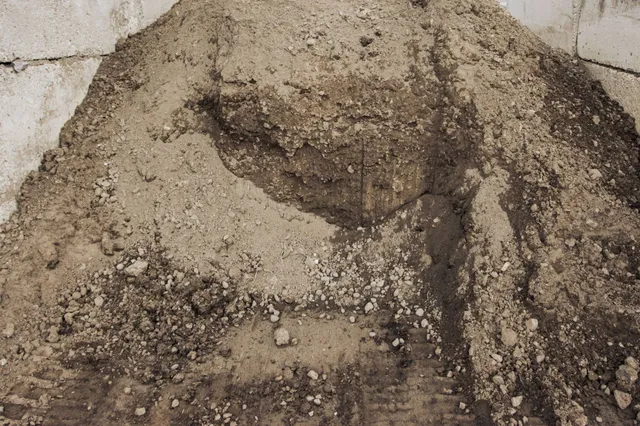
Fill Dirt
Grading & Backfill
See delivered price
View product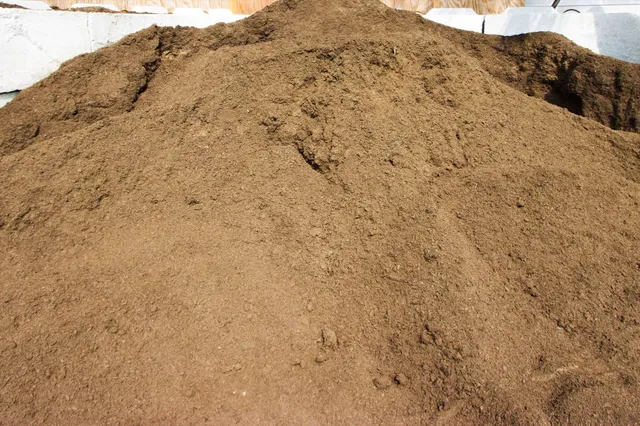
Topsoil
Lawn establishment & Garden beds
See delivered price
View product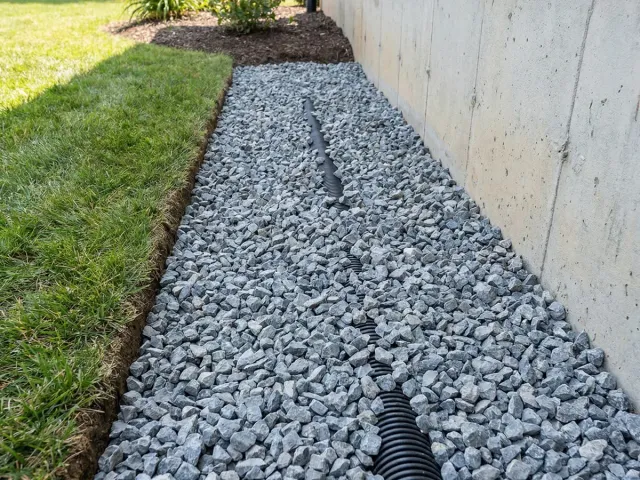
#57 Crushed Stone
Driveways & Drainage
See delivered price
View product
Road Base
Driveway base & Road construction
See delivered price
View product