
Gravel Numbers and Size Chart Explained
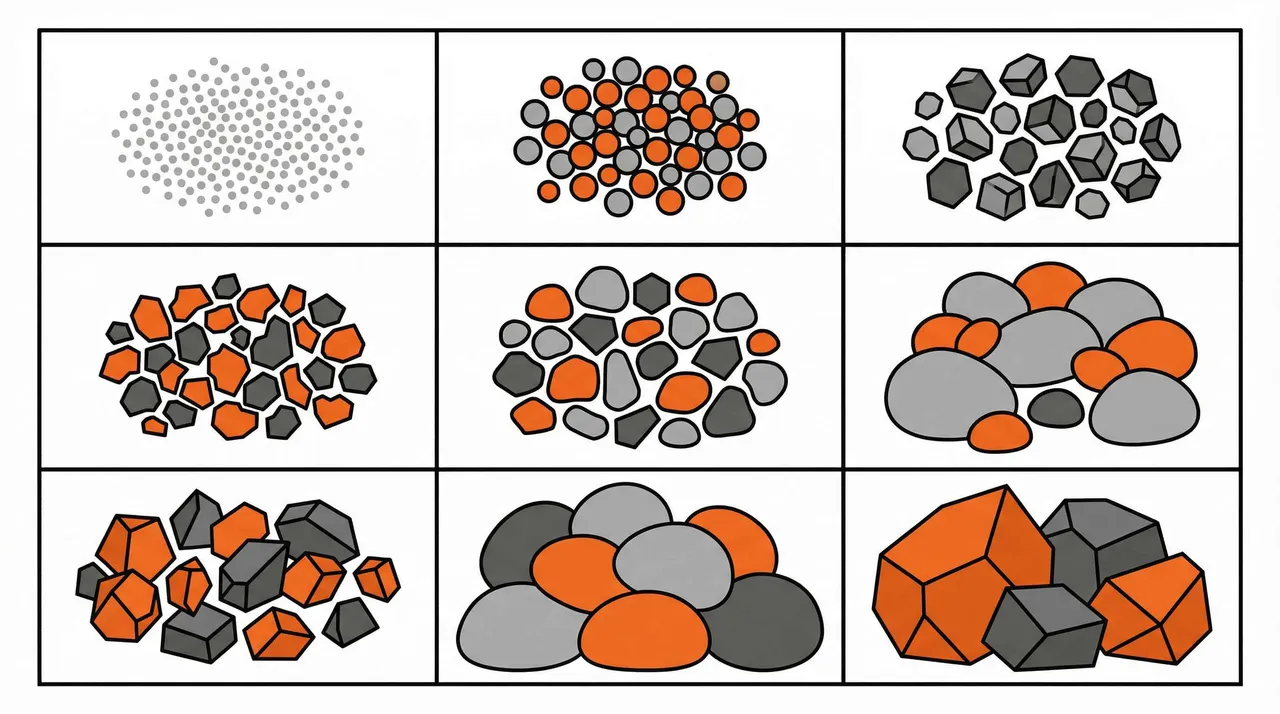
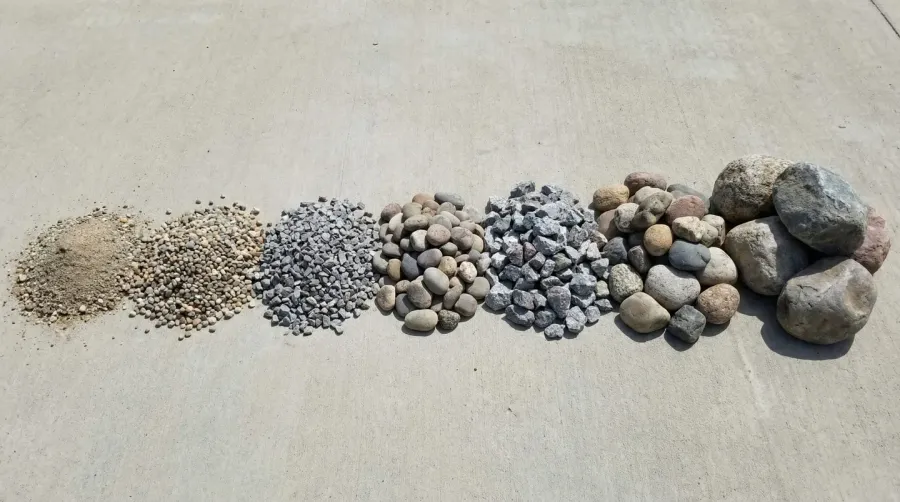
Confused by gravel numbers like #57 stone, #10 screenings, or #411? You’re not alone. These cryptic numbers represent specific size ranges that determine whether your driveway drains properly, your walkway stays comfortable underfoot, or your French drain actually works. Understanding this numbering system helps you avoid costly mistakes like ordering the wrong size and having to start over.
Quick Answer: The gravel numbering system uses ASTM standards where #57 stone (3/4″ to 1″) works best for driveways, #10 screenings (dust to 3/8″) create solid bases, and pea gravel (1/8″ to 3/8″) suits decorative landscaping.
This guide breaks down the most common gravel sizes, shows you exactly what each number means, and helps you pick the right stone for your specific project. Whether you’re building a driveway, installing drainage, or creating garden paths, you’ll know which gravel to order with confidence.
About Hello Gravel
Hello Gravel delivers bulk gravel, rock, dirt, and sand by the ton. Enter your ZIP code to see prices with delivery included. A local dump-truck driver places the load where access is safe; spreading is not included.
What is gravel and how is it classified
Gravel consists of loose rock fragments typically ranging from dust-sized particles up to 2.5 inches in diameter. These fragments come from quarries where larger rocks get crushed into specific sizes, or naturally from riverbeds where water has worn down stones over time.
The classification system primarily follows ASTM D448 and AASHTO M43 standards in the United States. These standards use numbered designations based on sieve sizes, which determine what size particles can pass through specific mesh openings. When you see “#57 stone,” that number refers to a standardized size range, not just a random label.
Some materials like pea gravel and riprap get named by their appearance or function rather than following the numbered system. Regional suppliers sometimes use different names for the same sizes, so knowing both the number and common names helps when shopping around. For a deeper dive into understanding gravel sizes by number, you can explore the complete standardization process.
How the gravel numbering system works
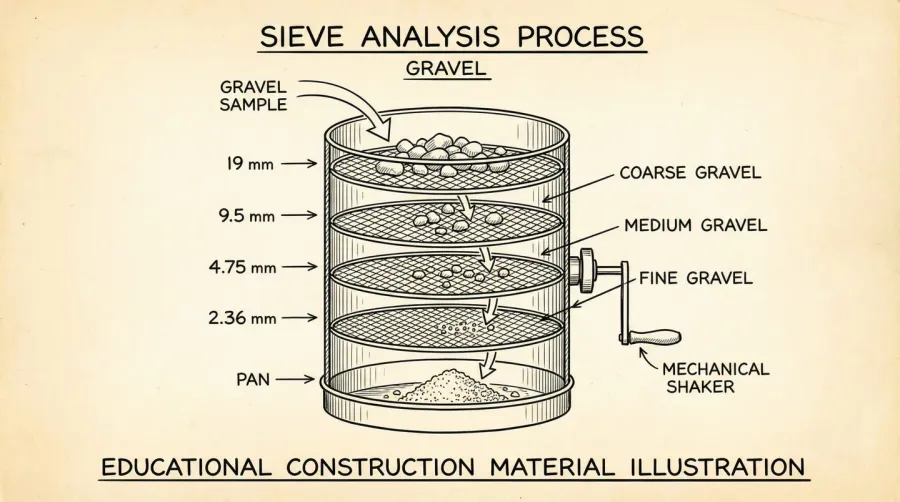
The numbering system connects directly to sieve analysis, where gravel gets sorted through progressively smaller mesh screens. Each numbered grade represents stones that fall within specific size ranges after this screening process.
Here’s where it gets tricky: the numbers don’t follow a simple “bigger number equals bigger stone” pattern. Instead, each number corresponds to a particular gradation specification. For example, #57 stone passes through a 1-inch sieve but gets retained on a 1/2-inch sieve, giving you that familiar 3/4-inch average size.
ASTM D448 provides the official specifications, but suppliers often use simplified size ranges that work for most projects. Some materials blend different sizes together, like #411 which combines #57 stone with stone dust to create a mix that compacts well for road bases.
Pro Tip: Always ask your supplier for their specific size chart since local variations exist, and some regions use different naming conventions for the same materials.
Gravel size chart and common applications
| Gravel Number/Name | Approximate Size Range | Also Called | Best Uses |
|---|---|---|---|
| #10 Screenings | Dust to 3/8″ | Stone dust, fines | Patio bases, under pavers |
| #57 Stone | 3/4″ to 1″ | 3/4″ clean stone | Driveways, concrete aggregate |
| #67 Stone | 1/4″ to 3/4″ | 1/2″ clean stone | Drainage, pipe bedding |
| #3 Stone | 1/2″ to 2″ | 1-1/2″ clean stone | Large construction, backfill |
| #411 | Blend of #57 + dust | Dense grade aggregate | Road bases, compactable surfaces |
This chart covers the most commonly requested sizes, but suppliers stock additional grades for specialized applications. Clean stones like #57 and #67 drain well because they lack fine particles, while blended materials like #411 compact tightly due to their mix of large and small particles.
The “clean” designation means the gravel contains minimal dust or fine particles, making it ideal for drainage applications. When you need compaction instead of drainage, blended grades work better because the fines fill gaps between larger stones. For more detailed information, check out our comprehensive aggregate sizes chart.
Popular gravel sizes explained
#10 Screenings create excellent bases under patios and walkways because they compact into a stable, level surface. This fine material ranges from dust up to 3/8-inch particles, filling in gaps to prevent settling. You’ll often see it used under pavers or as the final leveling layer for concrete pads.
#57 Stone serves as the workhorse of the gravel world, perfect for residential driveways and as concrete aggregate. Its 3/4-inch average size provides good drainage while still being comfortable to walk on. Most driveway projects use #57 for the top layer because it stays in place without being too chunky underfoot.
#3 Stone handles heavy-duty applications like building backfill and large construction projects. These 1/2-inch to 2-inch stones provide excellent drainage around foundations and retaining walls. The larger size makes #3 stone less suitable for walking surfaces but perfect for areas needing serious drainage capacity.
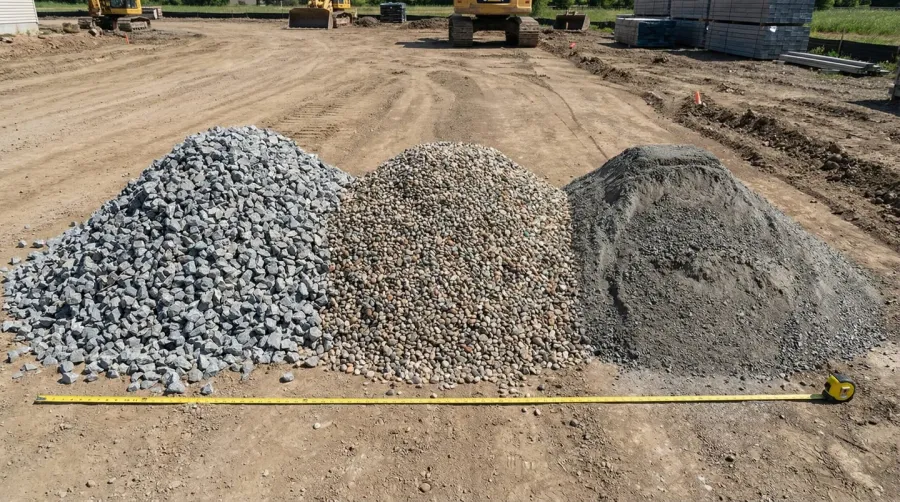
#411 Gravel combines #57 stone with stone dust to create a material that compacts extremely well. Road crews use this blend for base layers because it forms a solid, stable surface that resists rutting. For driveways, #411 works great as a base layer with #57 stone on top.
Pea Gravel gets its name from its small, rounded stones that resemble peas in size and shape. These 1/8-inch to 3/8-inch stones work beautifully for decorative landscaping, garden paths, and around plants. The smooth, rounded edges make pea gravel comfortable for bare feet, though it can shift more than angular crushed stone.
Riprap consists of large stones, often 4 to 8 inches or bigger, used primarily for erosion control along shorelines and steep slopes. While not technically part of the numbered system, riprap serves crucial functions in preventing soil erosion where smaller stones would wash away.
Important Note: Regional suppliers may use slightly different size ranges or names, so always confirm specifications when ordering, especially for critical applications like drainage systems.
Choosing the right gravel size for your project
Driveways and parking areas typically work best with #57 stone for the surface layer, providing good drainage while remaining comfortable to drive and walk on. For the base layer, consider #3 stone or #411 depending on your soil conditions. Areas with poor drainage benefit from clean #3 stone, while stable soils can use the more economical #411 blend. Learn more about selecting the perfect material with our driveway stone size chart.
Walkways and patios need materials that feel good underfoot while staying in place. Pea gravel creates attractive, comfortable paths that work well in garden settings. For more formal applications, #67 stone provides a finer texture than #57 while still offering good stability. Always use #10 screenings as a base layer under any walking surface.
Drainage applications require clean stones without fines that might clog over time. French drains typically use #57 or #67 stone, depending on the pipe size and flow requirements. Larger #3 stone works for heavy-duty drainage around foundations or in areas with high water flow.
Landscaping beds offer the most flexibility in gravel choice since function matters less than appearance. Pea gravel provides a classic look that complements most plants, while colored decorative stones can match specific design themes. Avoid using fine materials like #10 screenings in planting areas since they can interfere with water penetration. For landscape-specific recommendations, explore our comprehensive landscape stone size chart.
At Hello Gravel, we help match your specific project requirements with the right gravel type and quantity. Our team understands local conditions and can recommend the best approach for your particular situation, whether you’re building a simple garden path or a complex drainage system.
Understanding gravel sizes transforms a confusing shopping experience into a straightforward decision. With this knowledge, you can confidently discuss your needs with suppliers, avoid costly mistakes, and ensure your project performs as expected for years to come. The key lies in matching the gravel’s properties to your project’s specific requirements, whether that’s drainage, compaction, or simply looking great in your landscape. For visual reference and additional guidance, visit our gravel size chart with pictures to see exactly what each size looks like.
FAQ
What do gravel numbers like #57, #3, and #411 mean?
Gravel numbers refer to standardized size classifications based on ASTM D448 and AASHTO M43 standards. Each number represents a specific range of stone sizes determined by sieve analysis. For example, #57 stone is approximately 3/4″ to 1″ in diameter, #3 stone ranges from 1/2″ to 2″, and #411 is a blend of #57 stone with stone dust that compacts well for bases.
What size gravel is best for driveways?
For residential driveways, use a layered approach: #3 stone for the base layer (4-6 inches deep), #411 or similar compactable material for the middle layer (2-3 inches), and #57 stone for the surface layer (2-3 inches). This combination provides proper drainage, stability, and a comfortable driving surface that resists rutting.
What’s the difference between #57 and #67 gravel?
#57 gravel ranges from 3/4″ to 1″ in diameter, while #67 gravel is slightly smaller at 1/4″ to 3/4″. Both are clean stones that drain well, but #67 provides a smoother, more compact surface due to its smaller size. #57 is more common for driveways and drainage, while #67 works well for pipe bedding and areas requiring better compaction.
Can I use pea gravel instead of numbered gravel for my project?
Pea gravel works well for decorative landscaping, garden paths, and play areas due to its smooth, rounded edges and attractive appearance. However, it’s not suitable for structural applications like driveway bases or areas requiring compaction because the rounded stones don’t lock together like angular crushed stone. For load-bearing surfaces, stick with numbered crushed stone like #57 or #411.
Materials for this project
Get it delivered — dumped where you need it
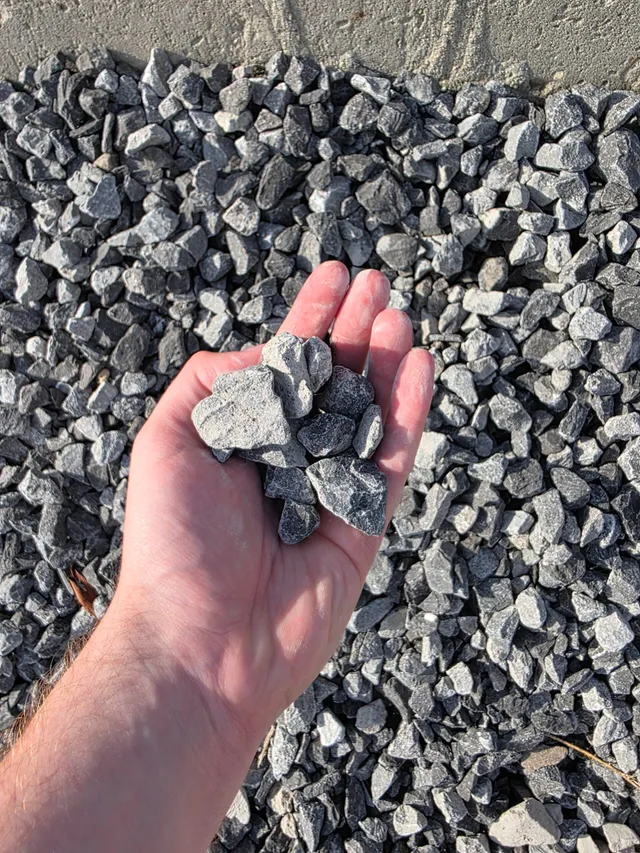
Driveway Gravel
Driveways & Parking areas
See delivered price
View product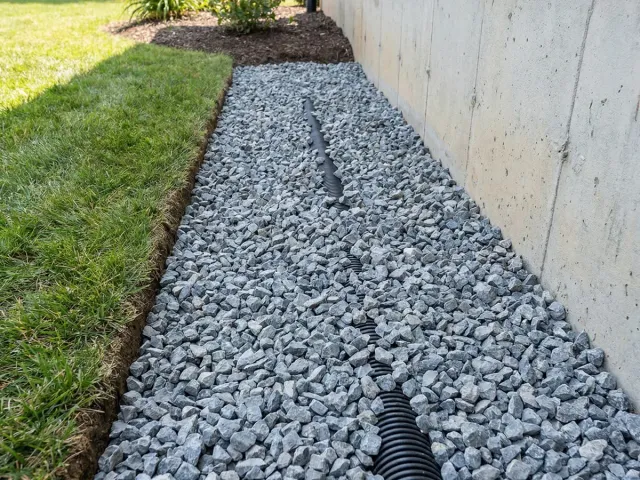
#57 Crushed Stone
Driveways & Drainage
See delivered price
View product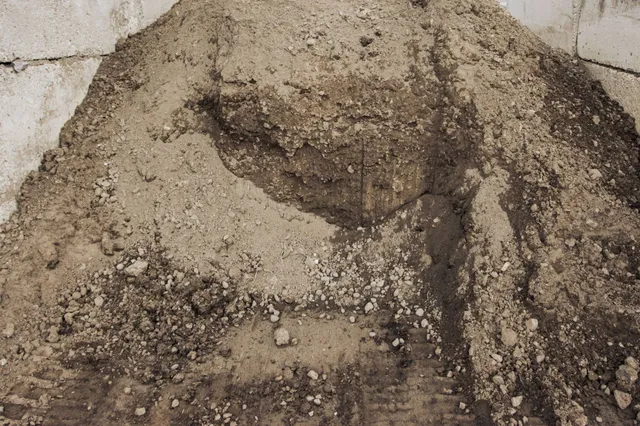
Fill Dirt
Grading & Backfill
See delivered price
View product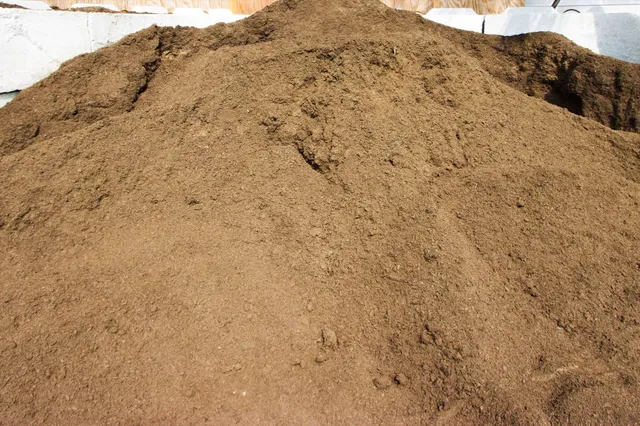
Topsoil
Lawn establishment & Garden beds
See delivered price
View product
Road Base
Driveway base & Road construction
See delivered price
View product