
Landscape Stone Sizes Chart (Best Rock Sizes and Uses)
Free local estimate
See delivered prices for your ZIP in 60 seconds
Tell us where the project is and we'll price this material — delivered — for your exact ZIP.
- Real delivered pricing for your ZIP — not a generic range.
- Works for any quantity — driveways, pads, drains, or full projects.
- Prefer to talk? We follow up with local availability and delivery windows.
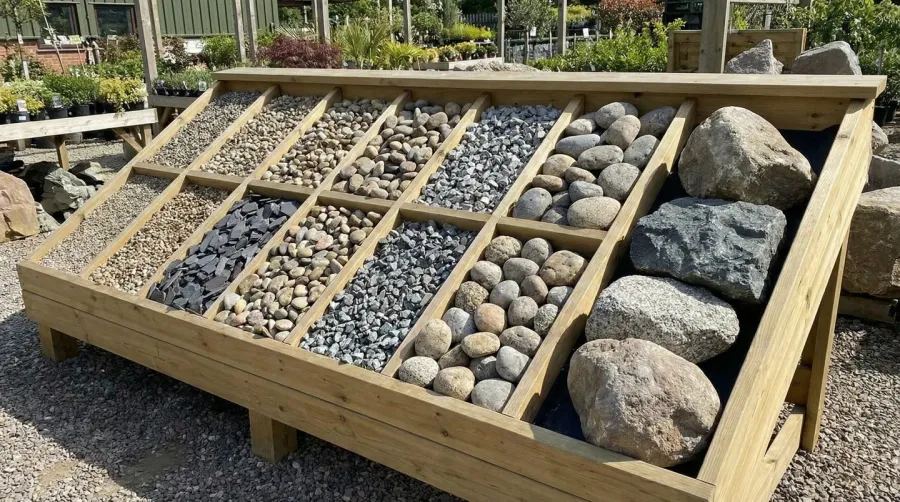
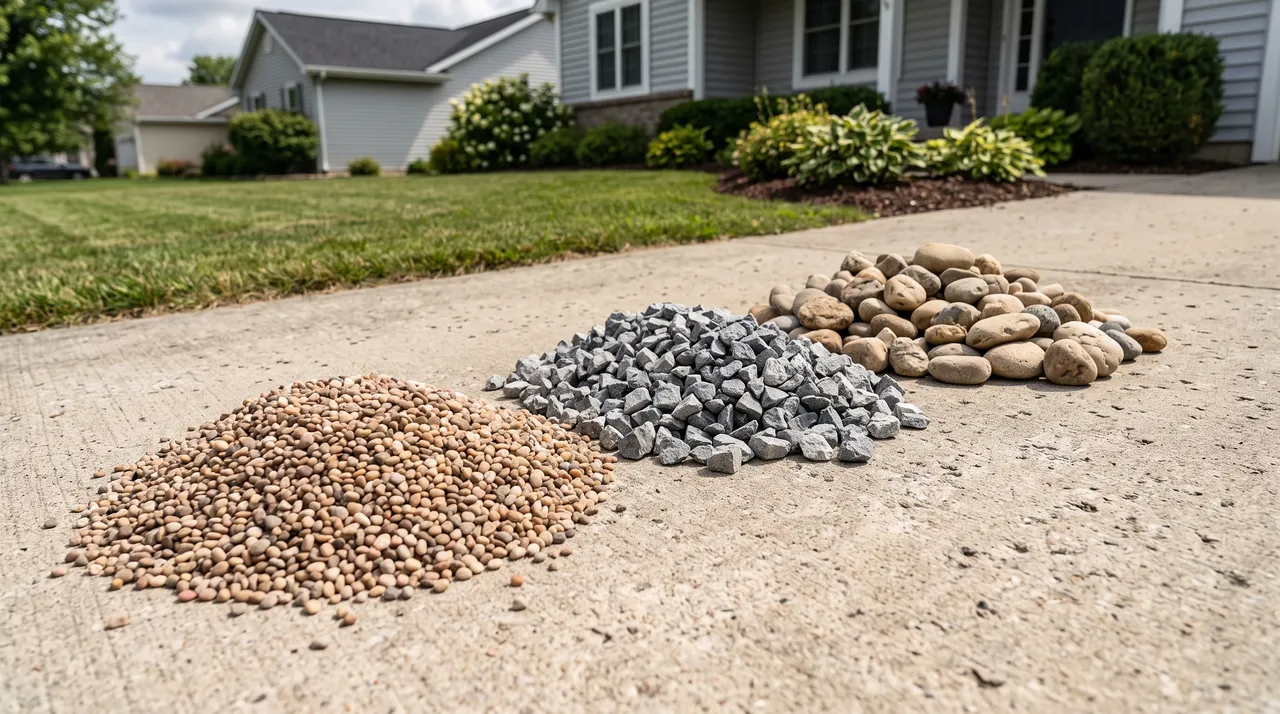
Choosing the right landscape stone size can feel overwhelming when suppliers use different names and numbering systems for the same materials. You might see “pea gravel,” “#57 stone,” or “3/4-inch crushed rock” and wonder which one actually fits your project.
This guide provides a simple stone size chart with clear measurements, common names, and specific applications for each size range. Whether you’re planning a patio, driveway, garden bed, or drainage system, you’ll know exactly which stone size works best for your project.
Quick Answer: Most walkways use 1/4″ to 3/8″ pea gravel, driveways need 3/4″ crushed stone for the surface layer, and French drains work best with 3/4″ to 1.5″ clean stone for proper water flow.
About Hello Gravel
Hello Gravel delivers bulk gravel, rock, dirt, and sand by the ton. Enter your ZIP code to see prices with delivery included. A local dump-truck driver places the load where access is safe; spreading is not included.
Quick landscape stone size reference
Here’s your at-a-glance guide to common landscape stone sizes and their typical uses:
| Size Range | Common Names | Best Applications | Coverage per Ton |
|---|---|---|---|
| 1/8″ – 1/4″ | Stone dust, screenings | Paver base, fine pathways | 120-140 sq ft |
| 1/4″ – 3/8″ | Pea gravel, #8 stone | Walkways, decorative beds | 100-120 sq ft |
| 3/8″ – 3/4″ | #57 stone, medium gravel | Driveways, patios | 80-100 sq ft |
| 3/4″ – 1.5″ | #4 stone, large gravel | Drainage, French drains | 70-90 sq ft |
| 2″ – 4″ | Riprap, large stone | Erosion control, retaining walls | 60-80 sq ft |
Coverage estimates assume a 2-3 inch depth and may vary based on stone type and compaction.
Understanding stone sizing systems
Stone sizes use three main measurement systems that can create confusion. Inches and millimeters show the actual stone diameter, while numbered codes like “#57” or “#4” refer to specific gradations set by industry standards.
Most landscape stones aren’t uniform in size but fall within a range. For example, “#57 stone” typically measures 3/8″ to 3/4″, meaning you’ll get a mix of sizes within that range rather than perfectly uniform pieces.
The key is understanding that smaller numbers in the coding system usually mean larger stones. A “#4 stone” is bigger than “#57 stone,” which seems backward but follows the screening process used in quarries. For a deeper dive into how this system works, check out our guide on understanding the numbering system for gravel.
Best stone sizes for popular projects
Patios and walkways
For comfortable walking surfaces, choose stones between 1/4″ and 3/8″. Pea gravel works perfectly here because the rounded edges feel smooth underfoot while providing good stability. The smaller size also allows stones to lock together naturally, creating a firm surface that won’t shift under normal foot traffic.
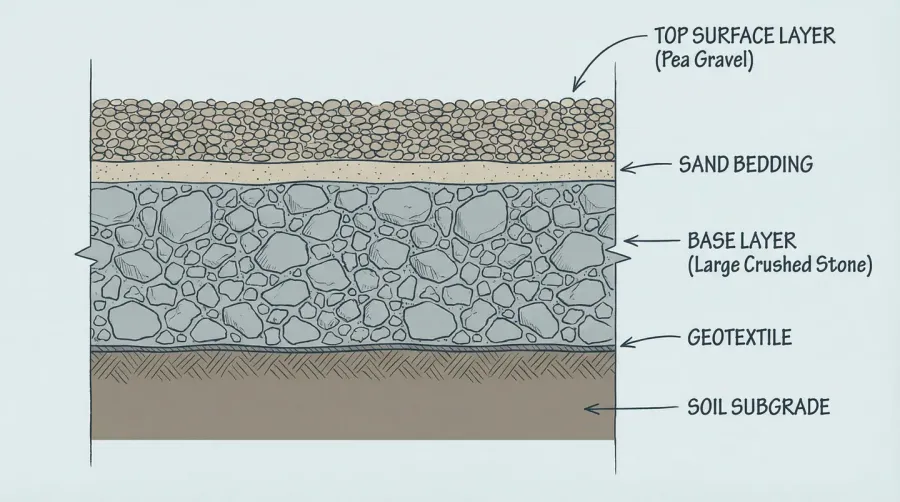
Start with a 2-3 inch base of larger crushed stone (3/4″), then add 1-2 inches of your walking surface material. This layered approach gives you the drainage and stability you need while keeping the top comfortable for bare feet or light shoes.
Driveways and parking areas
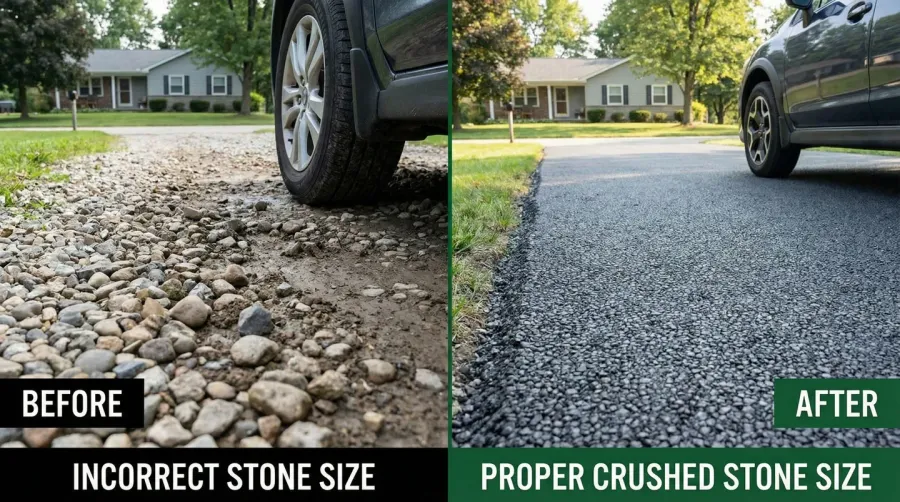
Driveways need 3/4″ crushed stone for the surface layer because it handles vehicle weight without creating ruts or loose spots. The angular edges of crushed stone lock together under compression, forming a stable driving surface that won’t track into your house on shoes or tires.
For the base layer, use 2-4 inch stone to provide drainage and prevent frost heaving. Most driveways need 4-6 inches of base material topped with 2-3 inches of surface stone, depending on your soil conditions and expected traffic. Our comprehensive driveway stone size chart provides detailed specifications for different driveway applications.
Pro Tip: Avoid rounded river rock for driveways – the smooth surfaces won’t compact properly and will shift under vehicle weight, creating an unstable and potentially dangerous surface.
Garden beds and decorative areas
Decorative stone mulch typically uses 3/8″ to 1″ sizes, depending on your plants and desired look. Smaller stones work better around delicate perennials, while larger stones complement bold plantings and create stronger visual impact.
Consider your maintenance preferences too. Smaller stones stay in place better but can be harder to rake clean of leaves. Larger decorative stones are easier to maintain but may shift more during heavy rains or when you’re working in the garden.
Drainage and erosion control
French drains and similar drainage systems need 3/4″ to 1.5″ clean, washed stone. This size range allows water to flow freely while filtering out soil particles that could clog the system over time.
For erosion control on slopes, use 2-4 inch riprap or larger stones. The weight and interlocking nature of these stones resist water movement while allowing drainage. Steeper slopes or areas with faster water flow may need even larger stones for effective protection.
Coverage and quantity calculations
Understanding how much stone you need prevents costly over-ordering or frustrating shortages mid-project. Stone coverage depends on the size you choose and how deep you spread it.
Generally, one ton of stone covers 80-120 square feet at a 2-3 inch depth. Smaller stones pack more tightly and cover less area per ton, while larger stones have more air space and cover more area.
Here’s a simple calculation method: measure your project area in square feet, multiply by your desired depth in feet, then divide by 27 to get cubic yards. Most suppliers can convert cubic yards to tons based on the specific stone you’re ordering.
For example, a 10 ft x 20 ft walkway at 2 inches deep equals 200 square feet x 0.167 feet deep = 33.4 cubic feet, or about 1.2 cubic yards. This typically requires 1.5-2 tons of stone, depending on the type.
Important: Always order 10-15% extra stone to account for compaction, irregular areas, and future maintenance needs.
Common mistakes to avoid
Many homeowners choose stones that are too large for walkways, creating an uncomfortable and potentially unsafe walking surface. Stones larger than 3/4″ can cause ankle twisting and make the path difficult to navigate, especially for children or elderly family members.
Another frequent error is using fine materials like stone dust in areas that need drainage. While stone dust works great for paver bases, it can clog French drains or create muddy conditions in areas with poor natural drainage.
Don’t forget to consider vehicle weight when sizing driveway stone. What works for foot traffic may not handle cars and trucks without creating ruts, loose spots, or tracking problems. To learn more about matching stone types to specific applications, explore our comprehensive guide to construction stone sizes.
Choosing the right landscape stone size makes the difference between a project that looks great and functions well versus one that requires constant maintenance or creates safety issues. Use this chart as your starting point, but don’t hesitate to discuss your specific conditions with a knowledgeable supplier who can recommend the best options for your local climate and soil conditions. For visual references to help you identify different stone sizes, our gravel size chart with pictures offers detailed imagery and comparisons.
Ready to start your landscaping project? Hello Gravel stocks all the stone sizes covered in this guide and delivers nationwide with our white-glove service. Get an instant quote online and have quality materials delivered directly to your project site, saving you time and ensuring you get exactly what you need for professional results.
Frequently Asked Questions
What size landscape stone is best for walkways?
For walkways, 1/4″ to 3/8″ pea gravel provides the most comfortable walking surface. This size is small enough to feel smooth underfoot while still providing good stability and drainage. Avoid stones larger than 3/4″ for walkways as they can create an uneven, uncomfortable surface that may cause tripping.
What size gravel should I use for a driveway?
For driveways, use 3/4″ crushed stone for the surface layer and 2-4″ stone for the base. The 3/4″ angular crushed stone compacts well under vehicle weight and won’t create ruts or loose spots. The larger base stone provides proper drainage and prevents frost heaving in cold climates.
What size stone is best for drainage projects?
For French drains and drainage systems, use 3/4″ to 1.5″ clean, washed stone. This size range allows water to flow freely while filtering out soil particles that could clog the system. Avoid stone dust or fine materials in drainage applications as they can impede water flow.
How much landscape stone do I need per square foot?
Coverage depends on stone size and depth, but generally one ton covers 80-120 square feet at 2-3 inches deep. Smaller stones like pea gravel cover about 100-120 sq ft per ton, while larger stones cover 70-90 sq ft per ton. Always order 10-15% extra to account for compaction and settling.
Materials for this project
Get it delivered — dumped where you need it
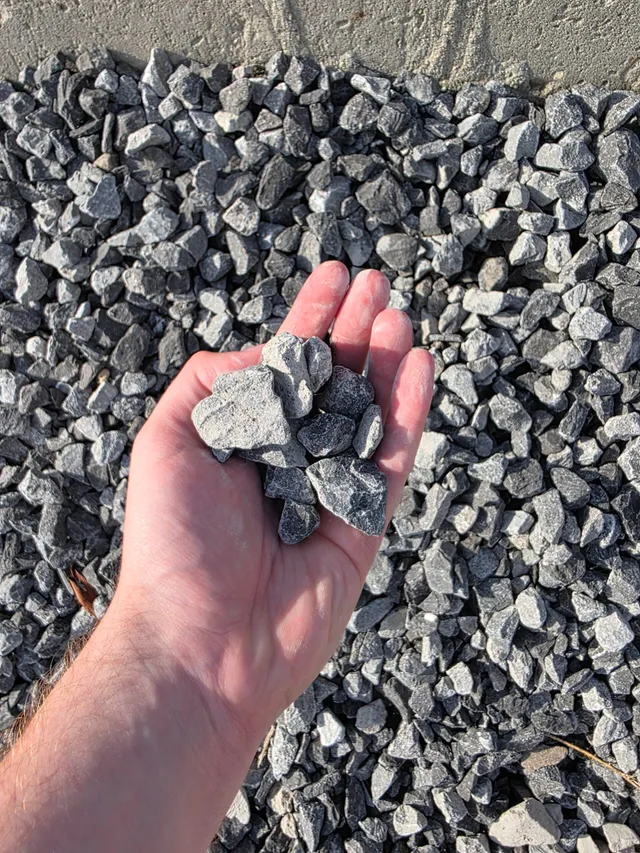
Driveway Gravel
Driveways & Parking areas
See delivered price
View product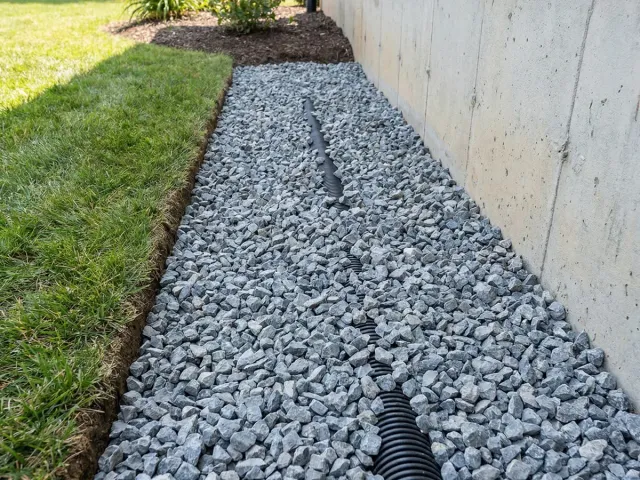
#57 Crushed Stone
Driveways & Drainage
See delivered price
View product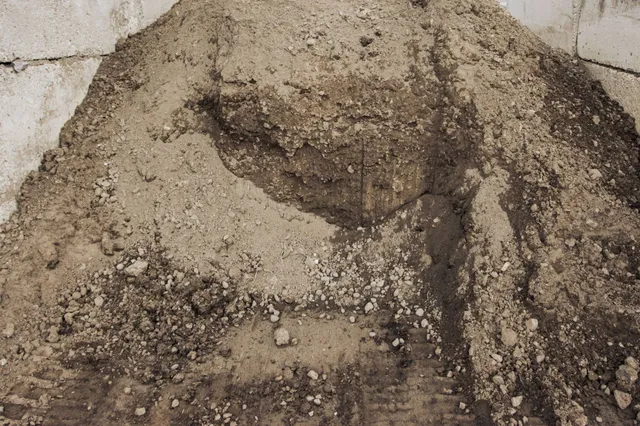
Fill Dirt
Grading & Backfill
See delivered price
View product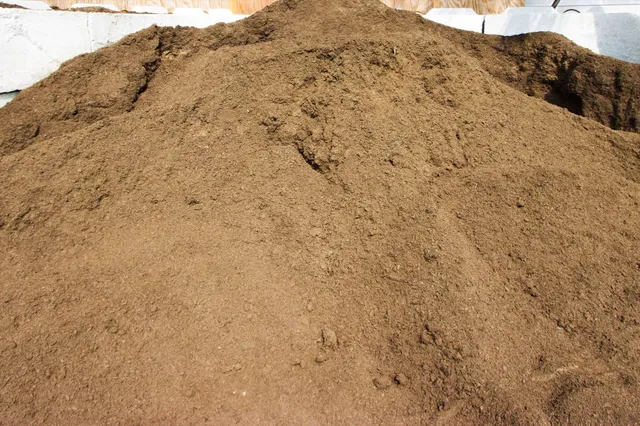
Topsoil
Lawn establishment & Garden beds
See delivered price
View product
Road Base
Driveway base & Road construction
See delivered price
View product