
Decomposed Granite Shed Foundation Guide Installation Steps and Benefits
Guide handoff
Want help applying this guide to your project?
Share your ZIP and what you need help with. We'll use this guide as context when we follow up.
- 1 This guide gives us the context you were reading.
- 2 Ask about pricing, material choice, delivery timing, or quantity.
- 3 Keep it broad if you are still figuring out the project.
Building a solid shed foundation doesn’t have to break the bank or require professional contractors. Decomposed granite offers an excellent balance of affordability, drainage, and stability that makes it perfect for most shed projects. This weathered granite material creates a firm, well-draining base that prevents water damage while remaining easy to work with for DIY enthusiasts.
Quick fact: Decomposed granite provides superior drainage compared to concrete slabs, reducing water pooling around your shed by up to 90% while costing significantly less than traditional foundation materials.
Whether you’re planning a small garden shed or a larger storage building, understanding how to properly install a decomposed granite foundation will save you time, money, and future headaches. Let’s walk through everything you need to know about this versatile foundation material.
What is decomposed granite and why choose it
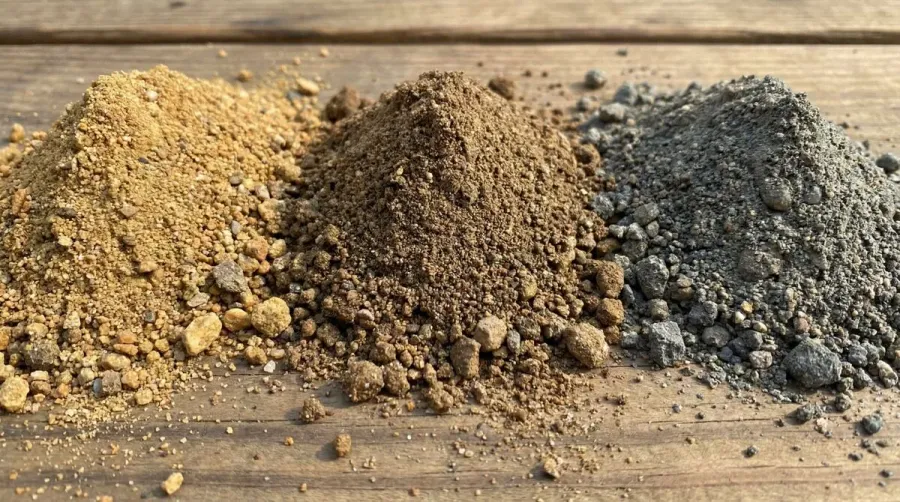
Decomposed granite, commonly called DG, forms when granite rock naturally weathers and breaks down into smaller particles over thousands of years. The result is a sandy material with a coarser texture that compacts beautifully while maintaining excellent drainage properties.
You’ll find decomposed granite in several colors including tan, brown, and gray, allowing you to choose an option that complements your property’s aesthetic. Unlike regular sand, DG contains angular particles that lock together when compacted, creating a stable surface that won’t shift under your shed’s weight.
The material’s natural composition makes it ideal for areas with heavy rainfall or snowfall. Water passes through the compacted DG instead of pooling on the surface, protecting your shed’s floor from moisture damage that commonly affects structures on poorly draining foundations. Understanding what type of decomposed granite is best for drainage can help you select the right grade for your climate conditions.
Benefits of decomposed granite for shed foundations
Decomposed granite offers several compelling advantages over traditional foundation materials like concrete slabs or gravel pads. The most significant benefit is its exceptional drainage capability, which prevents the water-related issues that plague many shed foundations.
Installation proves much simpler than concrete work. You can spread and compact DG using basic tools without waiting for curing times or dealing with weather delays that affect concrete pours. This makes it perfect for weekend DIY projects where you want to complete the foundation and install your shed in the same timeframe.
Cost represents another major advantage. According to hellogravel.com, decomposed granite typically costs 30-50% less than concrete foundations while providing comparable stability for most shed applications. The material’s wide availability means you can source it locally in most regions, reducing delivery costs.
Pro tip: DG foundations require minimal maintenance once installed properly, unlike wooden foundations that need regular treatment or concrete that can crack and require repairs.
Step-by-step installation process
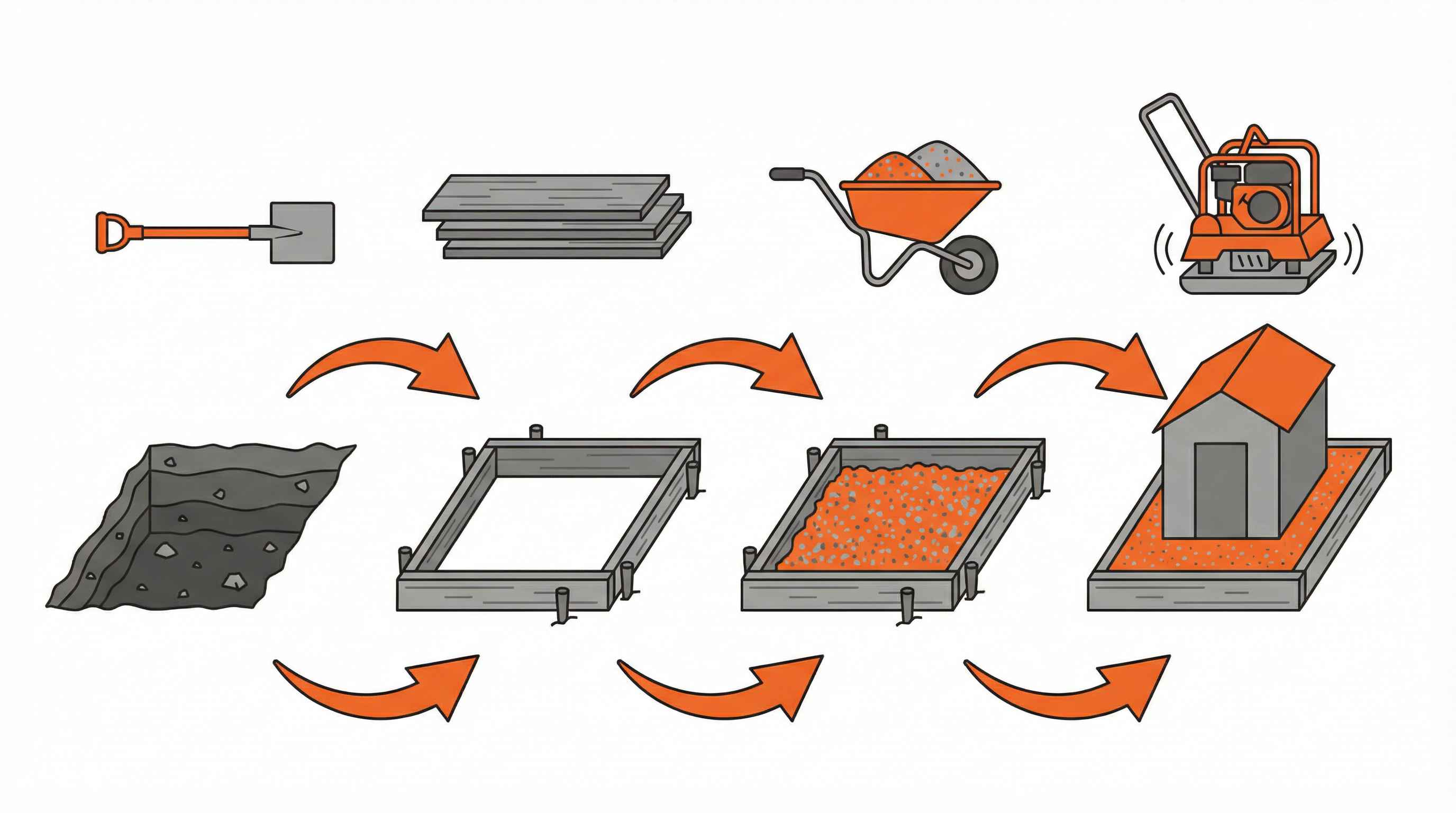
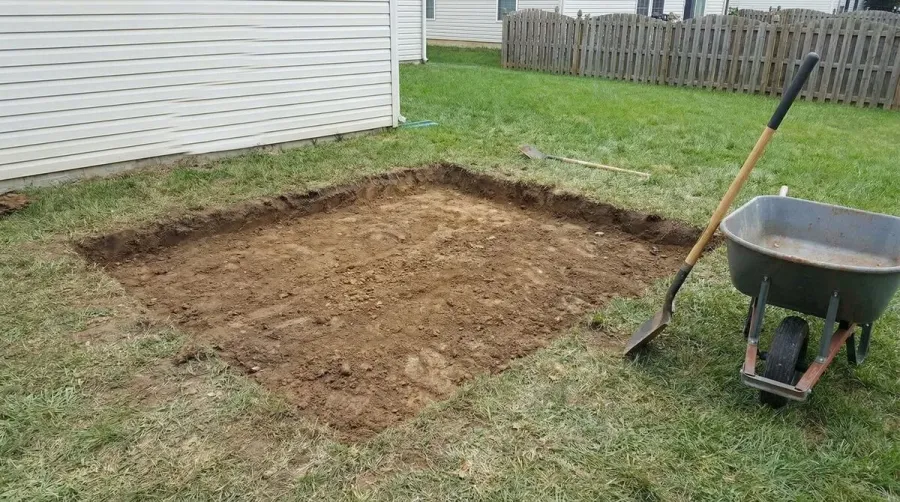
Installing a decomposed granite foundation requires careful site preparation and proper compaction techniques. Start by marking an area that extends one foot beyond your shed’s dimensions on all sides. For a 10×12 shed, you’ll need a 12×14 foundation area.
Clear all vegetation, rocks, and debris from the marked area. Excavate 4-6 inches deep, ensuring the bottom remains level across the entire space. Install landscape fabric to prevent weed growth, then add a 2-inch base layer of coarse gravel for enhanced drainage.
Spread your decomposed granite in 2-inch lifts, compacting each layer thoroughly with a plate compactor. This prevents settling and creates the firm surface your shed needs. Continue adding and compacting layers until you reach the desired height, typically 4-6 inches total thickness. If you’re working on similar projects, learning how much decomposed granite you need for a patio can help with material calculations.
The final step involves fine-grading the surface with a rake and making one final pass with the compactor. Check for level using a long straight board and adjust any high or low spots before installing your shed.
| Foundation Type | Cost per sq ft | Installation Time | Drainage Rating |
|---|---|---|---|
| Decomposed Granite | $2-4 | 1-2 days | Excellent |
| Concrete Slab | $6-10 | 3-7 days | Poor |
| Gravel Pad | $3-5 | 1 day | Good |
Sourcing quality decomposed granite
Finding high-quality decomposed granite requires understanding what to look for and where to shop. Quality DG should have consistent particle size and color throughout, without excessive dust or large rock chunks that prevent proper compaction.
Local quarries and landscape supply companies typically offer the best prices and freshest material. When possible, inspect the material before purchasing to ensure it meets your quality standards. Fresh DG should feel slightly damp and hold together when squeezed in your hand.
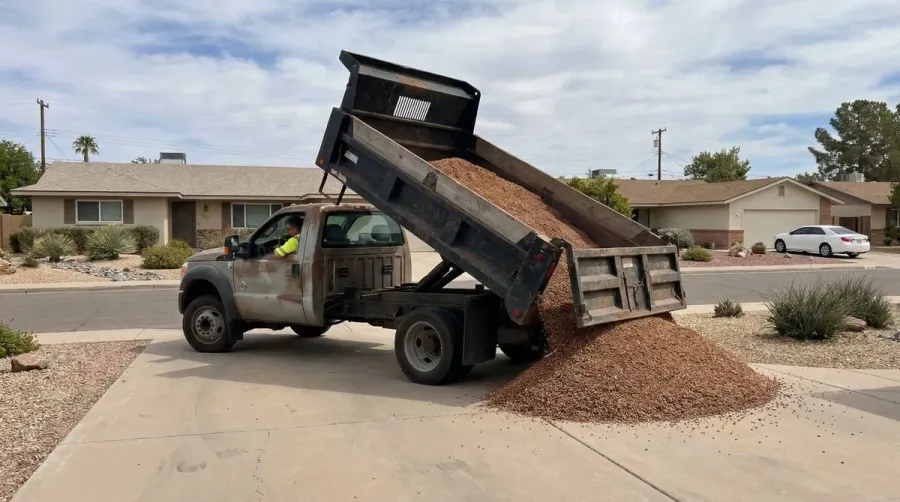
Consider delivery options when calculating total project costs. Many suppliers offer bulk delivery that proves more economical than multiple trips with a pickup truck, especially for larger shed foundations. Calculate approximately 1.5 tons of DG per 100 square feet of foundation area when ordering. For driveways and other applications, you can reference how much decomposed granite you need for a driveway to estimate quantities.
Important: Always verify the supplier’s DG grade matches your project needs. Some grades work better for pathways while others excel for structural foundations like shed bases.
Decomposed granite provides an excellent foundation solution that balances cost, performance, and ease of installation. With proper site preparation and compaction techniques, your DG foundation will provide years of stable support for your shed while maintaining superior drainage that protects your investment. The material’s affordability and DIY-friendly installation process make it an ideal choice for homeowners looking to build a quality foundation without the complexity and expense of concrete work. Whether you’re building a shed, creating a patio base using decomposed granite, or planning parking areas with this versatile material, the installation principles remain consistent and straightforward.
FAQ
Is decomposed granite a good base for a shed?
Yes, decomposed granite is an excellent base for sheds due to its superior drainage properties, cost-effectiveness, and stability. It prevents water pooling that can damage your shed’s foundation, costs 30-50% less than concrete, and provides even weight distribution. The material compacts well to create a firm surface while maintaining excellent drainage capabilities.
How thick should decomposed granite be for a shed foundation?
Decomposed granite should be 4-6 inches thick for most shed foundations. Install it in 2-inch lifts, compacting each layer thoroughly with a plate compactor. For larger or heavier sheds, consider using the full 6-inch depth. Always include a 2-inch base layer of coarse gravel beneath the DG for enhanced drainage and stability.
How much does decomposed granite cost for a shed foundation?
Decomposed granite typically costs $2-4 per square foot for shed foundations, which is significantly less expensive than concrete slabs that cost $6-10 per square foot. You’ll need approximately 1.5 tons of DG per 100 square feet of foundation area. The total cost varies based on local availability and delivery options, but DG generally costs 30-50% less than traditional foundation materials.
What are the main benefits of using decomposed granite for shed foundations?
The main benefits include excellent drainage that reduces water pooling by up to 90%, lower cost compared to concrete, easy DIY installation without curing times, and minimal maintenance requirements. Decomposed granite also provides stable weight distribution, prevents moisture damage to your shed, and offers natural colors that complement your property’s aesthetic while being environmentally friendly.