
Decomposed Granite for Retaining Wall Base Complete Guide
Guide handoff
Want help applying this guide to your project?
Share your ZIP and what you need help with. We'll use this guide as context when we follow up.
- 1 This guide gives us the context you were reading.
- 2 Ask about pricing, material choice, delivery timing, or quantity.
- 3 Keep it broad if you are still figuring out the project.
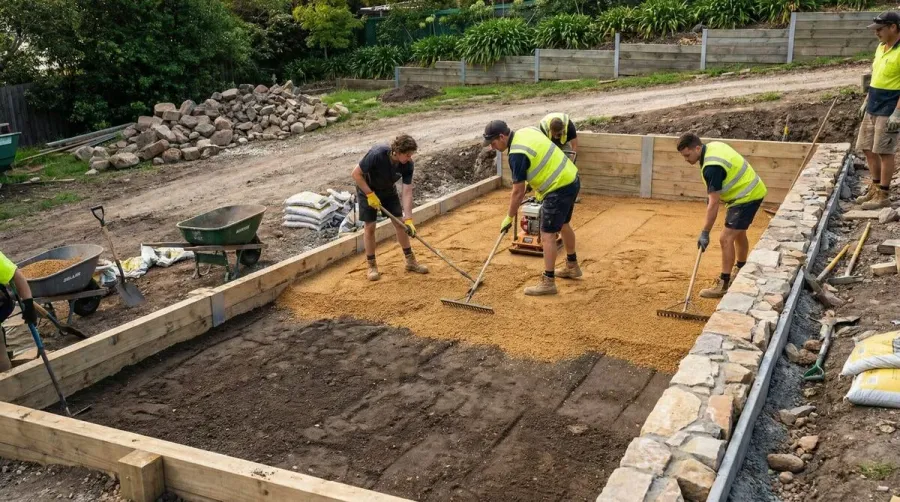
Yes, decomposed granite can be an excellent retaining wall base material when you choose the right type and follow proper installation techniques. Stabilized or resin-coated decomposed granite offers superior compaction and erosion resistance compared to natural DG, making it suitable for walls up to 4 feet in height. The key is understanding which type works best for your specific project requirements and local conditions.
Quick Fact: Stabilized decomposed granite provides 30% better compaction than natural DG, making it the preferred choice for retaining wall foundations according to gravelshop.com.
Retaining walls transform sloped landscapes into functional outdoor spaces while preventing soil erosion. Your choice of base material directly impacts the wall’s longevity and stability. Understanding decomposed granite’s properties helps you make an informed decision for your landscaping project.
What is decomposed granite and why use it
Decomposed granite, commonly called DG, forms when granite rock naturally weathers into fine, sand-like particles over time. This weathering process creates a material that compacts well while maintaining some porosity for drainage.
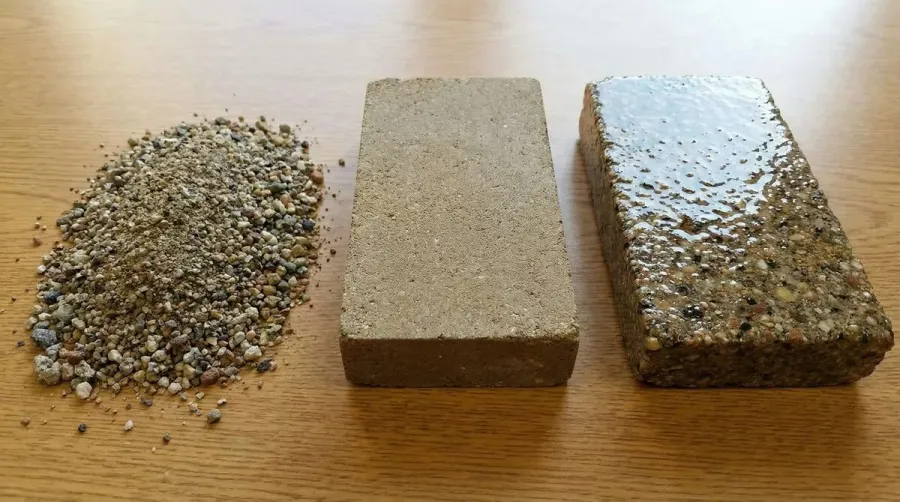
You’ll find three main types of decomposed granite available for construction projects. Natural DG contains only the weathered granite particles without additives. Stabilized DG includes binding agents that help particles stick together during compaction. Resin-coated DG offers the highest durability with a protective coating that resists water penetration.
The material’s popularity stems from its balance of affordability and performance. Unlike concrete, which can crack under freeze-thaw cycles, decomposed granite flexes slightly with ground movement. This flexibility makes it particularly valuable in regions with seasonal temperature changes, similar to how it performs in decomposed granite patio bases.
Best decomposed granite types for retaining walls
Stabilized decomposed granite stands out as the top choice for retaining wall bases. The binding agents create stronger interlocking between particles, resulting in better load distribution and reduced settling over time. This type works exceptionally well for walls between 2 to 4 feet in height.
Resin-coated decomposed granite offers premium performance but comes with higher costs. The resin coating provides excellent water resistance, making it ideal for areas with heavy rainfall or poor drainage conditions. Consider this option for high-value installations or challenging environmental conditions.
Natural decomposed granite works adequately for smaller retaining walls under 2 feet or temporary installations. However, its lack of binding agents means you’ll need more frequent maintenance and potential re-compaction over time. For projects requiring optimal drainage performance, you might also want to explore which type of decomposed granite is best for drainage.
Installation Tip: According to graniterock.com, compact your DG base in 4-inch lifts using a plate compactor for optimal density and stability.
Benefits and considerations for your project
Cost-effectiveness makes decomposed granite attractive for budget-conscious projects. You’ll typically pay 40-60% less than concrete alternatives while achieving comparable performance for smaller walls. The material’s natural appearance also blends seamlessly with landscape designs.
Installation simplicity allows many homeowners to tackle DG base preparation as a DIY project. Basic hand tools and a plate compactor handle most residential applications. The forgiving nature of the material means minor mistakes won’t compromise your entire project, whether you’re building a retaining wall or creating a driveway.
Environmental benefits include reduced carbon footprint compared to concrete production. Decomposed granite often sources locally, minimizing transportation impacts. The material also allows better water infiltration than solid concrete bases.
However, consider your project’s specific requirements carefully. Walls exceeding 4 feet in height typically require engineered solutions beyond basic DG bases. Areas with expansive clay soils or high water tables may need additional drainage measures or alternative base materials. When comparing foundation materials, understanding the differences between crushed limestone and crushed granite can help you make the best choice.
| Base Material | Cost per Ton | Compaction Rating | Best Use |
|---|---|---|---|
| Natural DG | $25-35 | Good | Walls under 2 feet |
| Stabilized DG | $35-50 | Excellent | Walls 2-4 feet |
| Resin-coated DG | $50-70 | Superior | High-moisture areas |
| Crushed Stone | $30-45 | Excellent | All wall heights |
Installation process and best practices
Start your installation by excavating a trench approximately 6 inches deep and 12 inches wide along your planned wall location. The trench depth should equal roughly one inch for every foot of wall height, as recommended by extension.oregonstate.edu.
Layer your chosen decomposed granite in 4-inch lifts, moistening each layer slightly before compaction. Too much water creates mud, while too little prevents proper binding. Aim for moisture content that allows the material to hold together when squeezed in your hand. If you’re working on paver base installation, similar compaction techniques apply.
Compact each lift thoroughly using a plate compactor, making multiple passes in different directions. Proper compaction eliminates air voids that could lead to settling later. The finished base should feel solid underfoot without any give or movement.
Pro Tip: Install geotextile fabric between your DG base and native soil to prevent mixing and maintain long-term stability, especially important in areas with clay or sandy soils.
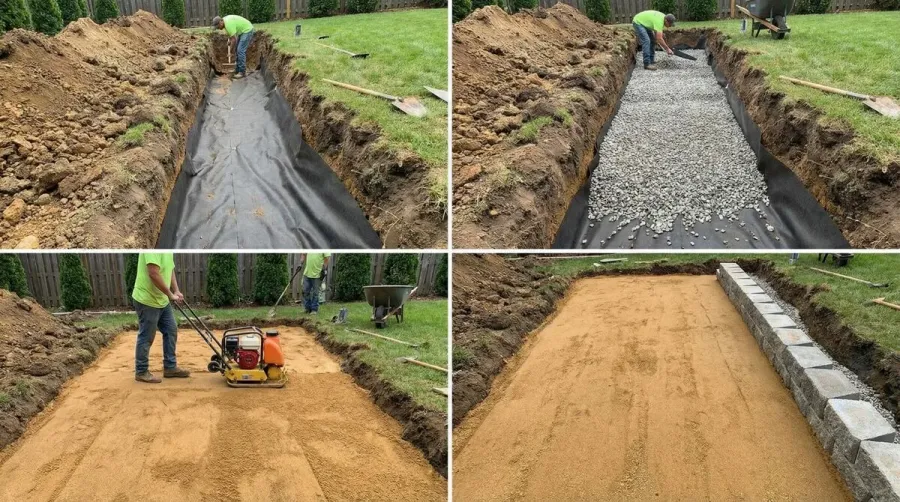
Consider drainage behind your retaining wall during base preparation. Poor drainage creates hydrostatic pressure that can compromise even the best base materials. Install drainage gravel and perforated pipe systems as needed based on your site conditions.
Decomposed granite provides an excellent foundation for retaining walls when properly selected and installed. Focus on choosing the right type for your specific conditions, follow proper installation techniques, and consider professional consultation for walls over 4 feet in height. With careful planning and execution, your DG-based retaining wall will provide years of reliable service while enhancing your landscape’s functionality and beauty. For other landscaping applications, you can also explore how decomposed granite works as a mulch alternative or for garden path projects.
FAQ
Is decomposed granite good for retaining wall base?
Yes, decomposed granite is an excellent choice for retaining wall bases, especially stabilized or resin-coated varieties. These types provide superior compaction and erosion resistance compared to natural DG, making them suitable for walls up to 4 feet in height. The material offers good drainage properties while maintaining structural stability when properly installed.
What type of decomposed granite is best for retaining walls?
Stabilized decomposed granite is the top choice for retaining wall bases due to its binding agents that create stronger interlocking between particles. For areas with heavy rainfall or challenging conditions, resin-coated DG offers premium performance with excellent water resistance. Natural DG should only be used for smaller walls under 2 feet or temporary installations.
How thick should decomposed granite base be for retaining walls?
The decomposed granite base should be approximately 6 inches deep and 12 inches wide along your planned wall location. The trench depth should equal roughly one inch for every foot of wall height. Install the DG in 4-inch lifts, compacting each layer thoroughly for optimal stability and performance.
How much does decomposed granite cost for retaining wall base?
Decomposed granite costs vary by type: natural DG ranges from $25-35 per ton, stabilized DG costs $35-50 per ton, and resin-coated DG runs $50-70 per ton. This makes DG 40-60% less expensive than concrete alternatives while providing comparable performance for smaller retaining walls, making it an attractive budget-friendly option.