Crushed Concrete vs MOT Type 1: Which Sub-Base is Best for Your Project in 2025
Published on: December 10, 2025
Get an estimate for your project in 60 seconds
 Your information is secure
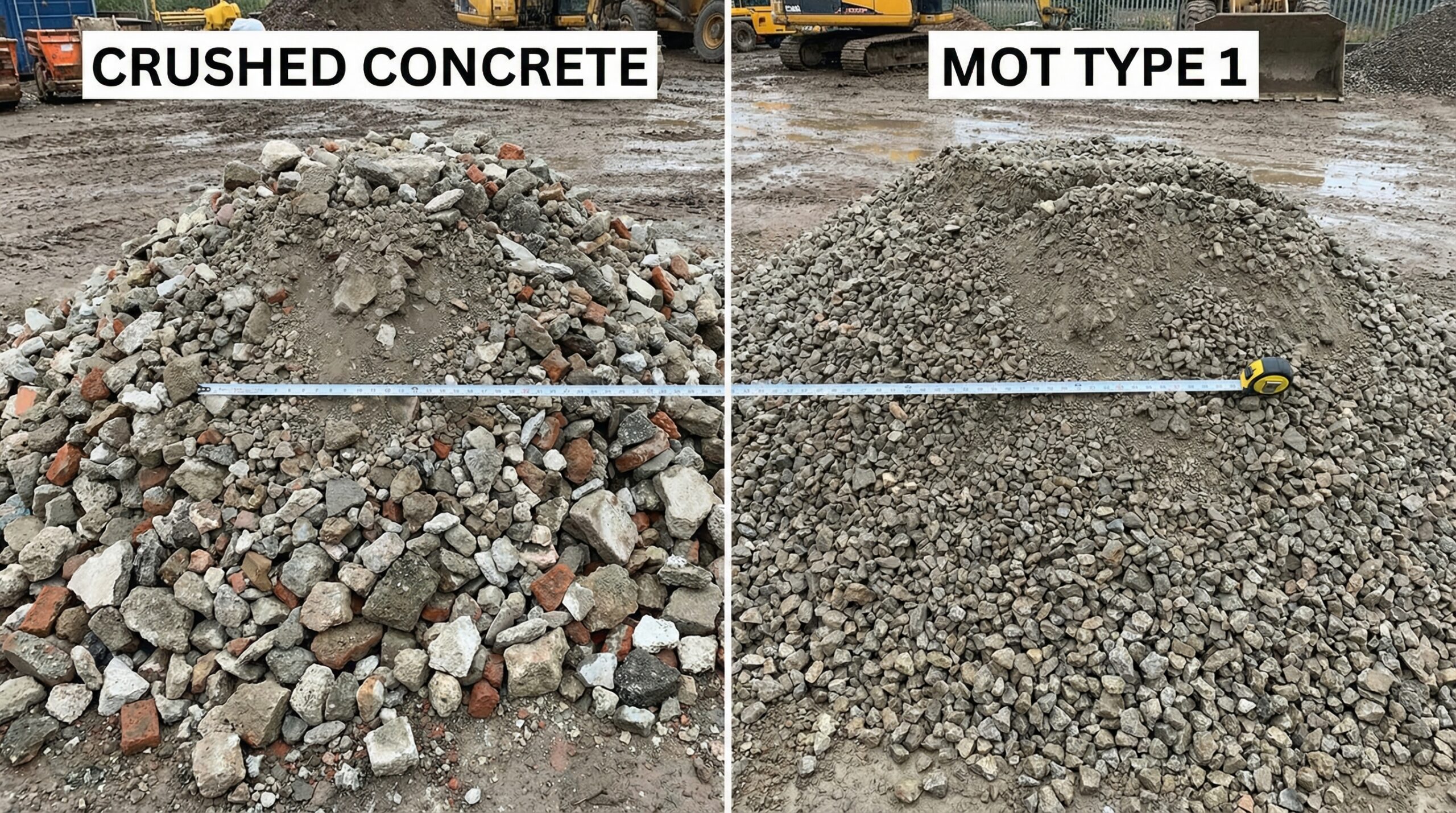
If you’re planning a driveway, patio, or path, you’ll likely encounter two popular sub-base options: crushed concrete and MOT Type 1. Both materials serve as excellent foundations, but they have distinct characteristics that make them suitable for different applications. This guide breaks down the key differences, costs, and performance factors to help you make the right choice for your specific project.
Quick Answer: MOT Type 1 offers consistent performance and meets regulated specifications, making it ideal for heavy-duty applications. Crushed concrete provides a cost-effective, eco-friendly alternative that works well for domestic projects where strict specifications aren’t required.
What is MOT Type 1?
MOT Type 1 is a carefully graded aggregate that forms the backbone of countless construction projects across the UK. Understanding what makes this material special starts with knowing what MOT actually means.
What does MOT stand for in construction?
MOT stands for “Ministry of Transport,” referring to the government department that originally established the specifications for this material. When you see MOT Type 1, you’re looking at an aggregate that meets strict grading and quality standards designed for road construction and heavy-duty applications.
The material consists of crushed stone ranging from 40mm down to fine particles (dust), creating a well-graded mix that compacts exceptionally well. This grading ensures maximum stability and load-bearing capacity when properly installed.
Common applications include driveways, road foundations, car parks, and sub-bases for block paving or artificial grass installations. The regulated specification means you get consistent performance regardless of which supplier you choose.
What is crushed concrete?
Crushed concrete represents the construction industry’s commitment to sustainability and resource efficiency. This recycled aggregate comes from demolished concrete structures that have been processed and graded for reuse in new projects.

The production process involves crushing demolished concrete into various sizes, removing contaminants like steel reinforcement, and screening the material to create usable aggregates. The result is a cost-effective alternative to virgin stone that maintains many of the performance characteristics of traditional aggregates.
You’ll find crushed concrete used in driveways, pathways, landscaping projects, and general backfill applications. While it doesn’t always meet the strict MOT Type 1 specification, high-quality crushed concrete can perform similarly in many domestic applications.
The environmental benefits are significant. Using crushed concrete reduces landfill waste, decreases demand for quarried stone, and often qualifies projects for sustainability credits.
Key differences between crushed concrete and MOT Type 1
Understanding the practical differences between these materials helps you make an informed decision for your project.
| Feature | Crushed Concrete | MOT Type 1 |
|---|---|---|
| Specification | Unregulated (varies by supplier) | Regulated MOT standard |
| Material source | Recycled concrete structures | Quarried stone or recycled concrete |
| Cost | Lower (typically 20-30% cheaper) | Higher but consistent quality |
| Load-bearing | Good for domestic use | Excellent for all applications |
| Environmental impact | High recycled content | Varies by source material |
Specification and quality control
The most significant difference lies in quality control. MOT Type 1 must meet specific grading requirements and performance standards, ensuring consistent results across different suppliers and batches. This regulation makes it the preferred choice for projects requiring guaranteed performance.
Crushed concrete quality can vary significantly between suppliers. While reputable companies produce excellent crushed concrete that rivals MOT Type 1 performance, others may offer inconsistent material with varying particle sizes and potential contaminants.
Strength and compaction performance
MOT Type 1’s regulated grading creates optimal compaction characteristics. The mix of large stones and fine particles allows the material to lock together tightly, creating a stable, load-bearing surface that won’t shift under pressure.
Quality crushed concrete can achieve similar compaction when properly graded, but the lack of standardization means performance varies. For critical applications like heavy-duty driveways or commercial projects, MOT Type 1 provides greater confidence in long-term performance.
Cost Consideration: While crushed concrete costs 20-30% less than MOT Type 1, poor-quality material may require replacement sooner, potentially increasing long-term costs. If you’re comparing prices, check out our guide on crushed concrete versus gravel pricing for more detailed cost analysis.
Which material is best for your project?
Choosing between crushed concrete and MOT Type 1 depends on your specific requirements, budget, and performance expectations.
Driveways and parking areas
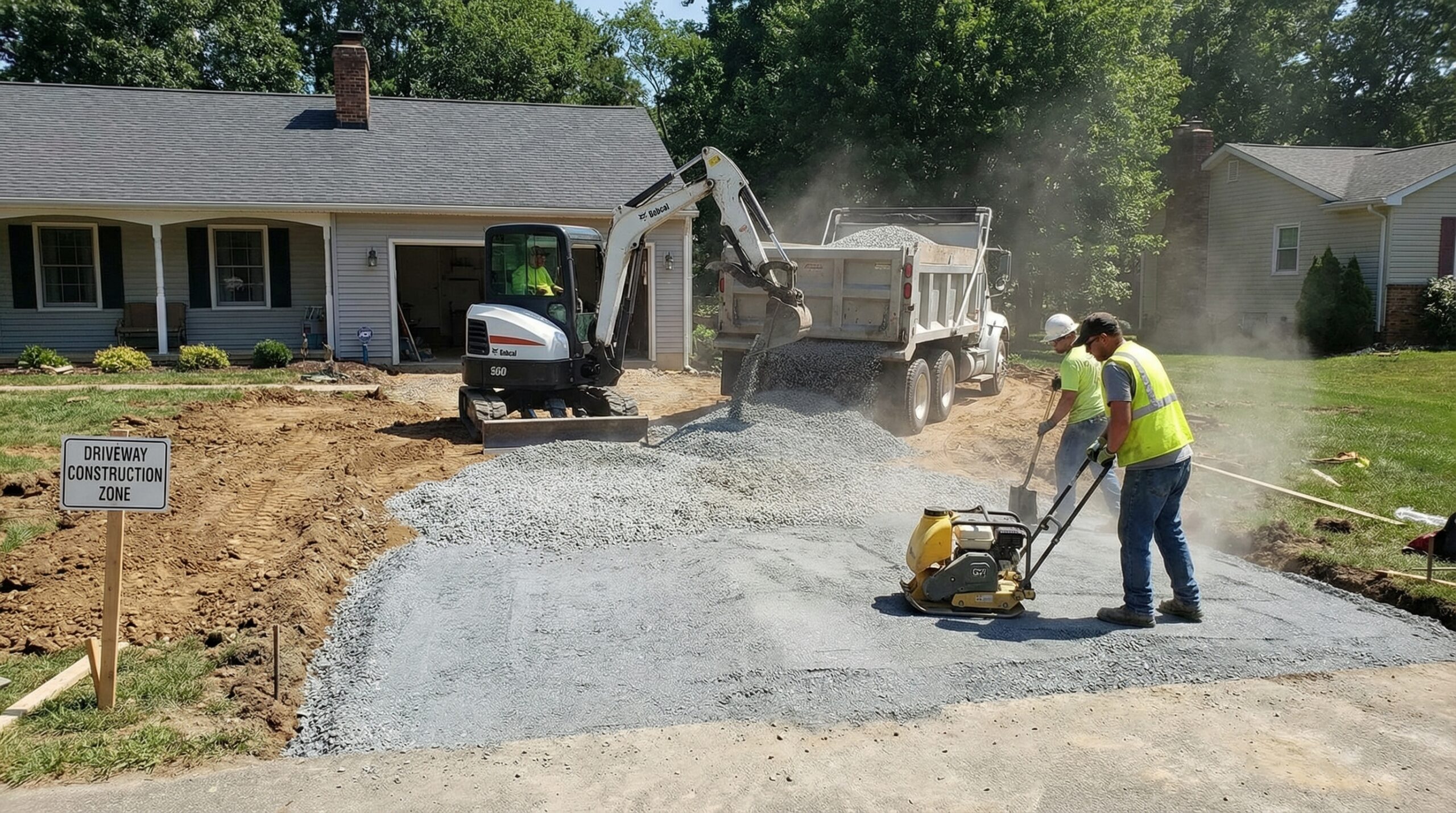
For domestic driveways with regular car use, both materials can work effectively. MOT Type 1 provides the most reliable long-term performance, especially for heavier vehicles or frequent use. High-quality crushed concrete offers a budget-friendly alternative that performs well under normal domestic loads.
Commercial parking areas or driveways expecting heavy traffic should use MOT Type 1 to ensure adequate load-bearing capacity and longevity. If you’re considering other alternatives, you might want to explore the comparison between crushed concrete and crusher run, another popular sub-base option.
Garden projects and pathways
Pathways, patios, and general landscaping projects often work well with either material. Crushed concrete’s lower cost makes it attractive for larger garden projects where strict specifications aren’t required.
For artificial grass installations, both materials can serve as effective sub-bases when topped with a finer material like sharp sand. The key is ensuring proper compaction and drainage. When planning decorative pathways, you may also want to consider crushed concrete versus pea gravel for a more aesthetic finish.
Budget and sustainability priorities
Projects prioritizing environmental impact and cost savings benefit from crushed concrete’s recycled content and lower price point. This makes it ideal for eco-conscious homeowners and larger projects where material costs significantly impact the budget.
Choose MOT Type 1 when project specifications require it, when maximum load-bearing capacity is essential, or when long-term performance outweighs initial cost savings. For comprehensive road construction projects, understanding the differences between crushed concrete and road base can help you make the most informed decision.
Installation Tip: Regardless of material choice, proper installation with adequate depth (typically 100-150mm for driveways) and thorough compaction ensures optimal performance.
Making the right choice for your needs
Both crushed concrete and MOT Type 1 have earned their place in modern construction. Your choice should align with your project’s specific requirements, performance expectations, and budget constraints.
For regulated projects, heavy-duty applications, or situations where consistent performance is critical, MOT Type 1 remains the gold standard. Its regulated specification provides confidence in quality and performance that’s hard to match.
Crushed concrete shines in domestic applications where cost-effectiveness and environmental responsibility matter most. When sourced from reputable suppliers, it delivers excellent performance for the majority of homeowner projects. To better understand what options are available, explore the different types of crushed concrete and their specific applications.
At Hello Gravel, we supply both high-quality MOT Type 1 and premium crushed concrete aggregates nationwide. Our expert team can help you determine which material best suits your specific project requirements, ensuring you get the right product delivered directly to your site. Whether you’re planning a small garden path or a large commercial development, we provide the materials and expertise to support your project’s success.
Frequently Asked Questions
What does MOT stand for in construction?
Is crushed concrete as good as MOT Type 1 for driveways?
Can MOT Type 1 be made from crushed concrete?
Does MOT Type 1 drain well compared to crushed concrete?
Author: igor