
Crushed Concrete vs Gravel Cost: Which Is Cheaper for Your Project
Pricing your crushed concrete? Get delivered prices for your ZIP.
We'll text your delivered price. No obligation.
Delivered to your driveway. You pick the date.
★ 4.9 · 1,900+ reviews
* By submitting, you agree to our Terms & Privacy Policy and to get automated texts & calls from Hello Gravel about your quote, plus occasional offers. Agreeing isn’t required to buy. Msg frequency varies. Msg & data rates may apply. Reply STOP to opt out, HELP for help.
- Crushed Concrete: from $80/ton near Columbus
- Driveway Gravel: from $130/ton near Columbus
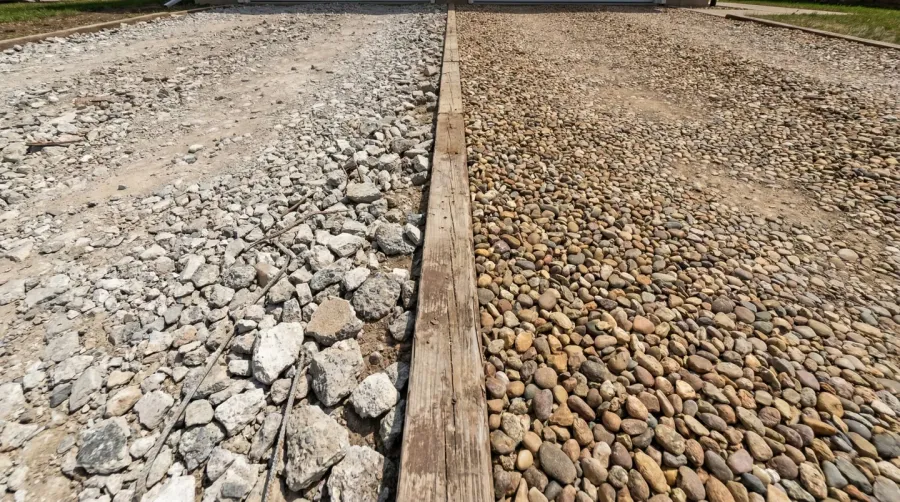
When you’re planning a driveway, parking pad, or base layer project, two materials consistently come up in conversations: crushed concrete and gravel. Most homeowners and contractors find themselves comparing these options, and the deciding factor often comes down to cost.
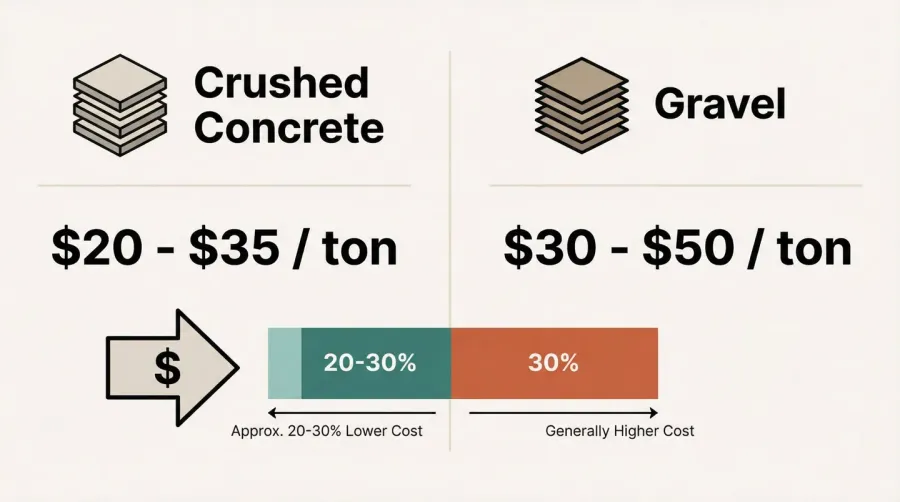
Yes, crushed concrete is generally cheaper than gravel because it’s made from recycled materials. While gravel typically costs $15-30 per ton, crushed concrete runs about $10-20 per ton. However, the best choice for your project depends on more than just upfront price.
Quick fact: Crushed concrete can save you 30-50% compared to traditional gravel while providing similar structural performance for most applications.
This guide walks you through the real costs, performance differences, and best uses for each material so you can make the right choice for your specific project and budget.
About Hello Gravel
Hello Gravel delivers bulk gravel, rock, dirt, and sand by the ton. Enter your ZIP code to see prices with delivery included. A local dump-truck driver places the load where access is safe; spreading is not included.
Quick answer: Is crushed concrete cheaper than gravel?
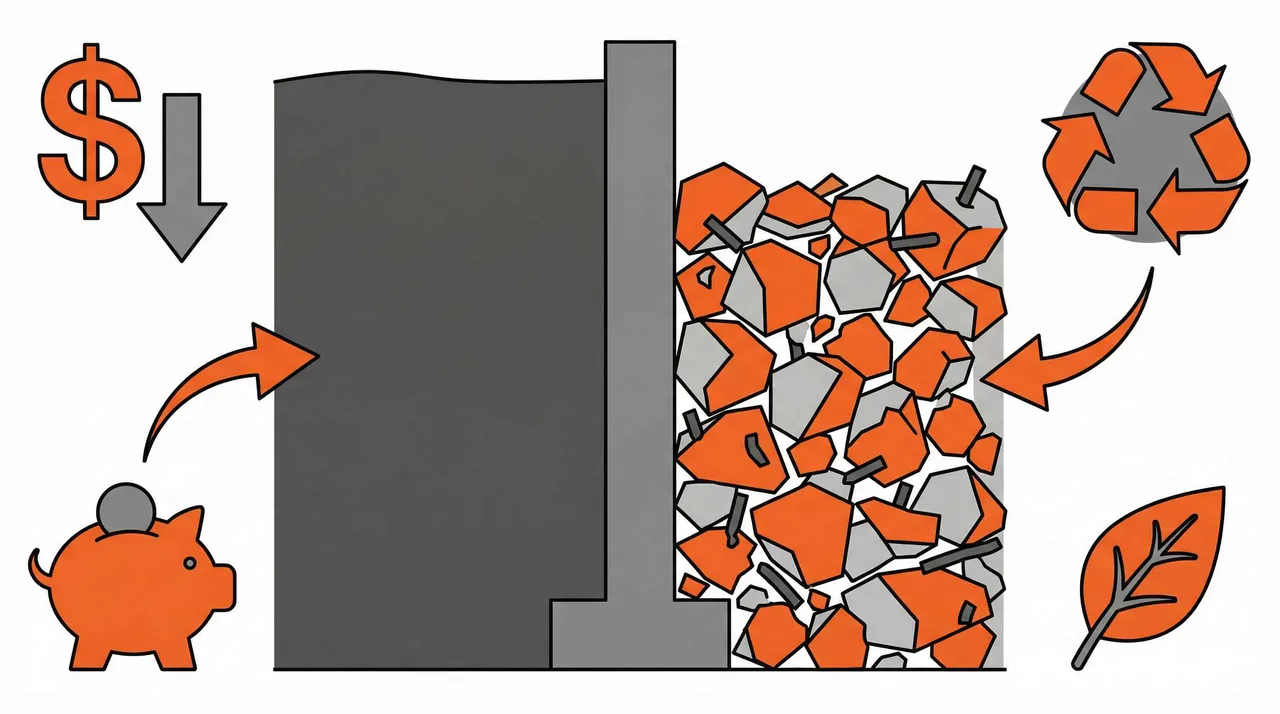
Crushed concrete wins on price in most situations. The cost difference stems from the source material. Crushed concrete comes from recycled demolition waste, while gravel requires quarrying, processing, and transportation of virgin stone.
Here’s what you can expect to pay per ton: – Crushed concrete: $10-20 per ton – Gravel: $15-30 per ton
The savings become more significant on larger projects. For a typical two-car driveway requiring 20 tons of material, you might save $100-200 by choosing crushed concrete over gravel.
However, cheaper upfront doesn’t always mean cheaper long-term. Gravel offers better drainage and requires less maintenance in some applications, which can offset the higher initial cost over time.
What is crushed concrete?
Crushed concrete is recycled aggregate made from demolished concrete structures like buildings, roads, and sidewalks. The recycling process involves breaking down old concrete, removing embedded materials like rebar, and crushing it into specific sizes.
The result is a versatile material that compacts well and provides excellent stability for base layers. You’ll find crushed concrete in various sizes, from fine particles (concrete sand) to larger chunks (up to 2 inches). The most common size for driveways and parking areas is 3/4-inch minus, which includes particles from dust up to 3/4 inch. Understanding the different types of crushed concrete can help you select the right grade for your specific application.
Crushed concrete works particularly well for driveways, parking pads, road bases, and any application where you need a solid, compactable foundation. It’s especially popular for rural driveways and heavy-duty applications because it locks together when compacted, creating a stable surface that can handle significant weight.
What is gravel?
Gravel is naturally occurring rock that’s been broken down by weathering or mechanically crushed to specific sizes. Unlike crushed concrete, gravel comes from quarries where stone is extracted and processed into various grades and sizes.
Common types include pea gravel (small, rounded stones), crushed stone (angular pieces), and crusher run (a mix of stone sizes with fines). Each type serves different purposes. When comparing crushed concrete vs pea gravel, you’ll notice that pea gravel works well for decorative landscaping, while crushed stone provides better compaction for structural applications.
Gravel offers superior drainage compared to most other materials because water flows easily between the stones. This makes it ideal for areas with drainage concerns or where you want to maintain natural water flow. The natural appearance also makes gravel a popular choice for decorative driveways and walkways where aesthetics matter.
Consider this: Gravel’s drainage advantage becomes crucial in areas with heavy rainfall or where standing water could be problematic.
Price comparison: Crushed concrete vs gravel
Several factors affect the final cost of both materials beyond the base price per ton. Understanding these factors helps you get accurate estimates for your specific project.
Distance from supplier significantly impacts delivery costs. Crushed concrete often has an advantage here because it’s produced locally from regional demolition projects. Gravel may need to travel farther from quarries, increasing transportation costs.
Order size affects per-ton pricing for both materials. Larger orders typically receive volume discounts, while small loads may include minimum delivery fees that increase the effective per-ton cost.
Local availability varies by region. Areas with active construction and demolition produce more crushed concrete, keeping prices low. Regions near quarries may have more competitive gravel pricing. For instance, when evaluating crushed concrete vs limestone price, you may find regional variations based on quarry proximity.
The environmental processing also explains the cost difference. Crushed concrete requires less energy-intensive processing since the material already exists. Gravel production involves quarrying, which requires heavy equipment, blasting, and more extensive processing.
Crushed concrete vs gravel: Side-by-side comparison
| Factor | Crushed Concrete | Gravel |
|---|---|---|
| **Cost per ton** | $10-20 | $15-30 |
| **Appearance** | Gray, industrial | Natural, varied colors |
| **Drainage** | Good when properly graded | Excellent |
| **Compaction** | Excellent | Good to excellent |
| **Environmental impact** | Low (recycled) | Higher (quarried) |
Crushed concrete advantages include lower cost, excellent compaction, and environmental benefits. It creates a solid base that handles heavy loads well and becomes more stable over time as the particles lock together.
Crushed concrete disadvantages involve appearance and potential quality variations. The gray color doesn’t appeal to everyone, and quality can vary depending on the source concrete’s original condition.
Gravel advantages center on aesthetics, drainage, and consistency. Natural stone looks more attractive in many settings, and the superior drainage prevents water pooling and frost damage.
Gravel disadvantages include higher cost and maintenance needs. Gravel can shift under traffic and may require periodic re-grading or additional material to maintain the surface.
How to choose the right material for your project
Your decision should consider budget, intended use, and long-term maintenance preferences. Here’s how to think through the choice:
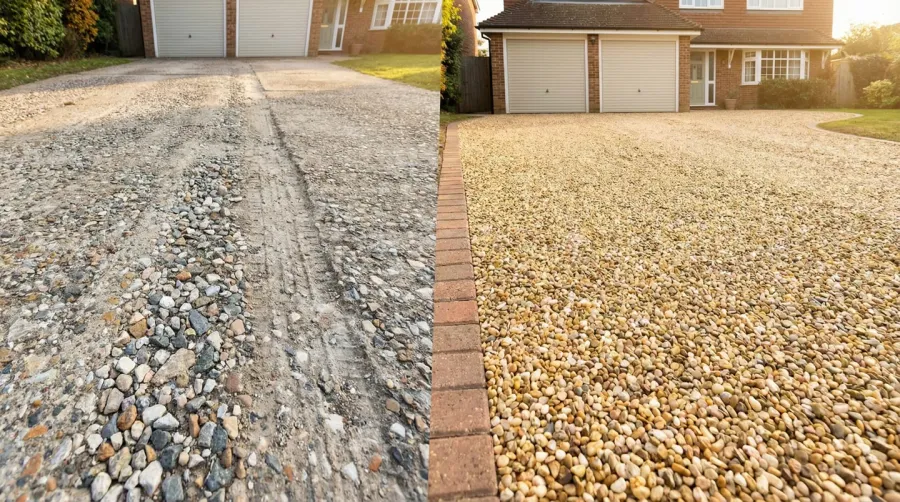
Choose crushed concrete when budget is the primary concern, you need maximum stability for heavy vehicles, or environmental impact matters to you. It’s ideal for shop pads, RV parking, and utility driveways where function trumps appearance.
Choose gravel when appearance matters, drainage is critical, or you want a more natural look. Gravel works well for decorative driveways, areas with drainage challenges, and projects where the material will be visible from the house.
Consider mixing materials for the best of both worlds. Many contractors use crushed concrete as a base layer for stability and cost savings, then top it with decorative gravel for appearance. This approach provides structural benefits while maintaining curb appeal. You might also explore options like crushed concrete vs crusher run or crushed concrete vs road base for optimal foundation performance.
Pro tip: For high-traffic areas, crushed concrete’s superior compaction often makes it the better long-term choice, even if gravel looks better initially.
The thickness requirements also differ slightly. Crushed concrete typically needs 3-4 inches for driveways, while gravel may require 4-6 inches to achieve similar stability, which can affect material quantities and total project cost.
Whether you choose crushed concrete for its cost advantages or gravel for its aesthetic appeal, both materials can create durable, functional surfaces when properly installed. The key is matching the material to your specific needs, budget, and long-term goals for the project.
Ready to get pricing for your specific project? Hello Gravel can provide quotes for both crushed concrete and gravel, helping you compare actual costs based on your location and project requirements.
FAQ
Is crushed concrete always cheaper than gravel?
Yes, crushed concrete is generally cheaper than gravel because it’s made from recycled materials rather than quarried stone. While gravel typically costs $15-30 per ton, crushed concrete runs about $10-20 per ton. However, prices can vary by region and availability, so it’s best to get local quotes for accurate pricing.
Is crushed concrete good for driveways?
Yes, crushed concrete makes an excellent driveway material. It compacts well to create a stable surface that can handle heavy vehicle traffic. While it has a more industrial appearance than decorative gravel, it provides superior durability and cost savings for functional driveways, especially for rural properties or heavy-use areas.
Does crushed concrete drain as well as gravel?
Crushed concrete provides good drainage when properly graded, though gravel typically drains slightly better due to its more uniform stone composition. Both materials allow water to flow through when installed correctly. The drainage performance depends more on proper installation, base preparation, and the specific gradation of material used.
Can I mix crushed concrete and gravel together?
Yes, many contractors use crushed concrete as a cost-effective base layer and top it with decorative gravel for appearance. This approach gives you the structural benefits and cost savings of crushed concrete while maintaining the attractive look of gravel on the surface. This combination works well for driveways where both function and aesthetics matter.
Delivered price for your ZIP
Delivered to your driveway. You pick the date.
★ 4.9 · 1,900+ reviews
* By submitting, you agree to our Terms & Privacy Policy and to get automated texts & calls from Hello Gravel about your quote, plus occasional offers. Agreeing isn’t required to buy. Msg frequency varies. Msg & data rates may apply. Reply STOP to opt out, HELP for help.
How much do you need?
Pricing your crushed concrete? Get delivered prices for your ZIP.
Delivered to your driveway. You pick the date.
★ 4.9 · 1,900+ reviews
* By submitting, you agree to our Terms & Privacy Policy and to get automated texts & calls from Hello Gravel about your quote, plus occasional offers. Agreeing isn’t required to buy. Msg frequency varies. Msg & data rates may apply. Reply STOP to opt out, HELP for help.
Delivered price for your ZIP
Delivered to your driveway. You pick the date.
★ 4.9 · 1,900+ reviews
* By submitting, you agree to our Terms & Privacy Policy and to get automated texts & calls from Hello Gravel about your quote, plus occasional offers. Agreeing isn’t required to buy. Msg frequency varies. Msg & data rates may apply. Reply STOP to opt out, HELP for help.
Before you call
One quick detail helps the person who picks up. You can skip it.