Crushed Concrete vs #57 Stone: Which Is Best for Your Driveway Project
Published on: December 10, 2025
Get an estimate for your project in 60 seconds
 Your information is secure
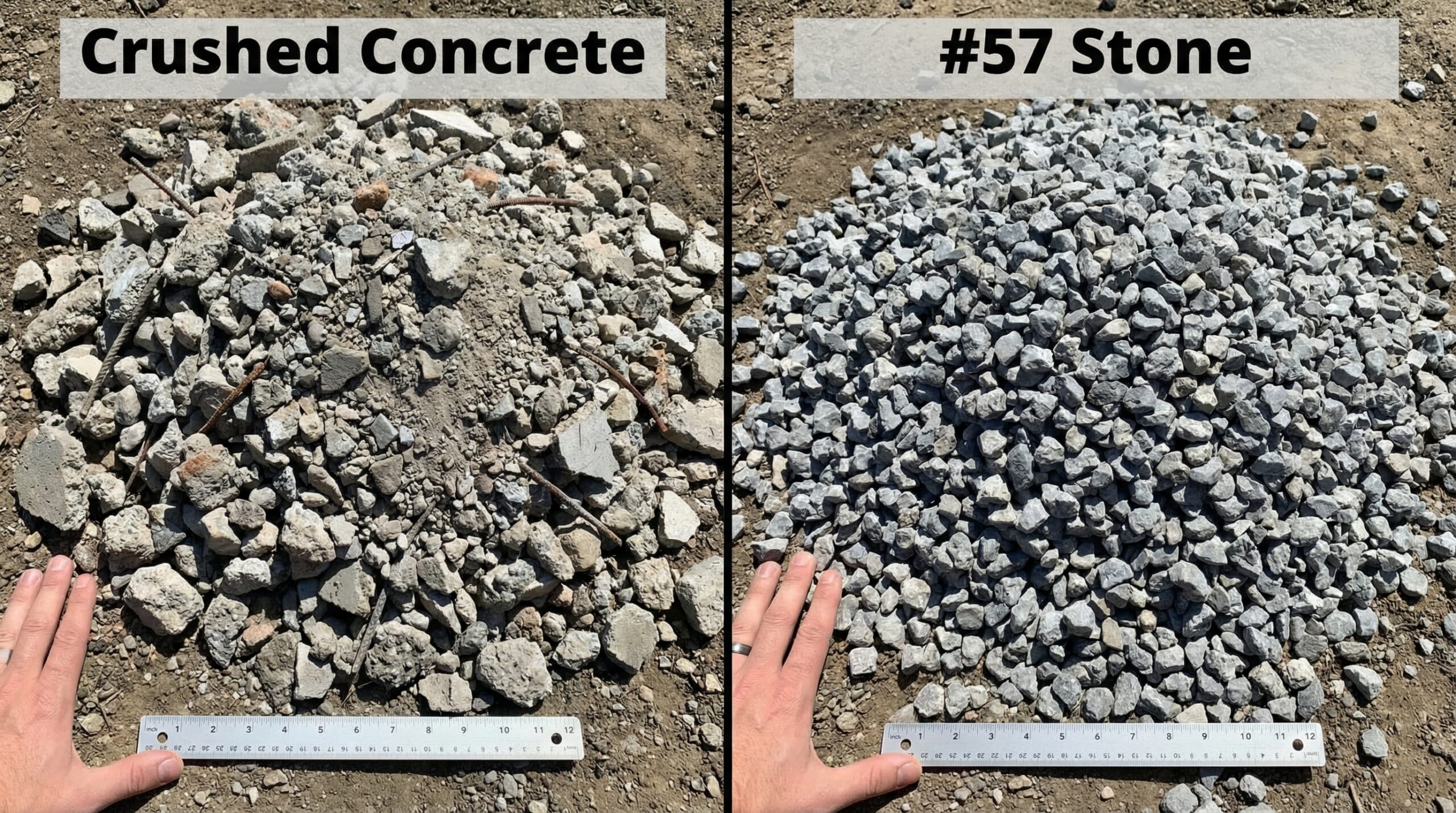
You’re planning a driveway, parking area, or drainage project, and you keep seeing two materials mentioned: crushed concrete and #57 stone. Both look similar at first glance, but choosing the wrong one could mean poor drainage, early cracking, or unnecessary costs down the road.
The short answer? Crushed concrete works best for budget-conscious base applications where compaction matters most, while #57 stone excels in drainage-critical projects like French drains and areas requiring consistent water flow. Your specific project needs, soil conditions, and budget will determine which material serves you better.
Quick fact: #57 stone refers to crushed stone graded between 3/4 inch and 1 inch in size, making it ideal for drainage applications, while crushed concrete can vary in size and composition depending on the source material.
By the end of this guide, you’ll know exactly which material to choose for your driveway, foundation base, or drainage system, plus practical tips for installation and where to source quality materials.
Understanding crushed concrete and #57 stone
What is crushed concrete?
Crushed concrete, also called recycled concrete aggregate, comes from demolished concrete structures like old buildings, roads, and sidewalks. The concrete gets crushed into various sizes, cleaned of debris like rebar and wood, then graded for different applications.
This recycled material typically contains a mix of sizes, from fine particles to chunks up to 2 inches, depending on how it’s processed. The angular shape of crushed concrete pieces helps them lock together when compacted, creating a stable base that can handle heavy loads. To learn more about the different variations available, check out our guide on types of crushed concrete.
What is #57 stone?
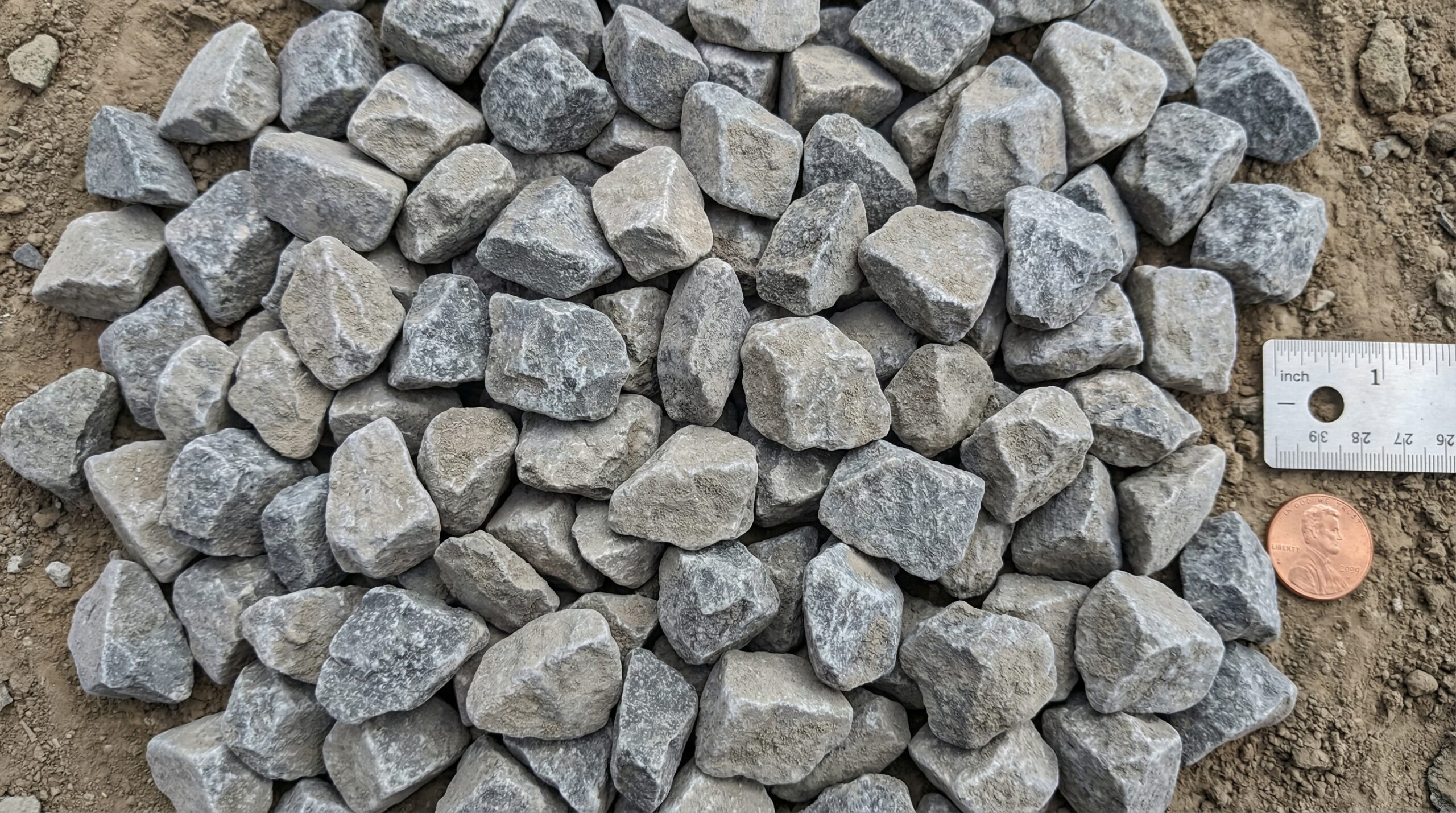
57 stone is quarried natural stone crushed to a specific size range of 3/4 inch to 1 inch. This uniform sizing creates consistent gaps between stones, allowing water to flow freely through the material. The angular shape provides good stability while maintaining excellent drainage properties.
You’ll often see #57 stone specified in construction plans for foundation drainage, French drains, and septic systems because engineers know exactly how it will perform. The consistent gradation means predictable results every time.
Key differences that matter for your project
Material composition and sourcing
The biggest difference lies in their origin. Crushed concrete gives old concrete a second life, reducing landfill waste and the need for new quarrying. This environmental benefit often comes with cost savings too.
57 stone comes from quarries where rock gets blasted, crushed, and sorted. While this requires more energy and environmental impact, it produces a consistent product with known properties.
Drainage performance
Here’s where these materials really diverge. #57 stone’s uniform size creates predictable void spaces that allow water to flow through at about 150-200 gallons per minute per square foot. This makes it the go-to choice for any application where drainage is critical.
Crushed concrete’s mixed sizing means smaller particles can fill the gaps between larger pieces, reducing drainage capacity. While this isn’t always bad, it matters when you need reliable water flow.
Important consideration: If your project sits in clay soil or an area with poor natural drainage, #57 stone’s superior water flow capabilities often justify the higher cost.
Compaction and stability
Crushed concrete typically compacts better than #57 stone because the varied particle sizes allow pieces to nest together more tightly. This makes it excellent for road bases, parking areas, and any application where maximum stability matters more than drainage. For similar compacting materials, you might also want to explore the differences between crushed concrete and crusher run.
57 stone compacts to some degree but maintains its void structure, providing good stability while preserving drainage. This balance makes it versatile for many applications.
Cost comparison and value considerations
Crushed concrete usually costs 20-40% less than #57 stone, making it attractive for large projects or tight budgets. However, the total project cost depends on more than just material price. If you’re curious about how crushed concrete pricing compares to other materials, our article on crushed concrete vs gravel price provides detailed cost breakdowns.
Consider these factors when calculating true costs:
Delivery and availability: Crushed concrete availability varies by region and depends on local demolition activity. #57 stone is more consistently available but may cost more to transport.
Installation depth: Projects requiring maximum drainage might need thicker #57 stone bases, while crushed concrete’s superior compaction might allow thinner applications in some cases.
Long-term performance: Both materials last decades when properly installed, but #57 stone’s consistent properties make performance more predictable over time.
| Material | Typical Cost | Best Drainage | Compaction | Environmental Impact |
|---|---|---|---|---|
| Crushed Concrete | Lower | Moderate | Excellent | Very Low |
| #57 Stone | Higher | Excellent | Good | Moderate |
Choosing the right material for your specific project
For driveways and parking areas
Most residential driveways benefit from crushed concrete as a base material. It compacts well, handles vehicle loads effectively, and costs less for the large quantities these projects require. Top it with crusher run or stone dust for a smooth driving surface.
Choose #57 stone for driveways in areas with drainage challenges, clay soil, or where water pooling has been an issue. The superior drainage often prevents frost heaving and extends pavement life. For another popular driveway base option, consider reading about crushed concrete vs road base.
For foundation and basement applications
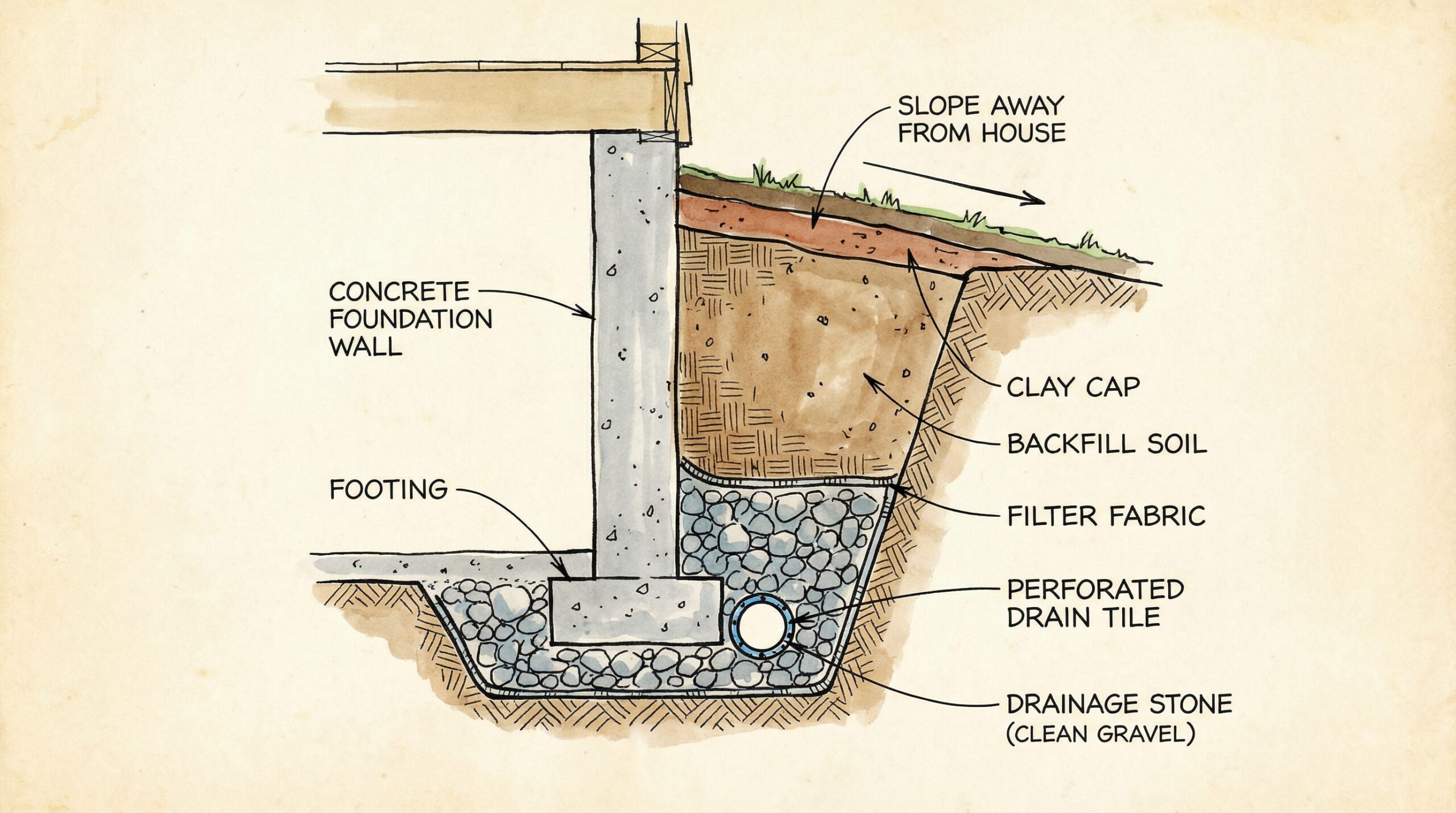
57 stone is typically specified around foundation walls and under basement slabs because building codes often require specific drainage performance. The consistent sizing ensures water moves away from the foundation rather than pooling.
Crushed concrete can work for some foundation applications, but check local building codes first. Some areas require specific stone gradations for foundation drainage.
For French drains and septic systems
Always use #57 stone for French drains, septic leach fields, and similar drainage applications. The uniform size creates the consistent water flow these systems need to function properly. Crushed concrete’s variable sizing can clog over time, leading to system failure.
For landscaping and erosion control
Both materials work for landscaping, but consider appearance and function. #57 stone typically looks more uniform and natural, while crushed concrete has a more industrial appearance that some homeowners prefer for modern landscapes. If you’re considering other decorative options, you might find our comparison of crushed concrete vs pea gravel helpful.
For erosion control, #57 stone’s angular shape and consistent sizing provide better long-term stability on slopes and around water features.
Pro tip: For decorative applications, consider how the material will look when wet. #57 stone maintains its appearance, while crushed concrete may show more variation in color and texture.
Getting quality materials delivered to your site
When you’ve decided which material fits your project, sourcing quality aggregate makes all the difference. Look for suppliers who can provide detailed gradation information and have consistent quality control processes.
Hello Gravel specializes in delivering high-quality crushed concrete and #57 stone directly to your project site. Our materials meet industry specifications, and our delivery team can help you determine the right quantities for your specific application.
Whether you’re building a new driveway, installing a French drain, or working on a foundation project, having the right material delivered on schedule keeps your project moving forward. Request a quote through our website to get pricing for your specific location and project requirements.
The success of your project depends on choosing the right material for your specific needs. With this guide, you can make an informed decision that balances performance, cost, and long-term durability for your particular application.
FAQ
Is crushed concrete better than #57 stone for driveways?
What size is #57 stone and how does it compare to crushed concrete?
Does crushed concrete drain as well as #57 stone?
Is crushed concrete cheaper than #57 stone?
Author: igor