Pea Gravel vs Crushed Gravel: Complete Guide to Sizes, Uses, and Costs
Published on: December 18, 2025
Get an estimate for your project in 60 seconds
 Your information is secure
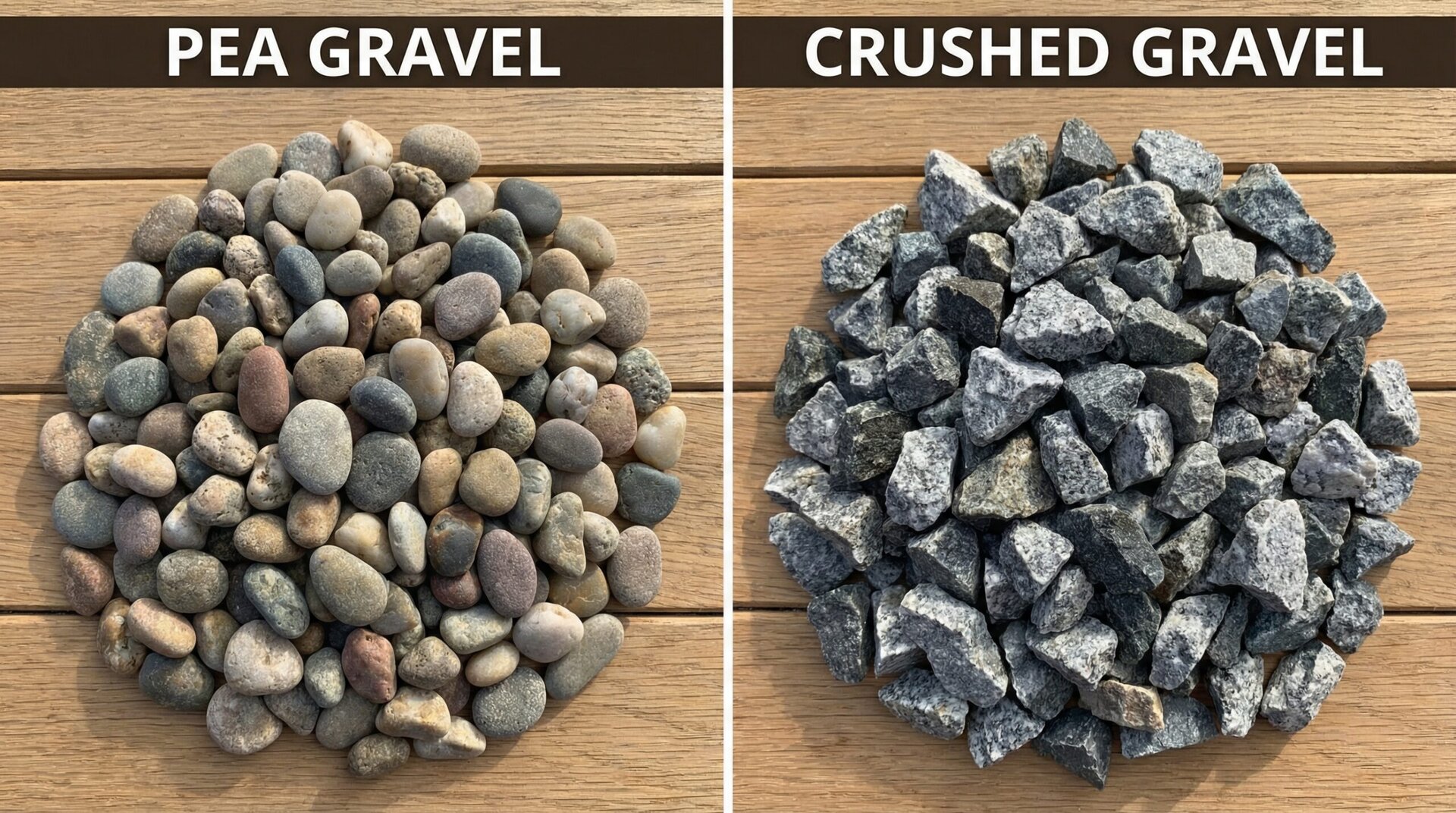
Choosing between pea gravel and crushed gravel for your project can feel overwhelming. The good news is that each type serves specific purposes, and understanding their differences will help you make the right choice. Pea gravel works best for decorative landscaping and comfortable walkways, while crushed gravel excels in driveways and areas needing stability.
Quick Answer: Pea gravel (3/8 inch, rounded) costs less and looks better for gardens. Crushed gravel (various sizes, angular) stays in place better and works perfectly for driveways and bases.
Both materials come from natural rock, but their formation and processing create distinct characteristics that affect their performance in different applications. Let’s explore what makes each type unique and when to use them.
Understanding gravel basics
Gravel forms naturally when rocks break down through weathering and water transport. This process creates two main categories: naturally rounded stones and mechanically crushed fragments. The key difference lies in their edges and how they interact with each other.
Natural gravel develops smooth, rounded edges as water carries rock fragments downstream. These pieces tumble against each other, wearing away sharp corners over thousands of years. Crushed gravel, however, gets its angular shape from mechanical crushing at quarries, creating sharp edges that help pieces lock together.
Both types serve essential roles in construction and landscaping. Your choice depends on whether you need stability and drainage (crushed) or aesthetics and comfort (pea gravel).
What makes pea gravel special
Pea gravel gets its name from its size, roughly matching a green pea at about 3/8 inch in diameter. These small, rounded stones come in various natural colors and sizes including tan, white, gray, and brown. The smooth surface makes walking comfortable, even in bare feet.
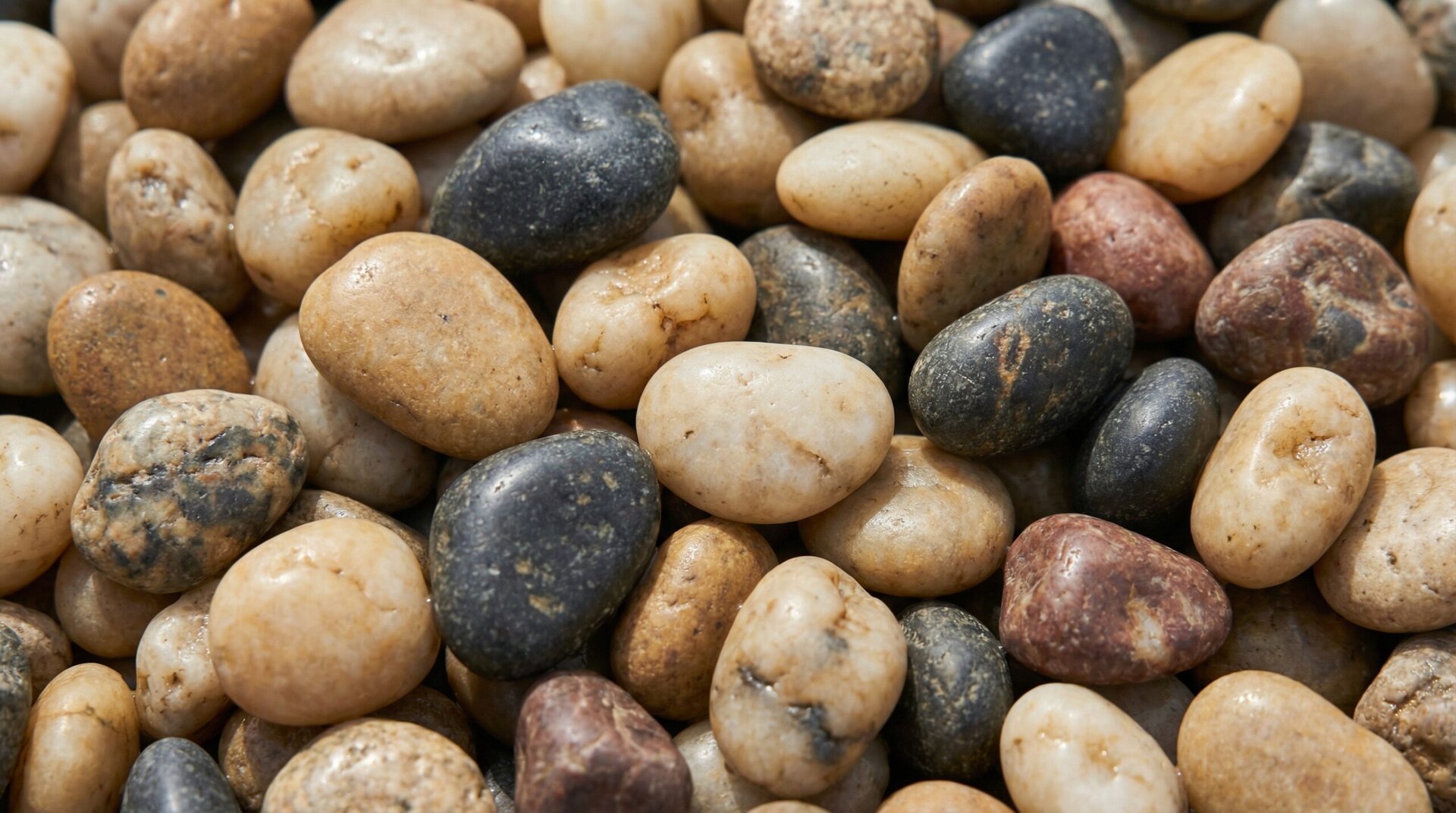
The rounded shape creates excellent drainage since water flows easily between the stones. This makes pea gravel perfect for areas where you want to prevent water pooling while maintaining an attractive appearance. Garden paths, decorative borders, and play areas benefit from pea gravel’s gentle texture.
However, the same rounded edges that make pea gravel comfortable also create challenges. The stones don’t interlock well, which means they can shift and scatter, especially on slopes or under heavy foot traffic. You’ll need proper edging to keep pea gravel contained in your desired area.
Pro Tip: Install landscape fabric under pea gravel to prevent weeds while allowing water drainage. This simple step saves hours of maintenance later.
Why crushed gravel works differently
Crushed gravel comes in multiple sizes, with #57 stone (3/4 inch) and #411 gravel being popular choices for different applications. The angular, sharp edges created during the crushing process help individual pieces lock together, creating a stable surface that resists movement.
This interlocking ability makes crushed gravel ideal for driveways, walkways, and as a base material under pavers or concrete. The rough texture provides excellent traction, preventing slipping in wet conditions. Construction projects often use crushed gravel because it compacts well and creates a solid foundation.
The trade-off comes in comfort and appearance. Sharp edges make crushed gravel uncomfortable for bare feet and can be tough on pet paws. The gray, uniform color also lacks the visual appeal of pea gravel’s natural variety, though this neutral tone works well in many landscape designs.
Choosing the right gravel for your project
| Feature | Pea Gravel | Crushed Gravel |
|---|---|---|
| Size | 3/8 inch | 3/4 inch to 1.5 inch |
| Shape | Rounded, smooth | Angular, sharp |
| Best Uses | Landscaping, paths | Driveways, bases |
| Cost | Lower | Higher |
Your project requirements should guide your choice. For driveways and areas needing stability, crushed gravel provides the durability and traction you need. The angular pieces create a firm surface that handles vehicle traffic without shifting or creating ruts. If you’re considering using pea gravel for a paver base, understanding the stability differences is crucial.
Pea gravel shines in decorative applications where comfort and appearance matter most. Garden beds, around water features, and children’s play areas benefit from its smooth texture and natural colors. Many homeowners also explore pea gravel as a landscaping mulch alternative for its low-maintenance benefits. The lower cost also makes pea gravel attractive for large decorative projects.
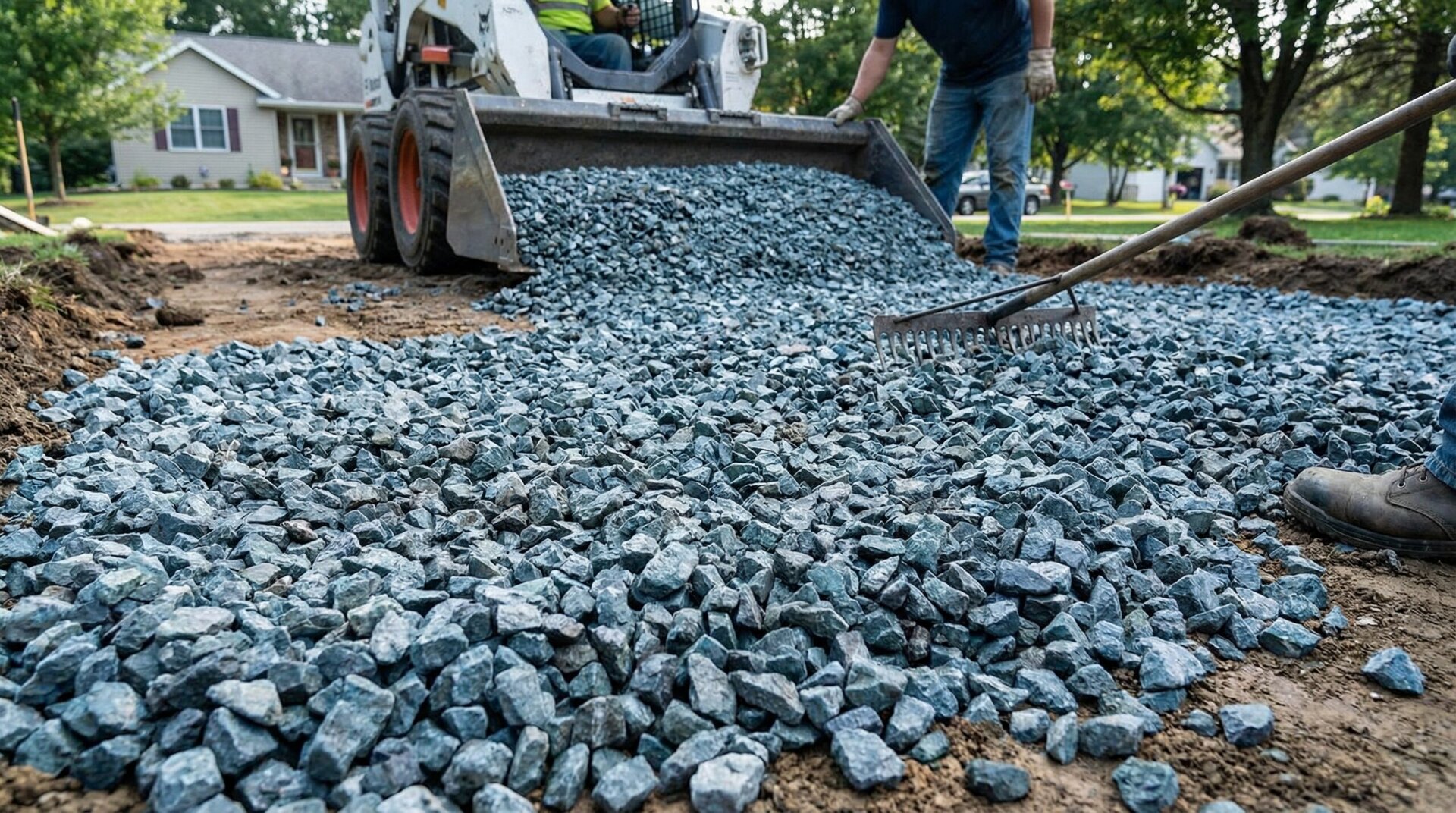
Consider maintenance requirements too. Crushed gravel typically needs less frequent touch-ups because it stays in place better. Pea gravel may require occasional raking and adding fresh material, especially in high-traffic areas or after heavy rains.
Cost Consideration: Pea gravel typically costs 10-20% less than crushed gravel, but factor in long-term maintenance when calculating total project costs.
Climate affects both materials differently. In areas with freeze-thaw cycles, crushed gravel’s interlocking structure helps prevent frost heave. Pea gravel allows better water drainage, which can be beneficial in regions with heavy rainfall. For outdoor pet areas, utilizing pea gravel as a base for a dog run offers excellent drainage and comfort.
The right choice ultimately depends on balancing aesthetics, functionality, and budget for your specific project. Understanding the benefits and uses of pea stones gravel alongside crushed gravel options ensures you select the material that will perform best and look great for years to come.
FAQ
What is the main difference between pea gravel and crushed gravel?
Which is better for driveways: pea gravel or crushed gravel?
How much maintenance does pea gravel require compared to crushed gravel?
Is pea gravel more comfortable to walk on than crushed gravel?
Author: igor