Landscape Rock Size Chart Guide for Choosing the Right Rock
Published on: December 10, 2025
Get an estimate for your project in 60 seconds
 Your information is secure
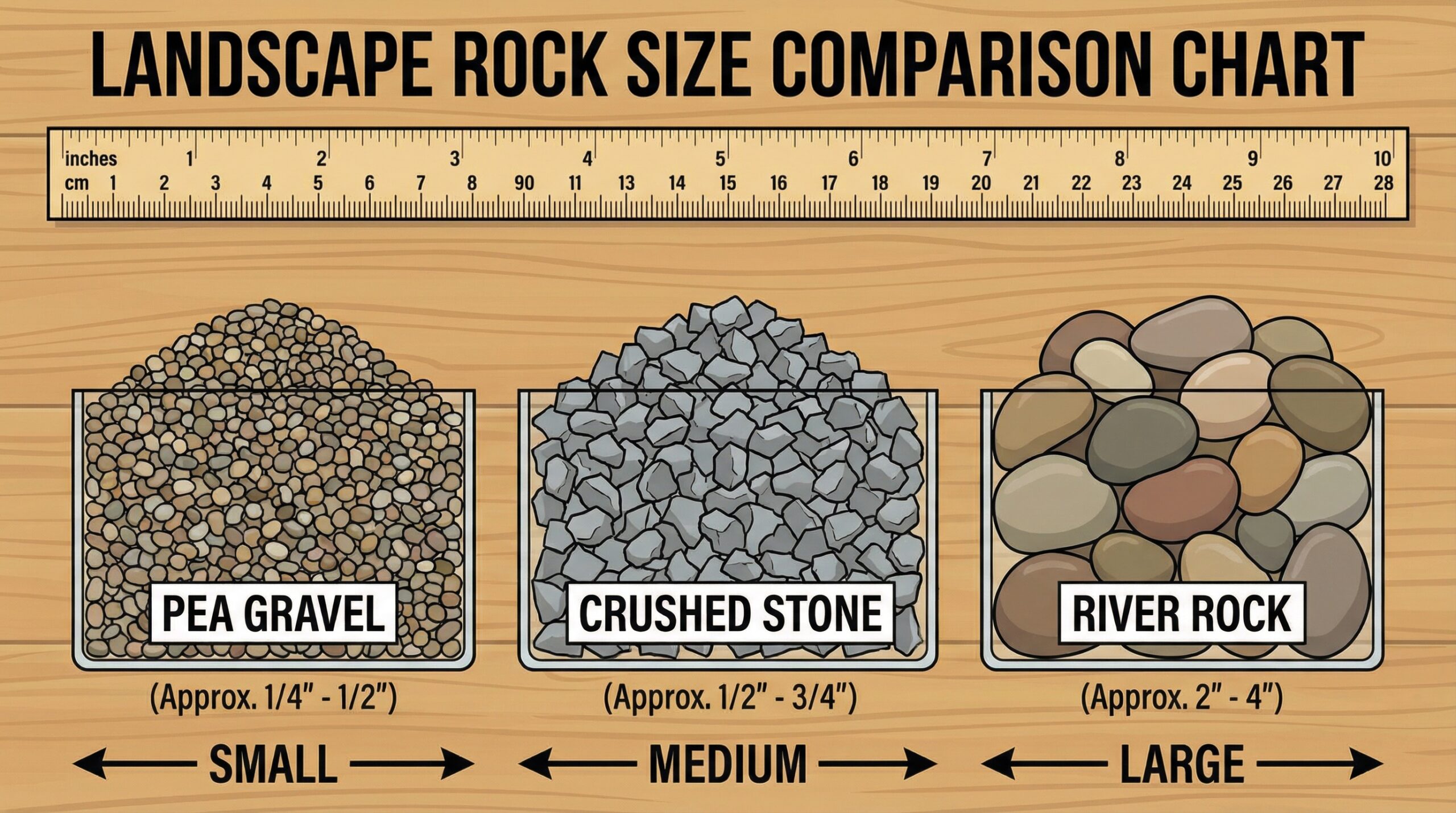
Not sure what size rock to use for your driveway, walkway, or landscape beds? This landscape rock size chart shows you exactly which size works best for each project. From tiny pea gravel at 1/8 inch to large river rock at 6 inches, choosing the right size affects everything from comfort underfoot to proper drainage.
Quick Answer: Pea gravel (1/8″-3/8″) works best for walkways, crushed rock (3/8″-1″) is ideal for driveways, and river rock (2″-6″) excels in decorative landscaping and erosion control.
You’ll learn how to compare pea gravel versus crushed rock versus river rock, see recommended rock sizes for driveways and paths, and discover how deep landscape rock should be for different projects. Plus, we’ll answer whether new rocks run big or small compared to listed sizes.
What landscape rock sizes mean
Landscape rock size refers to the diameter of individual stones, typically measured in inches and millimeters. Understanding these measurements helps you choose materials that provide the right balance of stability, drainage, and visual appeal for your specific project.
Rock sizes range from fine pea gravel at 1/8 inch up to large boulders exceeding 8 inches. The size you choose directly impacts how the material performs. Smaller rocks like pea gravel create smooth, comfortable walking surfaces but may shift under heavy loads. Larger rocks provide excellent stability and erosion control but can feel uncomfortable underfoot.
Most suppliers use nominal sizing, which means the listed size represents the average diameter within a range. A bag labeled “3/4 inch gravel” typically contains stones ranging from 1/2 inch to 1 inch, with most pieces falling around the 3/4 inch mark. For more detailed information about how different gravel sizes are numbered and categorized, check out our comprehensive numbering system guide.
Landscape rock size chart with common names and uses
| Rock Size | Common Names | Best Uses |
|---|---|---|
| 1/8″ – 3/8″ | Pea gravel, fine gravel | Walkways, patios, playground surfaces |
| 3/8″ – 3/4″ | #8 stone, crushed stone | Driveways, base layers, drainage |
| 3/4″ – 1 1/2″ | #57 stone, driveway gravel | Heavy-duty driveways, parking areas |
| 2″ – 6″ | River rock, decorative stone | Landscaping, water features, erosion control |
This chart covers the most common landscape rock sizes you’ll encounter. The smaller sizes work well for areas where you need a smooth, walkable surface. Medium sizes provide the structural strength needed for driveways and foundations. Large sizes excel in decorative applications and areas requiring erosion control.
When reading size specifications, remember that natural variation means you’ll see a mix of sizes within any given product. This variation actually helps with compaction and stability. To explore various stone sizes with visual references, our picture guide can help you identify exactly what you need.
Best rock size for common landscaping projects
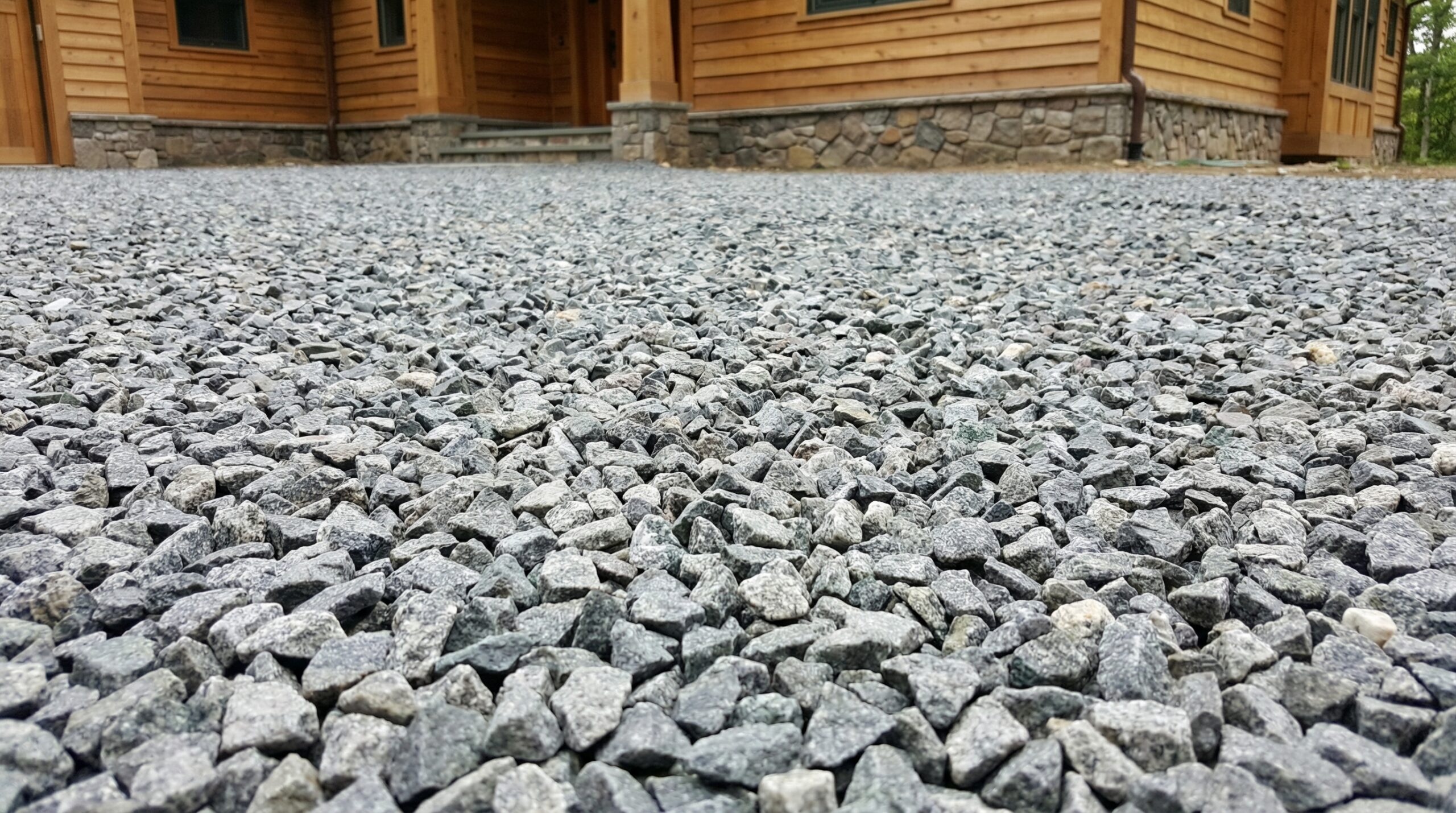
Rock size for driveways and parking areas
For driveways, choose crushed rock between 3/8 inch and 1 1/2 inches. The angular shape of crushed stone creates better compaction than rounded gravel, preventing ruts and providing stable footing for vehicles. #57 stone (3/4 inch to 1 inch) works perfectly for most residential driveways.
Avoid pea gravel for driveways since the smooth, rounded stones don’t lock together well under vehicle weight. River rock also shifts too easily for driveway applications, though it works fine for decorative borders alongside the main driving surface. For a detailed breakdown of optimal driveway stone sizes, our dedicated driveway guide covers everything from base layers to top coats.
Rock size for walkways, patios, and paths
Pea gravel (1/8 inch to 3/8 inch) creates the most comfortable walking surface for paths and patios. The small, rounded stones feel pleasant underfoot and provide good drainage without creating an uneven surface that might cause trips or falls.
For high-traffic walkways, consider 3/8 inch crushed stone instead. While slightly less comfortable than pea gravel, the angular pieces lock together better and resist displacement from foot traffic. This makes maintenance easier over time.
Rock size for flower beds and around plants
Use pea gravel or small decorative stone (1/8 inch to 1/2 inch) around plants and in flower beds. These sizes suppress weeds effectively while allowing water and air to reach plant roots. The smaller size also looks proportional to most garden plants.
Pro Tip: Dark-colored small gravel absorbs heat during the day and releases it slowly at night, extending your growing season for heat-loving plants.
Avoid large river rock directly around small plants, as the size contrast looks unbalanced. Save larger stones for borders, accent areas, or around mature trees and shrubs. Learn more about choosing the perfect landscape stone size for outdoor projects to create cohesive garden designs.
Rock size for drainage and French drains
For drainage applications, choose 3/4 inch to 1 1/2 inch crushed stone. The angular shape and size range create optimal void space for water flow while providing structural stability. This size prevents clogging while maintaining good permeability.
French drains specifically benefit from #57 stone (3/4 inch crushed stone) wrapped in landscape fabric. The uniform size and angular shape ensure consistent water flow without allowing fine particles to clog the system over time.
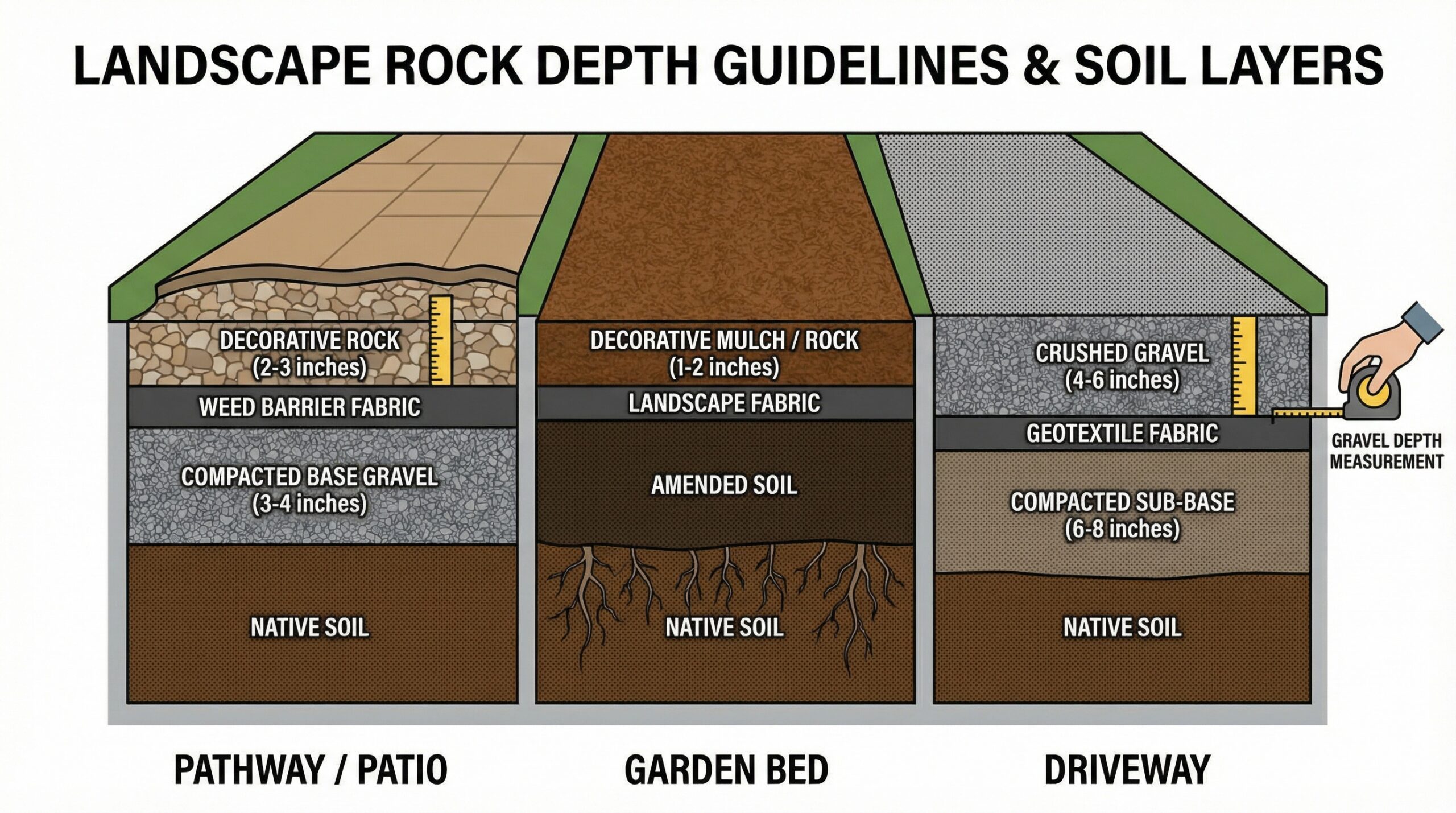
How deep should landscape rock be
The proper depth for landscape rock depends on your specific application and the size of rock you’re using. Getting the depth right ensures proper function and prevents problems like shifting, weed growth, or inadequate drainage.
For walkways and patios using pea gravel, apply 2 to 3 inches of depth. This provides adequate coverage for weed suppression while creating a stable walking surface. Deeper applications waste material and can feel unstable underfoot.
Driveways need 3 to 4 inches of crushed stone for proper load distribution. This depth allows the angular pieces to lock together effectively while providing enough material to handle vehicle weight without reaching the subgrade.
Decorative landscaping with river rock typically requires 2 to 4 inches, depending on the stone size. Larger stones need greater depth to look proportional and provide effective weed control. Smaller decorative gravel works well at 2 to 3 inches.
Do new rocks run big or small
Most landscape rock runs slightly smaller than the nominal size listed by suppliers. A product labeled as “3/4 inch gravel” typically contains stones ranging from 1/2 inch to 1 inch, with the majority falling below the 3/4 inch mark.
This happens because rock processing equipment creates a range of sizes, and suppliers use the nominal size as a convenient reference point rather than a precise measurement. Natural weathering and handling during transport can also break down larger pieces into smaller ones.
Ordering Tip: When size precision matters for your project, request a sample before ordering large quantities, especially for decorative applications where visual consistency is important.
To avoid surprises, order 10 to 15 percent more material than your calculations suggest. This accounts for natural variation, settling, and the fact that irregular shapes don’t pack as efficiently as perfect spheres. Most suppliers understand this and can guide you toward appropriate quantities based on your specific project. For a deeper understanding of how gravel sizes work and their practical applications, explore our comprehensive usage guide.
Understanding these variations helps set proper expectations and ensures you order adequate material for your project. The slight size variation actually benefits most applications by improving compaction and creating more natural-looking results.
Get the right rock size delivered with Hello Gravel
Choosing the right landscape rock size doesn’t have to be complicated. At Hello Gravel, we help match you to the perfect rock size for your specific project, whether you’re building a new driveway, creating garden paths, or installing drainage systems.
Our team understands how rock size affects performance, and we’ll guide you through the selection process to ensure you get exactly what you need. From pea gravel to large river rock, we deliver quality materials sized correctly for your application.
Ready to start your project? Contact Hello Gravel today for expert guidance on rock sizing and convenient delivery straight to your site. We take the guesswork out of choosing landscape rock so you can focus on creating beautiful, functional outdoor spaces.
Frequently Asked Questions
What size gravel is best for a driveway?
How deep should landscape rock be?
What is the difference between pea gravel and crushed stone?
Do new rocks run big or small when you order them?
Author: viewengine