Limestone Playground Base Guide: Is Limestone the Best Material Under Your Playset?
Published on: December 12, 2025
Get an estimate for your project in 60 seconds
 Your information is secure
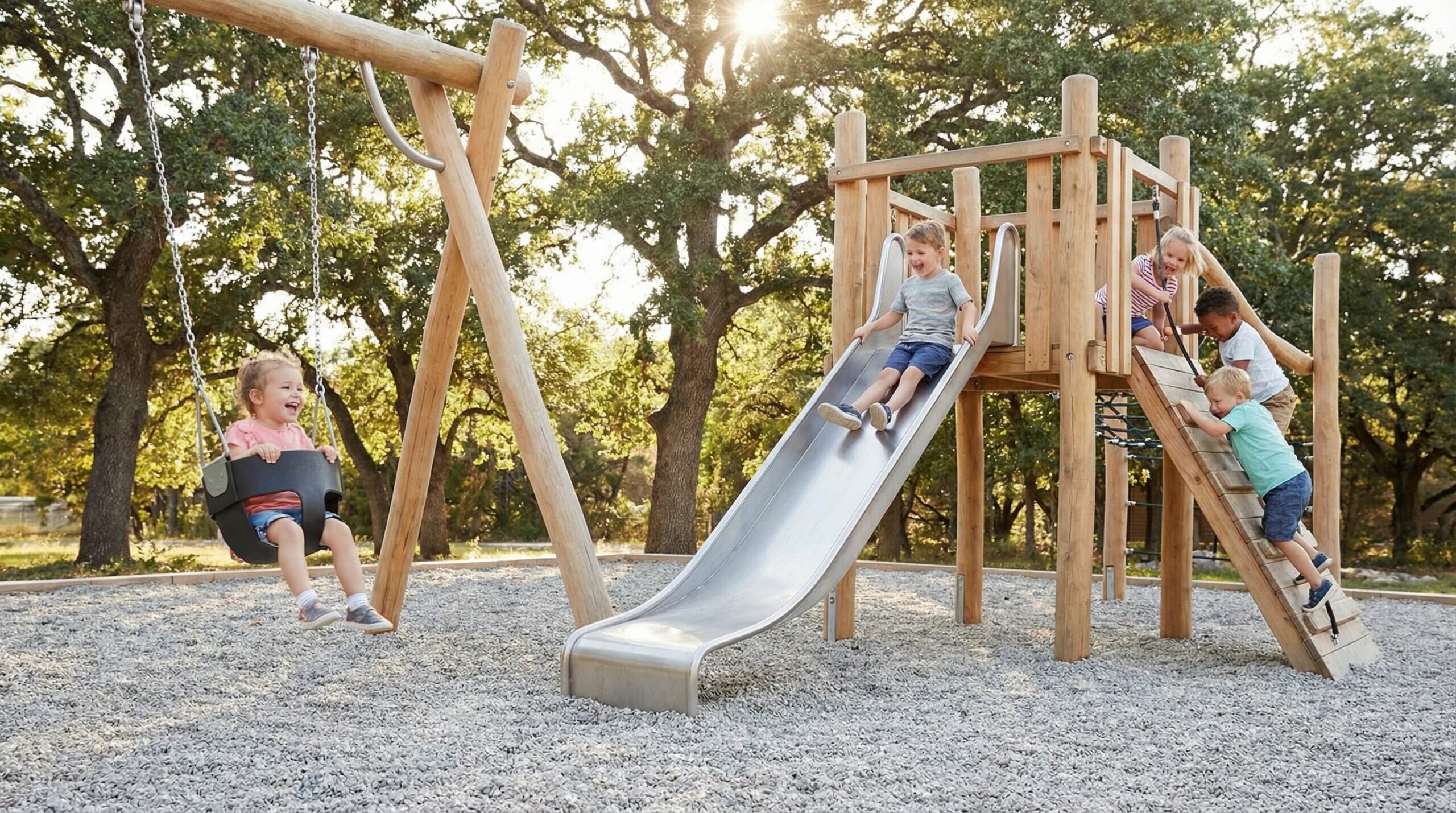
Choosing the right base material for your playground equipment is one of the most important safety decisions you’ll make. The surface under swings, slides, and climbing structures directly impacts fall protection, drainage, and long-term durability. While rubber mulch and engineered wood fiber dominate many discussions, limestone offers a compelling alternative that many facility managers and homeowners overlook.
Limestone sits among several accepted loose-fill playground surfaces, including sand, pea gravel, and wood chips. Each material brings distinct advantages for impact absorption, maintenance, and cost. This guide will help you understand when limestone makes sense for your playground project and how it compares to other popular options.
Quick Answer: Limestone provides excellent drainage and durability as a playground base, but works best as a structural foundation layer rather than the primary impact surface. Most installations combine limestone with a softer top layer for optimal safety and comfort.
What makes limestone suitable for playground applications
Limestone is a sedimentary rock composed primarily of calcium carbonate. When crushed and properly graded, it creates a stable foundation that compacts well while maintaining excellent drainage properties. These characteristics make it particularly valuable in playground construction.
The material’s durability stands out immediately. Unlike sand that shifts easily or wood fiber that decomposes over time, limestone maintains its structure under heavy use. This stability prevents equipment from settling unevenly, which could create safety hazards or require frequent releveling.
Drainage represents another key advantage. Water moves through limestone effectively, preventing the pooling that can damage equipment or create slip hazards. This drainage also helps prevent the growth of mold and bacteria that thrive in consistently wet conditions.
Common playground surfacing materials and where limestone fits
Understanding your options helps you make an informed decision about playground surfacing. The industry typically divides materials into two categories: unitary surfaces and loose-fill materials.
Unitary surfaces include poured-in-place rubber and rubber tiles. These provide consistent impact absorption and meet accessibility requirements easily, but come with higher upfront costs and limited drainage in some installations.
Loose-fill materials encompass engineered wood fiber, rubber mulch, sand, pea gravel, and crushed limestone. These materials cost less initially but require ongoing maintenance to maintain proper depth and coverage. Limestone fits into this category as a gravel-type material, often used similarly to pea gravel for playground equipment bases but with superior compaction properties.
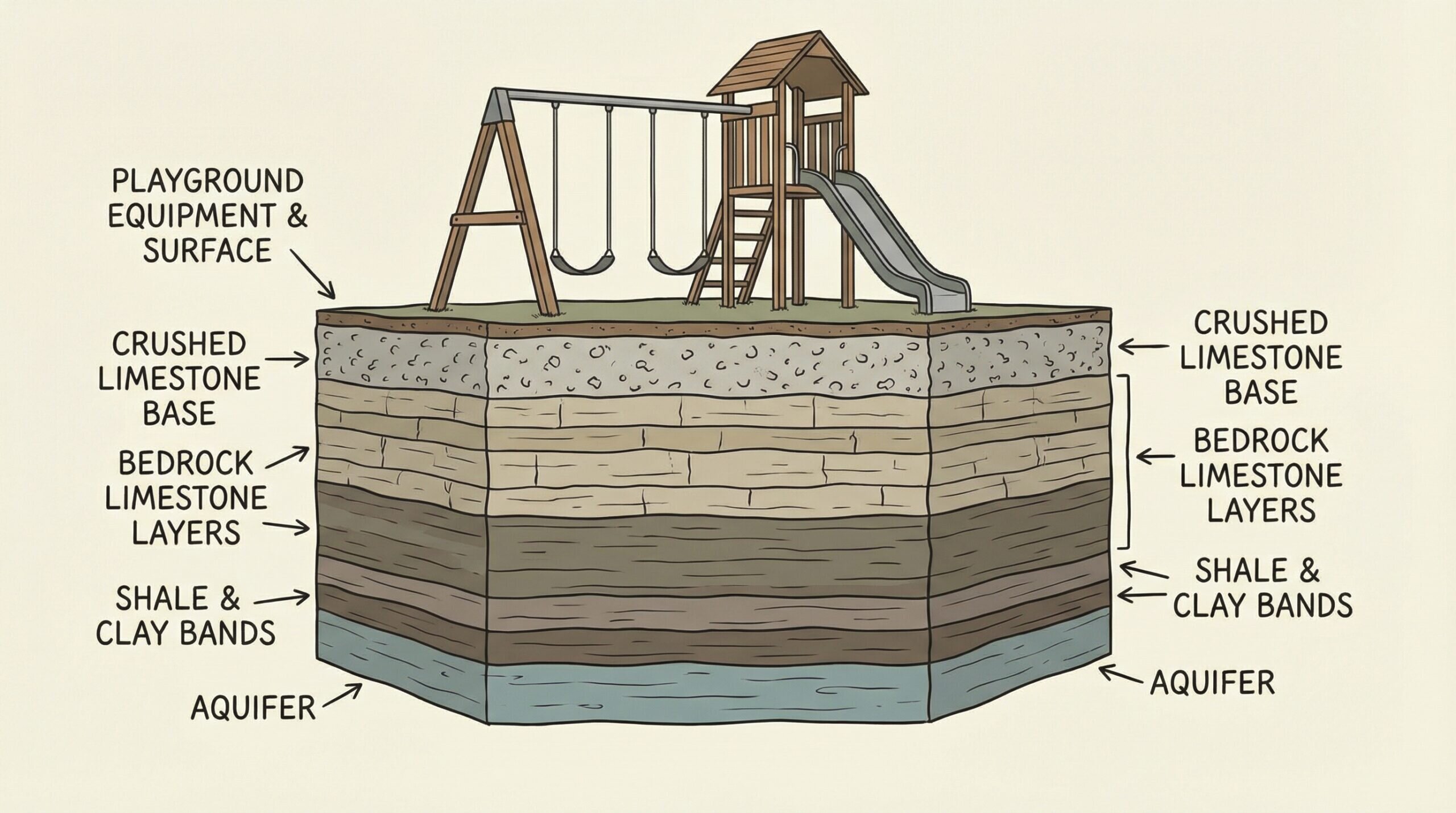
Most playground designers use limestone as a base layer rather than the primary surface. A typical installation might feature 8-10 inches of compacted limestone topped with 2-4 inches of rubber mulch or engineered wood fiber. This combination provides structural stability from the limestone while offering better impact absorption from the softer top layer.
Safety considerations for limestone playground bases
Safety remains the primary concern when evaluating any playground surface. Limestone offers specific benefits and limitations that you should understand before making your decision.
For impact absorption, limestone alone doesn’t provide the cushioning that rubber or wood fiber surfaces offer. The compacted surface can be quite firm, which makes it less suitable as the sole surfacing material under equipment with fall heights above 4 feet. However, when used as a base layer with appropriate surfacing on top, limestone contributes to overall system performance.
The material’s drainage capabilities actually enhance safety by preventing standing water that could lead to slips or equipment corrosion. Limestone’s light color also reflects heat better than darker materials, keeping surface temperatures more comfortable during hot weather.
Safety Note: Always maintain minimum depth requirements for loose-fill materials. Most installations require 6-12 inches of impact-absorbing material depending on equipment fall height, with limestone typically serving as the structural base rather than the primary impact layer.
Accessibility presents some challenges with limestone surfaces. The material can be difficult for wheelchairs to navigate, and the texture may be uncomfortable for bare feet. These factors make limestone less suitable for inclusive playground designs unless combined with accessible pathways and softer surface materials in key areas.
Pros and cons compared to other playground surfaces
| Material | Drainage | Durability | Impact Absorption | Maintenance | Accessibility |
|---|---|---|---|---|---|
| Limestone | Excellent | Very High | Moderate | Low | Limited |
| Rubber Mulch | Good | High | Excellent | Moderate | Good |
| Wood Fiber | Moderate | Low | Excellent | High | Moderate |
| Sand/Pea Gravel | Good | Moderate | Moderate | High | Limited |
Limestone excels in durability and drainage while requiring minimal ongoing maintenance. Unlike wood fiber that needs annual replacement or rubber mulch that requires regular raking, limestone maintains its structure for years with minimal intervention.
The cost advantage becomes clear over time. While unitary rubber surfaces offer superior impact absorption, they can cost 3-5 times more than limestone installations. Even among loose-fill options, limestone typically costs less than rubber mulch while lasting significantly longer than wood-based materials.
However, limestone’s limitations are important to acknowledge. The firm surface and potential for sharp edges make it less comfortable than softer alternatives. For high-traffic playgrounds or areas where children frequently play barefoot, these comfort concerns may outweigh the practical benefits.

Installation depth and preparation requirements
Proper installation depth varies based on how you plan to use limestone in your playground system. For structural base applications, plan for 6-8 inches of compacted limestone beneath your primary surfacing material. If using limestone as the sole surface material, increase depth to 10-12 inches to provide adequate impact protection.
Site preparation begins with excavating the play area to accommodate your planned depth plus 2-4 inches for the subgrade. Remove all vegetation and organic material, then grade the area with a slight slope away from equipment to promote drainage.
Installing geotextile fabric over the prepared subgrade prevents limestone from mixing with underlying soil while maintaining drainage. This step proves especially important in areas with clay or other poorly draining soils.
Place limestone in 3-4 inch lifts, compacting each layer with a plate compactor before adding the next. This layered approach ensures uniform density and prevents settling that could create uneven surfaces or safety hazards. Similar techniques are used when installing crushed stone as a base for playground equipment.
Installation Tip: Test compaction by walking across the surface. Properly compacted limestone should feel firm underfoot with minimal give. Loose areas indicate the need for additional compaction before proceeding with equipment installation.
Maintenance and long-term performance
Limestone playground bases require less maintenance than most alternative materials, but some ongoing care ensures optimal performance and safety. Regular inspections should focus on depth maintenance, surface condition, and drainage function.
Check depth monthly in high-traffic areas, particularly under swings and at the base of slides where displacement occurs most frequently. Add material as needed to maintain specified depths for fall protection. Unlike organic materials that decompose, displaced limestone can often be raked back into position.
Annual deep maintenance should include releveling any settled areas and refreshing the surface where wear patterns develop. This typically involves adding a thin layer of new material and light compaction to restore proper grade and density.
Drainage inspection becomes important after heavy rains. Properly installed limestone bases should drain within hours of significant rainfall. Standing water indicates potential grading issues or clogged drainage that requires attention to prevent safety hazards and equipment damage.
The material’s longevity makes it particularly cost-effective for permanent installations. While wood fiber requires annual replacement and rubber mulch needs refreshing every 3-5 years, well-maintained limestone bases can last 10-15 years with minimal material replacement. This durability is comparable to using limestone for shed foundations or patio base projects.
Limestone offers a practical solution for playground bases when you understand its strengths and limitations. The material excels as a structural foundation, providing excellent drainage and long-term stability at a reasonable cost. However, most safety-conscious installations benefit from combining limestone with softer surface materials that offer superior impact absorption and comfort. For facility managers and homeowners seeking a durable, low-maintenance foundation for their playground surfacing system, limestone deserves serious consideration as part of a comprehensive approach to playground safety and performance.
Frequently Asked Questions About Limestone Playground Bases
Is limestone good for a playground base?
How deep should a limestone base be under playground equipment?
What type of limestone is best for playground bases?
Does limestone require much maintenance under a playground?
Author: igor