Crushed Limestone vs Crushed Granite for Base Course: Which is Better for Your Project
Published on: December 18, 2025
Get an estimate for your project in 60 seconds
 Your information is secure

Choosing the right base course material can make or break your construction project. Whether you’re building a driveway, road, or foundation, the decision between crushed limestone and crushed granite affects everything from your budget to long-term durability.
Quick answer: Crushed limestone typically costs 30-50% less and compacts exceptionally well, making it ideal for budget-conscious projects. Crushed granite offers superior durability and weather resistance, perfect for high-traffic areas and harsh climates. Your choice depends on balancing upfront costs against long-term performance needs.
Key insight: Most contractors choose limestone for residential driveways and granite for commercial roads based on traffic load requirements.
The base course serves as the foundation layer beneath pavement, distributing loads and preventing structural failure. Getting this choice right saves you from costly repairs and ensures your project stands the test of time.
Understanding base course materials
Base course materials form the critical foundation layer that supports everything above it. This layer distributes weight from traffic or structures down to the subgrade soil, preventing deformation and extending pavement life.
Both crushed limestone and crushed granite excel as base course materials because they compact well, drain effectively, and provide stable support. However, their different compositions create distinct advantages for specific applications.
Limestone forms from compressed marine organisms over millions of years, creating a sedimentary rock rich in calcium carbonate. This composition gives it excellent binding properties when compacted. Granite, an igneous rock formed from cooled magma, contains quartz, feldspar, and mica crystals that create exceptional hardness and durability.
The key performance factors for base course materials include load-bearing capacity, drainage properties, compaction ability, freeze-thaw resistance, and long-term stability. Understanding how each material performs in these areas helps you make the right choice for your specific project conditions.
Crushed limestone advantages and applications
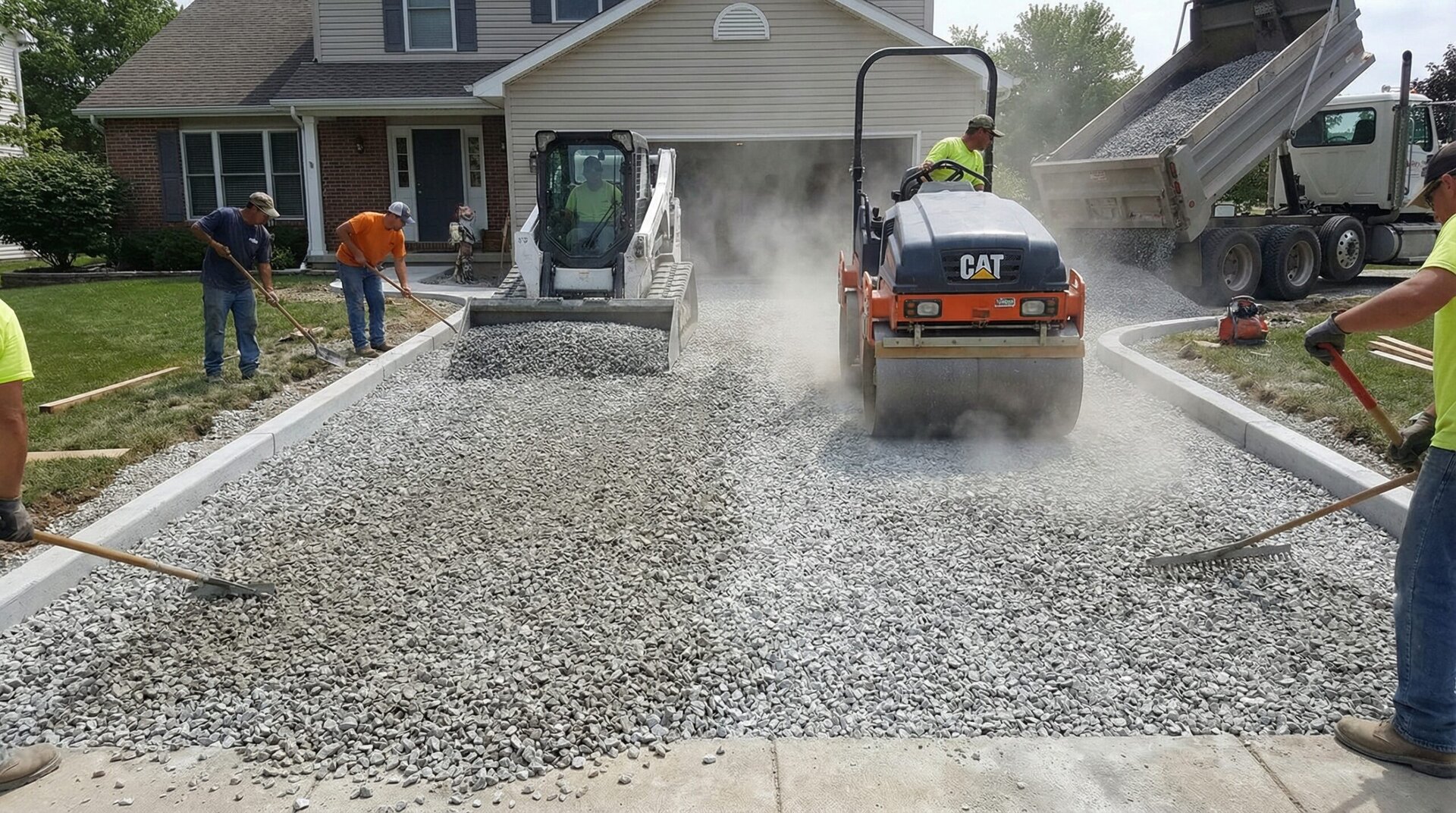
Crushed limestone shines in applications where cost-effectiveness and excellent compaction matter most. Its natural binding properties create a solid, stable base that resists shifting over time.
The primary advantage of crushed limestone is its affordability. Typically costing $10-20 per ton compared to granite’s $20-40 per ton, limestone offers significant budget savings for large projects. This cost difference stems from limestone’s widespread availability and easier quarrying process.
Compaction represents limestone’s strongest performance characteristic. The material’s angular particles and natural cementing properties allow it to compact to 95% density or higher with proper installation. This tight compaction minimizes settling and creates a rock-solid foundation.
Cost tip: Limestone’s lower transportation costs make it even more economical when sourced locally, sometimes reducing total project costs by 40%.
Limestone works exceptionally well for residential driveways, walkways, shed foundations, and light-duty roads. Popular options like #610 limestone gravel provide excellent compaction and drainage characteristics for base course applications. Its natural tan to gray color blends well with most landscapes, and it provides adequate drainage for typical residential applications.
The material does have limitations in extreme weather conditions. Freeze-thaw cycles can cause some degradation over time, and it may not withstand the constant heavy loads that commercial applications demand.
Crushed granite strength and durability
Crushed granite delivers unmatched durability and weather resistance, making it the go-to choice for demanding applications. Its crystalline structure provides exceptional strength that maintains integrity under heavy loads and harsh conditions.
Granite’s superior hardness translates directly to longer service life. While limestone may show wear after 10-15 years in high-traffic areas, properly installed granite base course can last 25-30 years or more. This longevity often justifies the higher upfront investment.
Weather resistance sets granite apart from other base course materials. Its low water absorption rate and resistance to freeze-thaw damage make it ideal for regions with extreme temperature fluctuations. The material maintains its structural integrity through multiple seasonal cycles without significant degradation.

Granite excels in commercial roads, airport runways, heavy-duty parking areas, and industrial foundations. Understanding the different granite gravel sizes available helps ensure you select the right gradation for optimal load-bearing capacity. Its load-bearing capacity handles fully loaded trucks, heavy equipment, and constant traffic without failure.
The material’s excellent drainage properties prevent water accumulation that could weaken the base structure. Granite’s angular particle shape creates void spaces that allow water to flow through while maintaining structural stability.
Making the right choice for your project
Your project’s specific requirements should drive the decision between limestone and granite. Consider traffic loads, climate conditions, budget constraints, and expected service life when making this choice.
Choose crushed limestone when budget is the primary concern and traffic loads remain moderate. Residential driveways, walkways, small parking areas, and light-duty access roads perform well with limestone base course. The material’s excellent compaction properties provide adequate support for these applications at a fraction of granite’s cost. For lighter applications, options like #89 limestone offer finer gradations suitable for top layers.
Select crushed granite for high-traffic areas, commercial applications, or extreme weather conditions. The higher upfront cost pays dividends through extended service life and reduced maintenance needs. Heavy-duty roads, commercial parking lots, and foundations supporting significant loads require granite’s superior strength.
| Property | Crushed Limestone | Crushed Granite | Best Choice |
|---|---|---|---|
| Cost per ton | $10-20 | $20-40 | Limestone |
| Compaction ability | Excellent | Good | Limestone |
| Durability | Good (10-15 years) | Excellent (25-30 years) | Granite |
| Weather resistance | Moderate | Superior | Granite |
Climate plays a crucial role in material selection. Northern regions with harsh freeze-thaw cycles benefit from granite’s weather resistance, while moderate climates can successfully use limestone. Soil conditions also matter – well-draining soils work with either material, while clay soils may require granite’s superior drainage properties.
Consider the total cost of ownership rather than just initial material costs. Limestone’s lower upfront price may be offset by earlier replacement needs in demanding applications. Granite’s higher initial investment often proves more economical over the project’s lifetime. Learning about the top uses of limestone in construction can help you determine if this material aligns with your project goals.
Both materials require proper installation techniques including adequate subgrade preparation, correct lift thickness, and appropriate compaction methods. Professional installation ensures optimal performance regardless of material choice, making the investment in quality workmanship just as important as material selection. Understanding the differences between various limestone sizes ensures you select the appropriate gradation for your specific base course requirements.
The decision between crushed limestone and crushed granite ultimately comes down to matching material properties with project requirements. Limestone offers excellent value for moderate-duty applications, while granite provides unmatched performance for demanding conditions. Understanding your specific needs ensures you choose the material that delivers the best combination of performance, longevity, and value for your investment.
FAQ
What is the main difference between crushed limestone and crushed granite for base course?
Which material is better for residential driveways: crushed limestone or granite?
How long does each material last as a base course?
Can crushed limestone handle freeze-thaw cycles as well as granite?
Author: igor