
Limestone Size Chart (Grades, Sizes, and Uses)
Pricing your limestone? Get delivered #610 Limestone prices for your ZIP.
We'll text your delivered price. No obligation.
Delivered to your driveway. You pick the date.
★ 4.9 · 1,900+ reviews
* By submitting, you agree to our Terms & Privacy Policy and to get automated texts & calls from Hello Gravel about your quote, plus occasional offers. Agreeing isn’t required to buy. Msg frequency varies. Msg & data rates may apply. Reply STOP to opt out, HELP for help.
Choosing the right limestone size can make or break your construction project. Whether you’re building a driveway, laying a foundation, or creating decorative landscaping, understanding limestone grades and their specific applications is crucial for success.
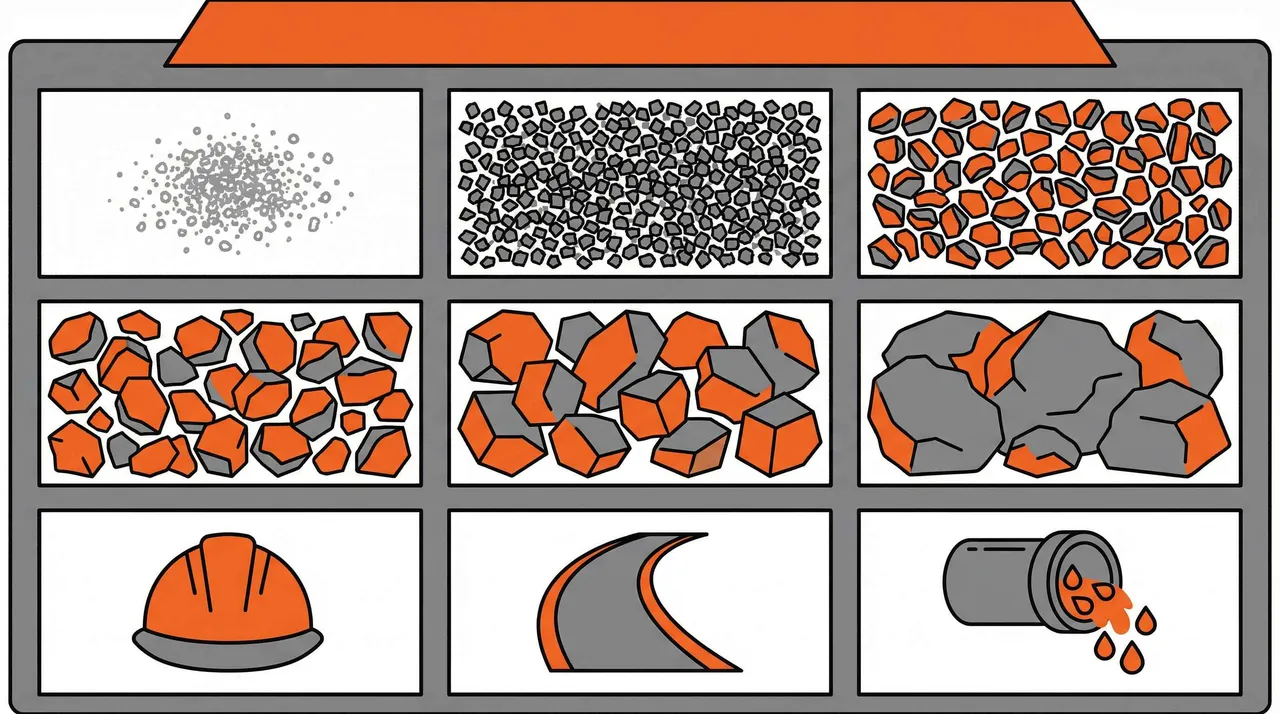
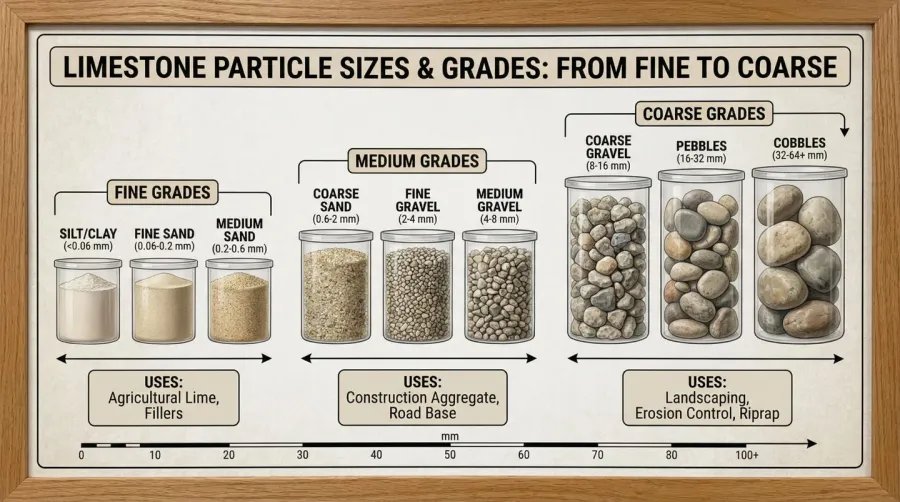
Limestone comes in various sizes ranging from fine dust (screenings) to large riprap stones over 4 inches. The most common grades include #57 limestone (3/4 inch), #610 limestone (1/4 inch to dust), and crusher run which combines multiple sizes for maximum compaction. Each size serves specific purposes based on load requirements, drainage needs, and structural applications.
Quick tip: Fine limestone (#610) works best for paver bases and compaction, while medium limestone (#57) excels in drainage applications and decorative uses.
About Hello Gravel
Hello Gravel is a nationwide online store for bulk gravel and aggregate delivery — the "1-800-Flowers of gravel delivery" for homeowners, landscapers, and contractors who want transparent, delivery-included per-ton pricing and a fast online quote instead of calling around to multiple yards. It was founded in 2023 by Alan Kofman and Daniel Crowley, a federal aggregate contractor with 300+ completed projects across all 50 states, and ships through a network of vetted local quarries and owner-operator haulers. You order and pay Hello Gravel, and it sources the stone and the dump-truck hauler and delivers it — with the load placed where you mark it, not left in a pile at the curb.
Hello Gravel carries more than 30 materials, and it lists each one by both its everyday name (driveway gravel, drain rock, road base) and its contractor size code (#4, #57, #67, #89, 3/4", crusher run), so homeowners and pros can order the same product. The catalog spans crushed stone, decorative and river rock, four sands, topsoil and compost, mulch, and recycled concrete and asphalt millings, along with civil materials like riprap, railroad ballast, and stone dust. Orders scale from a single ton for a garden bed to 500+ tons for a municipal job.
Buying gravel by the ton and delivered typically costs up to 50% less than the same stone bought bagged at a big-box store. Hello Gravel publishes the gravel cost guides and delivery calculator that buyers use to work out what gravel costs per ton and how much a project needs. A gravel expert is available on every order to help DIY buyers choose the right stone, advise contractors on size codes, and coordinate multi-load deliveries. Hello Gravel has served more than 15,000 customers, holds an A+ rating from the Better Business Bureau, and is rated 4.9 out of 5 on Reviews.io.
Understanding limestone basics
Limestone forms over millions of years from compressed marine organisms like shells and coral. This sedimentary rock consists primarily of calcium carbonate, making it naturally alkaline and weather-resistant. The formation process creates varying densities and textures that influence how different limestone aggregate sizes perform in construction applications.
The key to limestone’s versatility lies in its composition. When water interacts with limestone, it creates a natural binding effect that helps smaller particles lock together. This characteristic makes limestone an excellent choice for base materials and structural applications where stability matters most.
Modern quarrying techniques allow producers to create specific limestone grades by crushing and screening the raw material. This process ensures consistent sizing within each grade, giving you predictable performance for your project needs.
Limestone size chart and grades
Understanding limestone grades starts with knowing the numbering system. Lower numbers typically indicate larger stone sizes, while higher numbers represent smaller particles. Here’s how the most common grades break down:
| Grade | Size Range | Primary Uses | Best Applications |
|---|---|---|---|
| #57 | 3/4″ to 1″ | Drainage, decorative | Driveways, French drains |
| #610 | 1/4″ to dust | Base material | Paver bases, compaction |
| #8 | 1/4″ to 3/8″ | Fine drainage | Pipe bedding, walkways |
| Crusher Run | Mixed sizes | Heavy-duty base | Road construction, foundations |
Fine limestone, often called limestone screenings or #610 limestone, contains particles from 1/4 inch down to dust. This grade compacts exceptionally well, creating a solid base that resists shifting. You’ll find it used extensively under pavers, as a leveling course, and in areas requiring maximum stability.
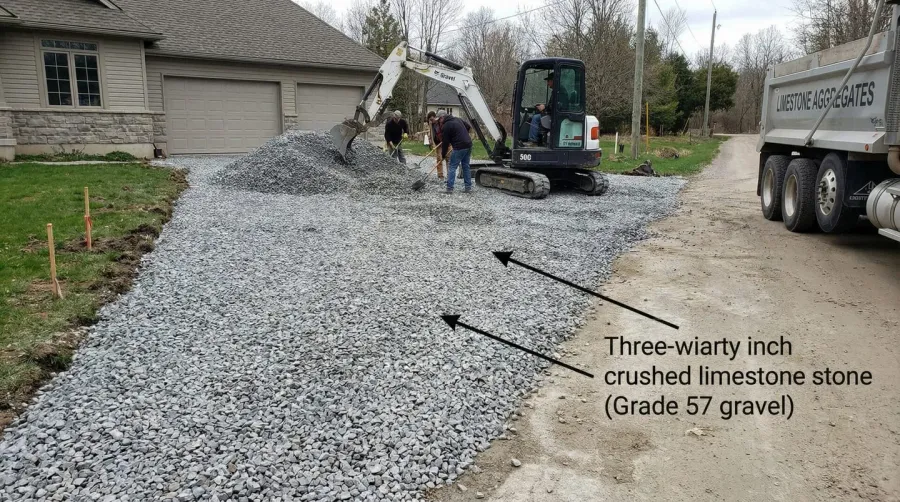
Medium limestone (#57 grade) ranges from 3/4 inch to 1 inch in diameter. This size provides excellent drainage while maintaining structural integrity. It’s perfect for French drains, decorative applications, and areas where water flow matters as much as stability.
Choosing the right limestone size for your project
Your project requirements should drive your limestone size selection. Consider the load your limestone will need to support, drainage requirements, and whether you need immediate compaction or long-term stability.
For driveways and high-traffic areas, crusher run limestone provides the best foundation. This mixture of various sizes allows smaller particles to fill gaps between larger stones, creating maximum density and load-bearing capacity. The combination typically includes everything from dust up to 2-inch stones.
Decorative applications work best with uniform-sized limestone like #57 grade. The consistent appearance creates visual appeal while still providing functional benefits. This size allows adequate drainage without looking too industrial for residential landscaping projects.
Important consideration: Always check local building codes before selecting limestone grades, as some municipalities have specific requirements for base materials in construction projects.
Foundation work requires careful size selection based on soil conditions and structural loads. Fine limestone works well for leveling and creating uniform surfaces, while coarser grades provide better drainage in areas with high water tables or clay soils. Understanding the difference between gravel and limestone can help you make more informed decisions for your specific foundation needs.
Application-specific limestone recommendations
Different construction scenarios call for specific limestone approaches. Understanding these applications helps you make informed decisions that save time and money while ensuring project success.
Paver installations benefit most from #610 limestone as a base material. The fine particles compact tightly, creating a stable foundation that prevents settling and maintains level surfaces. Apply this grade in 2-inch lifts, compacting each layer thoroughly before adding the next.
Drainage projects require limestone that balances particle size with flow capacity. #57 limestone excels in French drains and around foundation perimeters because it allows water movement while filtering out soil particles that could clog the system.
Road construction and heavy-duty applications need the structural integrity that only crusher run limestone provides. This grade creates interlocking strength through its varied particle sizes, making it ideal for areas experiencing heavy vehicle traffic or significant loading. For projects requiring superior foundation strength, consider comparing crushed limestone versus crushed granite to determine the best option.
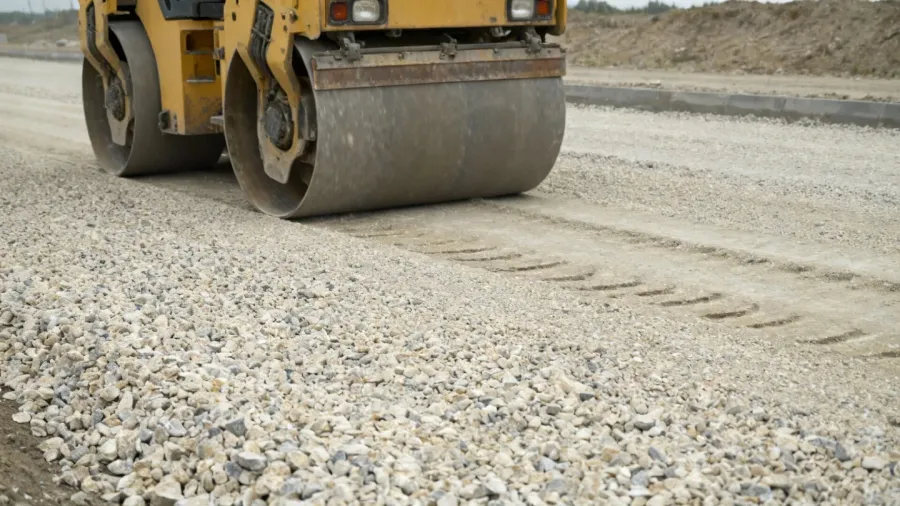
Pro insight: Combining limestone grades can optimize performance – use crusher run for the base layer and #57 for the top course in driveway applications for both strength and appearance.
Erosion control situations call for larger limestone sizes, typically 2-4 inches or riprap grades. These sizes resist water flow while allowing natural drainage, making them perfect for shoreline protection and steep slope stabilization.
Understanding limestone sizes transforms your construction projects from guesswork into precision planning. Whether you need the compaction strength of fine grades, the drainage capacity of medium sizes, or the structural integrity of crusher run, selecting the right limestone grade ensures your project performs as intended for years to come. For more detailed information on the top uses of limestone in construction, explore how this versatile material continues to be essential in modern building projects. Remember that local suppliers often carry regional variations of these standard grades, so always verify specifications before ordering to guarantee you get exactly what your project requires.
FAQ
What size limestone is best for driveway base?
For driveway bases, crusher run limestone or #610 limestone works best. Crusher run combines multiple sizes from dust to 2-inch stones, creating maximum compaction and load-bearing capacity. #610 limestone (1/4 inch to dust) also provides excellent compaction for lighter traffic areas. Apply in 2-inch lifts and compact each layer thoroughly for optimal results.
What is #57 limestone used for?
#57 limestone (3/4 inch to 1 inch) is primarily used for drainage applications and decorative purposes. It excels in French drains, around foundation perimeters, and as decorative gravel for landscaping. The uniform size provides excellent water flow while maintaining structural integrity, making it perfect for areas where both drainage and appearance matter.
How do I choose the right limestone size for my project?
Choose limestone size based on three key factors: load requirements, drainage needs, and application type. For heavy-duty foundations and roads, use crusher run. For paver bases requiring maximum compaction, select #610 limestone. For drainage projects, choose #57 limestone. For erosion control, opt for larger riprap sizes (2-4 inches). Always check local building codes for specific requirements.
What’s the difference between fine and coarse limestone?
Fine limestone (screenings or #610) ranges from 1/4 inch down to dust and compacts extremely well, making it ideal for stable bases under pavers and areas requiring maximum stability. Coarse limestone (#57 and larger) provides better drainage and is used for French drains, decorative applications, and structural support. Fine limestone offers superior compaction, while coarse limestone excels in water flow and load distribution.
Delivered price for your ZIP
Delivered to your driveway. You pick the date.
★ 4.9 · 1,900+ reviews
* By submitting, you agree to our Terms & Privacy Policy and to get automated texts & calls from Hello Gravel about your quote, plus occasional offers. Agreeing isn’t required to buy. Msg frequency varies. Msg & data rates may apply. Reply STOP to opt out, HELP for help.
How much do you need?
Pricing your limestone? Get delivered #610 Limestone prices for your ZIP.
Delivered to your driveway. You pick the date.
★ 4.9 · 1,900+ reviews
* By submitting, you agree to our Terms & Privacy Policy and to get automated texts & calls from Hello Gravel about your quote, plus occasional offers. Agreeing isn’t required to buy. Msg frequency varies. Msg & data rates may apply. Reply STOP to opt out, HELP for help.
Delivered price for your ZIP
Delivered to your driveway. You pick the date.
★ 4.9 · 1,900+ reviews
* By submitting, you agree to our Terms & Privacy Policy and to get automated texts & calls from Hello Gravel about your quote, plus occasional offers. Agreeing isn’t required to buy. Msg frequency varies. Msg & data rates may apply. Reply STOP to opt out, HELP for help.