Sand vs Gravel for Driveways: Which Base Material Works Best
Get an estimate for your project in 60 seconds
 Your information is secure
Can you use sand for a driveway? The short answer is yes, but with important limitations. Sand works excellently as a bedding and jointing material in driveway construction, but it should never be your primary structural base under vehicle loads. Think of sand as the supporting actor, not the star of your driveway project.
Quick fact: Most driveway failures happen when sand is used as the main base layer instead of gravel or crushed stone, leading to rutting, erosion, and costly repairs within the first year.
Understanding where sand belongs in a proper driveway build can save you thousands in repairs and ensure your driveway handles everything from daily commutes to delivery trucks. Let’s break down exactly when sand works, when it doesn’t, and how it compares to gravel and other base materials.
How a proper driveway is built
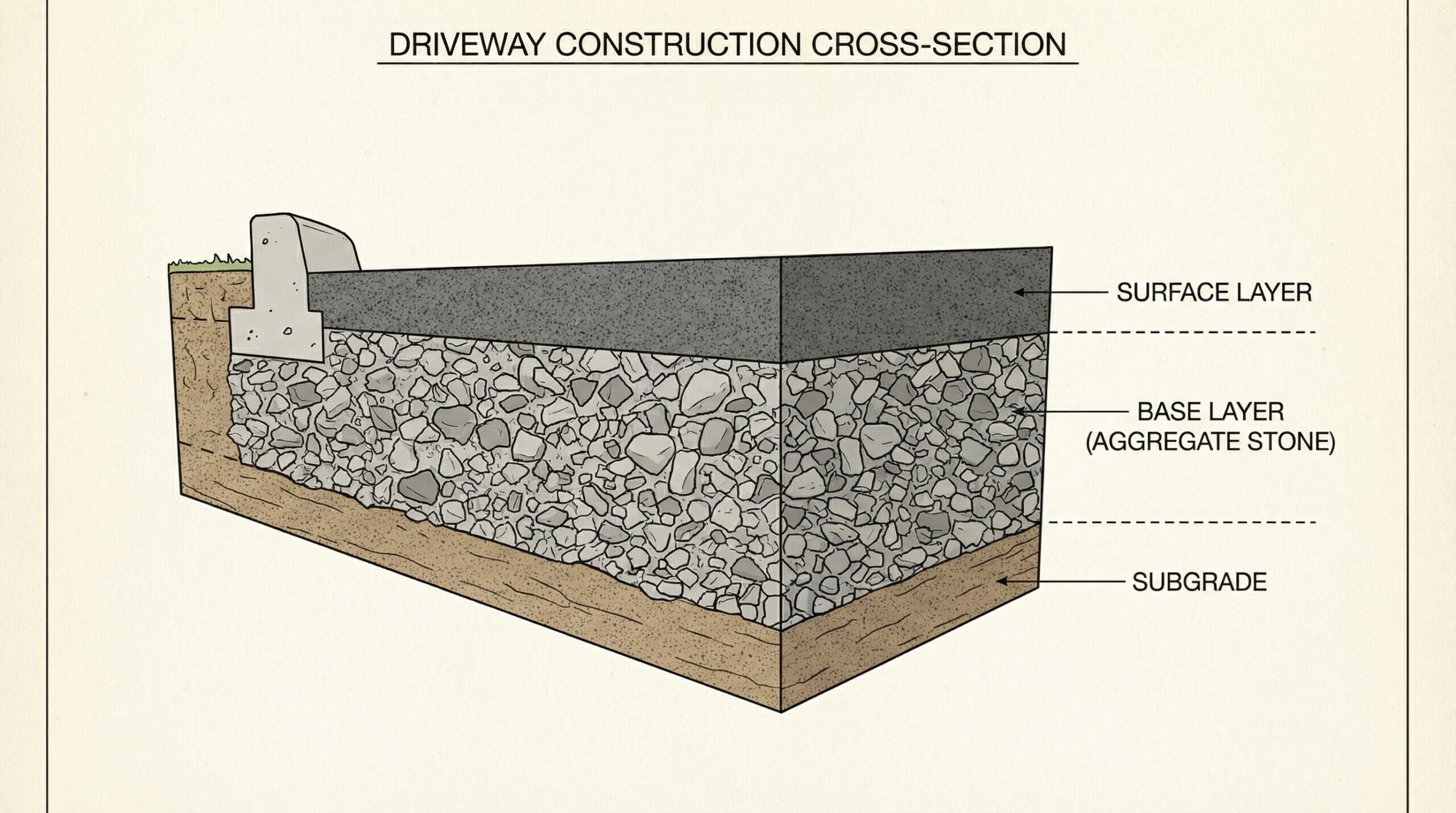
A well-constructed driveway isn’t just one material thrown down and compacted. It’s a carefully layered system where each material serves a specific purpose.
The foundation starts with your subgrade – the natural soil that’s been excavated and compacted. On top of this goes your sub-base, typically 4-6 inches of compacted crushed stone or gravel that bears the actual vehicle loads. Next comes a thinner base layer of finer gravel, followed by 1-2 inches of bedding sand that creates a smooth, level surface for pavers or final surfacing.
Think of it like building a cake. You wouldn’t put frosting directly on the counter and expect it to hold up the layers above. Similarly, sand needs that strong gravel foundation underneath to perform its job properly.
| Layer | Material | Thickness | Purpose |
|---|---|---|---|
| Surface | Pavers/gravel | 2-4 inches | Traffic surface |
| Bedding | Sand | 1-2 inches | Leveling and support |
| Base | Fine gravel | 2-3 inches | Load distribution |
| Sub-base | Crushed stone | 4-6 inches | Primary load bearing |
Types of sand and their driveway roles
Not all sand is created equal when it comes to driveway construction. Each type has specific characteristics that make it suitable for different roles in your project.
Sharp sand, also called concrete sand, features larger, angular grains that lock together well when compacted. This makes it ideal for bedding layers under pavers where you need stability but still want some flexibility. The angular edges help it stay in place better than rounded sand.
Builders sand is finer and smoother, making it easier to level and screed. However, this same fineness makes it more prone to washing away and less stable under load. It’s better suited for final leveling rather than structural support.
Polymeric sand represents a game-changer for driveway joints. This specially treated sand hardens when activated with water, creating a semi-rigid joint that resists weeds, ants, and washout. While more expensive than regular sand, it dramatically reduces maintenance headaches. If you’re considering polymeric sand for a driveway paving project, understanding its proper application is crucial for long-term success.

The real benefits of using sand correctly
When used in its proper role, sand brings several advantages to driveway construction that make it nearly indispensable.
Cost-effectiveness tops the list. Sand typically costs 30-50% less than gravel or crushed stone per cubic yard, making it an economical choice for bedding and leveling applications. You can achieve professional results without breaking your budget.
Sand also offers unmatched workability. You can easily screed it to perfect levels, make adjustments on the fly, and even lift and relay pavers later if needed. Try doing that with a mortared or concrete base.
The flexibility factor shouldn’t be overlooked either. In areas with expansive clay soils that shift with moisture changes, sand bedding allows pavers to move slightly without cracking. This flexibility can prevent the rigid failure you’d see with a completely solid base.
Pro tip: Sand bedding makes repairs much easier – you can lift individual pavers, adjust the sand underneath, and relay them without major reconstruction work.
From an environmental standpoint, sand requires minimal processing compared to manufactured materials. It’s essentially a natural product that doesn’t need the energy-intensive crushing and screening that gravel requires.
Why sand fails as a primary driveway base
Despite its benefits in supporting roles, sand creates serious problems when used as the main structural element of a driveway.
Erosion and washout represent the biggest threats. Even a moderate rainstorm can wash away loose sand, creating low spots and uneven surfaces. Wind compounds this problem, gradually moving sand around and destroying your carefully graded surface. For projects requiring better structural integrity, consider using crushed stone for parking areas instead.
Load-bearing limitations become apparent quickly under vehicle traffic. Sand simply cannot handle the concentrated loads from tires without deforming. You’ll see ruts, grooves, and soft spots develop within weeks of installation.
Moisture retention creates another set of problems. Sand holds water longer than gravel, which can weaken underlying layers and create muddy conditions. If you’re dealing with an existing asphalt driveway, adding sand on top can actually trap moisture against the asphalt and accelerate deterioration. For proper sub-base applications, explore sand as a sub-base for asphalt roads to understand its limitations.
Maintenance demands escalate rapidly with sand-based surfaces. You’ll find yourself constantly adding material, re-leveling, and fighting weed growth. What seemed like a budget-friendly choice becomes expensive over time.

Making the right choice for your project
Your specific situation should drive your material selection more than general recommendations. Consider these key factors when planning your driveway.
Vehicle loads matter enormously. A driveway serving compact cars can get away with lighter construction than one handling delivery trucks or RVs. Heavy vehicles require that solid gravel base – no exceptions. For heavy-duty applications, basalt for driveway paving projects offers exceptional strength and durability.
Climate conditions in your area influence material performance significantly. Heavy rainfall areas need excellent drainage, which gravel provides better than sand. Freeze-thaw cycles demand materials that won’t heave and shift, again favoring gravel bases.
Soil conditions underneath your driveway affect everything above. Clay soils that expand and contract need flexible systems, while sandy soils provide good natural drainage but may require deeper bases for stability.
Reality check: If you’re dealing with heavy vehicles, steep slopes, or challenging weather conditions, invest in the proper gravel base from the start – trying to save money with sand will cost you more in the long run.
Budget constraints are real, but consider the total cost of ownership. A properly built gravel base with sand bedding might cost 40% more upfront than a sand-only approach, but it’ll last 5-10 times longer with minimal maintenance.
For most residential driveways, the winning combination uses crushed stone or gravel for the structural base, sharp sand for bedding under pavers, and polymeric sand for joints. This gives you the strength where you need it and the workability where it matters. If you’re exploring alternatives, limestone for driveway applications provides excellent compaction and drainage characteristics.
When planning your driveway project, think beyond the initial installation cost. The right material combination will serve you reliably for decades, while shortcuts with inappropriate sand use will have you rebuilding within a few years. Hello Gravel can help you source the proper materials for each layer of your driveway system, ensuring you get professional results that stand up to real-world use.


 Chance Kittrell
