
Quarter Minus Gravel Guide for Compaction and Drainage
Pricing your gravel? Get delivered Driveway Gravel prices for your ZIP.
We'll text your delivered price. No obligation.
Delivered to your driveway. You pick the date.
* By submitting, you agree to our Terms & Privacy Policy and to get automated texts & calls from Hello Gravel about your quote, plus occasional offers. Agreeing isn’t required to buy. Msg frequency varies. Msg & data rates may apply. Reply STOP to opt out, HELP for help.
- Driveway Gravel: from $130/ton near Columbus
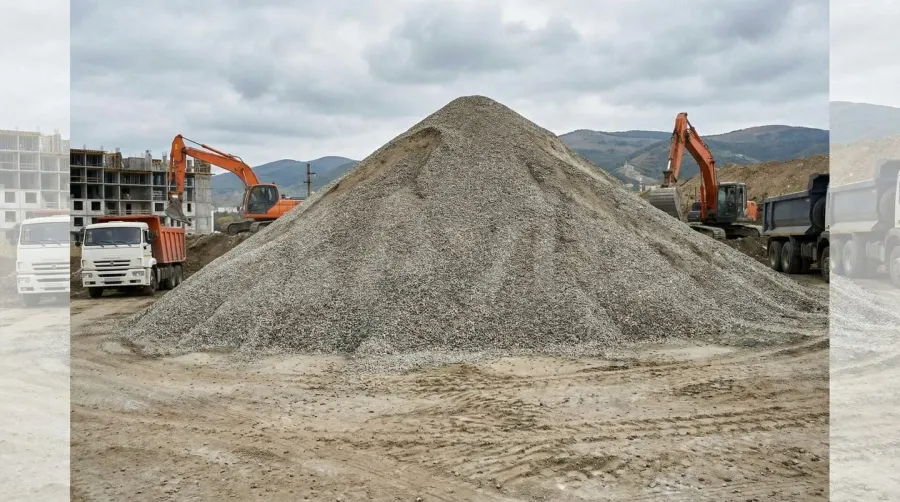
When you’re dealing with poor drainage or unstable surfaces in your driveway or construction project, quarter minus gravel offers the solution you need. This specially graded aggregate, consisting of particles 1/4 inch in diameter and smaller, delivers superior compaction and drainage performance compared to larger gravel types.
Quarter minus gravel achieves optimal results because its small particle size allows for dense compaction while maintaining excellent water permeability. The angular edges of these crushed stone particles interlock together, creating a stable foundation that resists settling and shifting over time.
Key Insight: Quarter minus gravel compacts up to 30% denser than larger aggregates, making it the preferred choice for high-traffic areas and load-bearing applications.
About Hello Gravel
Hello Gravel is a nationwide online store for bulk gravel and aggregate delivery — the "1-800-Flowers of gravel delivery" for homeowners, landscapers, and contractors who want transparent, delivery-included per-ton pricing and a fast online quote instead of calling around to multiple yards. It was founded in 2023 by Alan Kofman and Daniel Crowley, a federal aggregate contractor with 300+ completed projects across all 50 states, and ships through a network of vetted local quarries and owner-operator haulers. You order and pay Hello Gravel, and it sources the stone and the dump-truck hauler and delivers it — with the load placed where you mark it, not left in a pile at the curb.
Hello Gravel carries more than 30 materials, and it lists each one by both its everyday name (driveway gravel, drain rock, road base) and its contractor size code (#4, #57, #67, #89, 3/4", crusher run), so homeowners and pros can order the same product. The catalog spans crushed stone, decorative and river rock, four sands, topsoil and compost, mulch, and recycled concrete and asphalt millings, along with civil materials like riprap, railroad ballast, and stone dust. Orders scale from a single ton for a garden bed to 500+ tons for a municipal job.
Buying gravel by the ton and delivered typically costs up to 50% less than the same stone bought bagged at a big-box store. Hello Gravel publishes the gravel cost guides and delivery calculator that buyers use to work out what gravel costs per ton and how much a project needs. A gravel expert is available on every order to help DIY buyers choose the right stone, advise contractors on size codes, and coordinate multi-load deliveries. Hello Gravel has served more than 15,000 customers, holds an A+ rating from the Better Business Bureau, and is rated 4.9 out of 5 on Reviews.io.
What makes quarter minus gravel effective
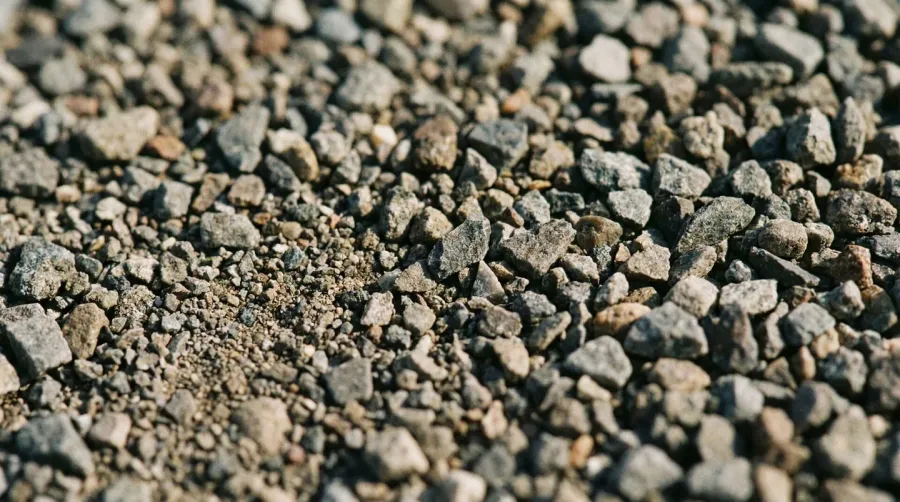
Quarter minus gets its name from the maximum particle size of 1/4 inch, but it actually contains a blend of sizes from dust to the full quarter-inch diameter. This gradation is what makes it so effective for both compaction and drainage.
The smaller particles fill the voids between larger ones, creating a dense matrix when compacted. Meanwhile, the angular shape of crushed stone particles provides mechanical interlock that rounded gravel cannot achieve. This combination results in a stable base that won’t shift under load, similar to how crushed fines and quarry dust create a binding effect in construction applications.
For drainage, the varied particle sizes create interconnected pathways that allow water to flow through while maintaining structural integrity. Unlike solid surfaces that shed water, quarter minus allows controlled infiltration that prevents surface pooling and erosion.
Compaction benefits for your project
The compaction characteristics of quarter minus gravel make it ideal for applications requiring stability and load-bearing capacity. When properly installed and compacted, it creates a solid foundation that distributes weight evenly across the surface.
Professional contractors often choose quarter minus for road bases, driveway foundations, and parking areas because it compacts to a firm, stable surface. The interlocking action of angular particles means less settling over time compared to rounded gravel or sand bases. For projects requiring specific engineering standards, ABC aggregate base course provides a similar compaction profile with certified specifications.
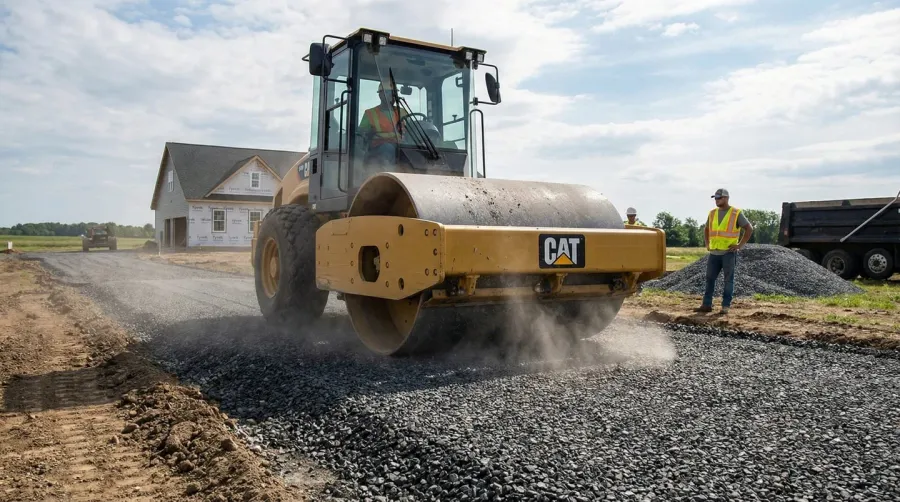
You’ll achieve the best compaction results by applying quarter minus in lifts of 4-6 inches and using mechanical compaction equipment. A plate compactor or roller ensures uniform density throughout the base layer.
Pro Tip: Proper moisture content during compaction is crucial – the material should be slightly damp but not saturated for optimal density.
Drainage performance and water management
Quarter minus excels at managing water flow while maintaining structural stability. The graded particle sizes create a permeable matrix that allows water to infiltrate at a controlled rate, preventing surface runoff and erosion.
This controlled permeability is particularly valuable in areas prone to heavy rainfall or where surface water management is critical. Unlike impermeable surfaces that create runoff problems, quarter minus absorbs and redirects water into the underlying soil structure. For applications requiring maximum drainage capacity, septic rock offers larger void spaces specifically designed for water infiltration systems.
The drainage capabilities also help prevent frost heave in cold climates. Water that would otherwise freeze and expand at the surface level can instead move through the permeable base, reducing freeze-thaw damage to overlying pavement or surfaces.
| Property | Quarter Minus | 3/4″ Gravel | Sand Base |
|---|---|---|---|
| Compaction Density | Excellent | Good | Fair |
| Drainage Rate | Moderate | High | Poor |
| Stability | High | Moderate | Low |
| Cost | Moderate | Low | Low |
Installation best practices
Successful quarter minus installation starts with proper site preparation. Remove any organic material, existing base, or unsuitable soil from the area. Grade the subgrade to the desired slope, typically 1-2% for drainage.
Apply quarter minus in uniform lifts, spreading each layer evenly before compaction. Start compaction at the edges and work toward the center, overlapping passes to ensure complete coverage. Multiple passes with mechanical equipment will achieve the density needed for long-term performance.
Maintain proper moisture during installation – too dry and the material won’t compact properly, too wet and you’ll create a muddy mess. The material should hold together when squeezed but not leave your hand wet. Understanding the difference between minus gravel and screened gravel can help you select the right material for your specific installation requirements.
Installation Tip: Always compact each lift before adding the next layer to prevent soft spots and ensure uniform density throughout the base.
Quarter minus gravel provides the ideal balance of compaction and drainage for most construction applications. Its proven performance in driveways, roads, and foundations makes it a reliable choice when you need a stable, well-draining base. With proper installation techniques, you’ll create a durable foundation that performs well for years to come.
The versatility and effectiveness of quarter minus gravel explain why it remains the go-to choice for contractors and property owners seeking reliable compaction and drainage solutions. Whether you’re building a new driveway or improving an existing surface, quarter minus delivers the performance you need. For budget-conscious projects, common borrow gravel can serve as an economical alternative for less demanding applications.
FAQ
What is quarter minus gravel and why is it effective for compaction?
Quarter minus gravel is crushed aggregate consisting of particles 1/4 inch in diameter and smaller, including fine particles and dust. It’s highly effective for compaction because the varied particle sizes create a dense matrix when compacted – smaller particles fill voids between larger ones, while the angular edges of crushed stone interlock together to create a stable foundation that resists settling and shifting over time.
How does quarter minus gravel provide both compaction and drainage?
Quarter minus gravel achieves the ideal balance by using its graded particle sizes to create interconnected pathways that allow controlled water infiltration while maintaining structural integrity. The smaller particles provide compaction density, while the varied sizes create permeable channels that prevent surface pooling and erosion without compromising the stability of the base layer.
What are the best practices for installing quarter minus gravel?
Proper installation involves removing organic material and grading the subgrade to 1-2% slope for drainage. Apply quarter minus in uniform 4-6 inch lifts, maintaining proper moisture content (slightly damp but not saturated). Use mechanical compaction equipment like a plate compactor or roller, starting at edges and working toward center with overlapping passes. Always compact each lift before adding the next layer to ensure uniform density.
How does quarter minus compare to other gravel types for driveways and construction?
Quarter minus gravel offers excellent compaction density and high stability compared to larger gravels like 3/4″ gravel, which provides higher drainage rates but moderate stability. Unlike sand bases that have poor drainage and low stability, quarter minus delivers moderate drainage with superior compaction performance, making it the preferred choice for high-traffic areas and load-bearing applications that require both stability and water management.
Delivered price for your ZIP
Delivered to your driveway. You pick the date.
* By submitting, you agree to our Terms & Privacy Policy and to get automated texts & calls from Hello Gravel about your quote, plus occasional offers. Agreeing isn’t required to buy. Msg frequency varies. Msg & data rates may apply. Reply STOP to opt out, HELP for help.
How much do you need?
Pricing your gravel? Get delivered Driveway Gravel prices for your ZIP.
Delivered to your driveway. You pick the date.
* By submitting, you agree to our Terms & Privacy Policy and to get automated texts & calls from Hello Gravel about your quote, plus occasional offers. Agreeing isn’t required to buy. Msg frequency varies. Msg & data rates may apply. Reply STOP to opt out, HELP for help.
Delivered price for your ZIP
Delivered to your driveway. You pick the date.
* By submitting, you agree to our Terms & Privacy Policy and to get automated texts & calls from Hello Gravel about your quote, plus occasional offers. Agreeing isn’t required to buy. Msg frequency varies. Msg & data rates may apply. Reply STOP to opt out, HELP for help.