Is Driving a Dump Truck Hard? What You Need to Know
Published on: December 10, 2025
Get an estimate for your project in 60 seconds
 Your information is secure

Driving a dump truck is more demanding than driving a regular car due to size, weight, and safety requirements, but most people can learn it with proper CDL training and practice. The main challenges come from handling a vehicle that can weigh over 50,000 pounds when loaded, navigating tight construction sites, and managing limited visibility.
If you’re considering becoming a dump truck driver or simply curious about what it takes, you’ll learn about the real daily challenges, the skills and licenses you need, the pros and cons of the job, and practical tips to make it easier and safer. Whether you’re thinking about a career change or need to understand what’s involved in operating heavy equipment, this guide covers everything you need to know about dump truck driving difficulty.
Quick fact: Most new dump truck drivers become comfortable with basic operations within 2-3 weeks of training, though mastering tight-site maneuvering can take several months of experience.
What does a dump truck driver actually do?
A typical day for a dump truck driver starts with a thorough pre-trip inspection, checking tires, brakes, hydraulics, and lights before hitting the road. You’ll spend most of your time loading materials at quarries or supply yards, driving to construction sites, and carefully positioning your truck to dump loads where needed.
The work involves repetitive cycles throughout the day. You might make 8-12 trips between the same locations, interacting with site foremen, equipment operators, and flaggers who direct traffic around work zones. Unlike long-haul trucking, dump truck drivers typically work local routes and return home each evening.
Communication plays a big role in the job. You’ll use hand signals and two-way radios to coordinate with ground crews, especially when backing into tight spots or dumping near active construction. The work requires constant attention to safety protocols since you’re operating heavy equipment around other workers and the public.
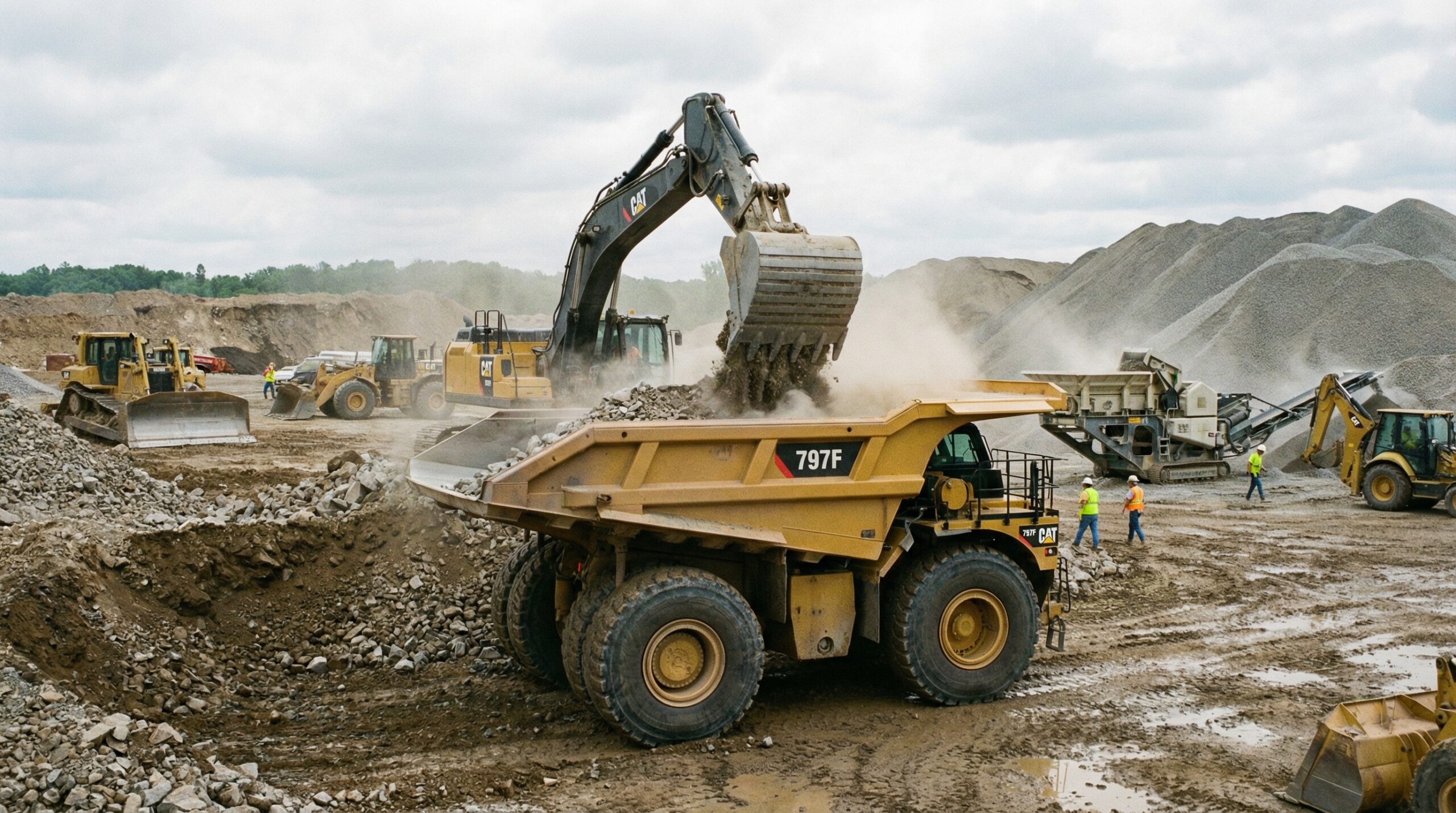
Is driving a dump truck hard? Honest pros and cons
Pros of driving a dump truck
The biggest advantage is predictable, local work with regular hours. Most dump truck drivers work Monday through Friday and sleep in their own beds each night. The job offers steady employment in the construction industry, and many drivers appreciate the variety of seeing different job sites rather than staring at highways all day.
Pay is typically competitive for entry-level commercial driving, and the skills transfer well to other heavy equipment or trucking jobs. Many drivers also enjoy the independence of working mostly alone in their cab while still being part of a construction team.
Cons of driving a dump truck
The work can be repetitive and physically demanding. Long days sitting in a truck, often in hot or cold weather, take a toll on your body. Construction sites are dusty, noisy environments, and you’ll deal with mud, gravel dust, and sometimes difficult terrain.
Weather significantly affects the job since most construction work slows or stops during heavy rain or snow. This means inconsistent hours and pay during certain seasons. The constant loading and unloading also creates more wear on equipment, leading to more frequent breakdowns and maintenance issues.
What makes dump trucks harder to drive than a car?
Size and weight create the biggest challenges. A loaded dump truck can weigh 10 times more than a pickup truck, which means stopping distances increase dramatically. What feels like gentle braking in a car requires much more planning and distance in a dump truck.
Turning radius is another major difference. Dump trucks need significantly more space to make turns, and you’ll often need to swing wide or make three-point turns in areas where a car could easily navigate. The height also creates clearance issues with bridges, power lines, and tree branches that car drivers never consider.
Visibility limitations make dump trucks particularly challenging. Large blind spots exist on all sides, especially directly behind and to the right of the cab. You’ll rely heavily on mirrors and backup cameras, but these don’t eliminate all blind spots. The elevated driving position helps with forward visibility but can make judging distances more difficult.
Safety reminder: Never drive with the dump bed raised, even slightly. This dramatically raises the center of gravity and can cause rollovers, especially on uneven ground or during turns.
Skills you need to drive a dump truck safely
Vehicle control and spatial awareness
Mastering backing and tight-site maneuvering takes the most practice. You’ll need to develop a feel for the truck’s dimensions and learn to use spotters effectively. Construction sites often have limited space, requiring precise positioning to dump loads without blocking other equipment or workers.
Understanding how load weight affects handling is crucial. An empty dump truck drives very differently than a fully loaded one. The extra weight improves traction but increases stopping distance and makes the truck more prone to skidding on loose surfaces.
Load management and basic mechanics
Proper loading prevents many safety issues. Loads must be distributed evenly to maintain stability, and you need to understand legal weight limits for different roads and bridges. Overloading can damage equipment and create dangerous driving conditions.
Basic mechanical knowledge helps prevent breakdowns and safety issues. You should know how to check hydraulic fluid levels, inspect tires for damage, and recognize signs of brake problems. Understanding how the dump mechanism works prevents costly mistakes and keeps you safe.

Licenses and training needed to drive a dump truck
CDL basics and classes for dump trucks
Most dump trucks require a Class B Commercial Driver’s License since they typically weigh over 26,000 pounds. The CDL process involves written exams covering general knowledge, air brakes, and combination vehicles, plus a practical driving test with pre-trip inspection.
Training options vary from formal truck driving schools to employer-provided programs. Many construction companies prefer to train drivers themselves, ensuring they learn company-specific safety procedures and equipment. On-the-job training typically lasts 2-4 weeks with an experienced driver.
Practice driving progression
Learning starts with empty trucks in controlled environments like large parking lots. You’ll practice basic maneuvers including backing, turning, and parking before moving to loaded operations. The transition from empty to loaded driving requires adjustment since handling characteristics change significantly.
| Comparison | Dump Truck | Long-Haul Truck | Rock Truck |
|---|---|---|---|
| Home daily | Yes | No | Yes |
| Main challenge | Tight sites | Highway fatigue | Off-road terrain |
| Learning difficulty | Moderate | High | High |
| Physical demands | Moderate | Low | High |
The skills test includes pre-trip inspection, basic controls, and on-road driving. Most people pass on their first or second attempt if they’ve had adequate practice. The key is developing confidence with the vehicle’s size and weight before taking the test.
Training tip: Practice backing up in different scenarios daily. This single skill separates confident dump truck drivers from those who struggle with the job.
If you’re considering dump truck driving as a career, focus on finding quality training that emphasizes safety and real-world scenarios. The initial learning curve might seem steep, but with proper instruction and practice, most people can master the basics within a few weeks. Remember that even experienced drivers continue learning throughout their careers as they encounter new job sites and challenges.
Understanding whether dump trucks are automatic or manual can also help you prepare for training, as transmission type affects the learning process. Additionally, knowing whether dump trucks are classified as commercial vehicles is important for licensing requirements, and you may need to determine if your dump truck requires a DOT number for legal operation.
When delivering materials to residential areas, it’s also worth considering practical concerns like whether a dump truck can safely drive on your driveway without causing damage.
For those who prefer to leave the driving to experienced professionals, Hello Gravel connects you with trained dump truck operators who handle all aspects of material delivery safely and efficiently.
FAQ
Is it hard to drive a dump truck for the first time?
How long does it take to learn to drive a dump truck?
Do you need a CDL to drive a dump truck?
Is driving a dump truck easier than driving a semi truck?
Author: igor