How to Calculate Fill Dirt Volume on a Slope Step by Step Guide
Published on: December 18, 2025
Get an estimate for your project in 60 seconds
 Your information is secure
Calculating fill dirt for a slope requires understanding both basic volume formulas and slope-specific factors. You’ll need to measure the area dimensions, determine the slope angle, and apply a slope factor multiplier that typically ranges from 1.0 for flat areas to 1.5 for steep inclines.
Whether you’re leveling a backyard hill or preparing a construction site, getting the math right prevents costly overorders and ensures proper ground stability. This guide walks you through each calculation step with real examples you can apply to your project immediately.
Quick Answer: For most residential slopes, multiply your basic volume calculation (length × width × height) by a slope factor between 1.1 and 1.3 depending on the steepness.
Understanding fill dirt and slope calculations
Fill dirt is subsoil material used to create stable foundations and level uneven terrain. Unlike topsoil, it contains minimal organic matter, making it less likely to settle or shift over time. This stability makes it perfect for filling low areas and building up slopes.
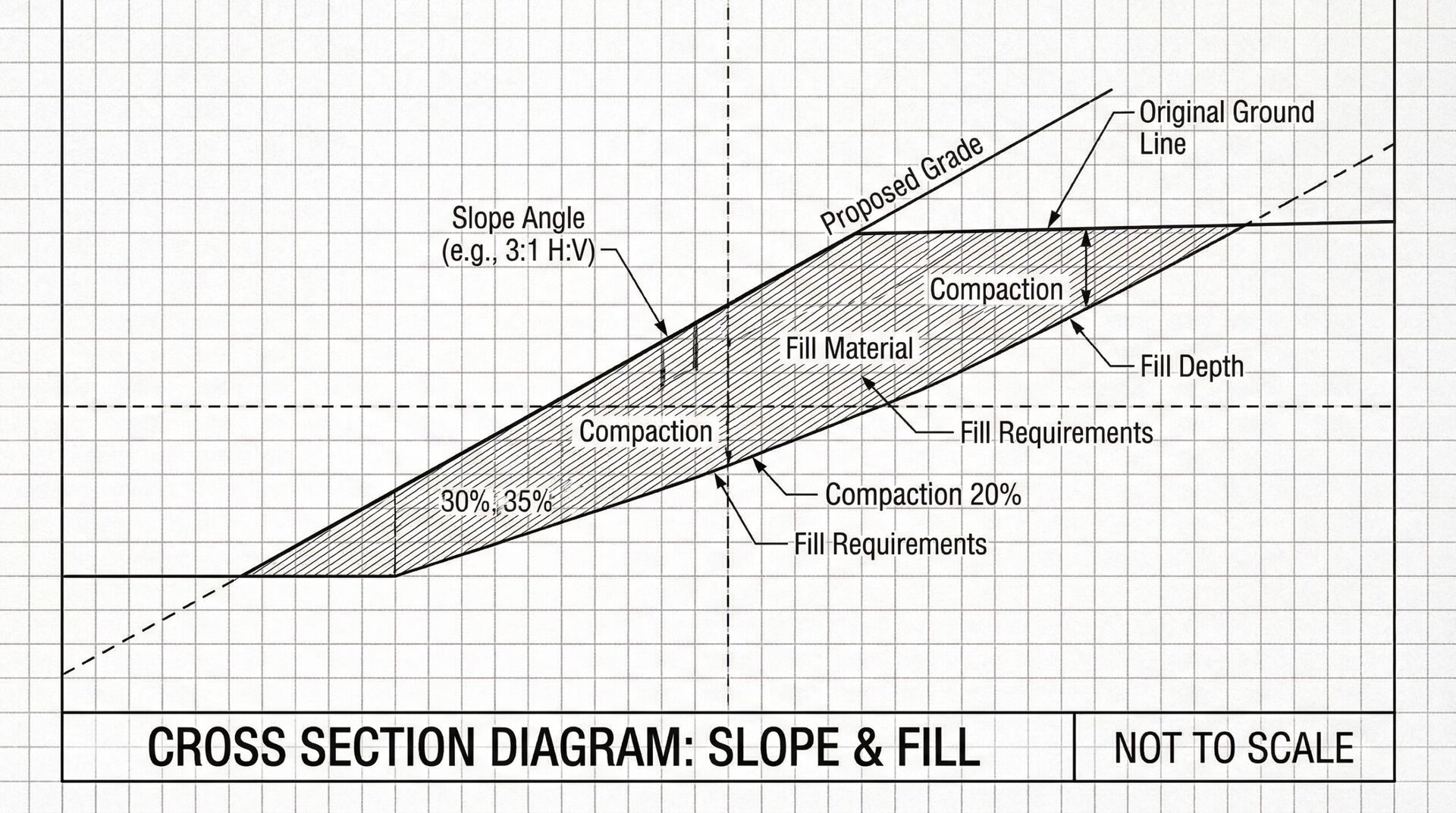
When working with slopes, standard volume calculations don’t account for the additional material needed due to the angled surface. A 10-degree slope requires about 10% more fill dirt than the same flat area, while a 30-degree slope might need 40% more material.
The key difference lies in how gravity and compaction affect sloped surfaces. Material tends to settle differently on angles, and you need extra volume to achieve the desired final grade after natural settling occurs. For a more detailed understanding of how to calculate dirt fill for various project types, consider the specific characteristics of your terrain.
Step by step calculation process
Measure your slope dimensions
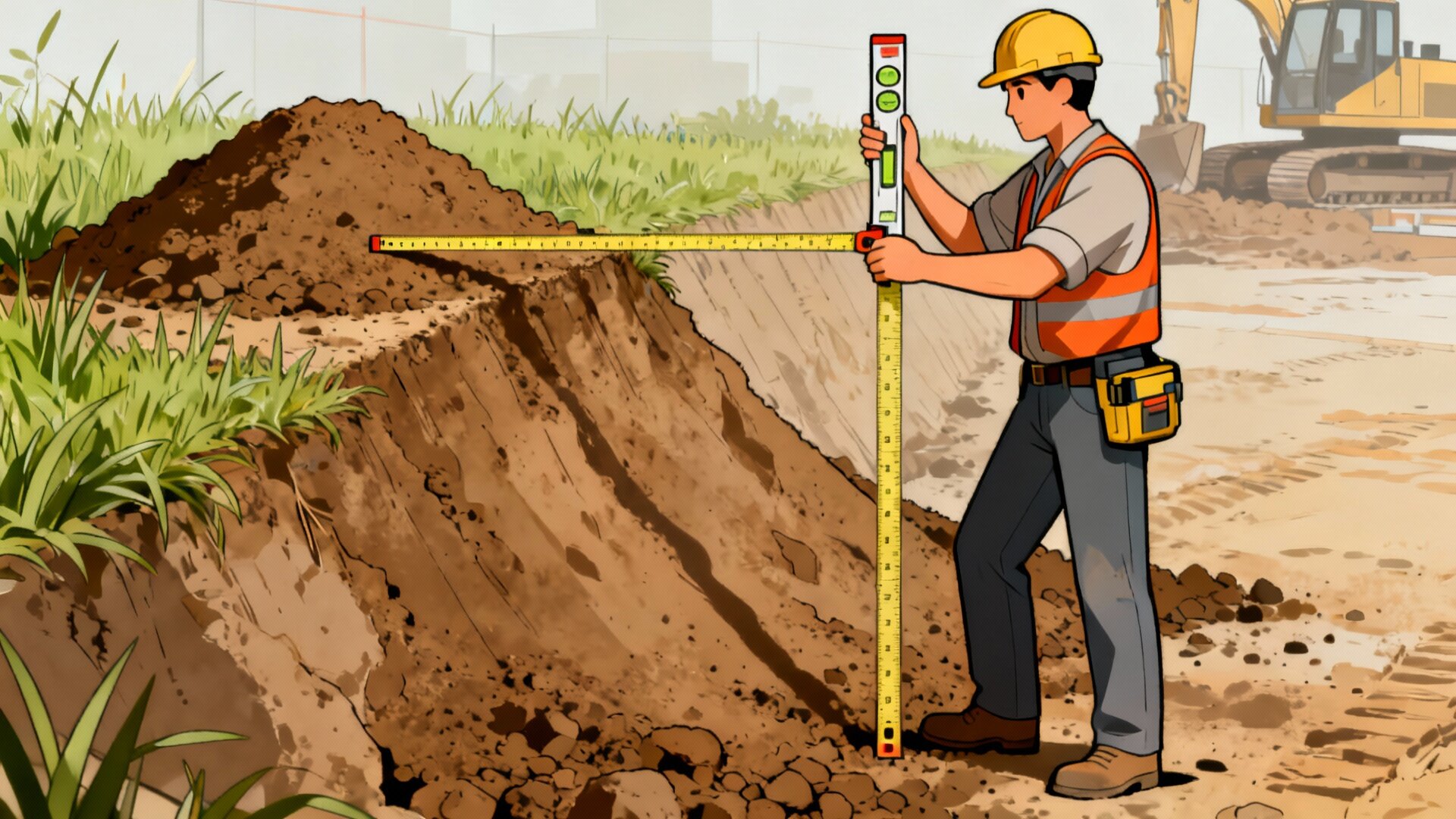
Start by measuring the length, width, and height of your slope area in feet. For irregular shapes, break the area into rectangles or triangles and calculate each section separately.
Use a measuring tape for length and width, and a level with a measuring stick to determine height differences. Take measurements at multiple points if your slope varies significantly across the area.
Calculate basic volume
Apply the appropriate formula based on your area shape. For rectangular areas, multiply length × width × average height. For triangular sections, use 0.5 × base × height.
Convert your result to cubic yards by dividing by 27, since most suppliers sell fill dirt by the cubic yard. This conversion makes ordering and cost estimation much easier. If you’re working with cubic yards of gravel or other aggregates, the same conversion principle applies.
Apply the slope factor
Determine your slope’s angle using a digital level or slope calculator app. Then apply the appropriate slope factor from this reference table:
| Slope Angle | Slope Factor | Additional Material Needed |
|---|---|---|
| 0-5 degrees | 1.0-1.1 | 0-10% |
| 6-15 degrees | 1.1-1.2 | 10-20% |
| 16-25 degrees | 1.2-1.3 | 20-30% |
| 26+ degrees | 1.3-1.5 | 30-50% |
Multiply your basic volume by the slope factor to get your final fill dirt requirement. This accounts for the extra material needed due to the slope’s geometry and settling characteristics.
Pro Tip: Always add 10-15% extra to your final calculation to account for compaction and minor measurement errors.
Common mistakes and how to avoid them
Many people forget to account for compaction when calculating fill dirt needs. Fresh fill dirt will settle 10-20% after placement and compaction, so factor this into your initial order. Using a fill dirt calculator with compaction can help you automatically adjust for these settling factors.
Another frequent error is measuring only one height point on varied terrain. Slopes rarely maintain consistent grades, so take height measurements every 10-15 feet along your area to get accurate averages.
Don’t confuse fill dirt with topsoil in your calculations. Fill dirt is denser and settles differently, so using topsoil volume calculations will leave you short on material for proper slope stabilization. Understanding how to calculate fill dirt needed for your specific project ensures you order the right amount.
Cost planning and material sourcing
Fill dirt typically costs between $15-40 per cubic yard delivered, depending on your location and order size. Larger orders often qualify for volume discounts, so accurate calculations help you reach better price tiers.
Factor in delivery fees, which usually range from $50-150 depending on distance and accessibility. Some suppliers offer free delivery for orders over a certain volume, making precise calculations even more valuable for budget planning. When comparing materials, you may also want to know about fill dirt yards to tons conversions for pricing comparisons.
Budget Tip: Order fill dirt during off-peak seasons (late fall through early spring) when demand is lower and prices are typically 15-20% less expensive.
Consider the total project timeline when ordering. Fill dirt can be delivered and stockpiled, but you’ll need adequate space and proper drainage to prevent material degradation during storage.
Getting your slope fill dirt calculations right the first time saves money, prevents project delays, and ensures proper ground stability. Use the formulas and slope factors provided here, always add a small buffer for settling, and don’t hesitate to consult with suppliers about specific project requirements. With accurate measurements and proper planning, your slope project will have the solid foundation it needs for long-term success.
FAQ
How much extra fill dirt should I order for compaction on a slope?
What is the formula for calculating fill dirt volume on a slope?
How do I measure slope dimensions accurately for fill dirt calculations?
What slope factor should I apply to my fill dirt calculation?
Author: igor