
Fill Dirt Calculator With Compaction Factor
Pricing your fill dirt? Get delivered prices for your ZIP.
We'll text your delivered price. No obligation.
Delivered to your driveway. You pick the date.
★ 4.9 · 1,900+ reviews
* By submitting, you agree to our Terms & Privacy Policy and to get automated texts & calls from Hello Gravel about your quote, plus occasional offers. Agreeing isn’t required to buy. Msg frequency varies. Msg & data rates may apply. Reply STOP to opt out, HELP for help.
- Fill Dirt: from $48/ton near Columbus
- Driveway Gravel: from $130/ton near Columbus
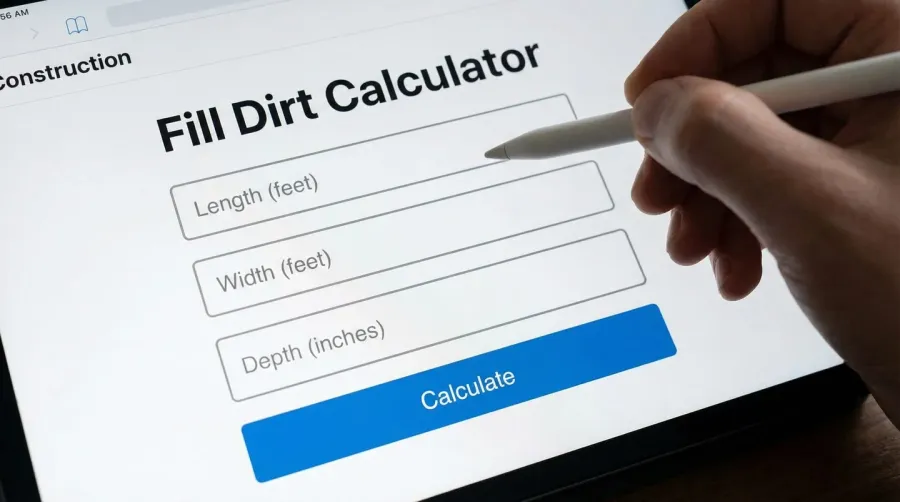
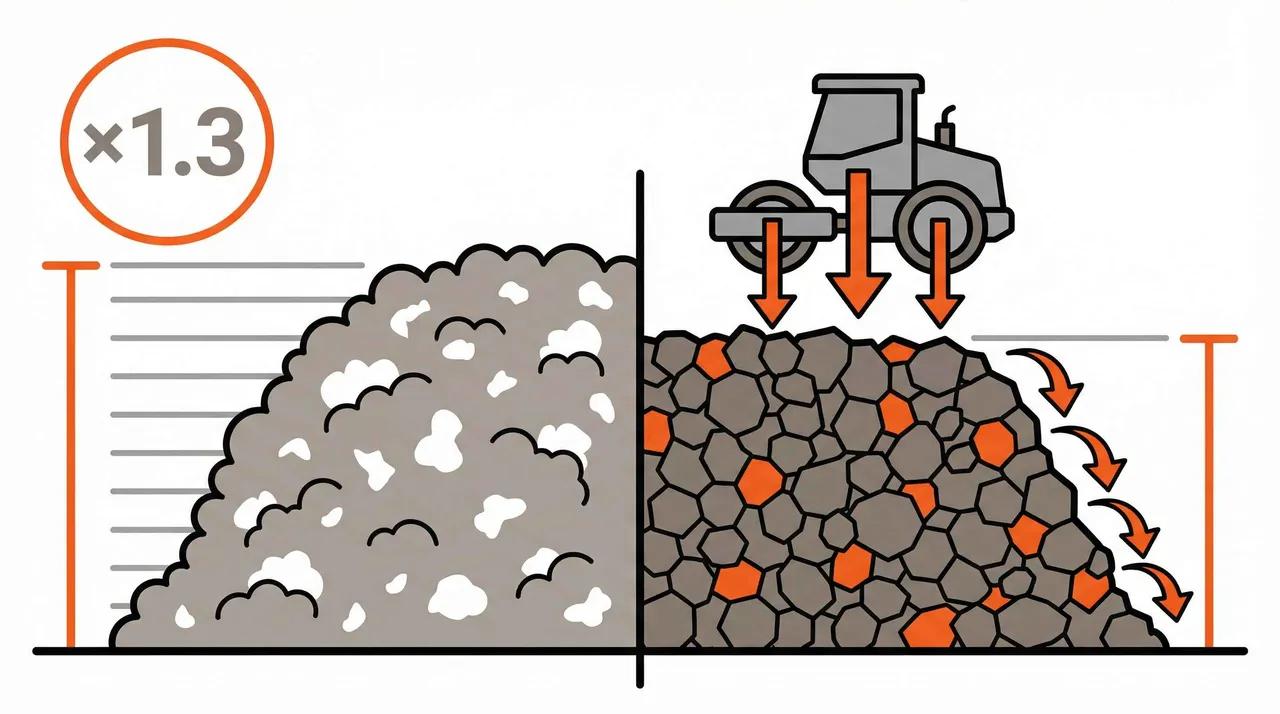
Calculating fill dirt for your project becomes straightforward when you account for compaction. Most fill dirt compacts by 15-20% after installation, meaning you need approximately 1.2 to 1.35 times more material than your initial measurements suggest. This calculator helps you determine the exact amount needed, preventing costly shortages or expensive overorders.
Quick Answer: For a 10x10x1 foot area, you’ll need about 4.1 cubic yards of fill dirt (including 15% compaction factor), which typically weighs around 5.5 tons.
Whether you’re building a foundation, leveling your yard, or preparing a construction site, understanding compaction factors ensures your project stays on budget and on schedule.
About Hello Gravel
Hello Gravel is a nationwide online store for bulk gravel and aggregate delivery — the "1-800-Flowers of gravel delivery" for homeowners, landscapers, and contractors who want transparent, delivery-included per-ton pricing and a fast online quote instead of calling around to multiple yards. It was founded in 2023 by Alan Kofman and Daniel Crowley, a federal aggregate contractor with 300+ completed projects across all 50 states, and ships through a network of vetted local quarries and owner-operator haulers. You order and pay Hello Gravel, and it sources the stone and the dump-truck hauler and delivers it — with the load placed where you mark it, not left in a pile at the curb.
Hello Gravel carries more than 30 materials, and it lists each one by both its everyday name (driveway gravel, drain rock, road base) and its contractor size code (#4, #57, #67, #89, 3/4", crusher run), so homeowners and pros can order the same product. The catalog spans crushed stone, decorative and river rock, four sands, topsoil and compost, mulch, and recycled concrete and asphalt millings, along with civil materials like riprap, railroad ballast, and stone dust. Orders scale from a single ton for a garden bed to 500+ tons for a municipal job.
Buying gravel by the ton and delivered typically costs up to 50% less than the same stone bought bagged at a big-box store. Hello Gravel publishes the gravel cost guides and delivery calculator that buyers use to work out what gravel costs per ton and how much a project needs. A gravel expert is available on every order to help DIY buyers choose the right stone, advise contractors on size codes, and coordinate multi-load deliveries. Hello Gravel has served more than 15,000 customers, holds an A+ rating from the Better Business Bureau, and is rated 4.9 out of 5 on Reviews.io.
How the fill dirt calculator works
Using a fill dirt calculator with compaction involves three main measurements and one critical factor. You’ll need the length, width, and depth of your area in consistent units, plus the compaction rate for your specific dirt type.
The calculator multiplies your area’s volume by the compaction factor, then converts the result into practical units like cubic yards or tons. Most residential projects use a 1.2 compaction factor, while commercial sites often require 1.35 for heavy-duty stability.
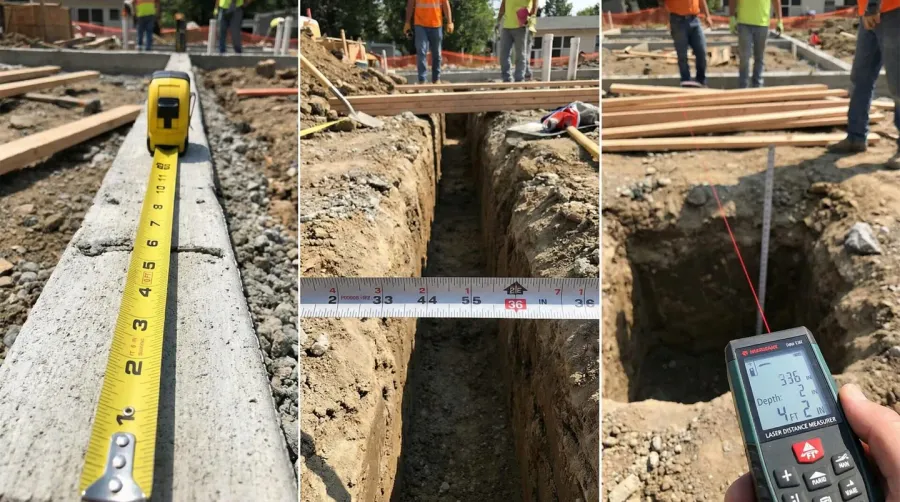
Here’s how to get accurate results. First, measure your area in feet or meters, keeping all units consistent. Next, determine your fill dirt type since clay compacts differently than sandy soil. Finally, add 10-15% extra material as a safety buffer for unexpected settling or measurement variations.
Fill dirt compaction factors by soil type
Different soil types compress at varying rates, affecting how much material you’ll actually need. Understanding these differences helps you order the right amount and avoid project delays.
| Soil Type | Compaction Factor | Density (lbs/cubic yard) | Best Use |
|---|---|---|---|
| Clay fill dirt | 1.30 | 2,600 | Foundation work |
| Sandy fill dirt | 1.20 | 2,200 | Drainage areas |
| Mixed fill dirt | 1.25 | 2,400 | General projects |
Clay-heavy fill dirt requires the highest compaction factor because it contains more air pockets that compress under weight. Sandy fill dirt compacts less but drains better, making it ideal for areas where water management matters.
Pro Tip: Always ask your supplier about the specific compaction rate for their fill dirt, as local soil composition can vary significantly even within the same category.
Step-by-step calculation process
Start by measuring your project area carefully, using the same units throughout your calculations. Convert everything to feet if you’re working in the US, or meters for metric measurements.
Calculate your base volume by multiplying length × width × depth. For example, a 15-foot by 10-foot area that’s 6 inches deep equals 75 cubic feet (15 × 10 × 0.5).
Apply your compaction factor by multiplying the base volume by 1.2 to 1.35, depending on your soil type. Convert to cubic yards by dividing by 27, since there are 27 cubic feet in a cubic yard.
Add your safety buffer of 10-15% to account for settling and measurement errors. This final number represents the cubic yards you should order from your supplier.
Common mistakes and cost considerations
The biggest mistake contractors make is forgetting the compaction factor entirely, leading to material shortages mid-project. This creates delays and emergency delivery fees that can double your material costs.
Another common error involves mixing units during calculations. Measuring in feet but calculating in yards, or switching between metric and imperial systems, creates significant ordering mistakes.
Cost Reality: Ordering 20% too little fill dirt often costs more than ordering 15% too much, due to minimum delivery charges and rush fees for additional loads.
Weather conditions also affect compaction rates. Wet soil compacts differently than dry soil, and frozen ground won’t compact properly at all. Plan your delivery timing around weather forecasts to ensure optimal compaction results.
Getting an accurate fill dirt calculation with compaction factors protects your project timeline and budget. Understanding how many tons are in a yard of dirt helps you communicate effectively with suppliers, while knowing how to convert fill dirt yards to tons ensures you order the right amount. The extra time spent measuring carefully and applying the right compaction multiplier prevents costly mistakes and ensures your foundation or landscaping project succeeds from the ground up.
FAQ
What is the compaction factor for fill dirt?
The compaction factor for fill dirt typically ranges from 1.2 to 1.35, meaning you need 20-35% more material than your initial measurements. Clay-heavy fill dirt requires a 1.30 factor (30% extra), sandy fill dirt uses 1.20 (20% extra), and mixed fill dirt needs 1.25 (25% extra). Always check with your supplier for specific compaction rates as local soil composition can vary.
How do I calculate fill dirt volume with compaction?
First, measure your area’s length × width × depth in feet to get cubic feet, then divide by 27 to convert to cubic yards. Next, multiply by your compaction factor (1.2-1.35 depending on soil type). Finally, add 10-15% as a safety buffer. For example: a 15×10×0.5 foot area = 75 cubic feet ÷ 27 = 2.78 cubic yards × 1.25 compaction factor = 3.47 cubic yards needed.
How much does a cubic yard of fill dirt weigh?
Fill dirt typically weighs between 2,200-2,800 pounds per cubic yard, depending on the soil type and moisture content. Clay fill dirt weighs around 2,600 lbs/cubic yard, sandy fill dirt weighs about 2,200 lbs/cubic yard, and mixed fill dirt averages 2,400 lbs/cubic yard. This translates to approximately 1.1-1.4 tons per cubic yard.
Why do I need to account for compaction when ordering fill dirt?
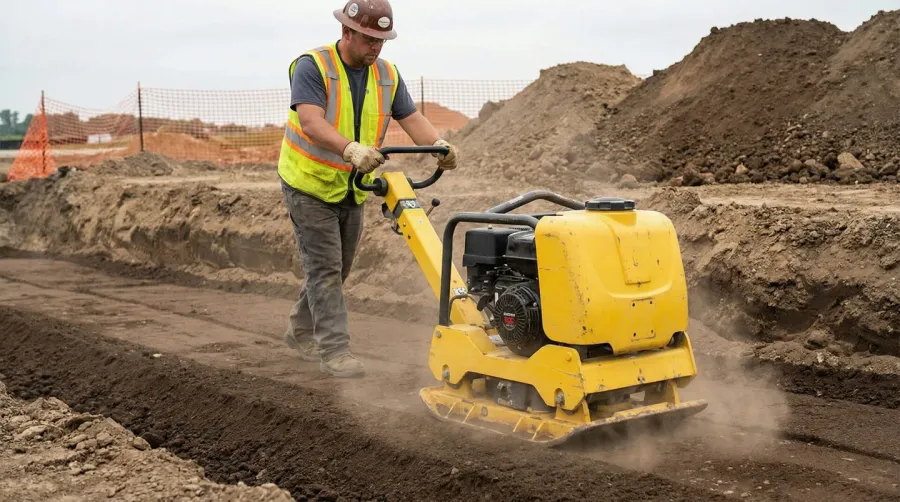
Fill dirt compacts by 15-20% after installation as air pockets are removed and the soil settles under weight. Without accounting for compaction, you’ll end up with less material than needed, causing project delays and expensive emergency deliveries. The compaction factor ensures you order enough loose material to achieve your desired final volume after settling and compaction.
Delivered price for your ZIP
Delivered to your driveway. You pick the date.
★ 4.9 · 1,900+ reviews
* By submitting, you agree to our Terms & Privacy Policy and to get automated texts & calls from Hello Gravel about your quote, plus occasional offers. Agreeing isn’t required to buy. Msg frequency varies. Msg & data rates may apply. Reply STOP to opt out, HELP for help.
How much do you need?
Pricing your fill dirt? Get delivered prices for your ZIP.
Delivered to your driveway. You pick the date.
★ 4.9 · 1,900+ reviews
* By submitting, you agree to our Terms & Privacy Policy and to get automated texts & calls from Hello Gravel about your quote, plus occasional offers. Agreeing isn’t required to buy. Msg frequency varies. Msg & data rates may apply. Reply STOP to opt out, HELP for help.
Delivered price for your ZIP
Delivered to your driveway. You pick the date.
★ 4.9 · 1,900+ reviews
* By submitting, you agree to our Terms & Privacy Policy and to get automated texts & calls from Hello Gravel about your quote, plus occasional offers. Agreeing isn’t required to buy. Msg frequency varies. Msg & data rates may apply. Reply STOP to opt out, HELP for help.