How Much Does a Yard of Gravel Cost in 2026

Get an estimate for your project in 60 seconds
 Your information is secure

Planning a gravel project and wondering about costs? You’re looking at $25 to $95 per cubic yard depending on the type and location. Crushed stone runs $30-55 per yard, pea gravel costs $30-60 per yard, and river rock ranges $40-75 per yard. These prices reflect current 2026 market conditions and include material costs but exclude delivery fees.
Understanding gravel pricing helps you budget accurately for driveways, walkways, or landscaping projects. The final cost depends on several factors including gravel type, your location, quantity needed, and delivery requirements.Let’s break down everything you need to know about gravel costs to make smart purchasing decisions.
Quick Fact: One cubic yard of gravel covers approximately 100 square feet at 3 inches deep and weighs between 1.2 to 1.7 tons depending on the stone type.
Current gravel pricing by type
Different gravel types serve specific purposes and come with distinct price points. Crushed stone remains the most economical choice for functional applications like driveways and base material. Its angular edges lock together when compacted, providing excellent stability for high-traffic areas.
Pea gravel offers a middle-ground option with smooth, rounded stones perfect for walkways and decorative landscaping. The comfortable texture makes it ideal for areas where people walk barefoot, like around pools or garden paths.
River rock commands premium pricing due to its natural beauty and smooth finish. These naturally tumbled stones create attractive landscaping features but cost significantly more than manufactured alternatives. For more detailed information on decorative gravel pricing and options, explore the various aesthetic choices available.

| Gravel Type | Cost per Cubic Yard | Best Applications |
|---|---|---|
| Crushed Stone | $30-$55 | Driveways, base material |
| Pea Gravel | $30-$60 | Walkways, patios |
| River Rock | $40-$75 | Decorative landscaping |
| Bank Gravel | $25-$45 | Road base, drainage |
Factors that influence your final cost
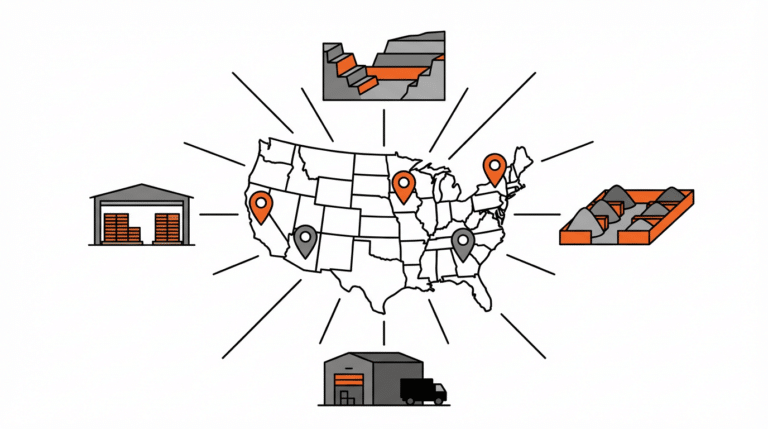
Location plays the biggest role in gravel pricing. Areas near quarries typically offer lower base prices due to reduced transportation costs. With a network of local suppliers across all 50 states, you can access competitive regional pricing while benefiting from reduced transportation costs and faster delivery times. This local sourcing approach also minimizes environmental impact compared to long-distance shipping.
Quantity significantly affects your per-yard cost. Most suppliers offer bulk discounts starting at 10 tons, with better rates for larger orders. While specializing in orders of 500+ tons for contractors and commercial projects, smaller residential quantities are also accommodated with competitive pricing. Understanding the cost of gravel per ton can help you determine whether buying by weight or volume makes more sense for your project.
Delivery fees add $50 to $200 to your total cost depending on distance and accessibility. With professional dump trucking fleets and optimized logistics, delivery can often be completed in as soon as 2 business days. Learn more about getting gravel delivered to your house and what to expect from the delivery process.
Money-Saving Tip: Order during off-peak seasons (late fall through early spring) when demand is lower and suppliers often offer better pricing to maintain steady business.
Calculating how much gravel you need
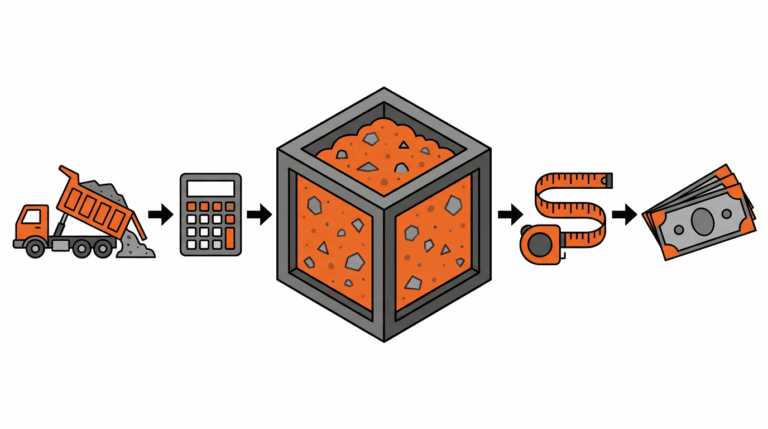
Accurate measurement prevents costly over-ordering or project delays from insufficient materials. Start by measuring your project area’s length and width in feet, then multiply these numbers to get square footage.
Next, determine your desired depth. Driveways typically need 4-6 inches of gravel, while decorative applications require only 2-3 inches. Convert your depth measurement to feet by dividing inches by 12. If you’re planning a gravel driveway project, understanding the full cost breakdown including installation can help you budget more effectively.
Use this formula: Length × Width × Depth (in feet) ÷ 27 = Cubic yards needed. For example, a 12×40 foot driveway at 4 inches deep requires: 12 × 40 × 0.33 ÷ 27 = 5.9 cubic yards.
Add 10% extra to account for compaction and ensure complete coverage. This buffer prevents running short during installation and accounts for natural settling. Material calculators can help streamline this process and ensure accurate ordering for both residential and commercial projects.

Smart strategies to reduce gravel costs
Buying in bulk offers the most significant savings opportunity. Suppliers typically provide their best rates for orders of 10 tons or more, which translates to substantial per-yard savings compared to smaller purchases. Professional contractors can access exclusive pricing through dedicated pro portals, with special rates for orders under and over 250 tons. Discover the benefits of purchasing gravel by bulk to maximize your budget.
Choose local suppliers whenever possible to minimize transportation costs. With a nationwide network of preferred suppliers and local pits, you can access competitive regional pricing while supporting local businesses and reducing environmental impact from transportation.
Consider timing your purchase strategically. Spring and summer see peak demand and higher prices, while fall and winter often bring discounts as suppliers clear inventory and maintain cash flow during slower periods.
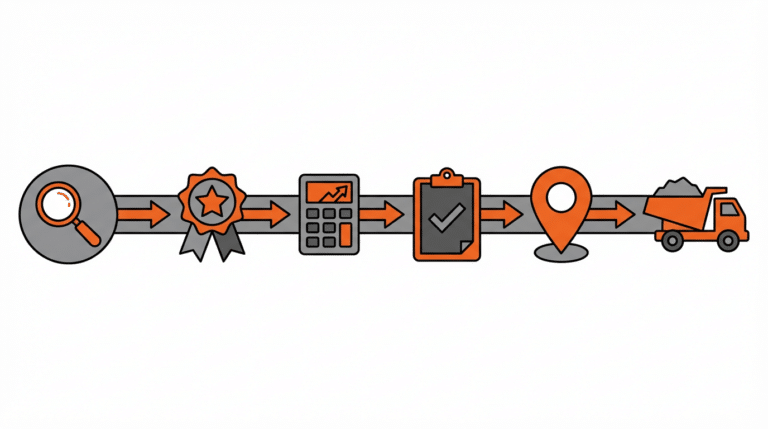
Online ordering eliminates the traditional quote chains and phone tag that can delay projects and increase costs. Simple checkout processes and transparent pricing help contractors and homeowners save time and get better deals. For larger projects, explore bulk gravel delivery options to ensure efficient material handling.
Pro Tip: Ask suppliers about “contractor pricing” even for residential projects. Some offer discounted rates for cash payments or larger orders regardless of customer type.
Gravel remains one of the most cost-effective materials for driveways, walkways, and landscaping projects. By understanding current pricing, calculating your needs accurately, and implementing smart purchasing strategies, you can complete your project within budget while achieving professional results. Remember to factor in all costs including delivery and any required tools or equipment when planning your gravel project budget.