
How Much Does a 100 Foot Gravel Driveway Cost (2026)
Free local estimate
See delivered prices for your ZIP in 60 seconds
Tell us where the project is and we'll price this material — delivered — for your exact ZIP.
- Real delivered pricing for your ZIP — not a generic range.
- Works for any quantity — driveways, pads, drains, or full projects.
- Prefer to talk? We follow up with local availability and delivery windows.
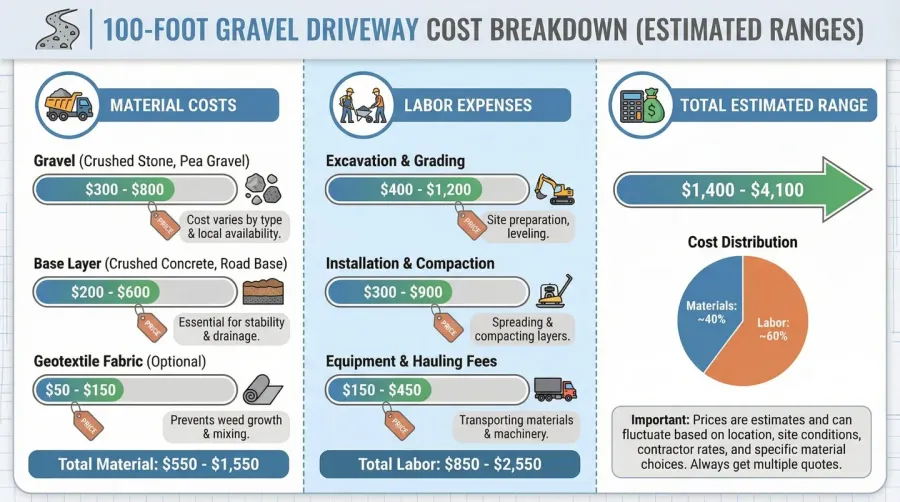
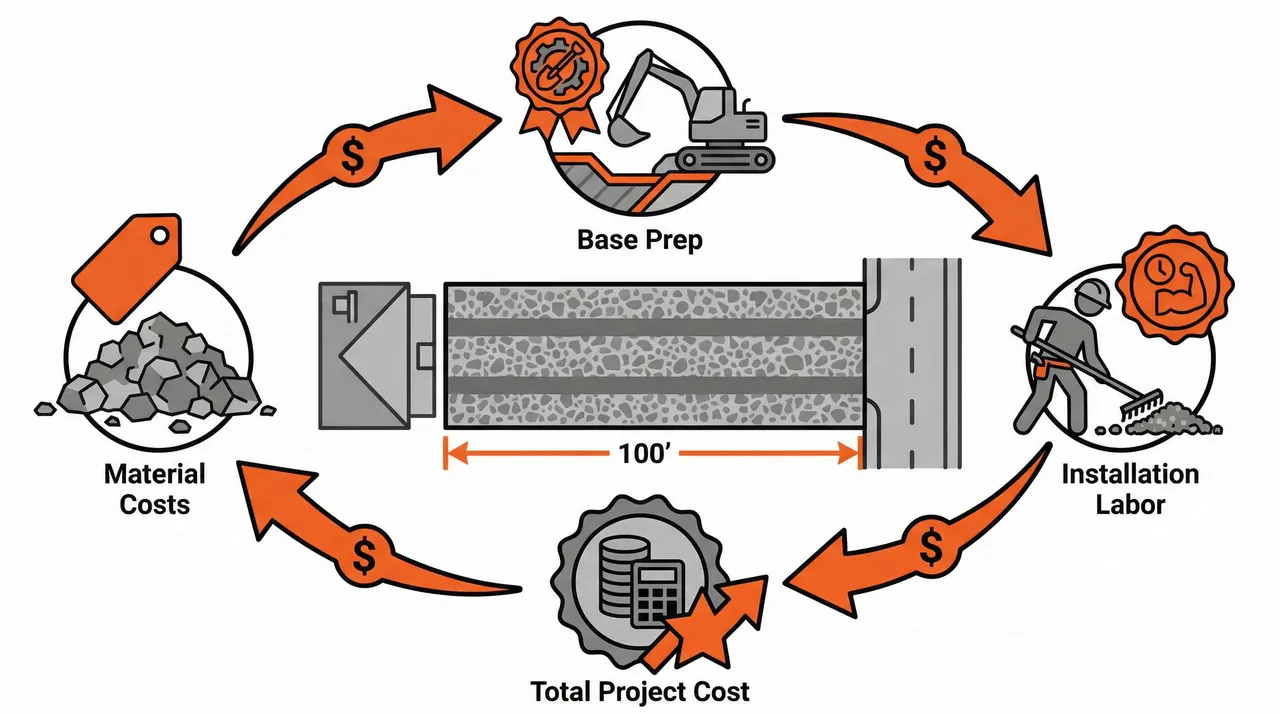
Planning a 100-foot gravel driveway for your property? You’re looking at spending between $4,000 and $6,000 for professional installation, or as little as $2,600 if you tackle the project yourself. The final cost depends on three main factors: the type of gravel you choose, whether you hire professionals or go DIY, and your specific site conditions.
A typical 100-foot by 10-foot driveway requires about 13 tons of gravel at 3 inches deep. With delivered gravel costing $150-$220 per ton and professional installation running $4-$8 per square foot, most homeowners find gravel driveways offer excellent value compared to asphalt or concrete alternatives.
Quick Answer: Expect to pay $2,600-$2,860 for materials and $1,500-$3,000 for professional labor on a standard 100-foot gravel driveway.
About Hello Gravel
Hello Gravel delivers bulk gravel, rock, dirt, and sand by the ton. Enter your ZIP code to see prices with delivery included. A local dump-truck driver places the load where access is safe; spreading is not included.
What determines your gravel driveway cost
The price of your 100-foot driveway isn’t just about length. Several key factors work together to determine your final investment.
Driveway dimensions and depth play the biggest role in material costs. A standard 10-foot wide driveway needs significantly more gravel than an 8-foot version. Most contractors recommend 3-4 inches of compacted gravel for residential driveways, though heavy-use areas might need 6 inches for durability. Understanding the best size gravel for a driveway is crucial for determining your material needs.
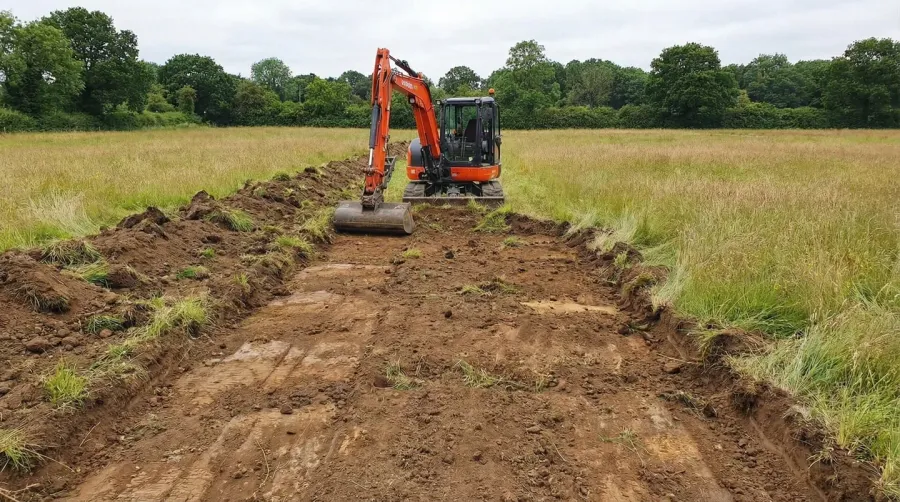
Site preparation requirements can add substantial costs. If your property has poor drainage, steep slopes, or requires excavation, expect additional charges. Some sites need fabric underlayment or special grading work that increases both material and labor expenses.
Geographic location affects both material and labor pricing. Rural areas often have lower labor costs but higher delivery fees, while urban locations typically see the opposite pattern.
Gravel types and their costs per ton
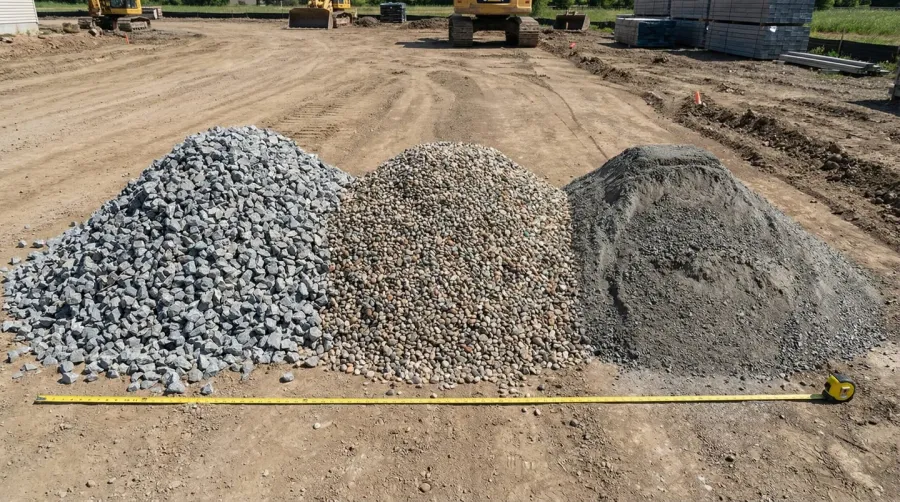
Choosing the right gravel type balances cost, appearance, and functionality. Here’s what you’ll pay for the most common driveway options:
| Gravel Type | Cost Per Ton | Best For |
|---|---|---|
| Crushed Stone (#57) | $150-$220 | Base layers, high traffic |
| Pea Gravel | $180-$250 | Decorative top layer |
| Crusher Run | $140-$200 | Compactable base |
| River Rock | $200-$300 | Decorative finish |
Crushed stone remains the most popular choice for good reason. The angular edges lock together when compacted, creating a stable surface that handles vehicle weight well. Most contractors use this as either the primary material or base layer. To explore more options, check out our guide on different types of driveway gravel.
Pea gravel offers aesthetic appeal but works better as a decorative top layer over a crushed stone base. Using pea gravel alone can lead to shifting and rutting under vehicle weight.
Crusher run provides excellent compaction due to its mix of stone sizes and fine particles. Many professionals prefer this for base layers, especially in areas with drainage concerns. Learn more about the best base rock for driveway projects to ensure proper foundation.
Professional installation versus DIY costs
The labor portion of your project represents a significant decision point. Professional installation typically costs $4-$8 per square foot, which translates to $4,000-$8,000 for a 1,000 square foot driveway.
Professional installation includes site preparation, proper grading for drainage, compaction with commercial equipment, and often a warranty on workmanship. Contractors have the experience to handle unexpected issues like poor soil conditions or drainage problems.
DIY installation can cut costs dramatically but requires physical effort and some equipment rental. You’ll need a plate compactor (around $60-$80 per day rental), basic hand tools, and time to properly grade and compact the material in layers.
The middle ground involves hiring professionals for site preparation and grading while handling the gravel spreading and final compaction yourself. This approach can save $1,000-$2,000 while ensuring proper foundation work.
Money-Saving Tip: Schedule your project during off-season months (late fall through early spring) when many contractors offer 10-15% discounts due to lower demand.
Smart strategies to reduce your driveway costs
Several proven approaches can help you get a quality gravel driveway while staying within budget.
Buy gravel in bulk during sales periods. Many suppliers offer significant discounts for large orders or during slower business periods. Purchasing 15-20 tons instead of exactly what you need provides extra material for future maintenance at a lower per-ton cost. If you’re budget-conscious, explore our guide on cheapest gravel for driveways to find affordable options.
Consider local gravel sources to minimize delivery charges. Quarries within 30 miles of your property often provide better pricing than distant suppliers, and local materials typically complement your area’s natural landscape.
Plan for proper drainage from the start. Spending extra on initial grading and drainage prevents costly repairs later. A well-drained driveway lasts decades with minimal maintenance, while poor drainage leads to washouts and frequent regrading. Selecting the best driveway base material ensures long-term stability.
Time your project strategically. Late fall and winter installations often cost less due to reduced contractor demand. However, avoid installation during freeze-thaw cycles or when ground conditions prevent proper compaction.
Pro Insight: Investing in quality base preparation costs more upfront but prevents expensive repairs and extends your driveway’s lifespan by years.
Your 100-foot gravel driveway represents a smart investment in your property’s functionality and value. With proper planning, quality materials, and attention to installation details, you’ll enjoy decades of reliable service at a fraction of the cost of paved alternatives. Whether you choose professional installation or tackle the project yourself, focus on proper drainage and compaction for the best long-term results.
FAQ
How much gravel do I need for a 100-foot driveway?
For a standard 100-foot by 10-foot driveway with 3 inches of compacted gravel, you’ll need approximately 13 tons of gravel. This equals about 29.6 cubic yards of material. If you’re planning a wider or deeper driveway, use the formula: length × width × depth (in feet) ÷ 27 = cubic yards needed. Then multiply by 1.3 to convert to tons.
What’s the difference between DIY and professional installation costs?
DIY installation costs $2,600-$2,860 for materials only, while professional installation ranges from $4,000-$6,000 total. The labor portion typically adds $4-$8 per square foot to your project. However, professional installation includes proper site preparation, grading for drainage, commercial-grade compaction equipment, and often comes with a workmanship warranty.
Which type of gravel is most cost-effective for driveways?
Crusher run is typically the most cost-effective option at $140-$200 per ton, offering excellent compaction due to its mix of stone sizes and fine particles. Crushed stone (#57) at $150-$220 per ton is also popular for its durability and stability. These angular gravels lock together when compacted, creating a stable surface that handles vehicle weight better than rounded stones like pea gravel.
How does gravel driveway cost compare to asphalt or concrete?
Gravel driveways are significantly more affordable than paved alternatives. Professional gravel installation costs $4-$8 per square foot, while asphalt typically runs $5-$12 per square foot and concrete ranges from $6-$15 per square foot. Additionally, gravel driveways require lower upfront investment and can last decades with proper maintenance, making them an excellent value for rural properties and long driveways.
Materials for this project
Get it delivered — dumped where you need it
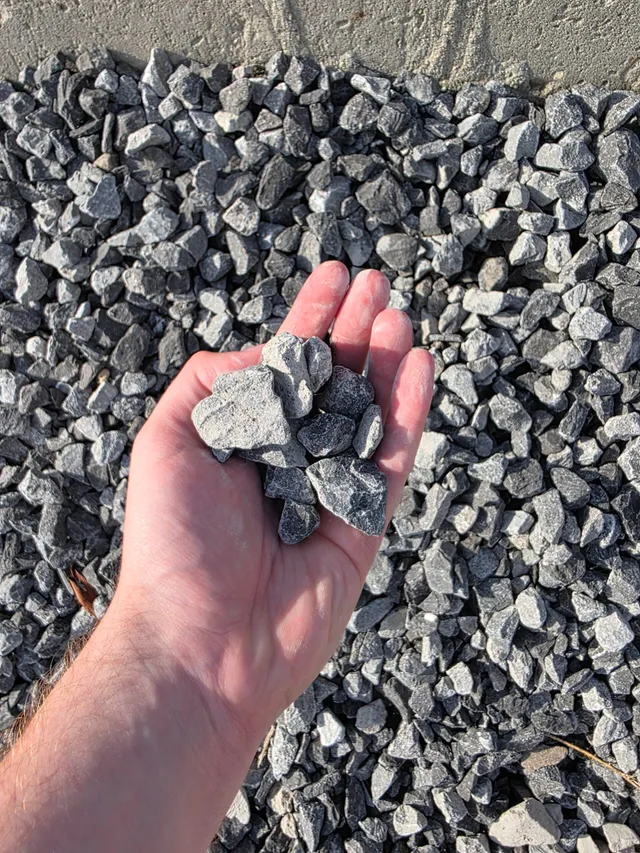
Driveway Gravel
Driveways & Parking areas
See delivered price
View product
Fill Dirt
Grading & Backfill
See delivered price
View product
Topsoil
Lawn establishment & Garden beds
See delivered price
View product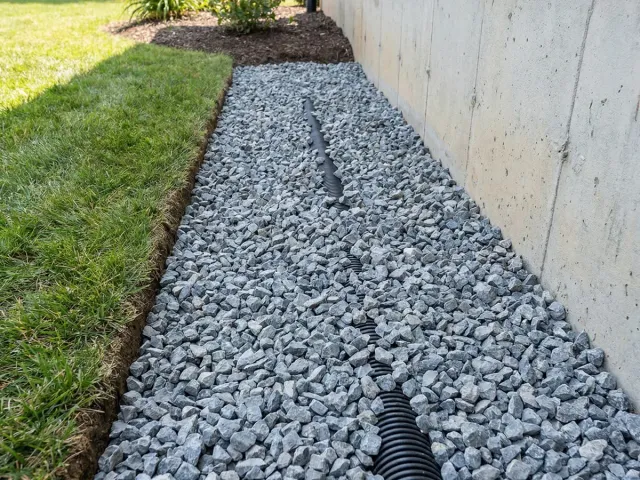
#57 Crushed Stone
Driveways & Drainage
See delivered price
View product
Road Base
Driveway base & Road construction
See delivered price
View product