
What Size Gravel for a Driveway (Complete Guide)
Free local estimate
See delivered prices for your ZIP in 60 seconds
Tell us where the project is and we'll price this material — delivered — for your exact ZIP.
- Real delivered pricing for your ZIP — not a generic range.
- Works for any quantity — driveways, pads, drains, or full projects.
- Prefer to talk? We follow up with local availability and delivery windows.
Choosing the right gravel size for your driveway can make the difference between a surface that lasts decades and one that develops ruts within months. The most recommended size for most residential driveways is 3/4-inch to 1-inch crushed stone, which provides the ideal balance of stability, drainage, and durability.
Quick Answer: For most driveways, 3/4-inch crushed stone (#57 gravel) offers the best combination of stability and drainage, especially when installed over a proper base layer.
Your driveway gravel choice depends on several factors including traffic volume, climate conditions, and whether you’re building a single layer or multi-layer system. Understanding these factors will help you avoid common problems like shifting stones, poor drainage, and premature wear that plague many gravel driveways.
About Hello Gravel
Hello Gravel delivers bulk gravel, rock, dirt, and sand by the ton. Enter your ZIP code to see prices with delivery included. A local dump-truck driver places the load where access is safe; spreading is not included.
Why gravel size matters for driveway performance
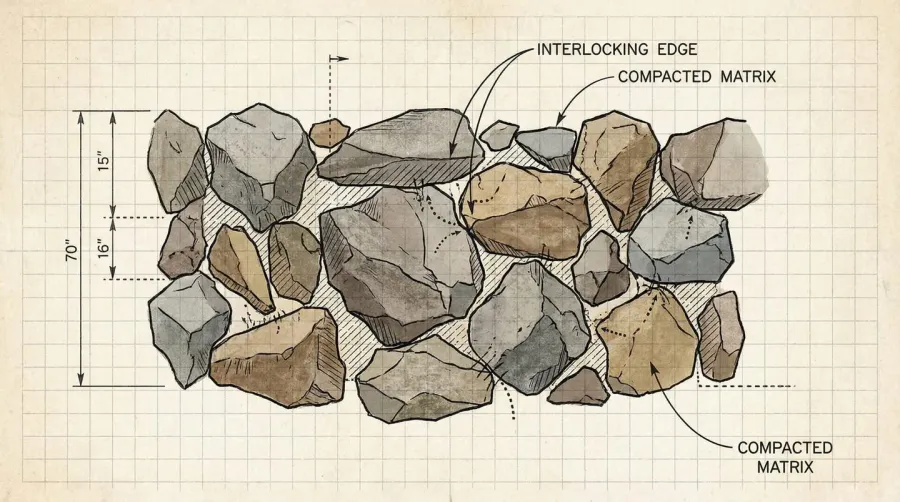
The size of your gravel directly impacts three critical aspects of your driveway’s performance. First, smaller stones interlock more tightly when compacted, creating a stable surface that resists shifting under vehicle weight. This interlocking action is what prevents the formation of ruts and keeps your driveway level over time.
Drainage represents the second major factor. Properly sized gravel allows water to flow through while preventing the formation of puddles that can weaken your driveway’s foundation. Too small, and water pools on the surface; too large, and you lose the stability benefits of proper compaction.
Finally, the right size gravel distributes vehicle loads evenly across the surface. When stones are too large, they create pressure points that can lead to uneven wear patterns and eventual failure of the driveway structure.
Best gravel sizes for different driveway needs
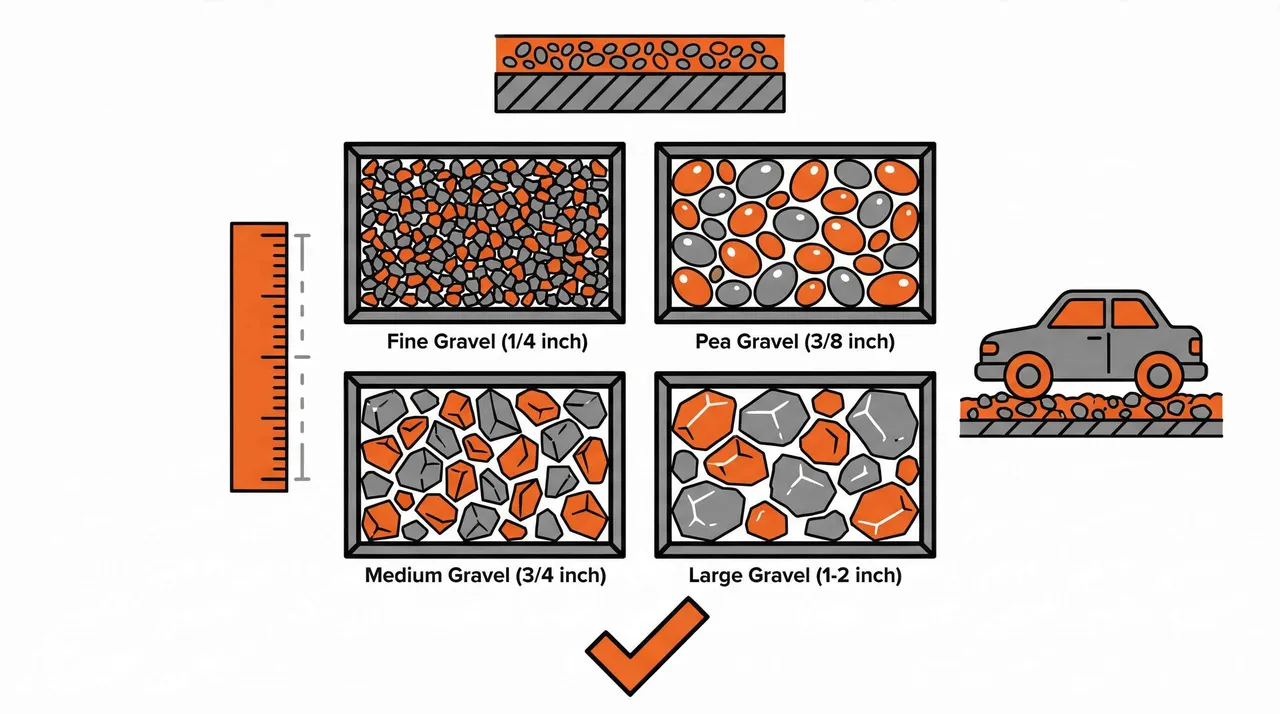
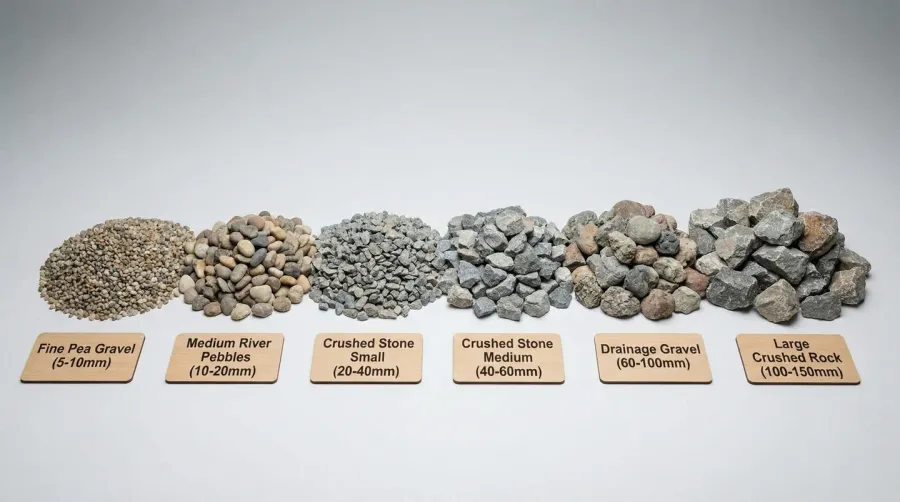
The most versatile choice for residential driveways is 3/4-inch crushed stone, also known as #57 gravel. This size provides excellent compaction while maintaining good drainage properties. The angular edges of crushed stone help pieces lock together, creating a stable surface that can handle regular car and light truck traffic.
For driveways with heavier traffic or commercial use, consider 1/2-inch to 3/4-inch gravel as your top layer. This slightly smaller size compacts even more tightly, providing superior stability for frequent heavy vehicle use. However, you’ll need to pay more attention to drainage in areas with heavy rainfall.
Pea gravel, typically 1/4-inch to 3/8-inch, works well for decorative applications or light-traffic areas. While it creates an attractive, smooth surface, pea gravel’s rounded shape doesn’t interlock as effectively as crushed stone, making it less suitable for high-traffic driveways. To learn more about the various options available, explore our guide on different kinds of driveway gravel.
Pro Tip: Avoid using gravel larger than 2 inches for driveway surfaces, as these sizes are better suited for drainage applications rather than driving surfaces.
| Gravel Size | Best Use | Traffic Type | Drainage |
|---|---|---|---|
| 1/4″ – 3/8″ (Pea) | Decorative, walkways | Light | Excellent |
| 1/2″ – 3/4″ (#57) | Most driveways | Moderate to Heavy | Good |
| 3/4″ – 1″ | Standard residential | Moderate | Good |
| 1″ – 2″ | Base layer only | N/A | Excellent |
Three-layer system for professional results
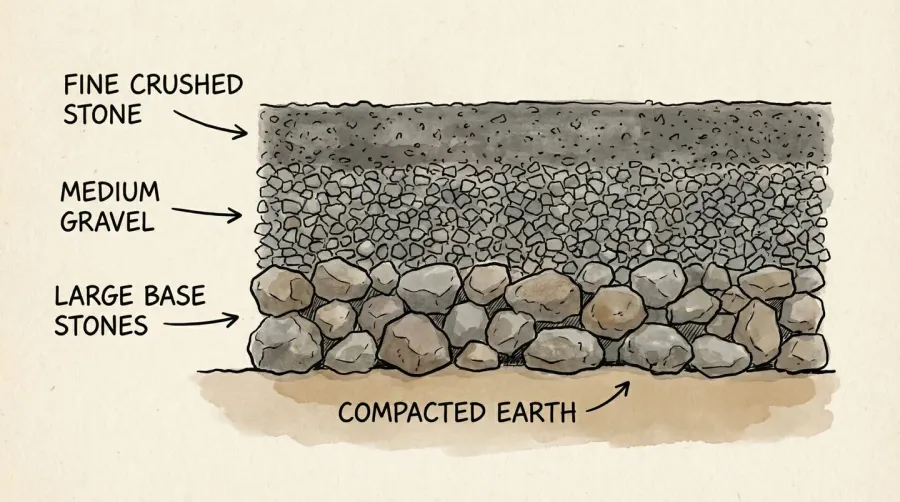
The most durable gravel driveways use a three-layer installation system that maximizes both stability and longevity. This approach might seem like extra work initially, but it prevents most common driveway problems and can extend your driveway’s life by decades.
Your base layer should consist of 4 to 6 inches of larger stones, typically 2 to 4 inches in diameter. This layer provides the foundation and handles the primary drainage function. The large stones create a stable platform that prevents the upper layers from sinking into the underlying soil. For detailed information on selecting the right foundation material, check out our comprehensive guide to the best driveway base material.
The middle layer uses 3 to 4 inches of medium-sized gravel, usually 3/4-inch to 1-inch crushed stone. This layer begins the transition from drainage to driving surface, providing both structural support and beginning the compaction process that creates your driveway’s stability.
Your top layer should be 2 to 3 inches of your chosen driving surface material, typically 1/2-inch to 3/4-inch crushed stone. This final layer creates the smooth, stable surface you’ll actually drive on while maintaining the drainage properties established by the lower layers. If you’re looking to understand more about aggregate options, our guide on driveway aggregate types provides valuable insights.
Installation tips for long-lasting results
Proper preparation makes the difference between a driveway that lasts decades and one that fails within years. Start by excavating the area to a depth that accommodates all your gravel layers plus 2 to 4 inches extra for proper compaction. Remove all vegetation, roots, and debris that could cause settling or drainage problems.
Consider installing geotextile fabric between your prepared soil and base layer, especially in areas with clay soil or poor drainage. This fabric prevents the mixing of soil and gravel while allowing water to pass through, maintaining the integrity of your gravel layers over time. For those working with existing dirt driveways, our article on the best material for a dirt driveway offers practical conversion strategies.
Compact each layer thoroughly using a plate compactor or similar equipment. Proper compaction is crucial for achieving the interlocking action that makes gravel driveways stable. Add water lightly during compaction to help the stones settle, but avoid oversaturating the material.
Important: Never skip the compaction step, as uncompacted gravel will shift and develop ruts quickly under vehicle traffic.
Regular maintenance keeps your gravel driveway performing at its best. Rake the surface monthly to redistribute stones and maintain an even surface. Add fresh gravel annually to replace material that’s been displaced or has settled deeper into the layers below.
Address drainage issues immediately by ensuring proper crown (slight peak in the center) and clearing any blocked drainage areas. Poor drainage is the leading cause of gravel driveway failure, so maintaining proper water flow protects your investment and extends the life of your driveway significantly. If you’re planning a new installation and want to understand the financial investment, our guide on 100-foot gravel driveway costs can help you budget effectively.
With the right gravel size and proper installation techniques, your driveway will provide reliable service for many years while enhancing your property’s appearance and value.
FAQ
What is the best gravel size for a driveway?
The best gravel size for most residential driveways is 3/4-inch to 1-inch crushed stone, also known as #57 gravel. This size provides excellent compaction while maintaining good drainage properties. The angular edges of crushed stone help pieces lock together, creating a stable surface that can handle regular car and light truck traffic effectively.
How thick should gravel be for a driveway?
A properly constructed gravel driveway should have a total thickness of 12-18 inches using a three-layer system: 4-6 inches of large base stones (2-4 inches diameter), 3-4 inches of medium-sized gravel (3/4-inch to 1-inch crushed stone), and 2-3 inches of top layer material (1/2-inch to 3/4-inch crushed stone). Each layer must be properly compacted for optimal performance.
Is pea gravel good for driveways?
Pea gravel (1/4-inch to 3/8-inch) works well for decorative applications or light-traffic areas but is not ideal for high-traffic driveways. While it creates an attractive, smooth surface, pea gravel’s rounded shape doesn’t interlock as effectively as crushed stone, making it less stable under heavy vehicle use. It’s best used as a top layer over a proper crushed stone base.
What’s the difference between crushed stone and pea gravel for driveways?
Crushed stone has angular edges that interlock when compacted, creating a stable, durable surface ideal for vehicle traffic. Pea gravel has smooth, rounded edges that don’t lock together as effectively, making it better for decorative purposes. For driveways, crushed stone provides superior stability and load distribution, while pea gravel offers better aesthetics but less structural integrity under heavy use.
Materials for this project
Get it delivered — dumped where you need it
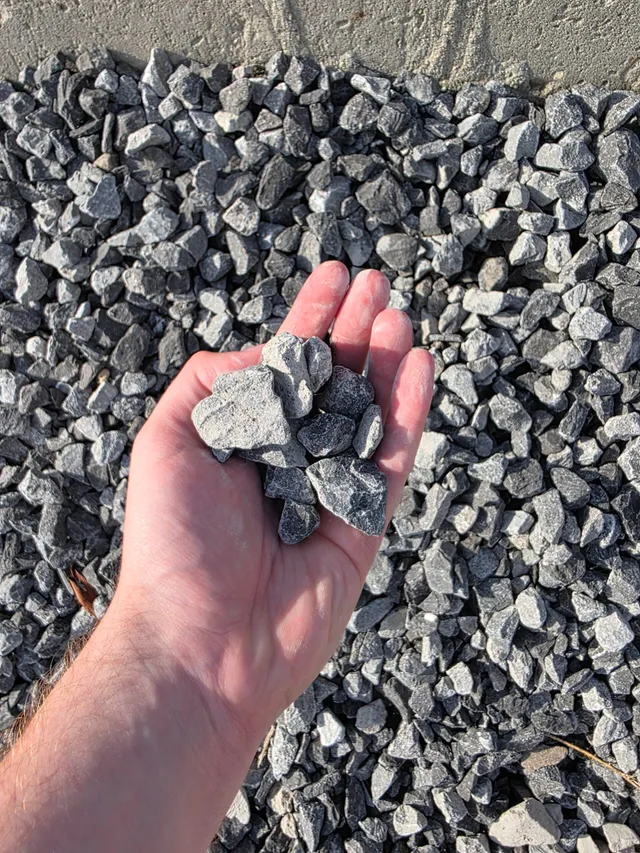
Driveway Gravel
Driveways & Parking areas
See delivered price
View product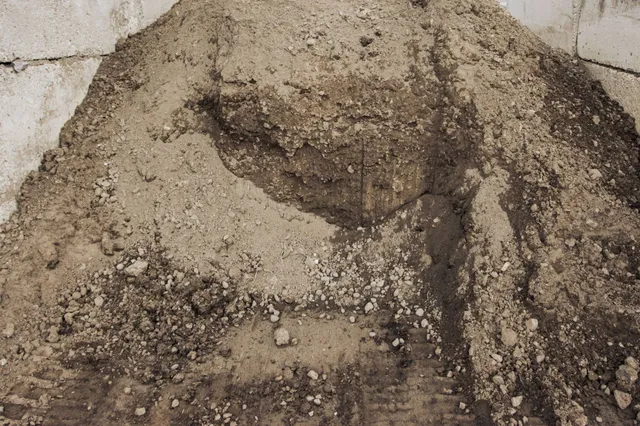
Fill Dirt
Grading & Backfill
See delivered price
View product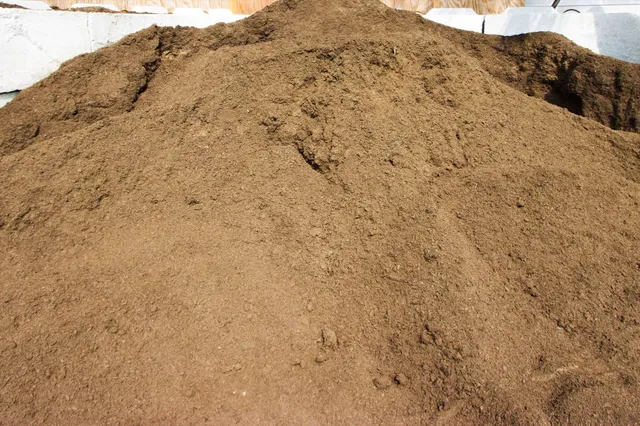
Topsoil
Lawn establishment & Garden beds
See delivered price
View product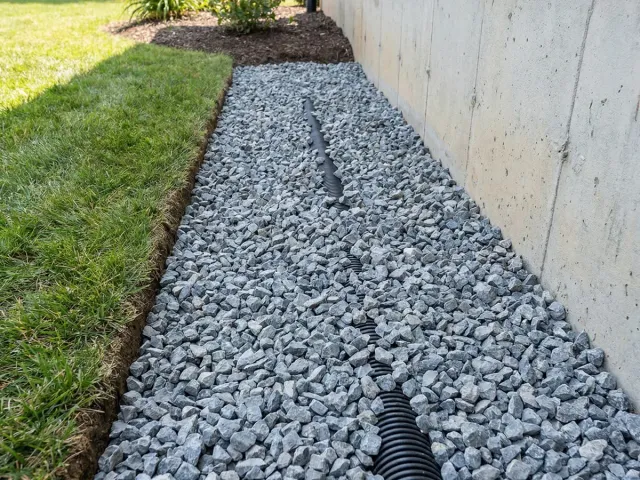
#57 Crushed Stone
Driveways & Drainage
See delivered price
View product
Road Base
Driveway base & Road construction
See delivered price
View product