
How much crushed concrete in a ton
Guide handoff
Want help applying this guide to your project?
Share your ZIP and what you need help with. We'll use this guide as context when we follow up.
- 1 This guide gives us the context you were reading.
- 2 Ask about pricing, material choice, delivery timing, or quantity.
- 3 Keep it broad if you are still figuring out the project.
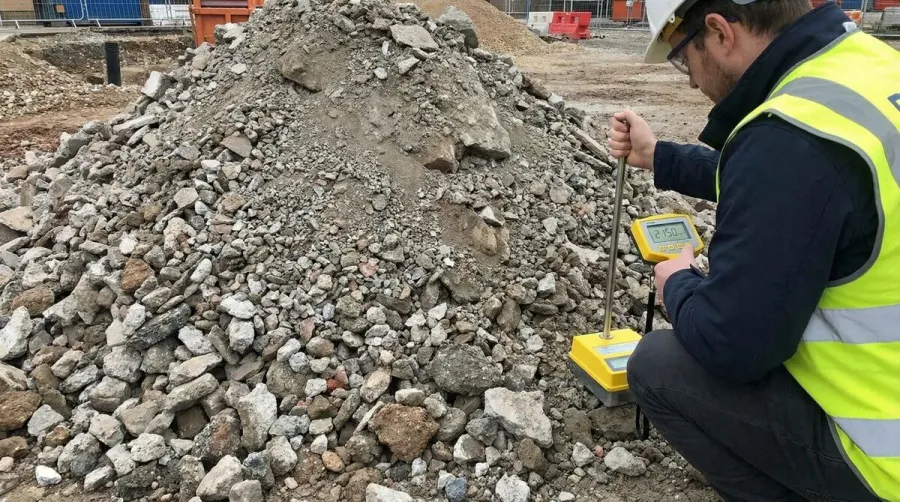
Understanding how much crushed concrete fits in a ton is essential for accurate project planning and budgeting. One ton of crushed concrete typically contains approximately 13.8 cubic feet of material, based on an average density of 145 pounds per cubic foot. However, this can vary depending on the size and moisture content of the concrete pieces.
Quick Answer: One ton (2,000 pounds) of crushed concrete equals roughly 13.8 cubic feet at standard density, but always add a 10-20% buffer for waste and compaction.
Whether you’re planning a driveway project or need road base material, knowing these calculations helps you order the right amount and avoid costly shortages or excess material.
What affects crushed concrete density
The density of crushed concrete isn’t fixed at exactly 145 pounds per cubic foot. Several factors influence how much material you’ll get in each ton, and understanding these variables helps you make more accurate calculations.
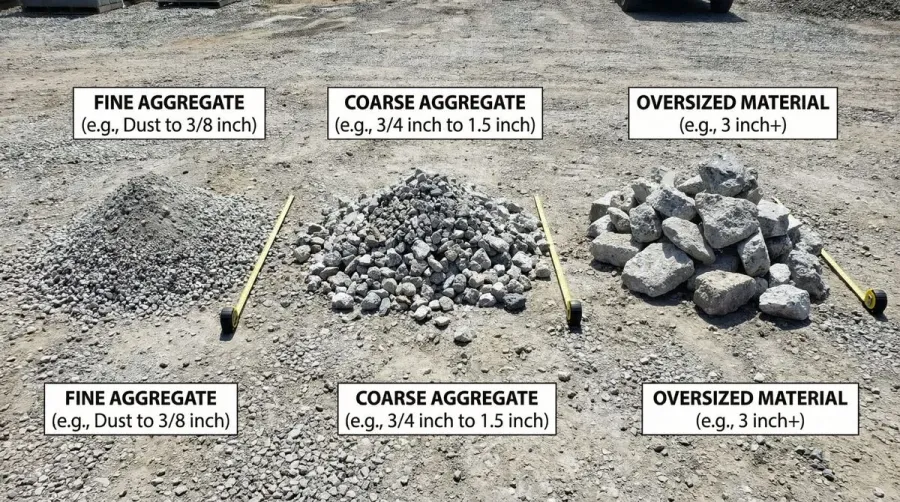
Particle size plays a major role in density. Smaller crushed concrete pieces pack together more tightly, creating higher density per cubic foot. Larger chunks leave more air gaps, reducing the overall weight. Most suppliers offer different grades, from fine powder to chunks several inches across.
Moisture content also affects weight significantly. Wet crushed concrete can weigh 10-15% more than dry material. If you’re working with recently washed material or during humid conditions, factor this into your calculations.
The original concrete source matters too. Concrete from different structures varies in composition, affecting the final crushed product’s density. Highway concrete often differs from building concrete in terms of aggregate mix and additives.
Converting tons to volume step by step
Converting crushed concrete from tons to cubic feet requires a simple formula, but accuracy depends on using the right density figure for your specific material.
Start with the basic conversion formula: Volume (cubic feet) = Weight (pounds) ÷ Density (pounds per cubic foot). For one ton (2,000 pounds) of standard crushed concrete at 145 lbs/ft³, the calculation becomes 2,000 ÷ 145 = 13.8 cubic feet.
To convert cubic feet to cubic yards, divide by 27 (since there are 27 cubic feet in a cubic yard). Using our example, 13.8 ÷ 27 = 0.51 cubic yards per ton. For more detailed weight calculations, check out our guide on crushed concrete weight per yard.
Always verify the density with your supplier before making final calculations. According to hellogravel.com, densities can range from 140 to 150 pounds per cubic foot depending on the specific product.
Pro Tip: Create a simple spreadsheet with different density values to quickly calculate volumes for various crushed concrete types you might encounter.
Planning for waste and project needs
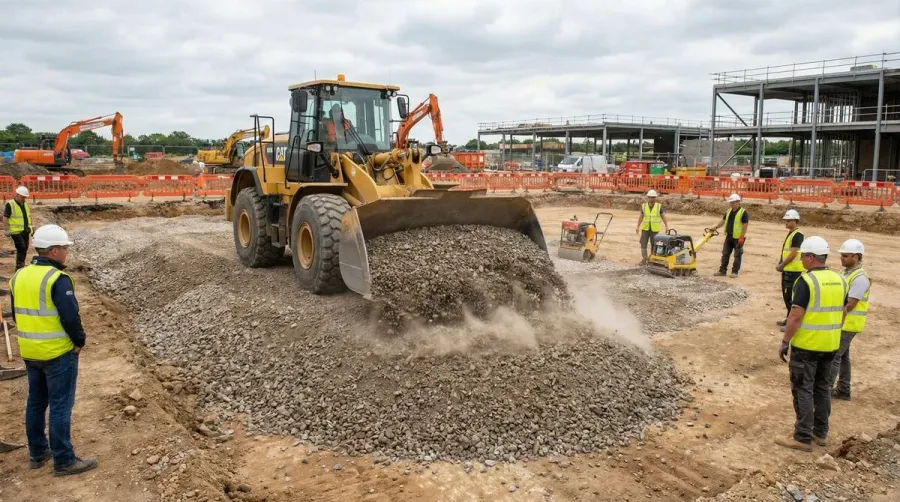
Real-world projects require more material than theoretical calculations suggest. Smart contractors and homeowners always account for waste, compaction, and unexpected needs when ordering crushed concrete.
Add a 10-20% buffer to your calculated amount. This covers normal waste from handling, spillage during transport, and material that gets compacted more than expected. For critical projects like road bases, lean toward the higher end of this range.
Consider your project’s compaction requirements. Crushed concrete used for driveways or parking areas will compact significantly under traffic and weather. What starts as loose material settles into a smaller volume over time.
Think about delivery logistics too. Ordering slightly more material costs less than arranging a second delivery for a small shortage. Most suppliers have minimum delivery quantities, so running short can be expensive.
Comparing crushed concrete to other materials
Understanding how crushed concrete compares to other common materials helps you make informed decisions about cost and performance for your specific project needs.
| Material | Density (lbs/ft³) | Cubic Feet per Ton | Cost Range per Ton |
|---|---|---|---|
| Crushed Concrete | 145 | 13.8 | $10-$50 |
| Gravel | 105 | 19.0 | $15-$75 |
| Sand | 100 | 20.0 | $20-$40 |
| Crushed Stone | 160 | 12.5 | $25-$60 |
Crushed concrete offers excellent value compared to virgin materials. It typically costs 30-50% less than new gravel or crushed stone while providing similar performance for most applications. For a detailed price comparison, see our article on crushed concrete vs gravel price. The environmental benefits add another layer of value, as you’re recycling material that would otherwise fill landfills.
For drainage applications, crushed concrete performs similarly to gravel but at a lower cost. Its angular shape helps with compaction and stability, making it ideal for road bases and foundation work.
The key difference lies in availability and consistency. While gravel maintains uniform properties, crushed concrete quality can vary based on the source material. Working with reputable suppliers like those mentioned in hellogravel.com ensures consistent quality and proper screening.
Understanding these density relationships and cost comparisons helps you make confident material choices. Whether you need 5 tons for a small driveway or 50 tons for a major project, accurate calculations prevent both shortages and waste. Remember to always confirm specific densities with your supplier and add appropriate buffers for real-world conditions.
FAQ
How many cubic yards of crushed concrete are in a ton?
Approximately 0.6-0.8 cubic yards of crushed concrete equals one ton, depending on the material’s density. With an average density of 1.4 tons per cubic yard, you get about 0.71 cubic yards per ton. Road base crushed concrete at 1.21 tons per cubic yard yields approximately 0.8 cubic yards per ton.
What is the standard density of crushed concrete?
Crushed concrete typically has a density of 145 pounds per cubic foot, which equals approximately 1.4 tons per cubic yard. However, density can vary from 140-150 lbs/ft³ depending on particle size, moisture content, and the original concrete source. Road base crushed concrete may have a density of 2410 lbs/yd³ (1.21 tons/yd³).
How do I calculate how many tons of crushed concrete I need?
First, calculate the volume by multiplying length × width × depth (in feet), then divide by 27 to get cubic yards. Multiply the cubic yards by the density (typically 1.4 tons per cubic yard) to get tons needed. Always add 10-20% extra for waste and compaction. For example: a 10×10×4 inch area = 1.22 cubic yards × 1.4 = 1.7 tons plus buffer.
How does crushed concrete compare to gravel in terms of weight?
Crushed concrete weighs approximately 1.4 tons per cubic yard, while gravel typically weighs about 1.35 tons per cubic yard, making them very similar in density. However, crushed concrete costs 30-50% less than virgin gravel while providing comparable performance for most applications like driveways and road bases.