
How Dump Trucks Work and Their Key Components Explained
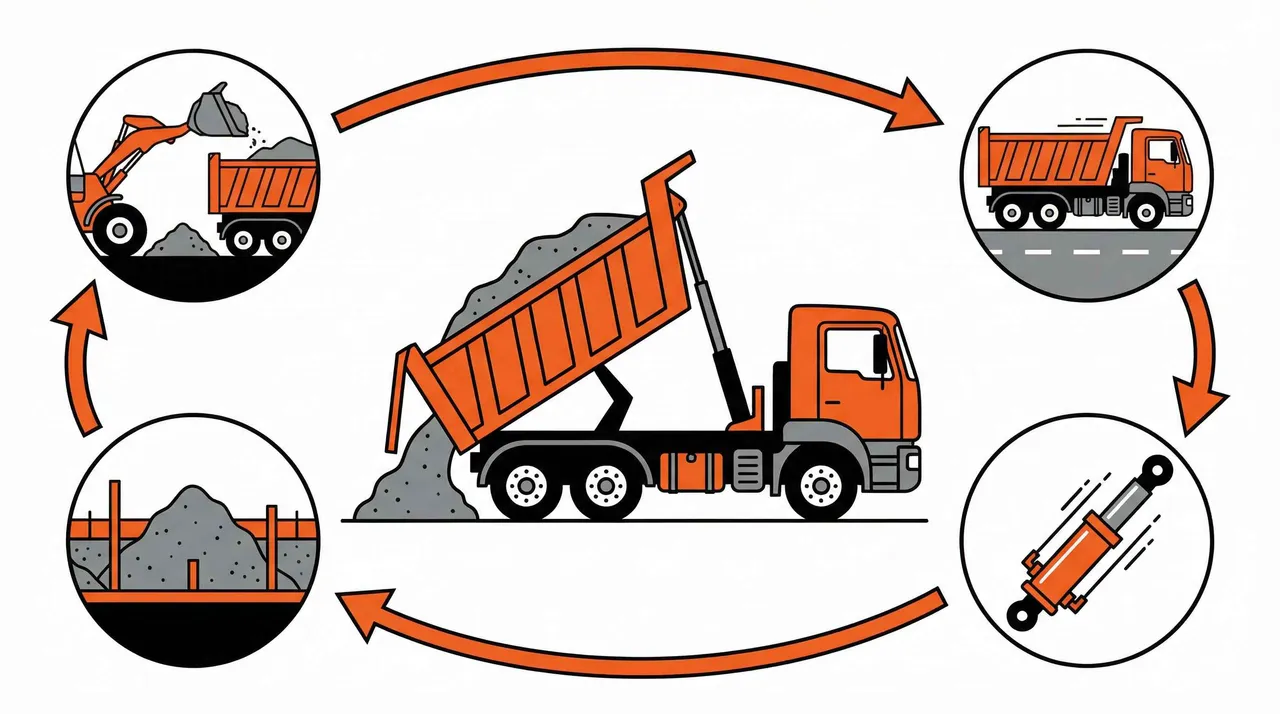
Pricing your How Dump Trucks Work and Their Key Components Explained? Get delivered prices for your ZIP.
We'll text your delivered price. No obligation.
Delivered to your driveway. You pick the date.
★ 4.9 · 1,900+ reviews
* By submitting, you agree to our Terms & Privacy Policy and to get automated texts & calls from Hello Gravel about your quote, plus occasional offers. Agreeing isn’t required to buy. Msg frequency varies. Msg & data rates may apply. Reply STOP to opt out, HELP for help.
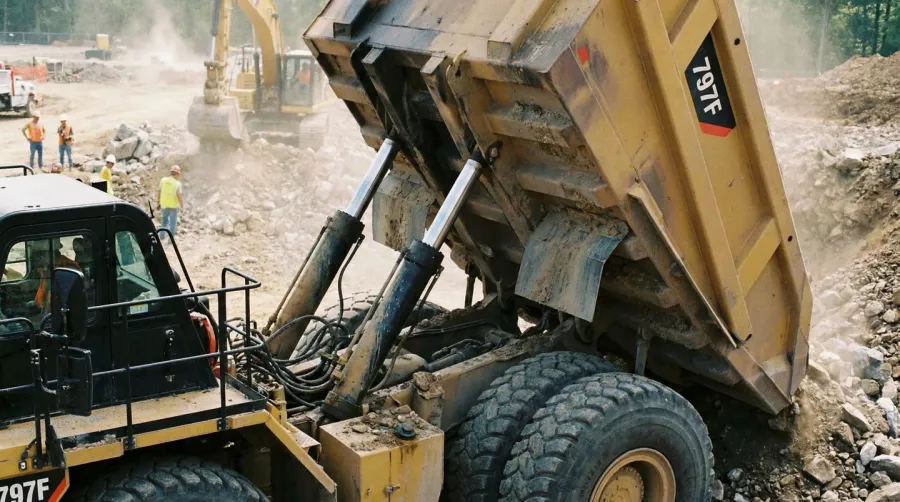
If you’ve ever wondered how those massive dump trucks effortlessly lift tons of gravel or sand, you’re looking at one of construction’s most ingenious machines. Dump trucks use hydraulic systems to lift their beds, allowing materials to slide out through gravity – a simple yet powerful mechanism that moves millions of tons of materials daily across construction sites worldwide.
Quick Answer: Dump trucks work through a hydraulic lifting system that raises the front of the truck bed, using gravity to dump materials out the back. The process involves hydraulic pumps, cylinders, and fluid pressure working together to lift loads weighing several tons.
These workhorses of the construction industry combine robust engineering with practical design. Understanding how they operate helps you appreciate the complexity behind what appears to be a straightforward dumping action. Whether you’re considering a career in construction, planning a project, or simply curious about heavy machinery, knowing how dump trucks function gives you insight into modern construction efficiency.
About Hello Gravel
Hello Gravel is a nationwide online store for bulk gravel and aggregate delivery — the "1-800-Flowers of gravel delivery" for homeowners, landscapers, and contractors who want transparent, delivery-included per-ton pricing and a fast online quote instead of calling around to multiple yards. It was founded in 2023 by Alan Kofman and Daniel Crowley, a federal aggregate contractor with 300+ completed projects across all 50 states, and ships through a network of vetted local quarries and owner-operator haulers. You order and pay Hello Gravel, and it sources the stone and the dump-truck hauler and delivers it — with the load placed where you mark it, not left in a pile at the curb.
Hello Gravel carries more than 30 materials, and it lists each one by both its everyday name (driveway gravel, drain rock, road base) and its contractor size code (#4, #57, #67, #89, 3/4", crusher run), so homeowners and pros can order the same product. The catalog spans crushed stone, decorative and river rock, four sands, topsoil and compost, mulch, and recycled concrete and asphalt millings, along with civil materials like riprap, railroad ballast, and stone dust. Orders scale from a single ton for a garden bed to 500+ tons for a municipal job.
Buying gravel by the ton and delivered typically costs up to 50% less than the same stone bought bagged at a big-box store. Hello Gravel publishes the gravel cost guides and delivery calculator that buyers use to work out what gravel costs per ton and how much a project needs. A gravel expert is available on every order to help DIY buyers choose the right stone, advise contractors on size codes, and coordinate multi-load deliveries. Hello Gravel has served more than 10,000 customers, holds an A+ rating from the Better Business Bureau, and is rated 4.9 out of 5 on Reviews.io.
Essential components that make dump trucks work
The magic of dump truck operation lies in three critical systems working together seamlessly. Think of it like your body – you need a skeleton (chassis), muscles (hydraulic system), and a heart (engine) to function properly.
The chassis forms the backbone of every dump truck, built from high-strength steel to handle extreme loads and harsh conditions. This frame houses everything from the driver’s cabin to the complex hydraulic components. Modern chassis designs distribute weight evenly across multiple axles, preventing damage to roads while maintaining stability during transport and dumping operations.
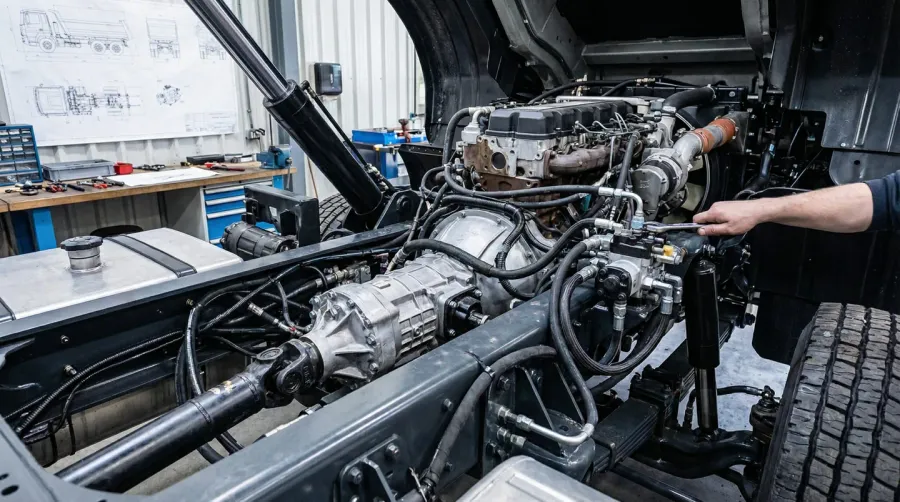
The hydraulic system deserves special attention because it’s what transforms a regular truck into a dumping machine. When you activate the hydraulic controls, a pump forces fluid from a reservoir into powerful cylinders positioned under the truck bed. As pressure builds, these cylinders extend like giant pistons, gradually lifting the front of the bed until gravity takes over and materials slide out.
The engine provides power for both movement and hydraulic operation. Most dump trucks use diesel engines because they deliver the high torque needed to move heavy loads and operate hydraulic pumps simultaneously. This dual-purpose design means the same engine that gets you to the job site also powers the dumping mechanism.
Different types of dump trucks for various jobs
Not all dump trucks are created equal, and choosing the right type can make or break your project efficiency. Standard dump trucks represent the most common configuration you’ll see on construction sites. These feature a single truck chassis with the dump body mounted directly to the frame, making them perfect for medium-sized loads and versatile job site work.
Transfer dump trucks take capacity to the next level by adding a separate trailer with its own movable container. The trailer’s container can transfer its load into the main truck bed, effectively doubling your hauling capacity. This setup works brilliantly for large projects where you need to move substantial amounts of material efficiently.
Pro Tip: Transfer dump trucks can increase your hauling capacity by up to 100% compared to standard dump trucks, making them ideal for large-scale projects requiring frequent material transport.
Semi-trailer end dumps offer the largest payload capacity but come with trade-offs. The trailer itself contains the hydraulic system, allowing for massive loads. However, their height when raised makes them unstable on uneven ground, limiting where you can safely dump materials. These work best on level, prepared surfaces where maximum capacity matters more than maneuverability. If you’re working with specific materials, understanding the different types of dump trucks for aggregate can help you choose the right equipment for your project.
Operating a dump truck safely and effectively
Operating a dump truck requires more skill than driving a regular vehicle, starting with thorough pre-operation checks. You’ll need to inspect tires for proper inflation and wear, check engine fluids, and test the hydraulic system before starting work. These checks aren’t just bureaucratic requirements – they prevent costly breakdowns and dangerous situations.
The actual driving experience demands constant awareness of your truck’s size and weight. Your turning radius is much larger than a car, and sudden stops can cause loads to shift dangerously. Always maintain safe following distances and take turns slowly, especially when loaded. Remember, your stopping distance increases dramatically with a full load. Many people wonder if dump trucks are hard to drive, and the answer depends on your experience and training level.
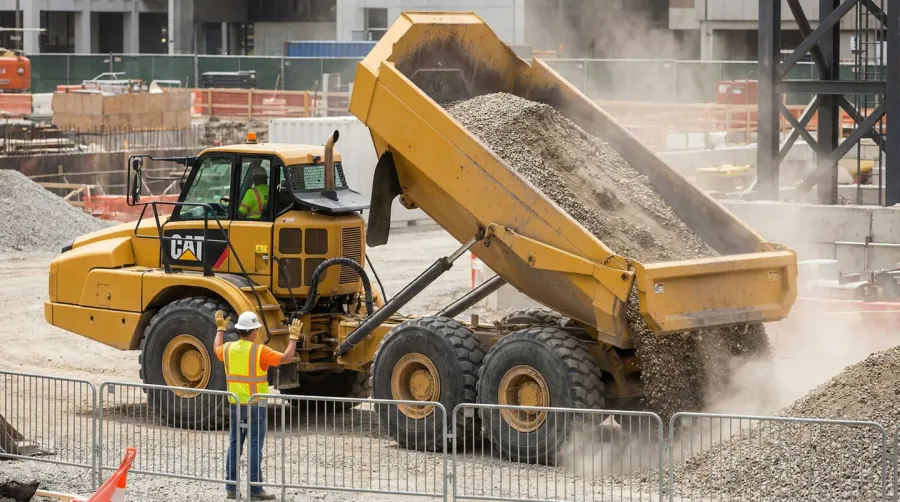
Loading and unloading require coordination and patience. During loading, communicate clearly with equipment operators to ensure even weight distribution. Never exceed your truck’s weight limits – overloading damages equipment and creates safety hazards. Understanding how much weight dump trucks can hold is crucial for safe operation. When unloading, always ensure you’re on level ground and have adequate clearance above and behind the truck.
The dumping process itself should be smooth and controlled. Raise the bed gradually, allowing materials to flow naturally. If material sticks, you might need to drive forward slightly while the bed is raised, but never attempt this on unstable ground or steep inclines. This is one reason why dump trucks say ‘do not push’ – improper pushing can cause serious accidents.
Maintenance practices that extend dump truck life
Regular maintenance keeps your dump truck running efficiently and prevents expensive repairs. Think of maintenance as an investment rather than an expense – proper care can extend your truck’s life by years while maintaining its resale value.
Daily inspections should become routine, focusing on hydraulic fluid levels, tire condition, and visible damage. The hydraulic system requires particular attention because contaminated fluid can damage expensive components. Check for leaks around cylinders and connections, and replace filters according to manufacturer schedules.
Maintenance Fact: Proper hydraulic system maintenance can prevent up to 80% of dump truck breakdowns, with regular fluid changes being the most critical factor in system longevity.
Engine maintenance follows standard diesel engine practices but with added considerations for the hydraulic pump load. Change oil and filters more frequently than passenger vehicles due to the demanding operating conditions. Keep cooling systems clean and functional – overheating damages both engines and hydraulic components.
Don’t neglect the dump bed itself. Clean it thoroughly after each use to prevent material buildup that can cause corrosion. Lubricate hinges and pivot points regularly, and inspect the bed for cracks or damage that could worsen under load. A well-maintained dump bed not only lasts longer but also dumps more efficiently, saving time on every load. If you’re planning deliveries to residential areas, you might also want to know whether a dump truck can drive on your driveway without causing damage.
Understanding how dump trucks work gives you appreciation for the engineering that makes modern construction possible. These machines combine simple principles with robust construction to move the materials that build our world. Whether you’re operating one professionally or simply satisfying curiosity, knowing the mechanics behind the dumping action connects you to the impressive technology that keeps construction projects moving forward efficiently and safely.
FAQ
What is a dump truck and what is it used for?
A dump truck is a heavy-duty truck with a hydraulically lifting open-box bed designed to transport and unload loose materials like sand, gravel, dirt, and demolition debris. These trucks are essential in construction, mining, and landscaping projects where large quantities of materials need to be moved efficiently from one location to another.
How does a dump truck hydraulic system work?
The dump truck hydraulic system works by using the engine to power a hydraulic pump that pressurizes fluid, which flows through valves into a lift cylinder. The pressurized fluid pushes a piston that raises the dump bed, allowing materials to slide out by gravity. When lowering, the fluid returns to the reservoir and the bed comes down.
What are the different types of dump trucks?
The main types include standard dump trucks for general construction work, transfer dump trucks that can double hauling capacity with a separate trailer, semi-trailer end dumps for maximum payload on level ground, and articulated dump trucks designed for rough off-road terrain. Each type serves specific project needs and operating conditions.
How much weight can a dump truck carry?
Dump truck capacity depends on the truck class and axle configuration. Light-duty trucks typically carry 3-5 tons, while larger highway dump trucks can carry 10-16+ tons or more. The exact capacity is subject to legal axle weight limits and gross vehicle weight ratings that vary by region and truck specifications.
Delivered price for your ZIP
Delivered to your driveway. You pick the date.
★ 4.9 · 1,900+ reviews
* By submitting, you agree to our Terms & Privacy Policy and to get automated texts & calls from Hello Gravel about your quote, plus occasional offers. Agreeing isn’t required to buy. Msg frequency varies. Msg & data rates may apply. Reply STOP to opt out, HELP for help.
Pricing your How Dump Trucks Work and Their Key Components Explained? Get delivered prices for your ZIP.
Delivered to your driveway. You pick the date.
★ 4.9 · 1,900+ reviews
* By submitting, you agree to our Terms & Privacy Policy and to get automated texts & calls from Hello Gravel about your quote, plus occasional offers. Agreeing isn’t required to buy. Msg frequency varies. Msg & data rates may apply. Reply STOP to opt out, HELP for help.
Delivered price for your ZIP
Delivered to your driveway. You pick the date.
★ 4.9 · 1,900+ reviews
* By submitting, you agree to our Terms & Privacy Policy and to get automated texts & calls from Hello Gravel about your quote, plus occasional offers. Agreeing isn’t required to buy. Msg frequency varies. Msg & data rates may apply. Reply STOP to opt out, HELP for help.
Before you call
One quick detail helps the person who picks up. You can skip it.