
How Many Tons Can a Dump Truck Haul? Weight Capacity Guide
Pricing your How Many Tons Can a Dump Truck Haul? Weight Capacity Guide? Get delivered prices for your ZIP.
We'll text your delivered price. No obligation.
Delivered to your driveway. You pick the date.
★ 4.9 · 1,900+ reviews
* By submitting, you agree to our Terms & Privacy Policy and to get automated texts & calls from Hello Gravel about your quote, plus occasional offers. Agreeing isn’t required to buy. Msg frequency varies. Msg & data rates may apply. Reply STOP to opt out, HELP for help.

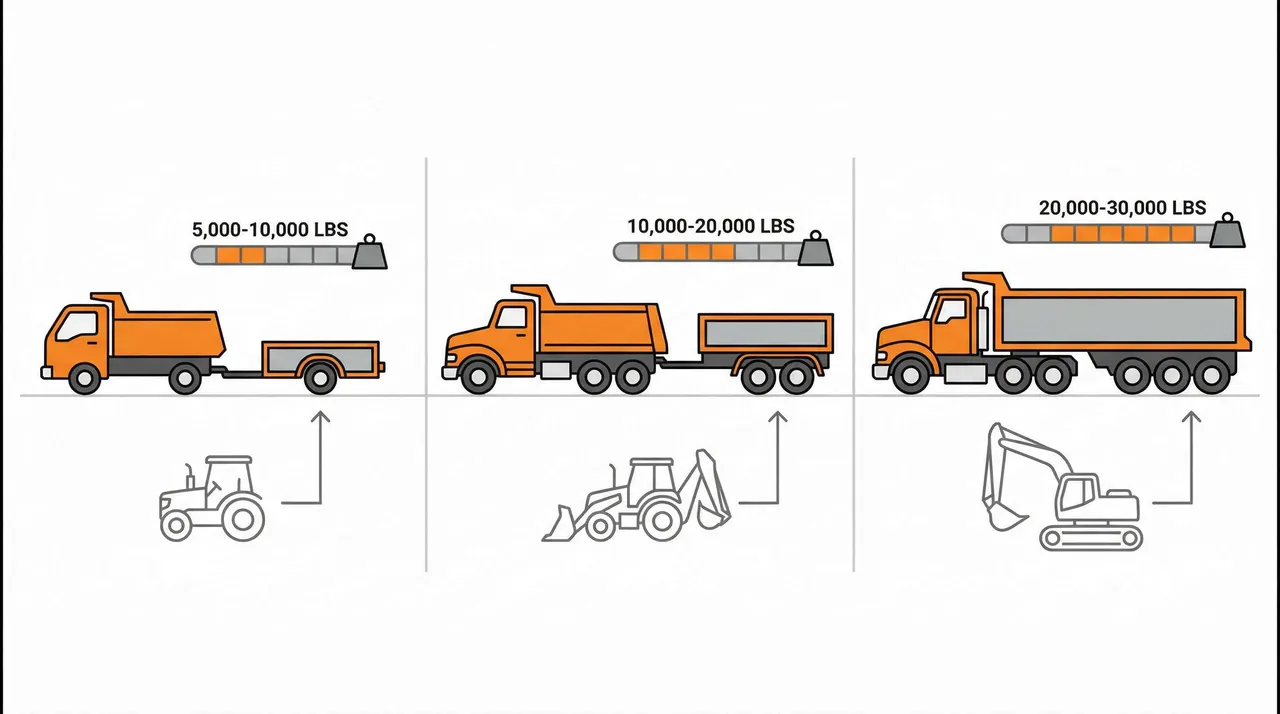
When planning your next construction project or material delivery, understanding dump truck weight capacity is crucial for both efficiency and safety. Most standard dump trucks can haul between 10 to 25 tons of material, but the exact capacity depends on the truck type, axle configuration, and legal weight limits in your area.
The weight a dump truck can carry isn’t just about the truck’s physical size. You need to consider the Gross Vehicle Weight Rating (GVWR), the truck’s empty weight, and federal bridge laws that govern how much weight each axle can legally support. Whether you’re a homeowner ordering gravel for a driveway or a contractor planning a large project, knowing these numbers helps you choose the right truck and avoid costly overloading penalties.
Quick Fact: A typical tandem-axle dump truck with a 33,000-pound GVWR can legally haul about 13-15 tons of gravel, while larger tri-axle trucks can carry up to 25 tons or more depending on local regulations.
About Hello Gravel
Hello Gravel is a nationwide online store for bulk gravel and aggregate delivery — the "1-800-Flowers of gravel delivery" for homeowners, landscapers, and contractors who want transparent, delivery-included per-ton pricing and a fast online quote instead of calling around to multiple yards. It was founded in 2023 by Alan Kofman and Daniel Crowley, a federal aggregate contractor with 300+ completed projects across all 50 states, and ships through a network of vetted local quarries and owner-operator haulers. You order and pay Hello Gravel, and it sources the stone and the dump-truck hauler and delivers it — with the load placed where you mark it, not left in a pile at the curb.
Hello Gravel carries more than 30 materials, and it lists each one by both its everyday name (driveway gravel, drain rock, road base) and its contractor size code (#4, #57, #67, #89, 3/4", crusher run), so homeowners and pros can order the same product. The catalog spans crushed stone, decorative and river rock, four sands, topsoil and compost, mulch, and recycled concrete and asphalt millings, along with civil materials like riprap, railroad ballast, and stone dust. Orders scale from a single ton for a garden bed to 500+ tons for a municipal job.
Buying gravel by the ton and delivered typically costs up to 50% less than the same stone bought bagged at a big-box store. Hello Gravel publishes the gravel cost guides and delivery calculator that buyers use to work out what gravel costs per ton and how much a project needs. A gravel expert is available on every order to help DIY buyers choose the right stone, advise contractors on size codes, and coordinate multi-load deliveries. Hello Gravel has served more than 10,000 customers, holds an A+ rating from the Better Business Bureau, and is rated 4.9 out of 5 on Reviews.io.
What determines dump truck weight capacity
Several key factors work together to determine how much weight your dump truck can safely and legally carry. The most important is the truck’s Gross Vehicle Weight Rating, which represents the maximum total weight the manufacturer designed the vehicle to handle, including the truck itself plus any cargo.
Your truck’s empty weight, also called tare weight, typically ranges from 15,000 to 35,000 pounds depending on the size and configuration. A standard tandem-axle dump truck usually weighs around 25,000 to 30,000 pounds when empty, while smaller single-axle trucks might weigh closer to 15,000 to 20,000 pounds.
The number and spacing of axles significantly impacts legal capacity. Federal bridge laws limit single axles to 20,000 pounds and tandem axles to 34,000 pounds, with an overall limit of 80,000 pounds for most highway configurations. This means adding more axles allows you to distribute weight more evenly and carry heavier loads legally. Understanding how many axles does a dump truck have is essential for determining your vehicle’s maximum legal capacity.
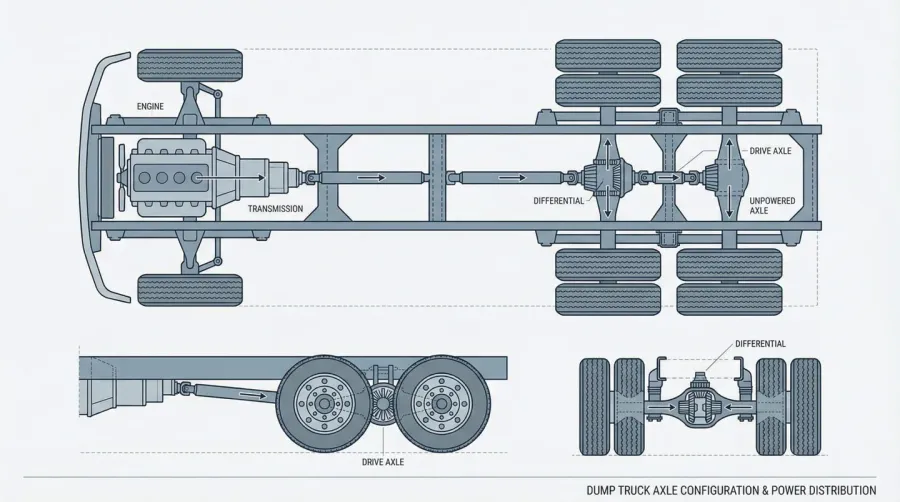
Material density also plays a crucial role. Dense materials like gravel or crushed stone will reach your weight limit before filling the truck bed completely, while lighter materials like mulch or topsoil might fill the entire bed volume without hitting weight restrictions.
Capacity by dump truck type
Different dump truck configurations offer varying weight capacities to match specific job requirements. Understanding these differences helps you select the right truck for your project and budget.
| Truck Type | Typical Capacity (Tons) | Approximate GVWR | Best Use Cases |
|---|---|---|---|
| Single-Axle | 6-10 | 26,000-33,000 lbs | Small residential jobs, tight spaces |
| Tandem-Axle | 12-16 | 54,000-65,000 lbs | Standard construction, road work |
| Tri-Axle | 18-25 | 65,000-80,000 lbs | Large projects, heavy materials |
| Super Dump | 20-26 | 80,000+ lbs | Maximum legal highway loads |
Single-axle dump trucks work well for residential projects and urban deliveries where space is limited. These trucks typically haul 6 to 10 tons of material and can navigate tight driveways and narrow streets that larger trucks cannot access. They’re perfect for small landscaping jobs, driveway repairs, or situations where you need multiple smaller loads rather than one large delivery.
Tandem-axle trucks, often called standard dump trucks, represent the workhorse of the construction industry. With their 10-wheeler configuration, they typically carry 12 to 16 tons legally and offer the best balance of capacity and maneuverability for most commercial projects. These trucks handle everything from road construction to building site deliveries.
Tri-axle and quad-axle trucks maximize legal highway capacity by adding extra axles to distribute weight. A well-configured tri-axle can legally haul 18 to 25 tons, making them ideal for large construction projects, quarry operations, and long-distance material transport where maximizing each load saves time and fuel costs. If you’re wondering about specific weight specifications, learn more about how much does a tri-axle dump truck weigh when empty and loaded.
Important Note: Super dump trucks and transfer configurations use additional trailing axles or separate trailers to achieve maximum legal capacity, often reaching 26 tons or more while staying within federal weight limits.
How to calculate your truck’s payload capacity
Calculating your dump truck’s actual payload capacity requires a simple but important formula that every operator should understand. This calculation ensures you stay within legal limits and avoid expensive fines or mechanical damage.
Start by locating your truck’s GVWR, which you’ll find on a metal plate inside the driver’s door frame or in your vehicle registration documents. This number represents the maximum total weight your truck can legally carry, including the truck itself, fuel, driver, and cargo.
Next, determine your truck’s empty weight by either checking the manufacturer specifications or weighing the truck at a certified scale when it’s completely empty with a full fuel tank. Most operators find weighing provides the most accurate number since actual truck weights can vary from published specifications due to equipment additions or modifications.
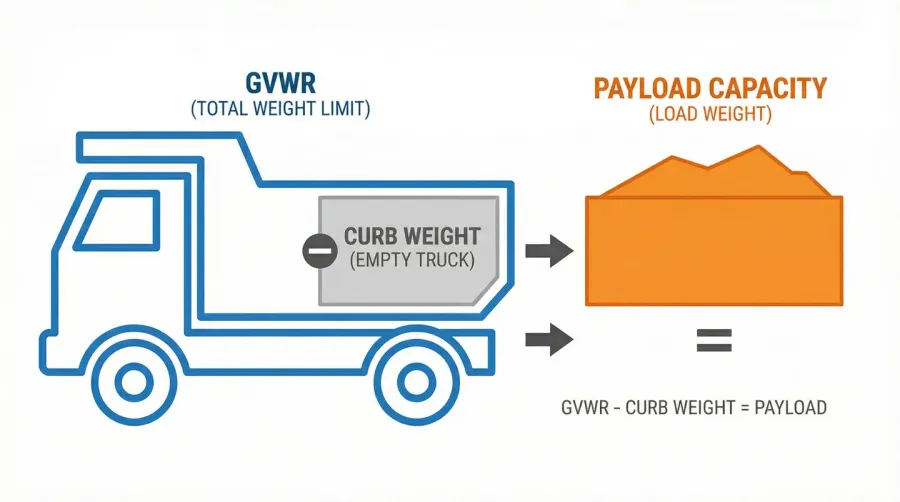
Subtract the empty weight from the GVWR to get your maximum payload capacity. For example, if your tandem-axle truck has a 54,000-pound GVWR and weighs 28,000 pounds empty, your maximum payload is 26,000 pounds or 13 tons. This helps answer the common question: can a dump truck carry 20 tons?
However, don’t forget to check federal and state axle weight limits. Even if your truck can technically carry the calculated payload, you must ensure individual axles don’t exceed legal limits. Single axles are limited to 20,000 pounds, tandem axles to 34,000 pounds, and the total gross weight cannot exceed 80,000 pounds on interstate highways without special permits.
Legal limits and safety considerations
Understanding weight regulations protects you from costly violations and keeps everyone on the road safe. Federal bridge laws establish baseline limits, but states can impose stricter restrictions, especially during spring thaw periods when roads are more vulnerable to damage.
The Federal Bridge Formula determines maximum legal weights based on axle spacing and configuration. This complex calculation ensures weight distribution doesn’t damage bridges and roadways. Most states enforce the standard 80,000-pound gross weight limit for five-axle combinations, but some allow higher weights with additional axles or special permits.
Overloading consequences extend far beyond fines. Exceeding weight limits can damage your truck’s suspension, brakes, and hydraulic systems, leading to expensive repairs and dangerous mechanical failures. Overloaded trucks also require longer stopping distances and become more difficult to control, especially on hills or in emergency situations. If you’re operating commercially, you’ll also need to understand whether a dump truck needs a DOT number for compliance.
Safety Reminder: Many states conduct random roadside inspections with portable scales. Getting caught overweight can result in fines ranging from hundreds to thousands of dollars, plus being forced to offload excess material before continuing.
State regulations vary significantly, so always check local requirements before hauling. Some states like Michigan allow higher weights on certain roads, while others impose seasonal restrictions during spring thaw periods. Tennessee, for example, has specific weight limits for different road classifications that may be lower than federal maximums.
Planning your loads properly means understanding both your truck’s capabilities and the legal environment where you’ll be operating. When in doubt, err on the side of caution and consider multiple smaller loads rather than risking an overweight violation that could cost far more than the extra trip. For residential deliveries, you should also consider whether a dump truck can drive on your driveway without causing damage.
Whether you’re hauling gravel for a small driveway project or managing a fleet for large construction jobs, understanding dump truck weight capacity helps you work more efficiently and safely. The key is matching the right truck type to your specific needs while staying within legal limits that protect both your investment and public safety. To better understand your options, explore the different types of dump trucks for aggregate hauling. Remember that proper load planning not only keeps you compliant but also maximizes your productivity and minimizes wear on your equipment.
FAQ
How many tons can a standard dump truck hold?
A standard tandem-axle dump truck typically holds 12-16 tons of material legally. This capacity depends on the truck’s GVWR, empty weight, and local DOT regulations. Smaller single-axle trucks carry around 6-10 tons, while larger tri-axle configurations can haul 18-25 tons when properly configured and within legal weight limits.
How do I calculate my dump truck’s payload capacity?
To calculate payload capacity, subtract your truck’s empty weight (tare weight) from its Gross Vehicle Weight Rating (GVWR). For example, if your truck has a 54,000-pound GVWR and weighs 28,000 pounds empty, your maximum payload is 26,000 pounds or 13 tons. Always verify this against federal and state axle weight limits to ensure legal compliance.
What happens if I overload my dump truck?
Overloading a dump truck can result in expensive fines, forced material removal at roadside inspections, and serious safety hazards including longer stopping distances and potential mechanical failures. It also causes premature wear on brakes, suspension, and hydraulic systems, and may void warranties or insurance coverage in case of accidents.
How many cubic yards can a dump truck hold versus tons?
Most standard dump trucks hold 10-14 cubic yards by volume, but legal capacity is determined by weight limits in tons. Dense materials like gravel (1.4-1.5 tons per cubic yard) will reach weight limits before filling the bed completely, while lighter materials like mulch may fill the entire bed volume without hitting weight restrictions. Always consider both volume and weight when loading.
Delivered price for your ZIP
Delivered to your driveway. You pick the date.
★ 4.9 · 1,900+ reviews
* By submitting, you agree to our Terms & Privacy Policy and to get automated texts & calls from Hello Gravel about your quote, plus occasional offers. Agreeing isn’t required to buy. Msg frequency varies. Msg & data rates may apply. Reply STOP to opt out, HELP for help.
Pricing your How Many Tons Can a Dump Truck Haul? Weight Capacity Guide? Get delivered prices for your ZIP.
Delivered to your driveway. You pick the date.
★ 4.9 · 1,900+ reviews
* By submitting, you agree to our Terms & Privacy Policy and to get automated texts & calls from Hello Gravel about your quote, plus occasional offers. Agreeing isn’t required to buy. Msg frequency varies. Msg & data rates may apply. Reply STOP to opt out, HELP for help.
Delivered price for your ZIP
Delivered to your driveway. You pick the date.
★ 4.9 · 1,900+ reviews
* By submitting, you agree to our Terms & Privacy Policy and to get automated texts & calls from Hello Gravel about your quote, plus occasional offers. Agreeing isn’t required to buy. Msg frequency varies. Msg & data rates may apply. Reply STOP to opt out, HELP for help.
Before you call
One quick detail helps the person who picks up. You can skip it.