Gravel Calculator: How to Calculate Cubic Yards for Your Project
Published on: December 18, 2025
Get an estimate for your project in 60 seconds
 Your information is secure
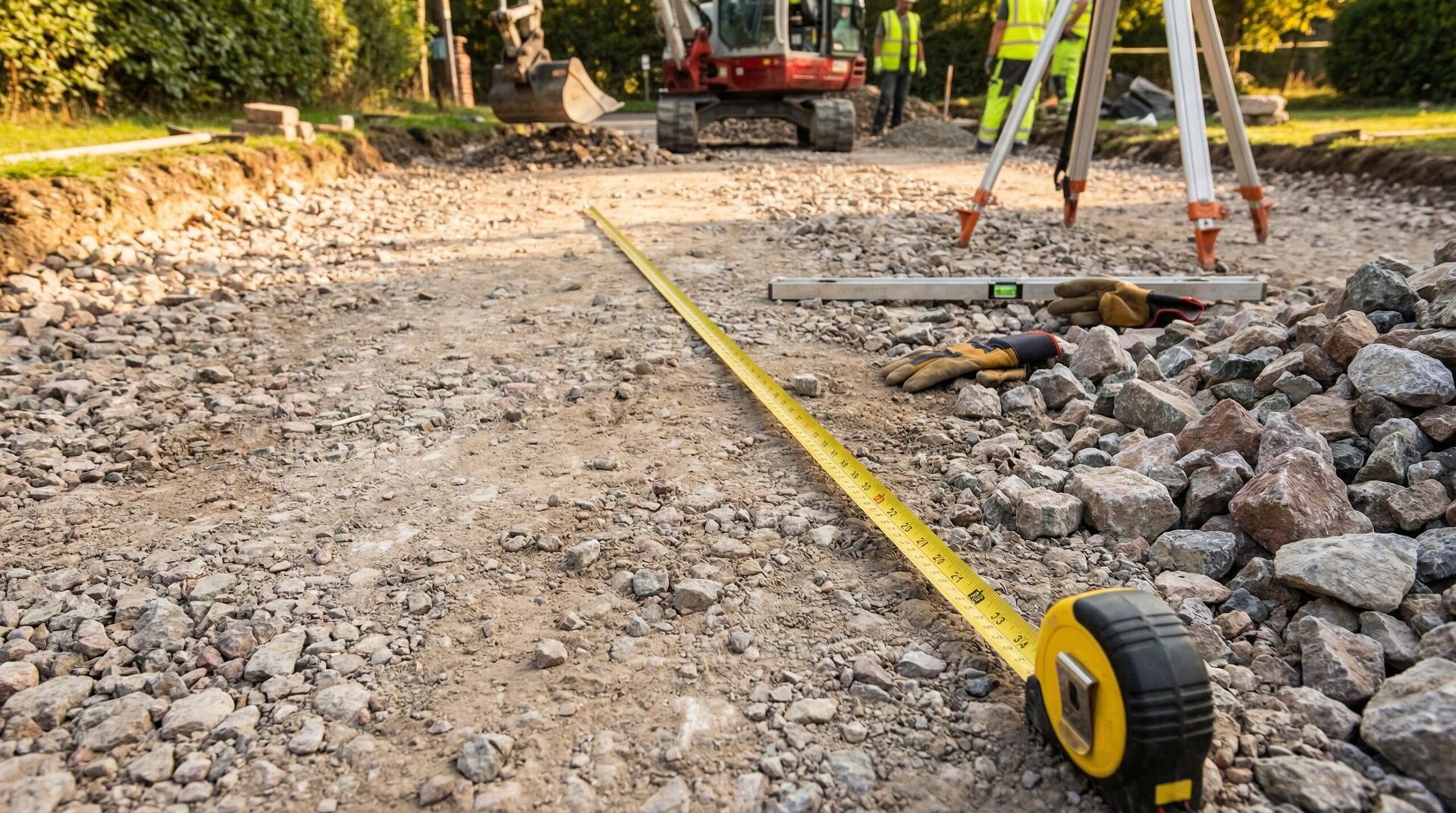
Planning a gravel project for your driveway, garden path, or patio? Getting the right amount of gravel is crucial for both your budget and project success. Whether you’re covering a 10×12 foot driveway or creating a winding garden path, knowing how to calculate cubic yards will save you from costly overbuying or frustrating shortages.
Quick answer: To calculate cubic yards of gravel, multiply length × width × depth (all in feet), then divide by 27. For example, a 10×10 foot area with 2-inch depth needs 0.62 cubic yards of gravel.
Pro tip: Most driveways need 2-4 inches of gravel depth, while decorative paths typically require only 1-2 inches for adequate coverage.
The cubic yard measurement gives you a three-dimensional perspective that accounts for length, width, and depth. This standard in the aggregate industry ensures you get exactly what your project needs without guesswork.
Why cubic yards matter for gravel projects
Understanding cubic yards helps you communicate clearly with suppliers and ensures accurate project planning. Unlike square footage, which only covers surface area, cubic yards account for the depth of material you need.
Most gravel suppliers price their products by the cubic yard, making this calculation essential for budgeting. A cubic yard of gravel typically weighs between 2,400 to 2,900 pounds, depending on the type and size of stone you choose.
When you order gravel by the cubic yard, you’re getting a consistent measurement that translates directly to the volume your project requires. This eliminates confusion and helps you avoid the common mistake of ordering by weight when volume is what actually matters for coverage.
Step-by-step calculation method
Start by measuring your project area carefully. Use a tape measure to determine the length and width of the space you want to cover. For irregular shapes, break the area into rectangles and calculate each section separately.
Next, decide on your gravel depth based on your project type. Driveways typically need 2-4 inches of depth for proper stability and drainage. Garden paths work well with 1-2 inches, while parking areas might require up to 6 inches for heavy vehicle traffic.
Convert all measurements to feet before calculating. If your depth is in inches, divide by 12 to get feet. Then multiply length × width × depth to get cubic feet. Finally, divide your cubic feet result by 27 to convert to cubic yards, since there are 27 cubic feet in one cubic yard.
Remember: Always round up to the nearest quarter yard when ordering. It’s better to have slightly too much gravel than to run short during your project.
Practical examples for common projects
Let’s walk through a typical driveway calculation. Say you have a driveway that’s 20 feet long and 12 feet wide, and you want 3 inches of gravel depth. First, convert 3 inches to feet: 3 ÷ 12 = 0.25 feet.
Now calculate: 20 × 12 × 0.25 = 60 cubic feet. Divide by 27: 60 ÷ 27 = 2.22 cubic yards. You’d want to order 2.5 cubic yards to account for compaction and ensure complete coverage.
For a garden path that’s 50 feet long and 3 feet wide with 1.5 inches of depth, the calculation looks different. Convert depth: 1.5 ÷ 12 = 0.125 feet. Then: 50 × 3 × 0.125 = 18.75 cubic feet ÷ 27 = 0.69 cubic yards. Order 0.75 cubic yards for this project.
| Project Type | Typical Depth | Coverage per Cubic Yard |
|---|---|---|
| Driveway | 2-4 inches | 80-160 sq ft |
| Garden Path | 1-2 inches | 160-320 sq ft |
| Parking Area | 4-6 inches | 55-80 sq ft |
Tips for accurate measurements and ordering
Always measure twice before ordering your gravel. Small measurement errors can lead to significant over or under-ordering, especially on larger projects. Take photos of your measurements and double-check your math before placing your order.
Consider the shape of your project area carefully. Circular areas require the formula π × radius² × depth, while triangular areas use 0.5 × base × height × depth. For complex shapes, break them into simpler geometric forms and calculate each section of crushed stone separately.
Factor in a 5-10% buffer for waste, compaction, and future maintenance. Gravel settles over time, and having extra material on hand helps with touch-ups. Most suppliers can store unused gravel for future projects if you order slightly more than needed. If you’re working with fill dirt instead, understanding how to calculate fill dirt with compaction is equally important for project success.
Cost-saving tip: Ordering gravel in full cubic yard increments often costs less per yard than partial orders, so rounding up can actually save money while ensuring adequate coverage.
Getting your gravel calculations right from the start sets your project up for success. With these measurement techniques and formulas, you can confidently order the exact amount of gravel needed for professional-looking results. Remember to account for your specific project requirements and always verify your calculations before placing your order.
Ready to start your gravel project? Use these calculations to determine your needs, and don’t hesitate to consult with your local aggregate supplier for project-specific advice and material recommendations. If you need to convert between different measurements, check out our guides on converting crushed concrete from cubic yards to tons or converting tons to cubic yards. For those working with square footage measurements, our crushed concrete calculator for square feet can help you determine the right amount of material needed.
FAQ
How many cubic feet are in a cubic yard of gravel?
How much area does a cubic yard of gravel cover?
How much does a cubic yard of gravel weigh?
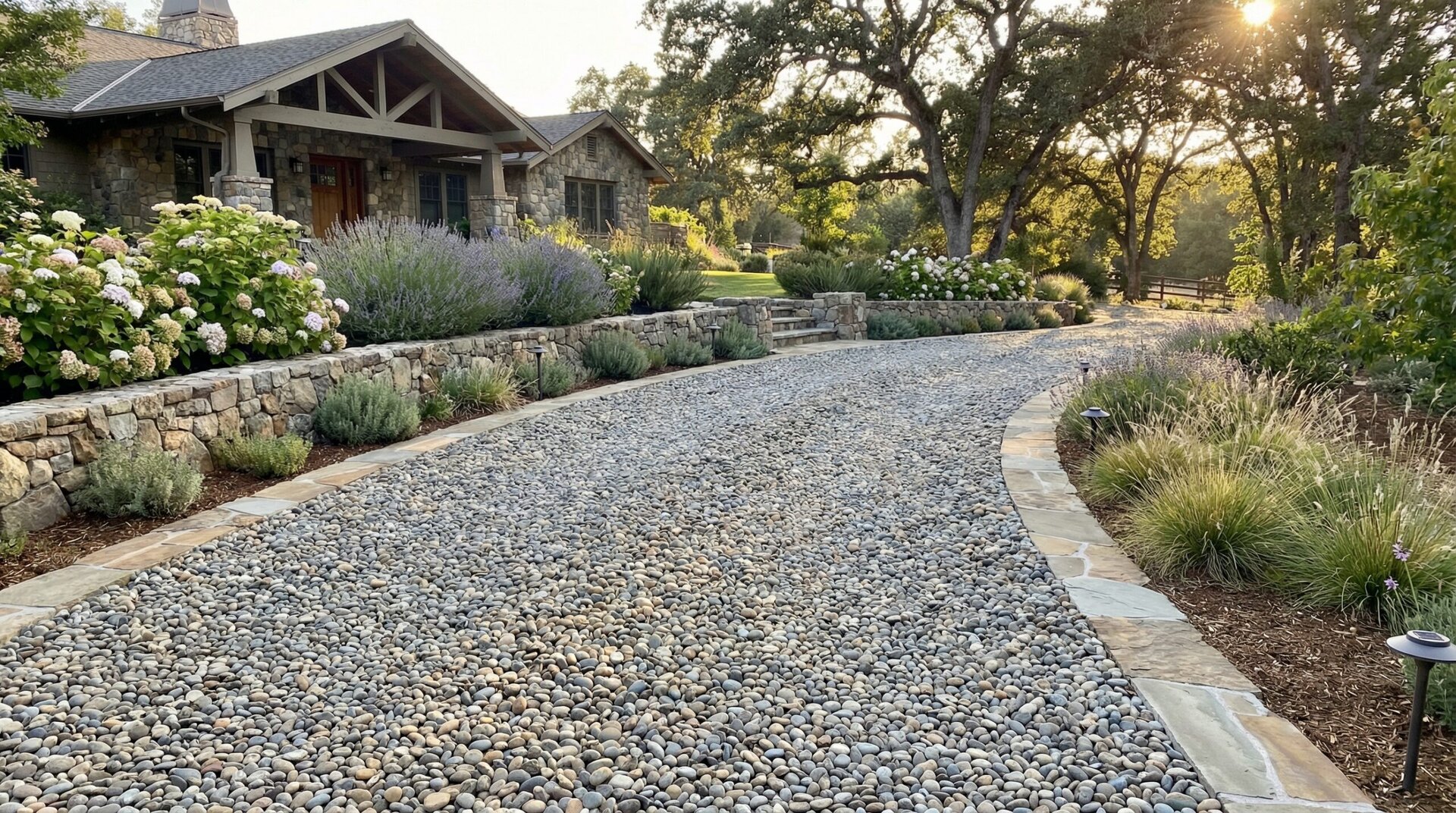
What does a cubic yard of gravel look like?
Author: igor