Crushed Concrete vs Limestone: Price, Pros, Cons & Best Uses 2025
Published on: December 10, 2025
Get an estimate for your project in 60 seconds
 Your information is secure
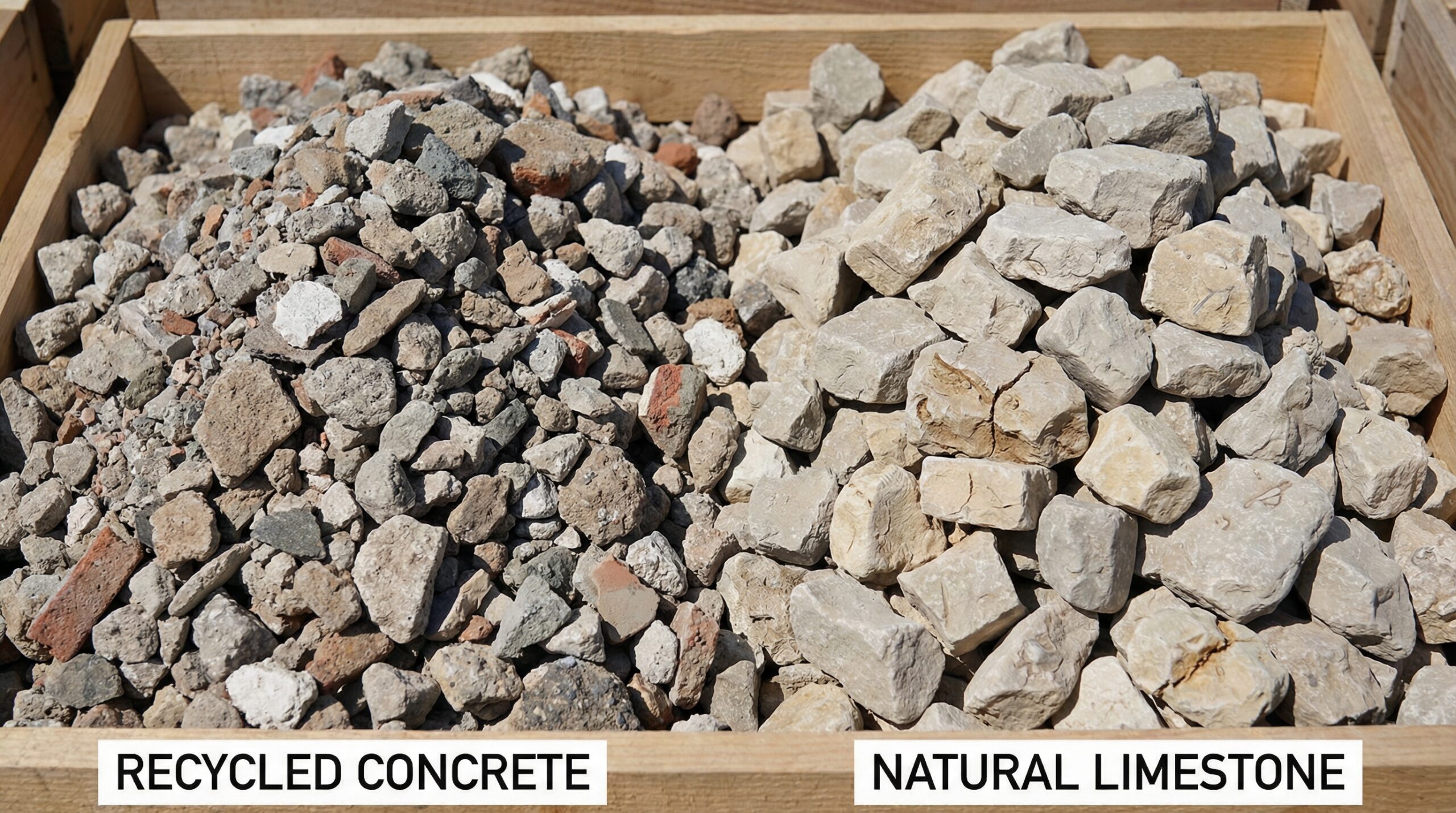
When choosing between crushed concrete and limestone for your project, crushed concrete typically costs 30-50% less than limestone but limestone offers superior consistency and appearance. Crushed concrete averages $10-50 per ton while limestone ranges from $30-100 per ton, making your material choice largely dependent on budget versus aesthetic priorities.
This guide compares both materials across price, performance, and best-use scenarios for driveways, sub-base applications, and construction projects. You’ll learn exactly when each material makes the most sense and how to calculate real costs for your specific project needs.
Quick Answer: Crushed concrete wins on budget and sustainability, while limestone excels in appearance and consistent quality. Most homeowners choose crushed concrete for utility areas and limestone for visible applications.
Quick Comparison: Crushed Concrete vs Limestone
| Factor | Crushed Concrete | Limestone |
|---|---|---|
| Price per ton | $10-$50 | $30-$100 |
| Best for | Driveways, sub-base, fill | Decorative paths, premium driveways |
| Appearance | Variable, industrial look | Consistent, natural appearance |
| Environmental impact | Recycled, eco-friendly | Quarried, higher carbon footprint |
The price difference becomes significant on larger projects. For a typical driveway requiring 50 tons of material, choosing crushed concrete over limestone could save you $1,000-$2,500 in material costs alone.
What Is Crushed Concrete
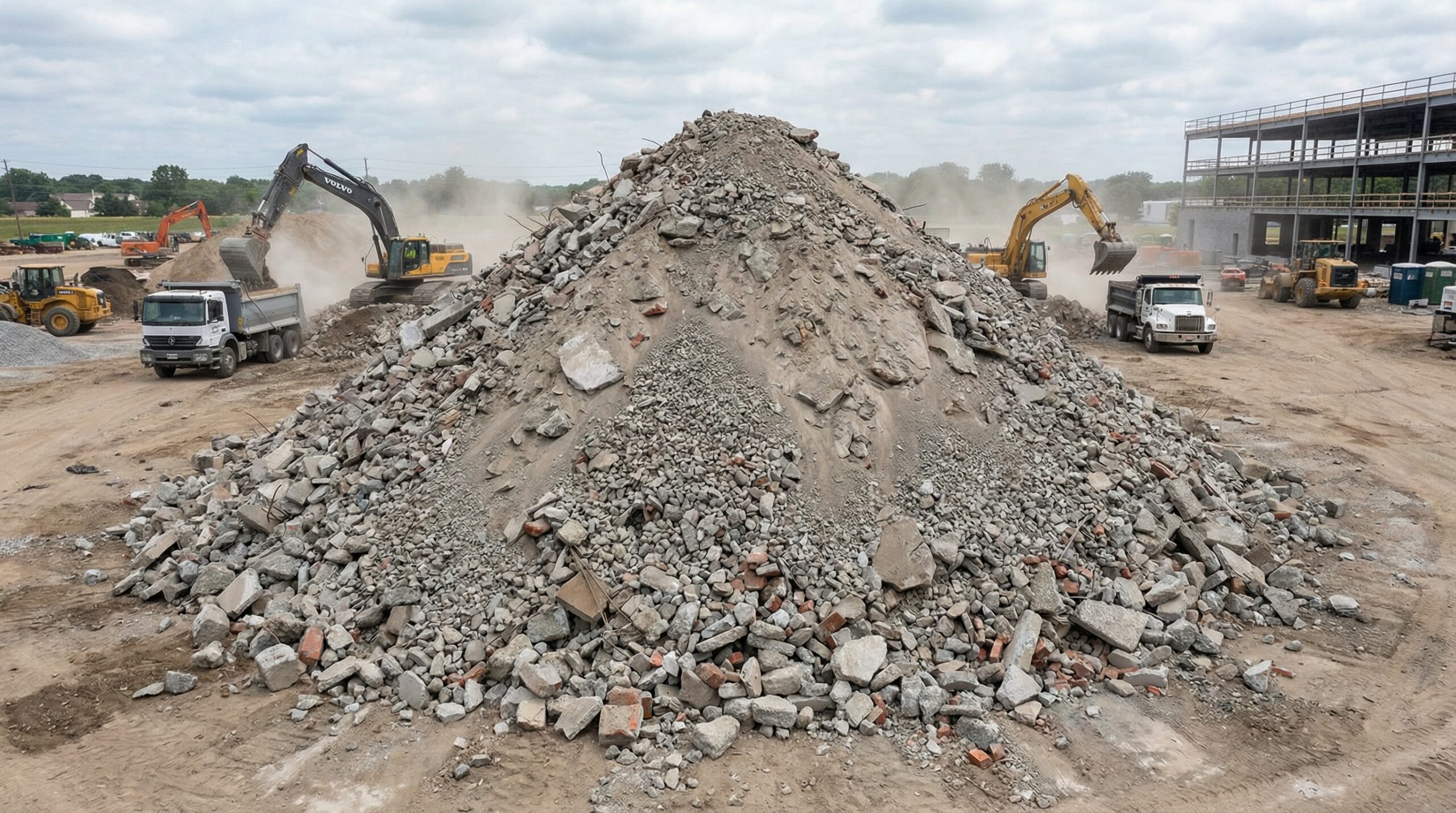
Crushed concrete, also called recycled concrete aggregate, comes from demolished buildings, roads, and structures. The concrete gets broken down, crushed to specific sizes, and screened to remove metal and debris, creating a sustainable building material.
This recycled approach makes crushed concrete widely available in urban areas where demolition projects are common. The material typically contains a mix of cement, sand, and stone from the original concrete, giving it excellent compaction properties for base applications. Understanding the different types of crushed concrete can help you select the right grade for your specific project needs.
You’ll find crushed concrete works exceptionally well for driveways, parking areas, and sub-base applications where appearance matters less than performance and cost. The angular pieces lock together when compacted, creating a stable foundation that handles heavy loads effectively.
What Is Crushed Limestone
Limestone is a natural sedimentary rock quarried from deposits formed over millions of years. After extraction, it’s crushed to various sizes and graded for different construction applications, maintaining consistent quality and appearance throughout.
The quarrying process ensures uniform color and composition, making limestone ideal when visual appeal matters. Most limestone used for construction comes in light gray to off-white colors, though regional variations can produce different hues.
You’ll appreciate limestone’s predictable performance characteristics. Unlike recycled materials, limestone offers consistent hardness, drainage properties, and compaction behavior, making it easier to work with for contractors and DIY projects alike.
Pro Tip: Limestone’s consistent grading makes it easier to calculate exact quantities needed, reducing waste and unexpected costs during installation.
Price Comparison: Understanding the Real Costs
The price gap between these materials reflects their production methods and availability. Crushed concrete costs less because it’s locally sourced from demolition projects, while limestone requires quarrying, processing, and often long-distance transportation.
Your location significantly impacts pricing. Urban areas typically offer better crushed concrete prices due to abundant demolition waste, while rural areas near limestone quarries may see smaller price differences between the materials. When comparing costs, it’s also worth exploring whether crushed concrete or gravel is cheaper for your specific application.
Delivery costs can add $5-15 per ton depending on distance from the supplier. For a 50-ton driveway project, this means delivery alone could cost $250-750, making bulk purchases and local sourcing crucial for budget management.
Consider the total project cost beyond material prices. Crushed concrete may require additional grading work due to size variations, while limestone’s consistency can reduce installation time and labor costs.
Performance Comparison by Project Type
For Driveways and Private Roads
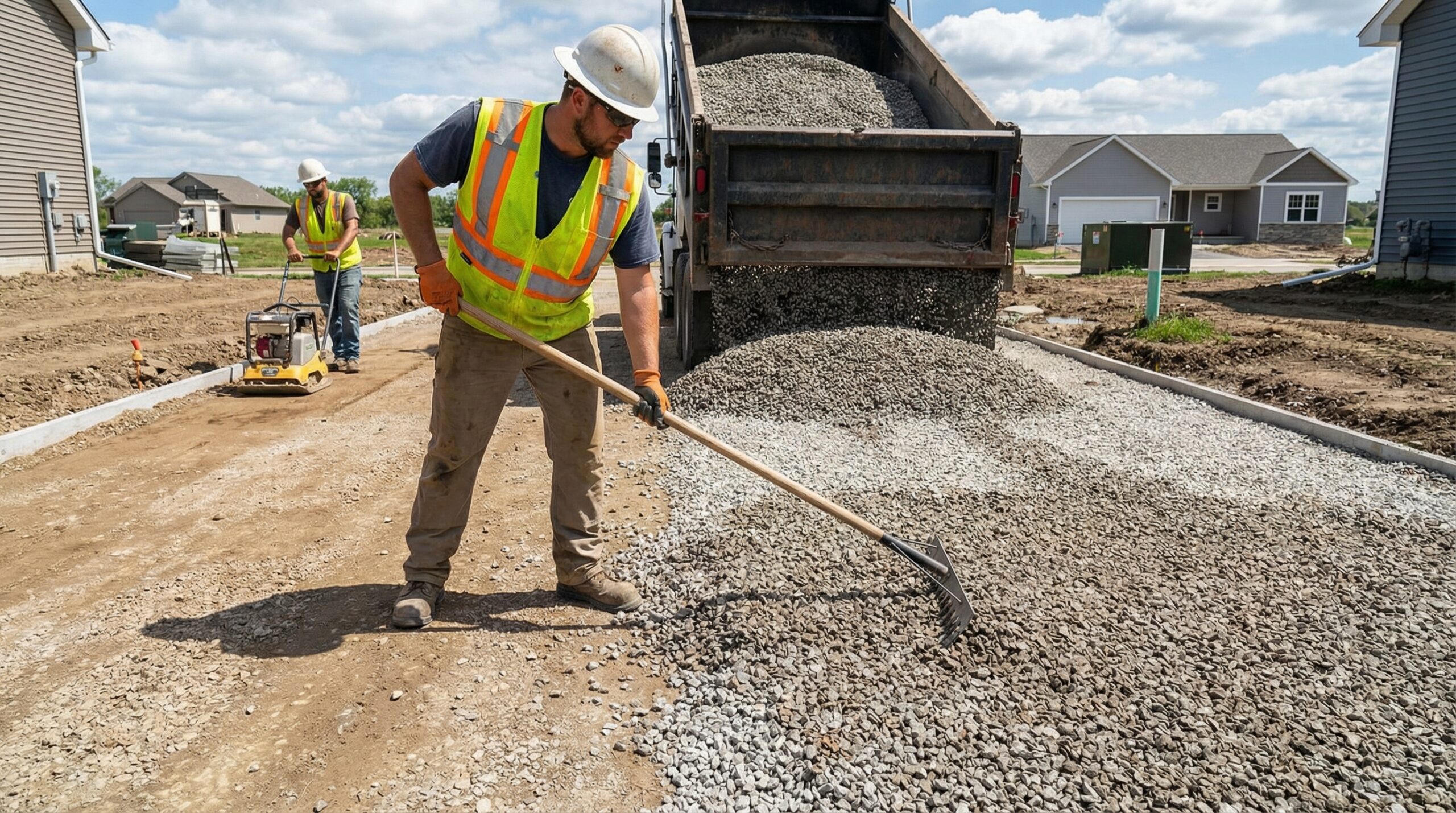
Crushed concrete excels in high-traffic residential driveways where durability matters more than appearance. Its angular pieces create excellent interlock when compacted, handling vehicle weight without shifting. Limestone provides a cleaner look for front driveways where curb appeal is important, though both materials perform similarly under normal residential traffic.
For Sub-base Applications
Both materials work well as sub-base for patios, sheds, and walkways. Crushed concrete offers better value for utility structures where the base won’t be visible. Limestone’s consistent sizing makes it easier to achieve proper grades for drainage, particularly important under patios and outdoor living spaces. For base layer applications, you might also consider comparing crushed concrete vs road base to determine which offers the best stability for your project.
For Parking Lots and Commercial Use
Heavy commercial traffic favors crushed concrete’s superior load-bearing capacity. The recycled material often contains harder aggregate pieces that resist crushing under constant heavy loads. Limestone works well for lighter commercial applications where appearance and dust control matter more than maximum load capacity.
Key Insight: Crushed concrete typically compacts 10-15% better than limestone, making it ideal for applications requiring maximum stability under heavy loads.
Environmental Impact: Recycled vs Quarried Materials
Choosing crushed concrete supports circular economy principles by diverting demolition waste from landfills. Every ton of crushed concrete used prevents approximately one ton of waste from entering disposal sites while reducing demand for virgin quarried materials.
Limestone production requires energy-intensive quarrying operations and often involves long-distance transportation from quarry sites to urban markets. This process generates significantly higher carbon emissions compared to locally-sourced recycled concrete. If you’re considering other recycled options, comparing crushed concrete vs recycled asphalt can provide insights into different sustainable material choices.
The environmental choice becomes clearer when you consider local availability. Using crushed concrete from nearby demolition projects can reduce transportation emissions by 60-80% compared to limestone shipped from distant quarries.
Making Your Decision: Budget vs Performance vs Appearance
Your project priorities should drive your material choice. If you’re working with a tight budget for a utility area like a back driveway or equipment pad, crushed concrete delivers excellent performance at the lowest cost.
Choose limestone when appearance matters and budget allows flexibility. Front driveways, decorative pathways, and visible areas benefit from limestone’s consistent color and texture, especially if you plan to leave some aggregate exposed.
Consider your local climate and soil conditions. Areas with poor drainage may benefit from limestone’s more predictable permeability, while stable soil conditions allow crushed concrete to perform equally well at lower cost. For projects requiring specific grading specifications, you may want to explore crushed concrete vs Class 5 to understand how different materials meet engineering requirements.
For most residential projects, the decision comes down to balancing upfront savings against long-term appearance preferences. Crushed concrete can save 30-50% on material costs, money that could fund other project improvements or simply stay in your budget.
Whether you choose crushed concrete for its value and sustainability or limestone for its consistency and appearance, Hello Gravel provides high-quality materials delivered directly to your project site. Our experienced team can help you calculate exact quantities and provide competitive pricing for both options, ensuring your project starts with the right foundation materials.
FAQ
Is crushed concrete cheaper than limestone?
Which is better for driveways: crushed concrete or limestone?
Is crushed concrete environmentally friendly?
How much material do I need for my driveway project?
Author: igor