
Crushed Concrete vs Crushed Rock: Which Is Better for Your Driveway and Patio
Guide handoff
Want help applying this guide to your project?
Share your ZIP and what you need help with. We'll use this guide as context when we follow up.
- 1 This guide gives us the context you were reading.
- 2 Ask about pricing, material choice, delivery timing, or quantity.
- 3 Keep it broad if you are still figuring out the project.
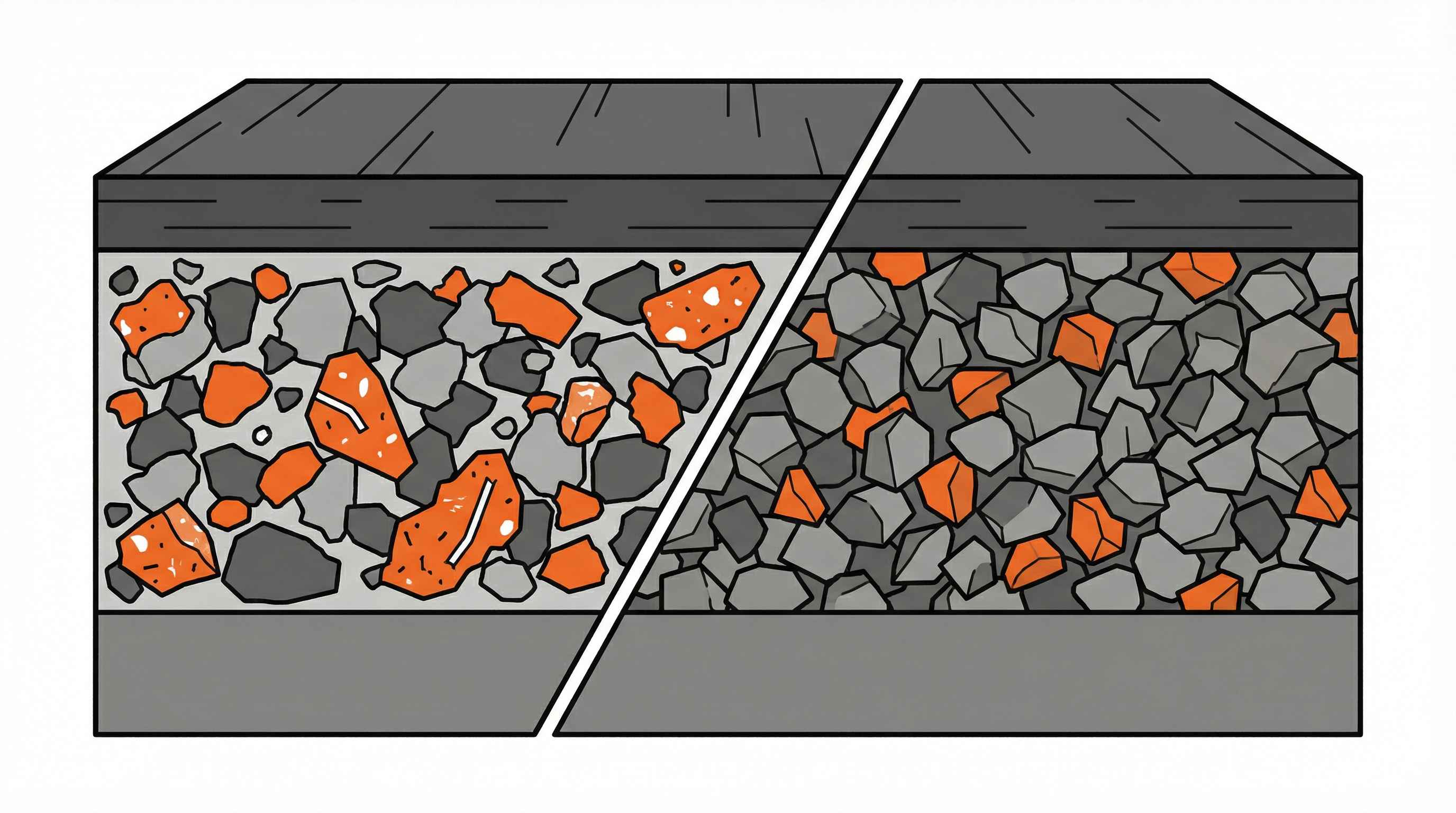
Planning a driveway, patio, or parking area? You’re likely weighing crushed concrete against crushed rock as your base material. Here’s the quick answer: crushed concrete typically costs 20-30% less than crushed rock and offers excellent environmental benefits since it’s recycled material. Crushed rock provides a more consistent appearance and strength but comes at a higher price point.
Both materials work well for most residential projects, but your choice depends on your budget, aesthetic preferences, and environmental priorities. Crushed concrete excels for budget-conscious homeowners who prioritize sustainability, while crushed rock suits projects where appearance and uniform strength matter most.
Quick Fact: Using crushed concrete for a typical 50-foot driveway can save you several hundred dollars compared to premium crushed rock while diverting waste from landfills.
Below, you’ll see exactly how they compare in cost, durability, appearance, and which projects each material handles best.
What is crushed concrete and how is it made
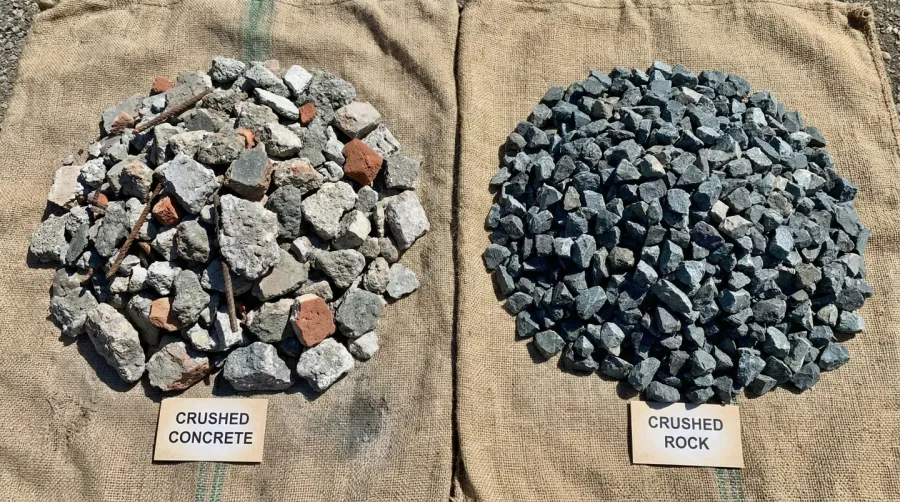
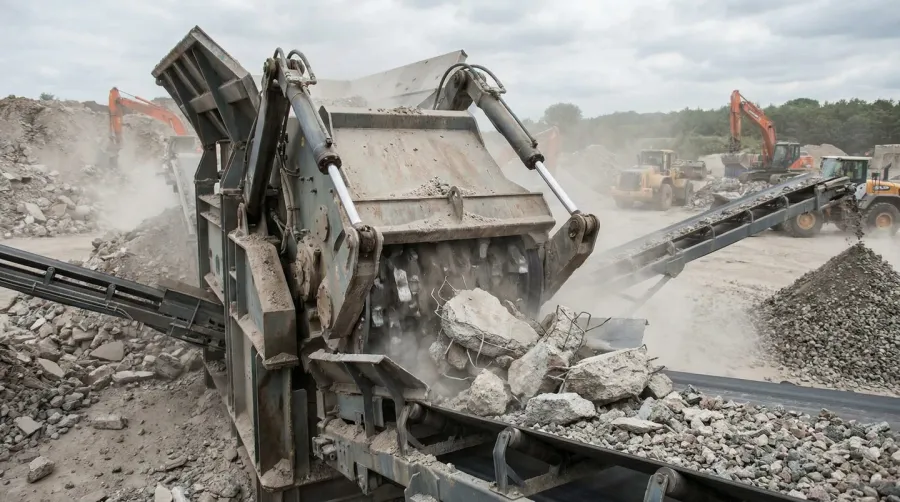
Crushed concrete is exactly what it sounds like – recycled concrete from demolished buildings, roads, and structures that’s been processed into usable aggregate. The recycling process involves collecting concrete waste, removing any steel reinforcement, and crushing it through heavy machinery into various sizes.
The result is a gray, angular material that compacts extremely well and provides excellent stability for base applications. Most crushed concrete contains small amounts of cement paste that actually helps it bind together when compacted, creating a solid foundation layer.
You’ll find crushed concrete available in different types of crushed concrete, from fine material perfect for walkways to larger chunks ideal for heavy-duty road bases. The recycled nature means each batch can vary slightly in composition, but quality suppliers screen their material to remove contaminants and ensure consistent performance.
Understanding crushed rock types and production
Crushed rock encompasses various natural stone materials including limestone, granite, river rock, and trap rock that are quarried and processed to specific sizes. The production involves drilling, blasting, and crushing virgin rock formations to create uniform aggregate.
Unlike recycled concrete, crushed rock offers consistent composition and appearance since it comes from controlled quarry sources. You can choose from different rock types based on your needs – limestone for excellent compaction, granite for maximum strength, or decorative river rock for attractive surfaces.
The natural origin gives crushed rock its appealing appearance with varied colors and textures. However, this virgin material requires significant energy to extract and process, making it less environmentally friendly than recycled alternatives.
Key differences that affect your project choice
The most significant differences between these materials center on cost, appearance, and environmental impact. When comparing crushed concrete versus gravel pricing, crushed concrete typically runs 20-30% less expensive than comparable crushed rock because it uses waste material that would otherwise fill landfills.
| Factor | Crushed Concrete | Crushed Rock |
|---|---|---|
| Cost | $ (Budget-friendly) | $$ (Higher cost) |
| Appearance | Industrial gray | Natural, varied colors |
| Strength | Good, variable | Excellent, consistent |
| Environmental Impact | Eco-friendly recycled | Virgin quarried material |
Appearance-wise, crushed concrete has an industrial gray look that works well for utilitarian applications but may not suit decorative projects. Crushed rock offers natural colors and textures that enhance landscaping and visible areas.
From a performance standpoint, both materials compact well and provide stable foundations. Crushed rock typically offers more consistent strength characteristics, while crushed concrete’s performance can vary based on the original concrete’s quality.
Environmental Benefit: Choosing crushed concrete for your project diverts approximately 1 ton of waste from landfills for every cubic yard used.
Best applications for each material type
For driveways and parking areas, crushed concrete excels as a base material, especially for residential applications with moderate traffic. Its excellent compaction properties create stable surfaces that resist rutting and settling. The cost savings become substantial on larger projects like long driveways or multiple parking spaces.
Crushed rock works better for high-visibility areas like front walkways, decorative patios, and landscaping features where appearance matters. Its natural colors and consistent texture make it ideal for projects where the material remains partially visible or serves dual functional and aesthetic purposes.
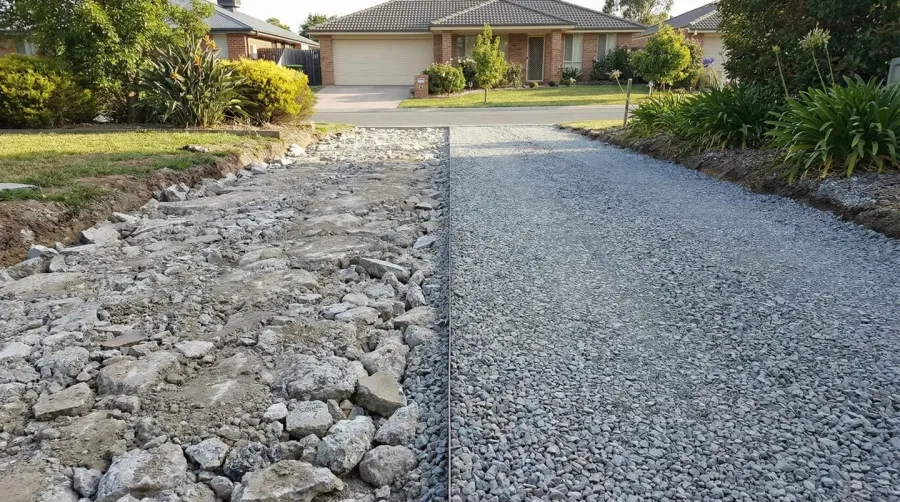
Heavy-duty applications like commercial driveways or areas with truck traffic often benefit from crushed rock’s consistent strength characteristics. However, properly graded crushed concrete can handle most residential loads without issues while providing significant cost savings.
For drainage applications, both materials work well, though specific rock types like crushed limestone or gravel may offer superior permeability for French drains and similar projects. If you’re considering decorative options, you might also explore crushed concrete versus pea gravel for pathways and garden beds.
Project Tip: For budget-conscious homeowners, use crushed concrete as your base layer and top with a thin layer of decorative crushed rock for the best of both worlds.
Making the right choice for your specific needs
Your decision should start with budget considerations since material costs often drive project feasibility. If you’re working with tight finances, crushed concrete delivers excellent performance at a lower price point, making larger projects more achievable. Many homeowners wonder which is cheaper crushed concrete or gravel, and the answer consistently favors crushed concrete for cost savings.
Consider your project’s visibility and aesthetic requirements. Back driveways, utility areas, and purely functional spaces work perfectly with crushed concrete. Front-facing areas, entertainment spaces, and landscaping features may justify the extra cost of attractive crushed rock.
Environmental priorities also play a role in material selection. Choosing recycled crushed concrete supports sustainable construction practices and reduces your project’s carbon footprint compared to virgin quarried materials.
Think about long-term maintenance and performance needs. Both materials last for decades when properly installed, but crushed rock may offer slightly better consistency in challenging conditions like heavy freeze-thaw cycles or extreme loads.
For most homeowners, crushed concrete provides the best value proposition – delivering solid performance, significant cost savings, and environmental benefits that make it an excellent choice for driveways, parking areas, and base applications. Reserve crushed rock for projects where appearance and maximum strength justify the additional investment. If you’re working on a road base project, comparing crushed concrete versus road base options can help you make the most informed decision.
When sourcing either material, work with reputable suppliers who can provide information about gradation, compaction characteristics, and any special considerations for your specific application. Quality installation matters more than material choice for long-term project success.
FAQ
Is crushed concrete better than crushed rock for driveways?
For most driveways, crushed concrete provides excellent performance as a base material at a lower cost than crushed rock. It compacts well, supports heavy loads, and offers good drainage. However, if the material will remain visible and aesthetics matter, crushed rock may be preferred for its cleaner, more uniform appearance. Choose crushed concrete for budget-friendly functionality or crushed rock when appearance is a priority.
Is crushed concrete cheaper than crushed rock?
Yes, crushed concrete is typically 20-30% cheaper than crushed rock because it’s made from recycled material rather than newly quarried stone. The cost savings come from lower production costs and often shorter transportation distances since recycling facilities are usually located closer to urban areas. The savings become more significant on larger projects like long driveways or parking areas.
Does crushed concrete drain well?
Crushed concrete offers good drainage performance due to its angular particles and interconnected void spaces. While it may not drain quite as well as some open-graded crushed rock options, it provides adequate permeability for most residential applications including driveways, parking areas, and retaining wall backfill. For areas with extremely heavy rainfall, you might consider crushed rock for maximum drainage.
Is crushed concrete environmentally friendly?
Yes, crushed concrete is an eco-friendly choice because it recycles demolition waste that would otherwise end up in landfills. Using crushed concrete reduces the demand for newly quarried stone, which lowers the environmental impact of extraction and processing. For every cubic yard used, approximately 1 ton of waste is diverted from landfills, making it an excellent sustainable option for construction projects.