Crushed Concrete vs Crush and Run: Which Is Better for Your Driveway?
Get an estimate for your project in 60 seconds
 Your information is secure

Choosing the right base material for your driveway can save you thousands in future repairs and headaches. When it comes to affordable, durable options, crushed concrete and crush and run (also called crusher run) are the two most popular choices for homeowners and contractors alike.
Crushed concrete is recycled concrete aggregate (RCA) made from old concrete structures, while crush and run is a blend of crushed stone and stone dust that creates an extremely stable base. Both materials offer excellent value, but they perform differently depending on your specific needs, budget, and project requirements.
Quick Answer: For budget-conscious, eco-friendly projects with good drainage needs, crushed concrete typically wins. For maximum stability under heavy traffic or when you need the smoothest possible finish, crush and run is usually the better choice.
This guide will walk you through the key differences, costs, and best applications for each material so you can make the right decision for your driveway project.
What is crushed concrete (recycled concrete aggregate)?
Crushed concrete, also known as recycled concrete aggregate or RCA, is exactly what it sounds like – old concrete that has been crushed into usable aggregate. This material comes from demolished buildings, old sidewalks, and broken concrete slabs that would otherwise end up in landfills.
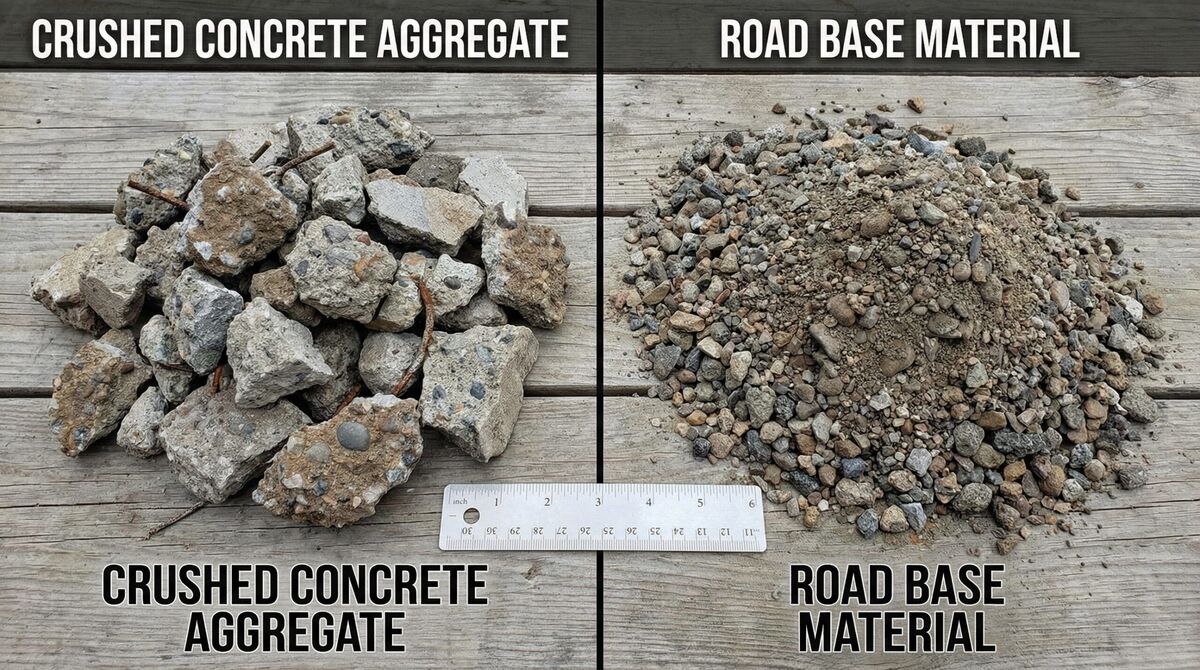
The production process involves crushing the concrete into various sizes, screening out contaminants, and removing any steel reinforcement. The result is an angular, gray-colored aggregate that typically ranges from fine particles up to 2-3 inches in diameter.
Pros of crushed concrete:
– Significantly lower cost than virgin stone materials
– Excellent drainage due to angular shape and varied particle sizes
– Environmentally friendly – diverts waste from landfills
– Good compaction properties for most residential applications
– Readily available in most areas
Cons of crushed concrete:
– Slightly less uniform than manufactured aggregates
– May contain small amounts of dust or debris
– Can have variable quality depending on the source material
– Not always approved for all municipal applications
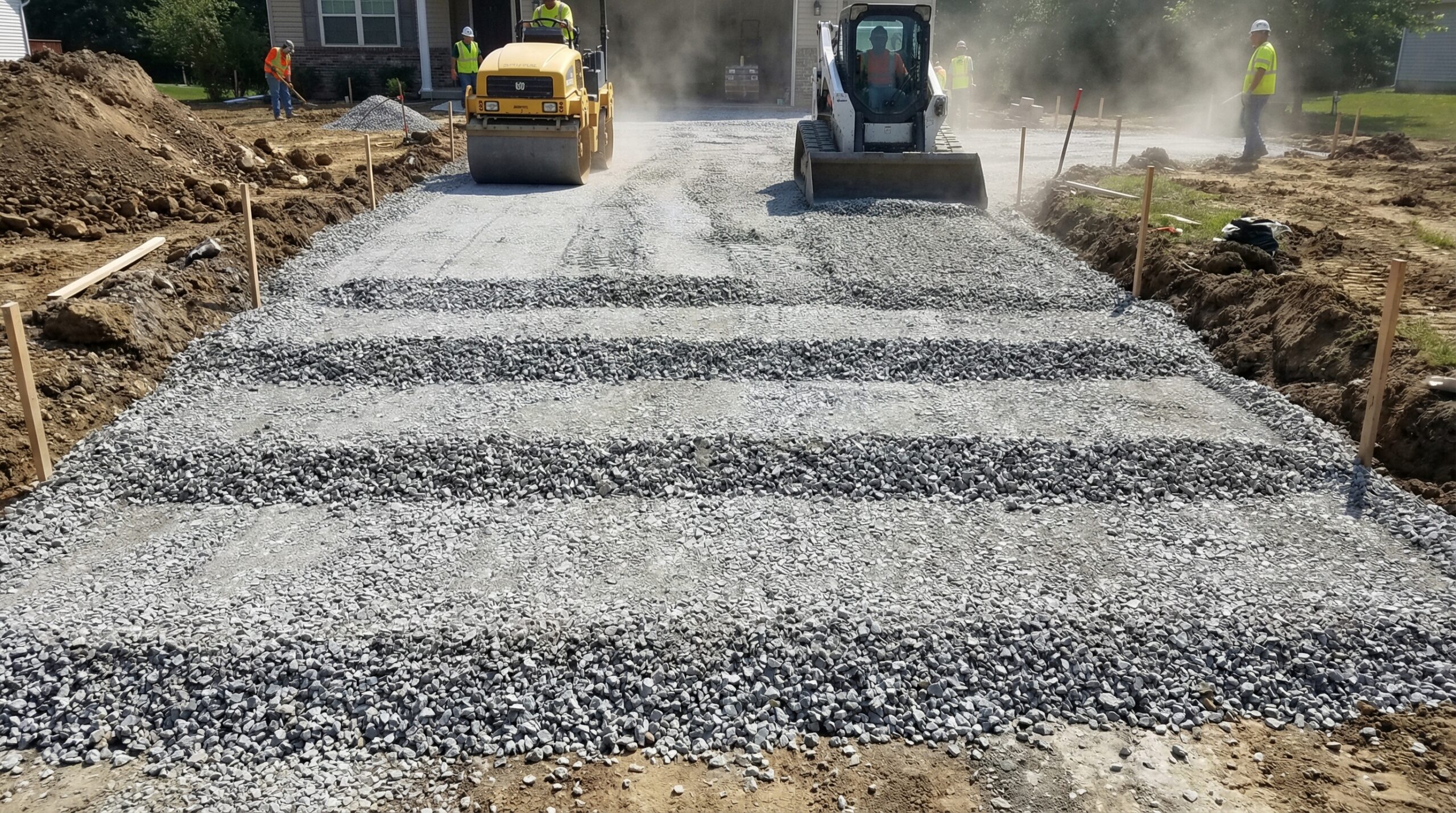
The angular nature of crushed concrete pieces allows them to lock together well when compacted, creating a stable base that still allows water to drain through effectively.
What is crush and run (crusher run) gravel?
Crush and run, also called crusher run, is a carefully engineered blend of crushed stone and stone dust. This material is produced by crushing quarried stone and keeping both the larger pieces and the fine particles together in specific proportions.
The magic of crush and run lies in its gradation – it contains stones ranging from about 3/4 inch down to fine dust. When compacted, the stone dust fills the voids between larger pieces, creating an incredibly dense and stable base that can handle heavy loads.
Pros of crush and run:
– Superior compaction and load-bearing capacity
– Creates a very smooth, stable surface when properly installed
– Consistent quality and gradation from batch to batch
– Excellent for high-traffic areas and heavy vehicle access
– Works well under concrete slabs and pavers
Cons of crush and run:
– Higher material cost than crushed concrete
– Less environmentally friendly (requires new quarrying)
– Can become dusty in dry conditions
– Moderate drainage compared to more open-graded materials
Pro Tip: The stone dust in crush and run acts like cement when wet and compacted, which is why it creates such a solid base but may not drain as quickly as crushed concrete.
Key differences: Crushed concrete vs crush and run
| Factor | Crushed Concrete (RCA) | Crush and Run |
|---|---|---|
| Material source | Recycled concrete | Quarried stone |
| Typical cost | Lower ($) | Higher ($$) |
| Compaction | Good | Excellent |
| Drainage | Excellent | Moderate |
| Environmental impact | Very low | Higher |
| Best for | Budget driveways, eco projects | Heavy traffic, smooth finish |
The choice between these materials often comes down to your priorities. If you are working with a tight budget and want to make an environmentally responsible choice, crushed concrete delivers excellent performance at a lower cost. However, if you need maximum stability for heavy trucks or want the smoothest possible driveway surface, crush and run is worth the extra investment.
For most residential driveways with normal car traffic, both materials will perform well when installed with proper base preparation and adequate thickness.
Best applications for each material
Choose crushed concrete when you need:
– A budget-friendly driveway base that still performs well
– Excellent drainage for areas with heavy rainfall
– An eco-friendly option that reduces landfill waste
– Base material for farm roads or temporary access roads
– Backfill behind retaining walls where drainage is important
Choose crush and run when you need:
– Maximum stability for heavy vehicle traffic
– The smoothest possible compacted surface
– A base under concrete slabs or pavers
– Long-term durability in high-traffic commercial applications
– Consistent, predictable material quality
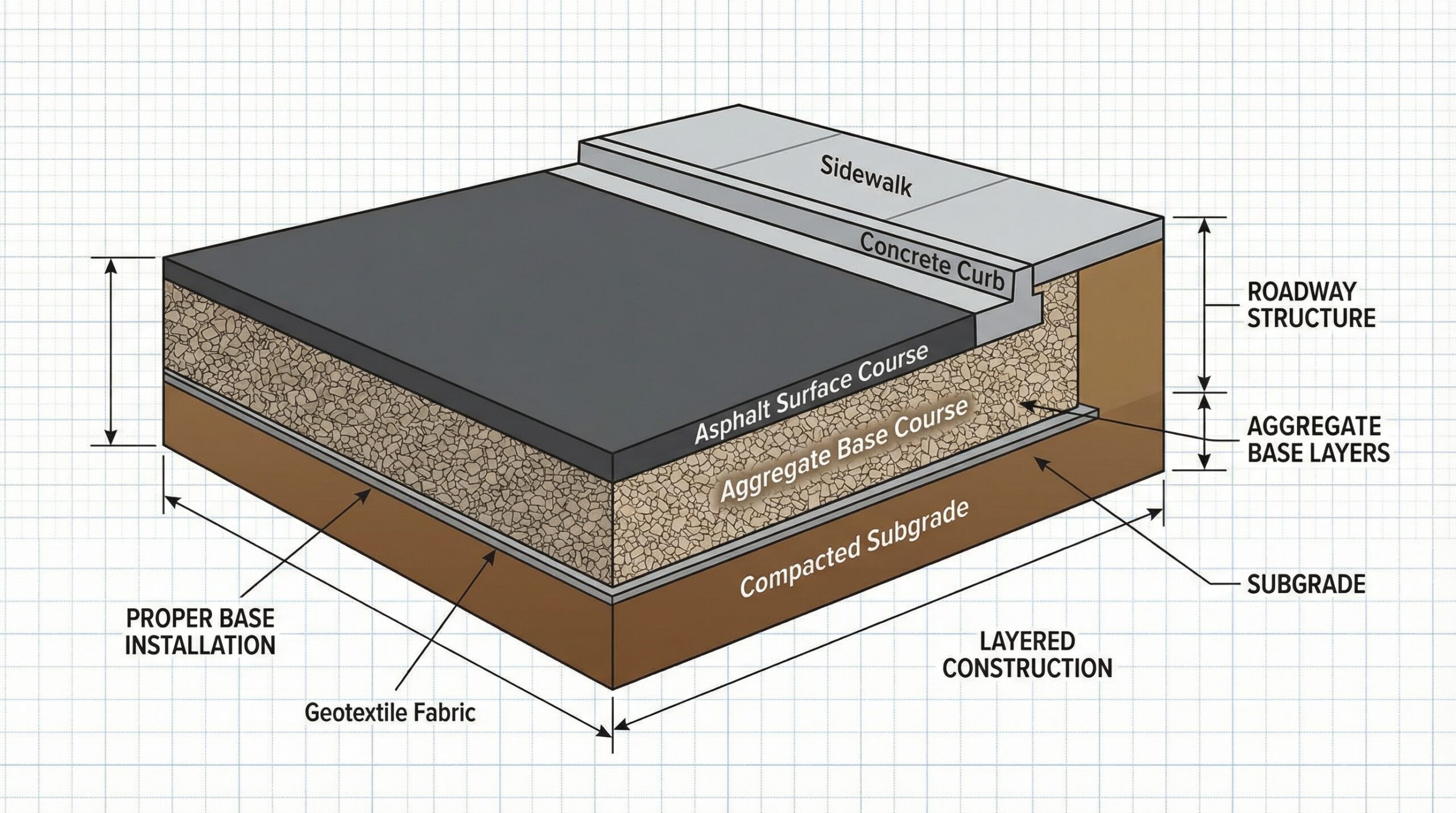
Both materials work best when installed over a properly prepared subgrade with adequate thickness. For most residential driveways, you will want 4-6 inches of base material, depending on your soil conditions and expected traffic loads.
Installation and cost considerations
The installation process is similar for both materials, but there are some key differences to keep in mind. Crushed concrete may require slightly more attention during spreading due to its varied particle sizes, while crush and run typically spreads and compacts more predictably.
Typical installation steps:
1. Excavate and prepare the subgrade
2. Install geotextile fabric if needed for soft soils
3. Spread base material in 2-3 inch lifts
4. Compact each lift with a plate compactor or roller
5. Grade the final surface for proper drainage
Cost-wise, crushed concrete typically runs 20-40% less than crush and run for the material itself. If you’re comparing crushed concrete vs gravel price, you’ll find that crushed concrete often offers the best value. However, delivery costs, site preparation, and installation labor are usually similar for both materials.
Budget Tip: The money you save on crushed concrete material can often pay for professional installation, which is crucial for long-term performance regardless of which material you choose.
When planning your project, remember that proper installation matters more than the specific material choice. A well-installed crushed concrete base will outperform a poorly installed crush and run base every time. Understanding the different types of crushed concrete available can also help you make a more informed decision.
If you’re also considering other alternatives, you might want to explore comparisons like crushed concrete vs road base or crushed concrete vs Class 5 to see which material best suits your specific project requirements. For those working in areas where limestone is common, checking out crushed concrete vs limestone can provide valuable insights into regional material options.
Ready to move forward with your driveway project? Hello Gravel makes it easy to get high-quality crushed concrete or crush and run delivered right to your site. Our materials are carefully screened and graded to ensure consistent performance, and our online ordering system eliminates the hassle of calling multiple suppliers for quotes. Whether you choose crushed concrete for its eco-friendly benefits or crush and run for maximum stability, we have got the materials and expertise to help your project succeed.


 Chance Kittrell
 Chance Krittel