Crushed Concrete for Paver Base Complete Guide to Benefits and Installation
Get an estimate for your project in 60 seconds
 Your information is secure

When planning your paver project, choosing the right base material can make or break your investment. Crushed concrete has emerged as a popular choice for homeowners looking to balance cost, durability, and environmental responsibility. But does it really deliver the performance you need for your patio, driveway, or walkway?
Quick answer: Crushed concrete makes an excellent paver base for most residential projects, offering 20-30% cost savings compared to traditional materials while providing strong load-bearing capacity and superior drainage. However, it may not be suitable for all soil types or heavy commercial applications.
Key insight: Properly compacted crushed concrete can support residential traffic loads while maintaining excellent drainage properties, making it ideal for patios and light-duty driveways.
This guide walks you through everything you need to know about using crushed concrete as your paver base, from understanding the material to proper installation techniques.
What is crushed concrete and why consider it
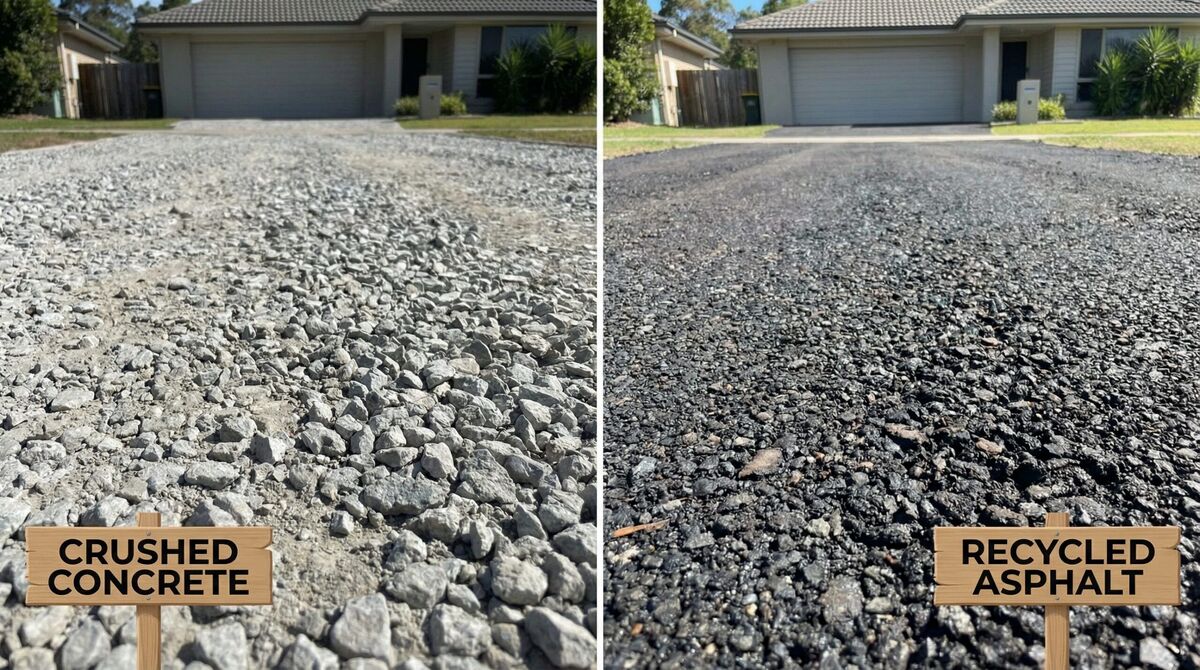
Crushed concrete, also known as recycled concrete aggregate (RCA), comes from demolished concrete structures that are processed and sorted into various sizes. This recycled material typically ranges from fine dust to 2-inch pieces, with 3/4-inch minus being the standard size for paver applications.
The material offers several compelling advantages over traditional base options. First, it costs significantly less than virgin aggregate materials, making it budget-friendly for homeowners. Second, it provides excellent compaction properties when properly installed, creating a stable foundation that resists shifting and settling.
What sets crushed concrete apart is its environmental benefit. By choosing this recycled material, you’re diverting waste from landfills while reducing demand for newly quarried stone. This makes it an attractive option for environmentally conscious homeowners who want to minimize their project’s carbon footprint.

Benefits that make crushed concrete worth considering
The cost advantage of crushed concrete is hard to ignore. Most suppliers price it 20-30% lower than comparable crushed stone or gravel options. For a typical 500-square-foot patio project, this translates to savings of $200-400 on base materials alone. If you’re comparing options, understanding crushed concrete vs gravel price differences can help you make an informed decision.
Beyond cost savings, crushed concrete delivers impressive performance characteristics. When compacted properly, it forms a dense, stable surface that can handle typical residential loads without issue. The angular shape of the crushed pieces allows them to lock together effectively, creating a solid foundation that resists movement. Learn more about crushed concrete compaction techniques to ensure optimal results.
Drainage is another standout feature. The varied particle sizes in crushed concrete create natural channels for water flow, helping prevent pooling and frost heave issues. This drainage capability often exceeds that of traditional sand bases, making it particularly valuable in areas with heavy rainfall or poor soil drainage. For detailed information on this topic, check out does crushed concrete drain well.
Performance tip: Crushed concrete achieves optimal compaction when moisture content is maintained at 8-12% during installation, creating maximum density and stability.
The environmental benefits extend beyond waste reduction. Using recycled concrete reduces the energy required for transportation since it’s often sourced locally from demolition projects. This local sourcing also means more predictable pricing and availability compared to materials that must be trucked from distant quarries.
Potential drawbacks and limitations to understand
While crushed concrete offers many advantages, it’s not perfect for every situation. The material may contain small amounts of metal reinforcement, which can occasionally cause rust stains if not properly screened. Quality varies depending on the source concrete, so working with reputable suppliers becomes crucial.
Soil compatibility presents another consideration. In highly acidic soils, the cement particles in crushed concrete may gradually deteriorate over time. This typically isn’t an issue in most residential applications, but it’s worth testing your soil pH if you’re concerned about long-term performance. Homeowners often wonder is crushed concrete toxic or harmful to their landscaping.
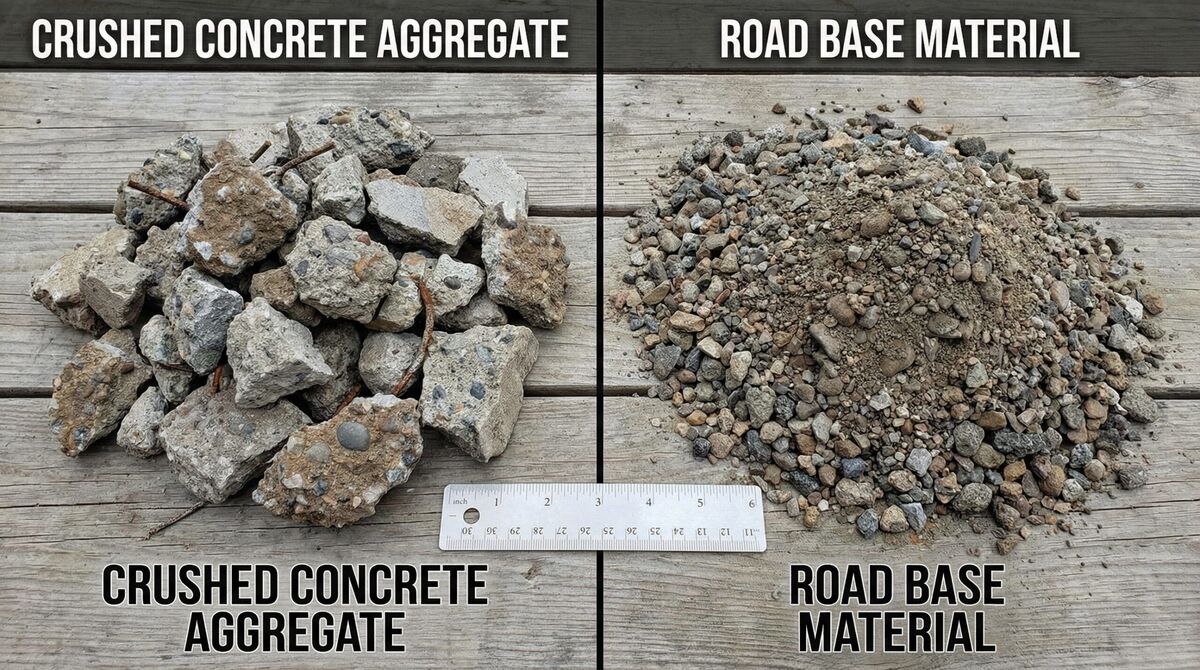
The compaction characteristics differ slightly from engineered road base materials. While crushed concrete compacts well, it may not achieve the same maximum density as purpose-designed aggregate blends. For heavy commercial applications or areas with constant truck traffic, comparing crushed concrete vs road base options might be worthwhile.
Installation process and best practices
Proper installation starts with adequate excavation and site preparation. Remove all vegetation and organic material, then excavate to a depth that accommodates your base thickness plus the paver height. For residential applications, plan for 4-6 inches of compacted crushed concrete base.
Spread the crushed concrete in lifts no thicker than 3 inches, maintaining proper moisture content throughout the process. Use a plate compactor to achieve thorough compaction, making multiple passes in different directions. For detailed guidance, see how to compact crushed concrete for best practices. The goal is to create a firm, stable surface that doesn’t show footprints when walked on.
After compacting the base, add a 1-inch leveling layer of coarse sand. This sand layer provides the final adjustment for paver height and creates a smooth bed for installation. Screed the sand level, then install your pavers according to manufacturer recommendations.

| Material | Cost per ton | Drainage | Load bearing | Environmental impact |
|---|---|---|---|---|
| Crushed concrete | $25-35 | Excellent | Good | Eco-friendly |
| Crushed stone | $35-50 | Good | Excellent | Moderate |
| Sand base | $30-40 | Poor | Fair | Low impact |
Installation tip: Maintain consistent moisture during compaction by lightly misting the crushed concrete if it appears too dry, but avoid oversaturating which can prevent proper compaction.
Making the right choice for your project
The decision to use crushed concrete depends on your specific project requirements and priorities. For typical residential patios, walkways, and light-duty driveways, crushed concrete provides an excellent balance of performance and value. The cost savings alone often make it the smart choice for budget-conscious homeowners. You can explore various types of crushed concrete to find the best option for your specific needs.
Consider your local climate and soil conditions when making the decision. In areas with good drainage and moderate traffic loads, crushed concrete performs exceptionally well. However, if you’re building in an area with heavy clay soils or expect regular heavy vehicle traffic, you might want to explore traditional road base options.
Working with an experienced supplier makes a significant difference in project success. Quality crushed concrete that’s properly screened and graded will perform much better than material from questionable sources. Take time to research local suppliers and ask about their processing methods and quality control procedures.
For most homeowners, crushed concrete offers a practical, cost-effective solution that delivers reliable performance while supporting environmental sustainability. When installed properly, it creates a stable foundation that will support your pavers for decades while saving money that can be invested in higher-quality pavers or other project enhancements.

 Chance Kittrell