Construction Stone Size Chart: Complete Guide to Choosing the Right Crushed Stone for Your Project
Published on: December 10, 2025
Get an estimate for your project in 60 seconds
 Your information is secure
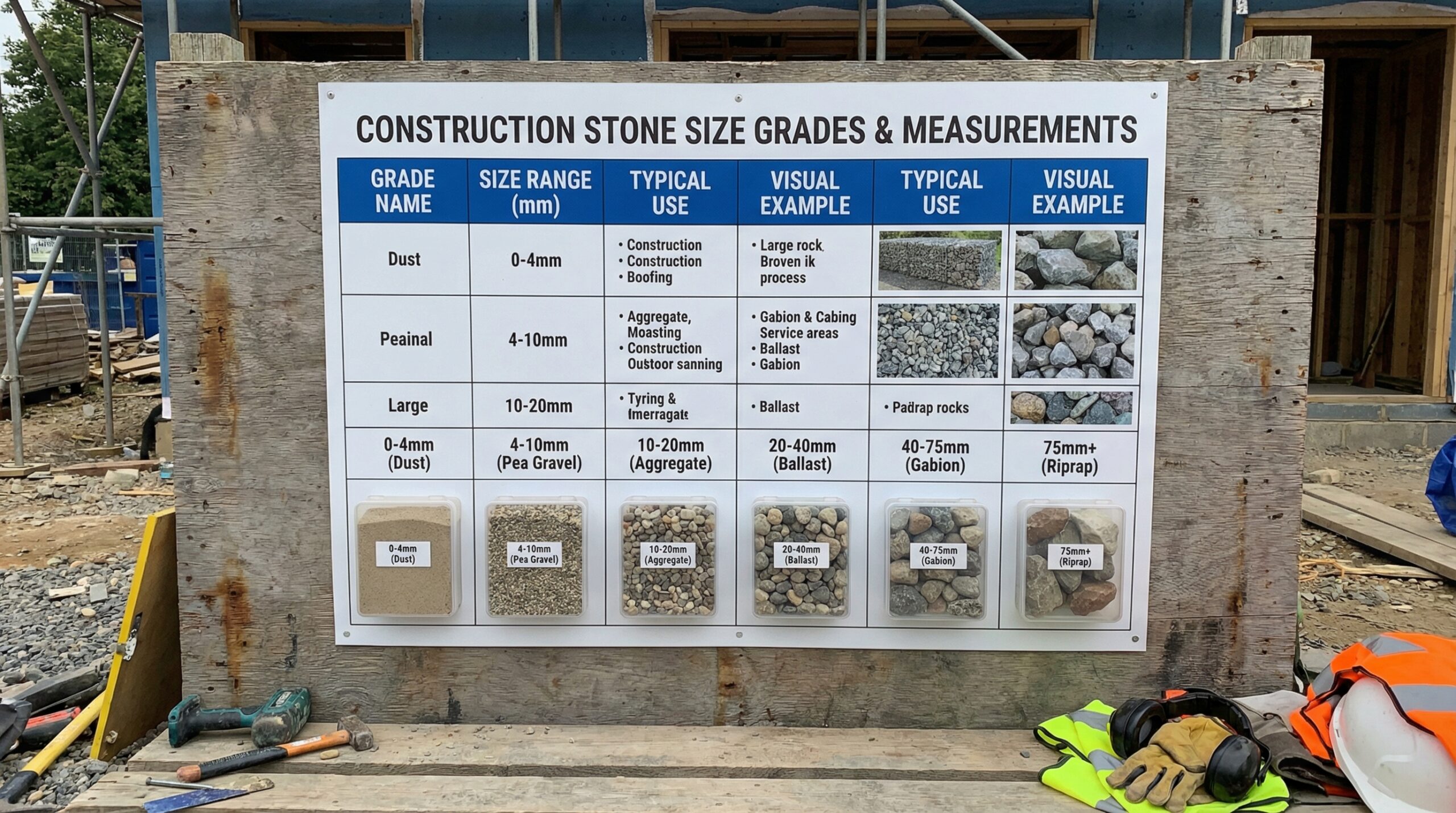
Choosing the right stone size for your construction project can feel overwhelming with all the grade numbers and size measurements available. Whether you’re planning a driveway, setting up drainage, or laying a foundation, understanding stone sizes is crucial for project success.
This guide provides you with a clear stone size chart, explains what those confusing grade numbers like #57 and #8 actually mean, and helps you match the perfect stone size to your specific project needs. You’ll discover which sizes work best for driveways, drainage systems, walkways, and more.
Quick Answer: Most driveways use 3/4-inch (#57) crushed stone for the base layer, while French drains typically need clean 3/4-inch to 1-inch stone for proper water flow.
Construction stone size chart with grades and applications
Understanding stone sizes starts with knowing how the industry categorizes different materials. The construction industry uses a standardized grading system where numbers correspond to specific size ranges measured through screening processes.
| Stone Grade | Size Range (inches) | Size Range (mm) | Best Uses |
|---|---|---|---|
| #57 Stone | 3/4″ to 1″ | 19-25mm | Driveways, general drainage, concrete base |
| #8 Stone | 3/8″ to 1/2″ | 9.5-12.7mm | Walkways, patio base, pipe bedding |
| #10 Stone | 1/8″ to 3/8″ | 3.2-9.5mm | Concrete mix, fine drainage |
| Pea Gravel | 1/4″ to 3/8″ | 6-9.5mm | Decorative landscaping, pathways |
| Screenings | Dust to 3/8″ | 0-9.5mm | Base compaction, leveling |
The grade numbers don’t follow a simple pattern, but they represent industry standards developed over decades. Smaller numbers generally indicate larger stone sizes, though there are exceptions like #8 and #10. For a deeper dive into understanding the numbering system for gravel, you can explore how these classifications evolved.
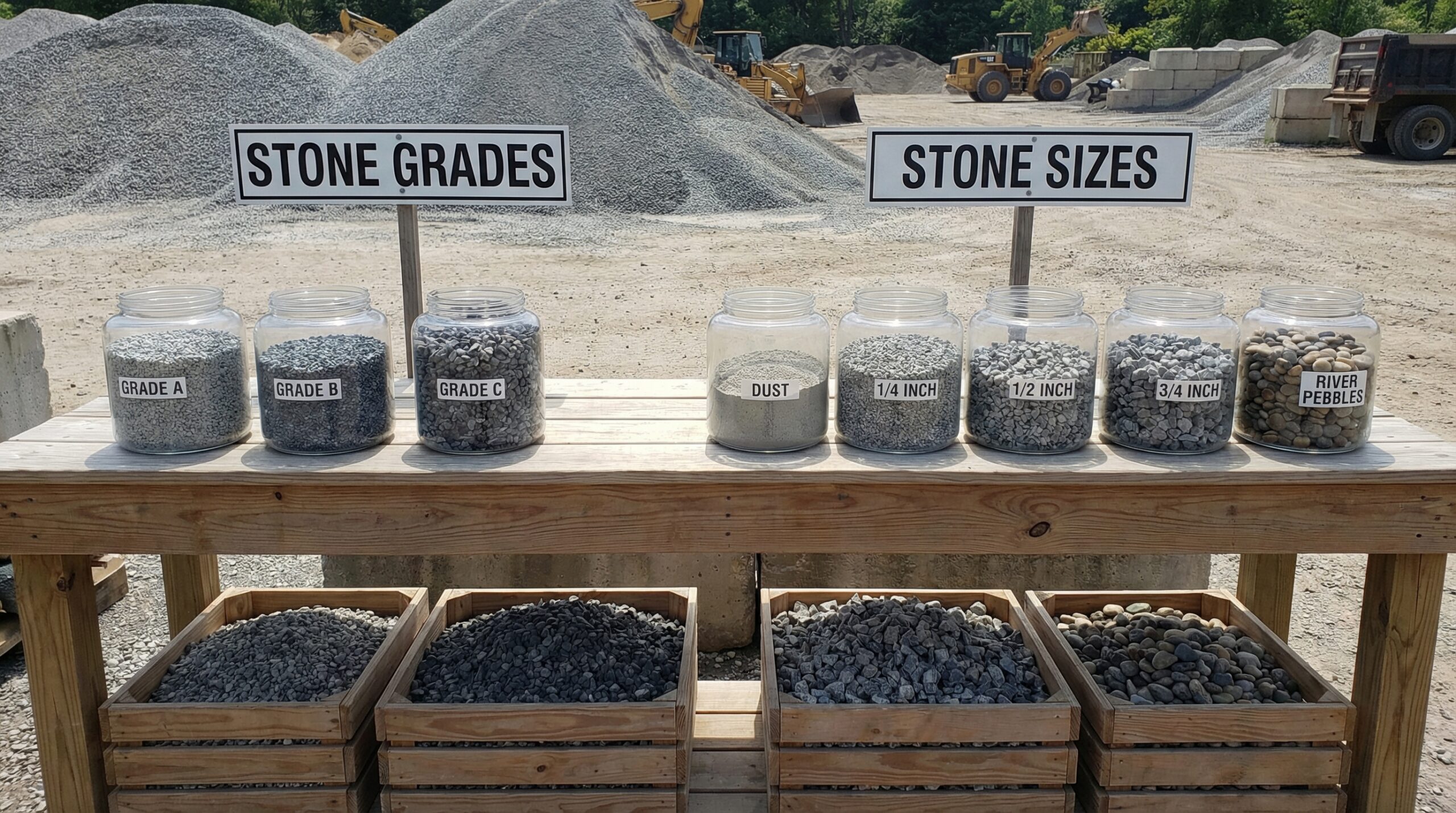
Best stone sizes for common construction projects
Different projects require specific stone characteristics for optimal performance. The key is matching stone size to your project’s drainage needs, load requirements, and intended use.
Driveways and parking areas
For most residential driveways, 3/4-inch crushed stone (#57) provides the ideal balance of stability and drainage. This size compacts well while allowing water to flow through, preventing puddles and frost damage.
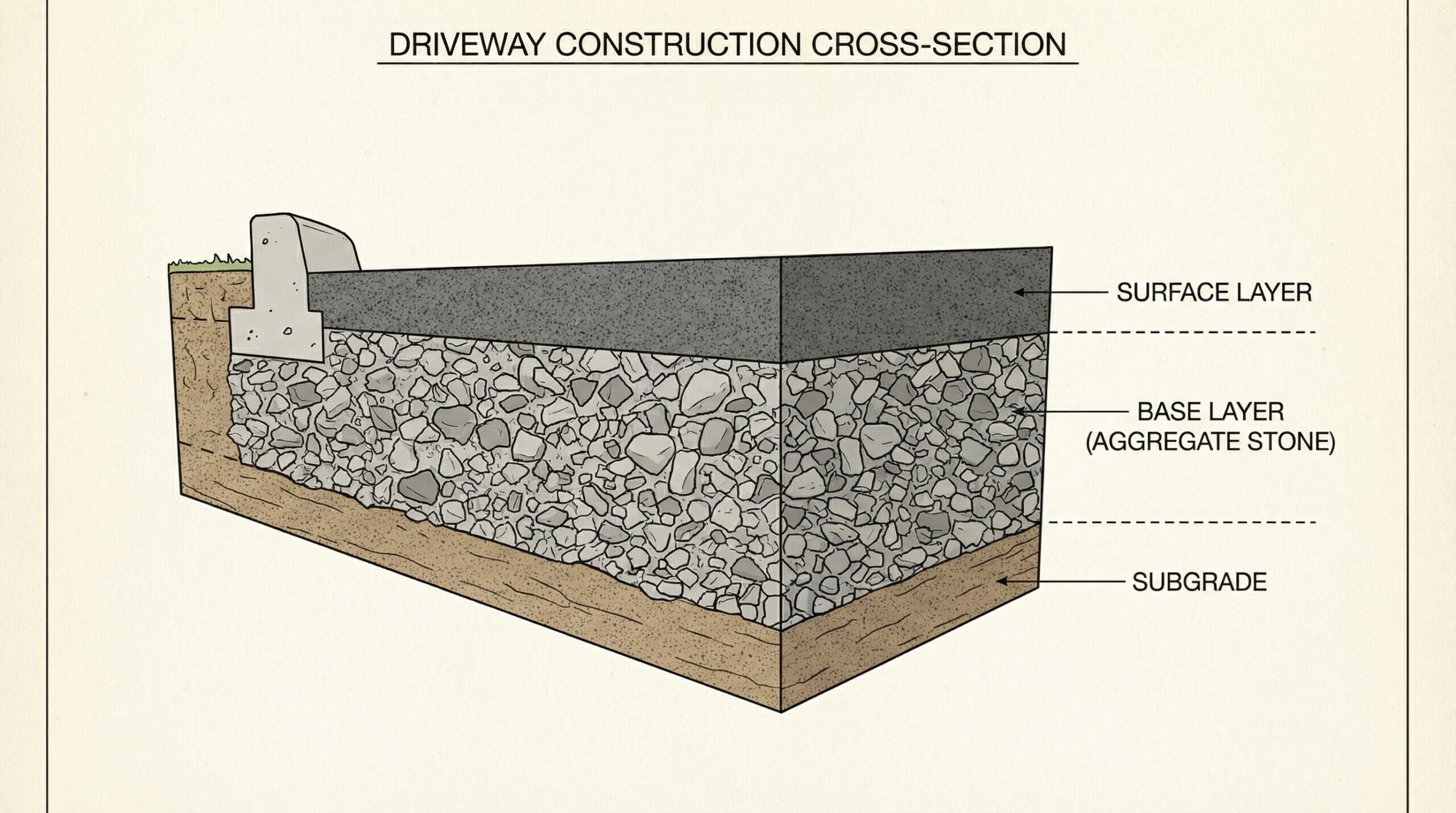
You’ll want to lay #57 stone about 3-4 inches deep over a prepared base. For heavy-traffic areas or commercial driveways, consider using a base layer of larger stone (1-2 inches) topped with #57 for the driving surface. Check out the ultimate driveway stone size chart for more detailed recommendations on creating a durable driveway foundation.
French drains and drainage systems
Drainage applications need clean, washed stone that won’t clog with fine particles. Use 3/4-inch to 1-inch stone for most French drain systems, as this size range provides excellent water flow while remaining stable.
Avoid using crusher run or stone with fines for drainage projects. The small particles will eventually clog your system and reduce its effectiveness over time.
Walkways and patio bases
Smaller stones work better for walking surfaces where comfort matters. Pea gravel (1/4 to 3/8 inch) creates attractive, comfortable pathways that drain well and resist weeds when properly installed.
For patio bases under pavers or flagstone, use #8 stone (3/8 to 1/2 inch) as it provides good compaction while maintaining some drainage capability.
Pro Tip: Always use a landscape fabric barrier under decorative stone to prevent weeds while maintaining drainage.
Foundation and retaining wall backfill
Behind retaining walls, use larger stone (1-2 inches) to ensure proper drainage and prevent hydrostatic pressure buildup. This prevents water from accumulating behind the wall, which could cause structural problems.
For general backfill around foundations, #57 stone works well as it compacts adequately while still allowing water to drain away from the structure.
How to choose the right construction stone size
Selecting the proper stone size involves considering several factors that affect both performance and cost. Start by identifying your project’s primary purpose, then match stone characteristics to those needs.
Consider drainage requirements first. Projects needing excellent drainage should use clean, single-size stone without fines. Applications requiring compaction benefit from mixed-size materials that lock together when compressed.
Load-bearing capacity matters for driveways and foundations. Larger stones generally handle heavier loads better, while smaller stones work fine for light-duty applications like garden paths. For a comprehensive overview of sizes of gravel and their uses, explore the various applications and performance characteristics.
Budget plays a role since larger stones typically cost more due to processing and transportation expenses. However, using the right size initially saves money by preventing future repairs and replacements.
Cost Consideration: While larger stones cost more upfront, they often last longer in high-traffic applications, making them more economical long-term.
Understanding crushed stone grades and stone types
The numbering system for crushed stone grades developed from industry standards that specify how much material passes through different screen sizes. This ensures consistency across suppliers and regions.
Crushed stone differs from gravel in that it’s mechanically broken from larger rocks, creating angular pieces that lock together well. Natural gravel has rounded edges from water action, making it less stable for structural applications but more comfortable for walking surfaces. Learn more about understanding stone sizes and their characteristics to make informed decisions for your project.
Recycled concrete offers an environmentally friendly alternative to quarried stone. It performs similarly to crushed stone in most applications while reducing waste and often costing less than new materials.
Stone dust or screenings consist of very fine particles that help bind larger stones together. While useful for compaction, too much fine material can create drainage problems in applications where water flow is important.
When ordering stone, specify whether you need washed or unwashed material. Washed stone costs more but provides better drainage, while unwashed stone with fines compacts better for base applications. For visual reference, consult a visual guide to gravel sizes with pictures to see exactly what different grades look like.
Choosing the right construction stone size ensures your project performs well and lasts for years. Whether you’re building a driveway, installing drainage, or creating walkways, matching stone size to your specific needs prevents problems and saves money in the long run. Remember that investing in the correct materials upfront pays dividends through improved performance and reduced maintenance over time.
Frequently Asked Questions
What size crushed stone should I use for a driveway?
What is the difference between #57 and #8 stone?
What size stone is best for French drains and drainage systems?
What size crushed stone should I use under a concrete slab?
Author: igor