Best Base for Retaining Walls: Can You Use Sand?
Published on: December 12, 2025
Get an estimate for your project in 60 seconds
 Your information is secure
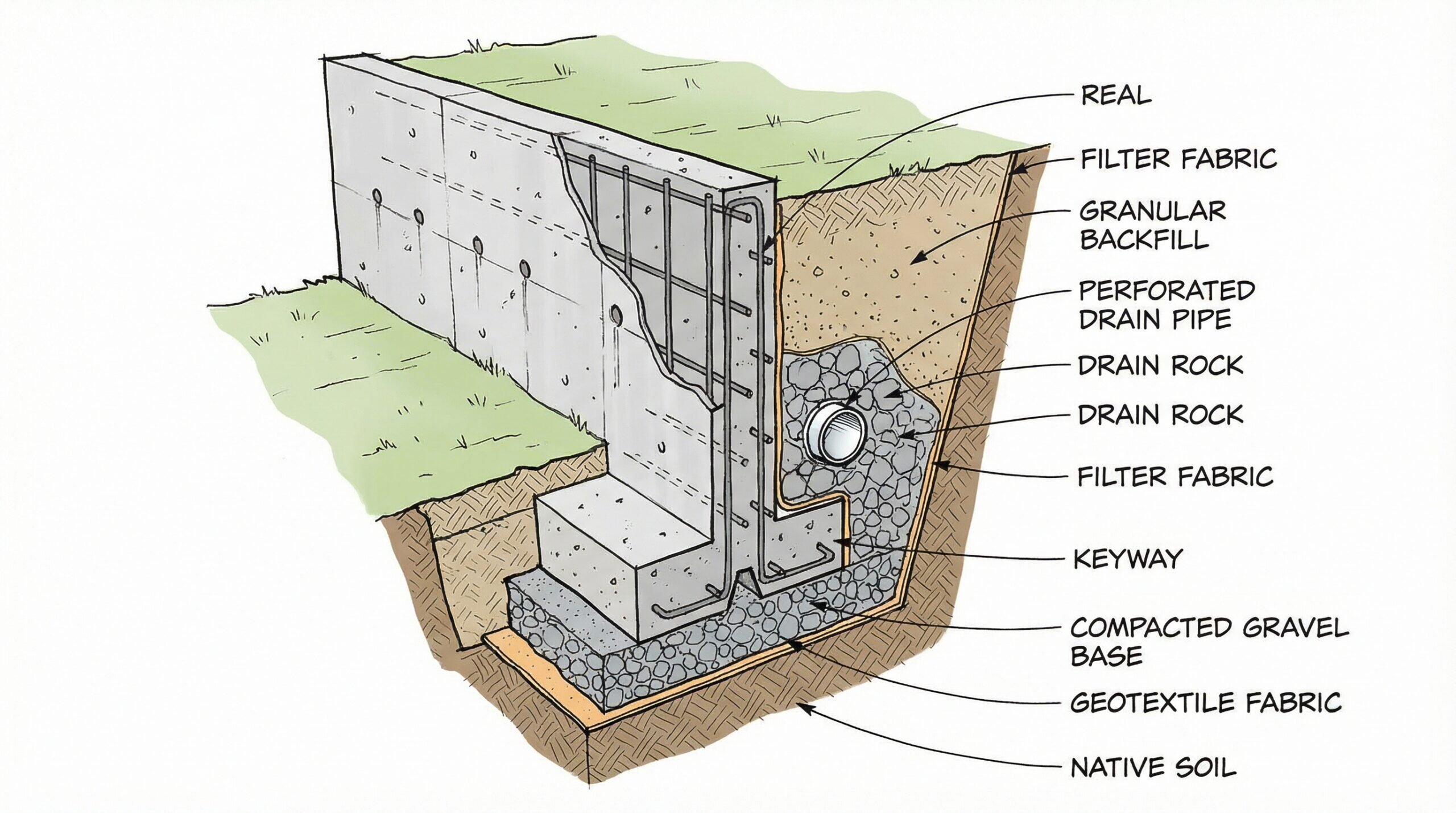
Most retaining wall failures happen because of poor base construction and drainage issues, not because the visible blocks are defective. If you’re wondering whether sand can work as your retaining wall base, here’s the short answer: sand alone is rarely the best choice for most retaining walls, especially those over 2 feet tall or holding back significant soil loads.
Quick Answer: While sand has some benefits like good drainage, crushed stone or angular gravel provides superior stability and load-bearing capacity for most retaining wall projects.
This guide will walk you through when sand might work, why professionals typically choose crushed stone instead, and how to build a proper retaining wall base that won’t fail over time. You’ll also learn the step-by-step process and common mistakes that lead to leaning or collapsed walls.
What is a retaining wall base and why it matters
A retaining wall base serves as the foundation that distributes the weight of your wall and resists the horizontal pressure from soil behind it. Think of it like the foundation of your house – if it’s not solid and properly constructed, everything above it becomes unstable.
The base must handle several forces working against your wall. Soil naturally wants to move downhill, creating constant pressure against the back of your wall. Water can make this pressure even worse by adding weight and reducing soil stability. Without a proper base, your wall will gradually lean forward, develop cracks, or even collapse completely.
Most retaining wall bases need to be 4 to 8 inches deep for shorter walls, with the depth increasing for taller structures. The material you choose for this base directly affects how well your wall performs over decades of use.
Can you use sand as a retaining wall base
Sand does offer some advantages that make it tempting for DIY projects. It’s usually affordable, readily available at most supply yards, and easy to work with using basic tools. Sand also drains water quickly, which helps prevent the buildup of hydrostatic pressure behind your wall.
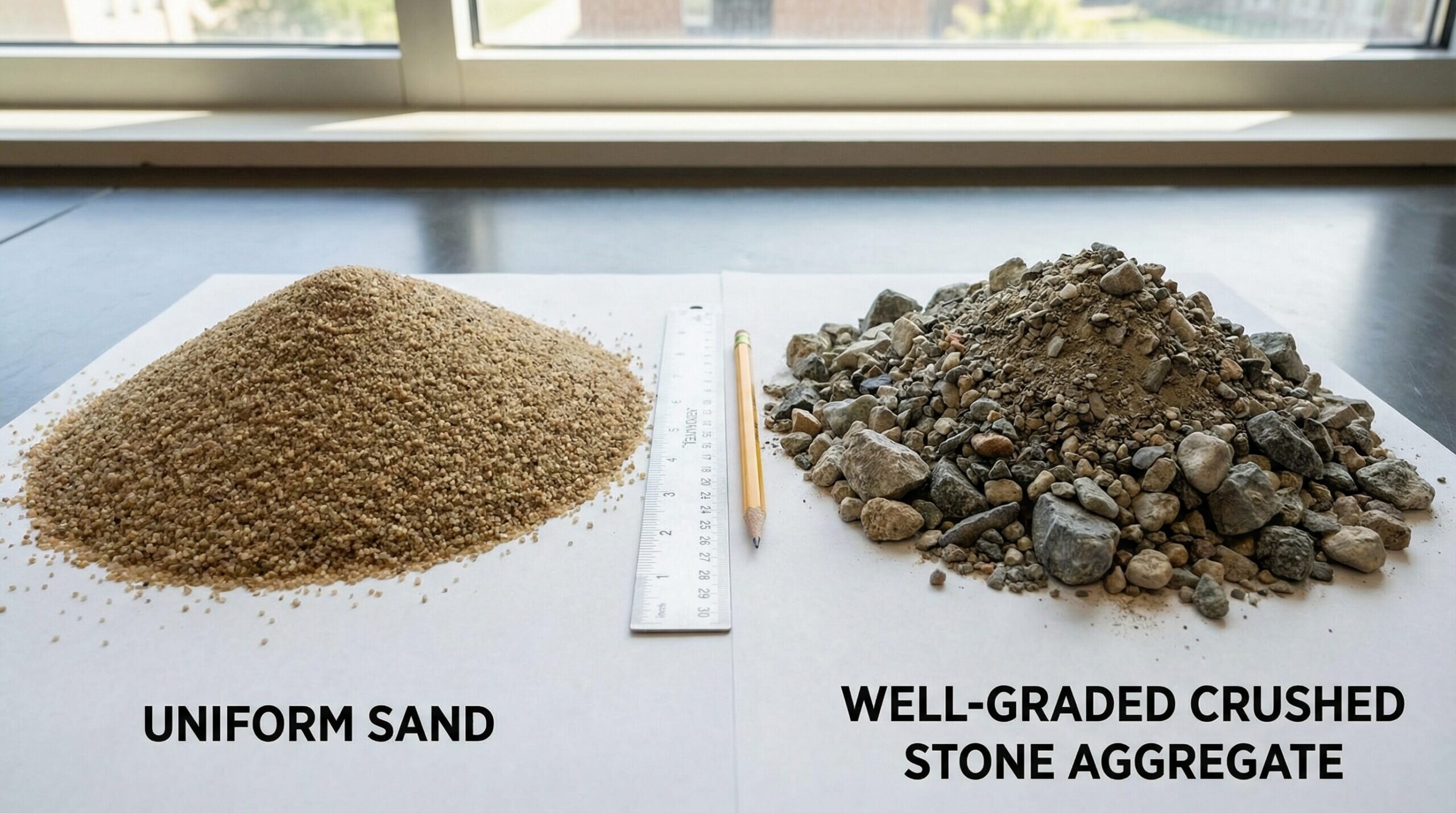
However, sand has significant limitations that make it problematic for most retaining wall applications. Sand particles are typically rounded and don’t lock together when compacted, making the base prone to shifting over time. This is especially true in areas with freeze-thaw cycles or heavy rainfall, where sand can wash out from under your wall.
Important Note: Sand works best as a thin bedding layer (1-2 inches) over a compacted crushed stone base, rather than as the primary foundation material.
The load-bearing capacity of sand is also much lower compared to angular, crushed materials. For walls holding back heavy clay soils or supporting additional loads like driveways or patios, sand simply doesn’t provide enough structural support. If you’re considering sand for a shed foundation project, similar principles apply regarding its limitations as a primary base material.
When sand might be acceptable: very short decorative walls under 18 inches, temporary installations, or as specified by interlocking block manufacturers for certain systems. Even then, you’ll typically get better long-term results with crushed stone.
Best materials for a retaining wall base
Professional contractors and engineers typically recommend crushed stone or angular gravel for retaining wall bases. These materials compact much better than sand and create a stable, interlocking foundation that resists movement.
Crushed stone (3/4 inch minus) is often the top choice because it contains a mix of larger stones and smaller particles that fill gaps when compacted. The angular edges lock together, creating a solid base that won’t shift under load. This material drains well while maintaining excellent stability. For similar applications, crushed stone works exceptionally well for parking areas where load-bearing capacity is critical.
Paver base is another excellent option, especially for segmental block walls. It’s specifically engineered to compact uniformly and provides consistent support across the entire wall footprint. Many paver base products include stabilizing agents that further improve performance.
Angular gravel blends like #57 or #78 stone work well for larger projects. These materials offer good drainage and compaction characteristics, though they may require more careful installation to achieve uniform density. Gravel can also be used as a foundation for small bridge projects, demonstrating its structural versatility.
| Material | Drainage | Compaction | Best For | Cost |
|---|---|---|---|---|
| Sand | Excellent | Poor | Bedding layer only | Low |
| Crushed Stone | Good | Excellent | Most retaining walls | Medium |
| Paver Base | Good | Excellent | Block walls | Medium-High |
| Angular Gravel | Good | Very Good | Large projects | Medium |
What to avoid: rounded pea gravel, which doesn’t compact well, and pure sand bases for any structural application. While pea gravel works for retaining wall base projects in some limited scenarios, it’s generally not recommended for structural applications.
How to build a proper retaining wall base
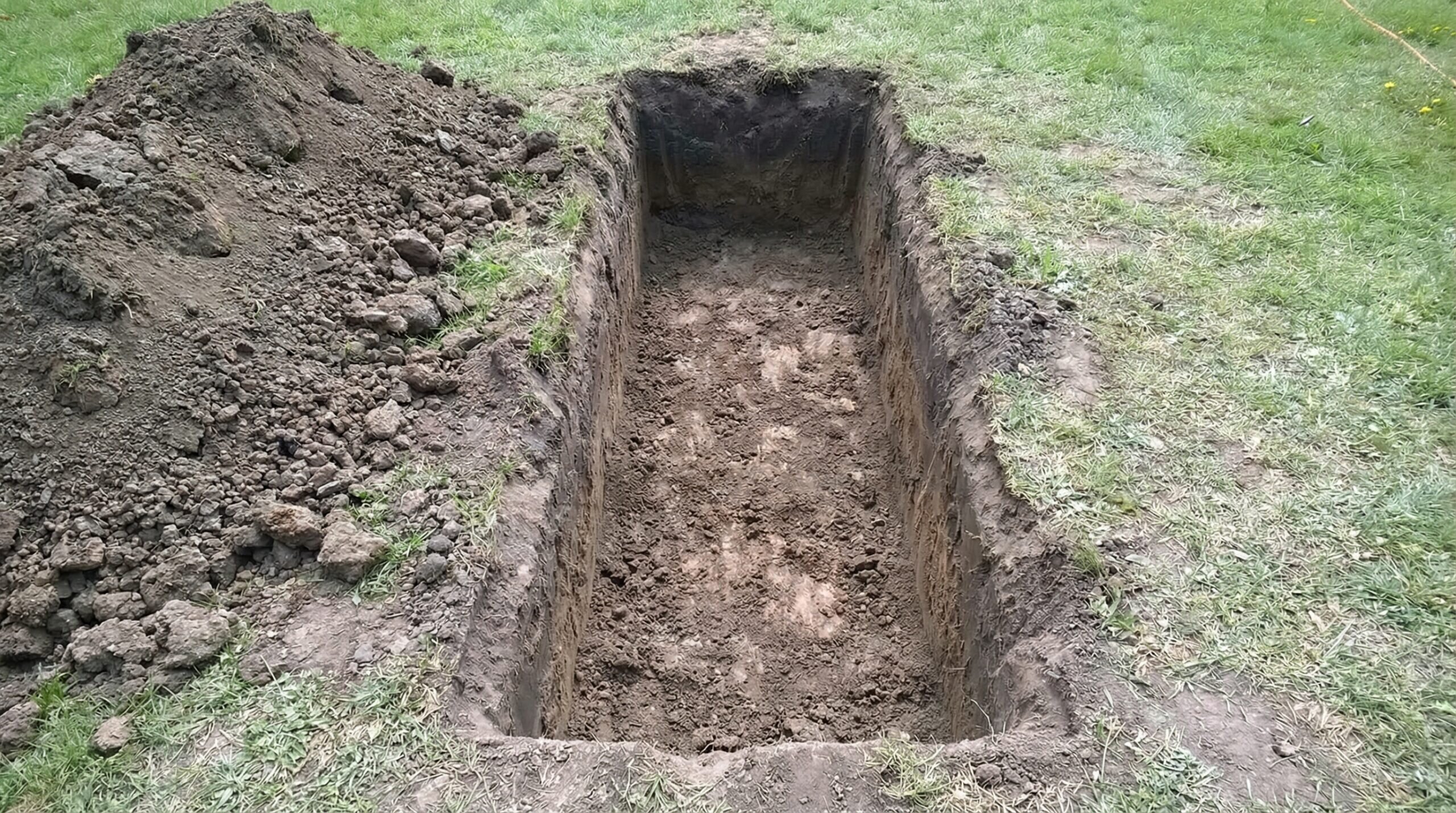
Building a solid retaining wall base requires careful attention to excavation depth, material selection, and compaction technique. Start by marking your wall line and excavating to the proper depth – typically 4 to 8 inches for the base plus enough to bury 10% of your wall height plus 2 inches.
Compact your subgrade soil thoroughly before adding any base material. This prevents settling that could cause your wall to sink unevenly over time. Use a plate compactor or hand tamper to achieve firm, uniform soil conditions.
Add your base material in 2 to 3 inch lifts, compacting each layer before adding the next. This layered approach ensures uniform density throughout the base thickness. Check for level and proper slope as you work – your base should be level from side to side but may need a slight backward slope depending on your wall design.
Pro Tip: Always compact base materials when they’re slightly damp but not soaking wet. This moisture helps particles bind together during compaction.
Install drainage pipe and geotextile fabric as needed before placing your first course of blocks. The base should extend at least 6 inches beyond the back of your wall to provide adequate bearing area for the soil load. Similar principles apply when using crushed stone as a sub-base for deck projects, where proper drainage and compaction are equally critical.
For walls over 4 feet tall or those supporting additional loads, consider consulting a structural engineer to ensure your base design meets local building codes and soil conditions.
Common mistakes when building retaining wall bases
Many DIY retaining wall projects fail because builders skip crucial base preparation steps. Building directly on topsoil, clay, or uncompacted fill almost guarantees problems down the road. These materials compress and shift over time, causing your wall to settle unevenly.
Using the wrong materials is another frequent mistake. Pea gravel might look similar to crushed stone, but its rounded particles don’t compact properly and will shift under load. Similarly, using sand as your primary base material rather than just a thin bedding layer creates instability issues. Understanding when polymeric sand can be used for a retaining wall base project versus when crushed stone is necessary can save you from costly failures.
Inadequate compaction causes many wall failures that don’t show up until months or years later. Each lift of base material must be thoroughly compacted before adding the next layer. Skipping this step or using inadequate equipment leads to settling and movement.
Ignoring drainage is perhaps the most costly mistake. Water buildup behind retaining walls creates enormous pressure that can destroy even well-built structures. Always include proper drainage pipe, gravel backfill, and outlet systems in your design. For projects requiring superior drainage and stability, consider using quarry process for retaining wall base projects, which offers excellent compaction and drainage characteristics.
Ready to start your retaining wall project with professional-grade materials? Hello Gravel delivers high-quality crushed stone, paver base, and drainage aggregates directly to your site. Our experienced team can help you calculate exactly how much material you need and ensure you get the right products for long-lasting results.
Frequently Asked Questions
Can sand be used as the only base material for a retaining wall?
What is the best base material for retaining wall blocks?
How thick should the base be under a retaining wall?
Why do retaining walls fail when built on sand bases?
Author: igor