Can Quarry Process Be Used for a Retaining Wall Base? Complete 2024 Guide
Published on: December 12, 2025
Get an estimate for your project in 60 seconds
 Your information is secure
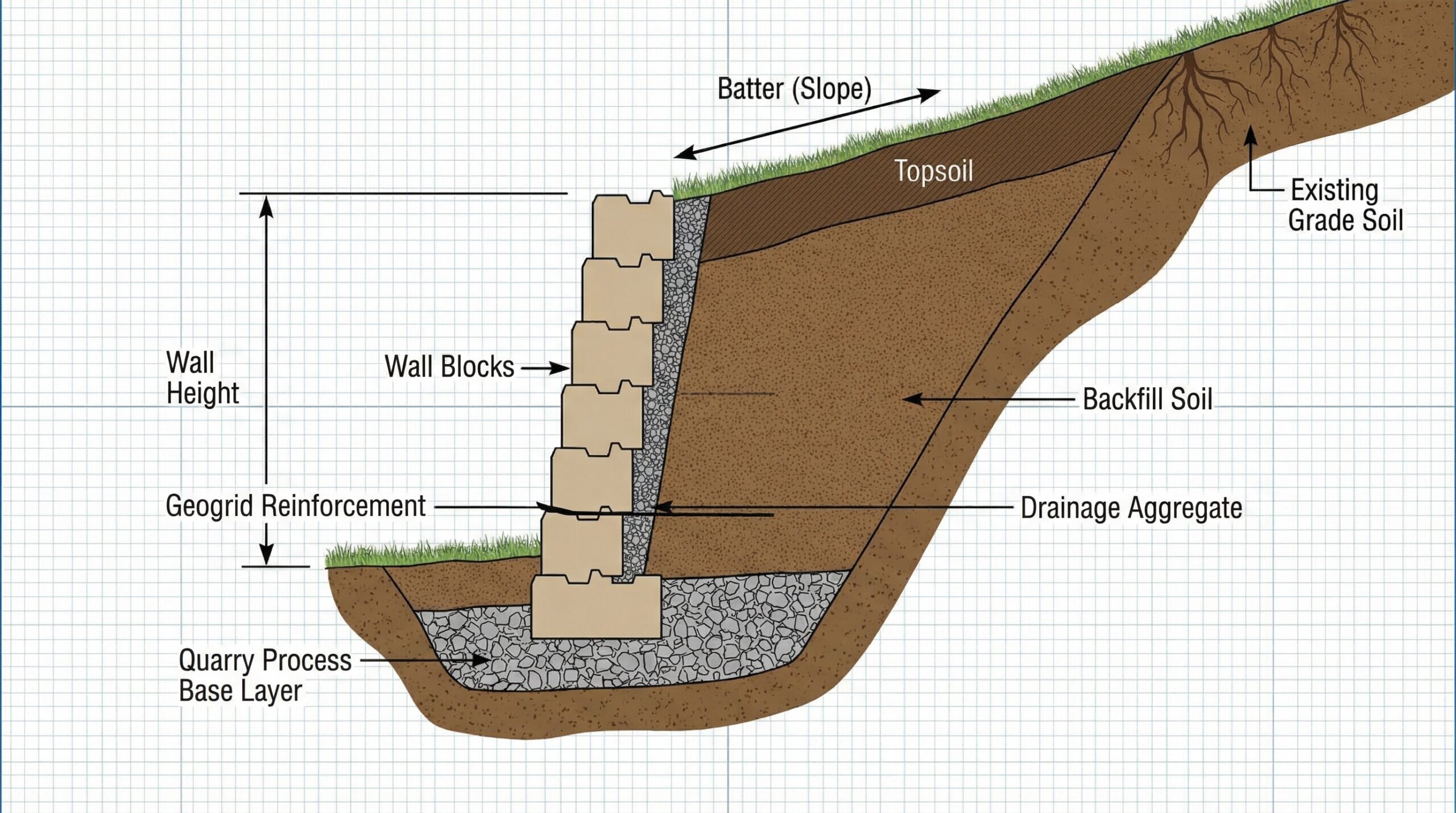
Many DIYers choose the wrong base material and end up with leaning or cracked retaining walls within a few years. The good news? Yes, quarry process can absolutely be used as a retaining wall base for most residential projects—if you install it correctly and pair it with proper drainage.
Quarry process, also known as dense grade aggregate (DGA), is a mixture of crushed stone (typically 3/4 inch minus) and stone dust that compacts into a solid, stable foundation. Contractors favor it because it’s affordable, readily available, and creates an excellent load-bearing surface when properly installed.
Quick Answer: Quarry process works well for retaining walls up to 4 feet high when combined with proper drainage. For taller walls or heavy loads, consult an engineer about your specific project requirements.
This guide covers when quarry process is the right choice, how deep your base should be, step-by-step installation instructions, and how it compares to other base materials. You’ll also learn how to calculate the quantity you need and avoid common mistakes that lead to wall failure.
What is quarry process and why use it for retaining walls?
Quarry process consists of angular crushed stone pieces ranging from 3/4 inch down to fine stone dust. This gradation is key—the larger stones provide structural strength while the fines fill gaps and act as a binding agent when compacted.
The angular shape of quarry process stones allows them to interlock tightly, creating a stable base that resists shifting and settling. Unlike rounded gravel, these sharp edges grip together under compaction, forming what engineers call a “bound” base material.
Most quarry process is made from granite, limestone, or trap rock, depending on your local geology. The specific rock type matters less than the gradation and proper installation technique. If you’re considering alternative materials, you might also want to explore whether granite can be used for retaining wall bases or limestone as a retaining wall foundation.
For retaining walls, quarry process offers three main advantages. First, it compacts to a very stable surface that can support significant weight. Second, it’s typically 30-50% less expensive than concrete bases. Third, it’s available from most aggregate suppliers, making it convenient for residential projects.

When quarry process works best for your retaining wall
Quarry process excels as a base material for garden walls, landscape borders, and residential retaining walls up to 4 feet in height. It’s particularly suitable when you’re building on stable, well-draining soil and the wall won’t support heavy loads like driveways or structures.
Consider quarry process when your project involves straight or gently curved walls, you’re working with standard concrete blocks or natural stone, and local codes don’t require engineered foundations. Many homeowners successfully use it for terracing slopes, creating planting beds, and building decorative landscape features.
However, some situations call for different base materials. If your wall will exceed 4 feet in height, support vehicle loads, or you’re building on clay soil or areas with poor drainage, you’ll likely need clean drainage gravel or a concrete footing instead. For comparison, you can learn about using pea gravel for retaining wall bases or river rock as a retaining wall foundation.
Important Note: Always check local building codes before starting. Some municipalities require engineered foundations or specific materials for retaining walls, regardless of height.
Walls built in areas with freeze-thaw cycles also benefit from quarry process because its bound nature resists frost heaving better than loose materials. The key is ensuring proper drainage behind the wall to prevent water from accumulating and freezing.
How deep should your quarry process base be?
Base depth depends primarily on your wall height and soil conditions. For walls up to 2 feet high, a 4-6 inch compacted base typically provides adequate support. Walls between 2-4 feet generally require 6-8 inches of compacted quarry process.
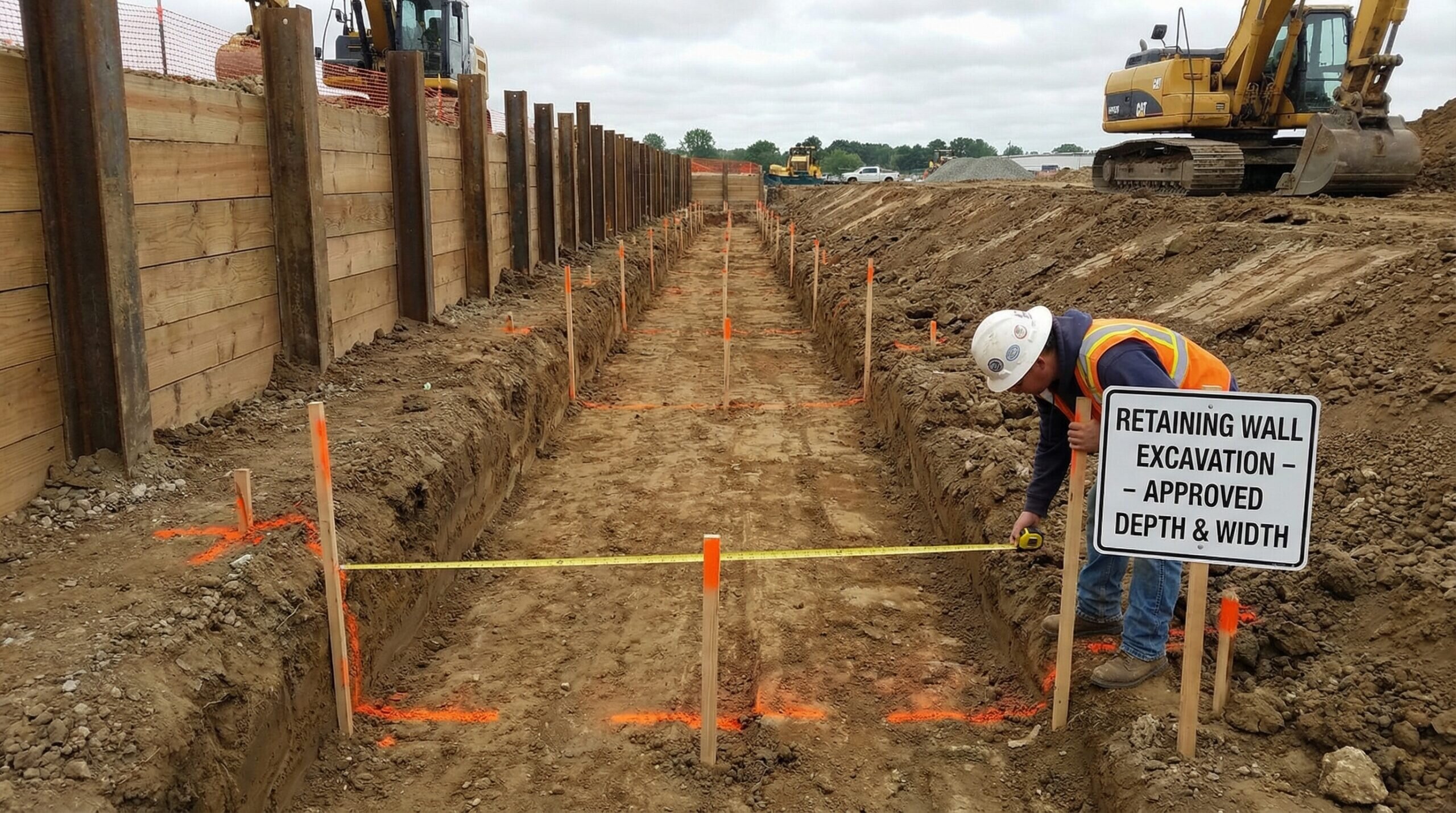
The trench itself should be deeper than your base thickness. Plan to excavate 12-16 inches deep for most residential walls, allowing space for the quarry process base plus burying part of your first course of blocks below grade.
Trench width matters too. Make your trench at least twice the depth of your wall blocks. For standard 8-inch deep blocks, excavate a trench at least 16 inches wide. This provides room for proper compaction and ensures the base extends beyond the wall footprint.
| Wall Height | Base Depth | Trench Depth | Trench Width |
|---|---|---|---|
| Up to 2 ft | 4-6 inches | 12-14 inches | 16-20 inches |
| 2-3 ft | 6-8 inches | 14-16 inches | 18-24 inches |
| 3-4 ft | 8-12 inches | 16-20 inches | 20-28 inches |
These are general guidelines for typical residential projects. Challenging soil conditions, heavy loads, or local codes may require deeper bases or professional engineering.
Step-by-step installation of quarry process base
Start by marking your wall layout with spray paint or stakes and string. Call 811 to have utilities marked before digging. Excavate your trench to the planned dimensions, removing all topsoil, roots, and organic material until you reach firm mineral soil.
Compact the trench bottom with a hand tamper or plate compactor. This step prevents future settling by ensuring you’re building on stable, undisturbed soil. If the soil is loose or sandy, you may need to compact it in lifts.
Install landscape fabric across the trench bottom and up the sides. This prevents fine soil particles from migrating into your base material over time. Next, place perforated drain pipe along the back edge of the trench if your wall design includes drainage.
Place quarry process in 2-3 inch lifts, spreading it evenly across the trench. Lightly mist each lift with water—the material should be damp but not soaking wet. Compact each lift thoroughly with a plate compactor, making multiple passes until the surface feels solid underfoot.
Continue adding and compacting lifts until you reach your target base thickness. The final surface should be level and smooth, providing a stable platform for your first course of blocks. Use a long straight edge to check for high or low spots. If you’re also planning other hardscape projects, you might find our guide on using quarry process for driveway paving helpful.
Common mistakes that lead to retaining wall failure
The biggest mistake is skipping compaction or doing it inadequately. Quarry process must be compacted in thin lifts to achieve its full load-bearing potential. Dumping 8 inches of material and compacting only the surface leaves loose material underneath that will settle over time.
Another common error is using quarry process alone for drainage behind the wall. While QP makes an excellent base, it doesn’t drain freely like clean gravel. Always install proper drainage aggregate and pipe behind retaining walls to manage water pressure.
Many DIYers also underestimate base width and depth requirements. A narrow or shallow base cannot properly distribute the wall’s weight, leading to tilting or cracking. Follow the depth guidelines and always make your trench wider than the blocks. For related foundation projects, consider reading about using crushed stone as a base for playground equipment or shed foundation materials.
Finally, building on unstable soil without proper preparation causes many failures. Never place quarry process directly on topsoil, clay, or loose fill. Always excavate to firm mineral soil and compact the subgrade before placing your base material. If you’re working with challenging soil conditions, you may also want to explore sand as a retaining wall base alternative.
Understanding these fundamentals helps you build a retaining wall that will perform well for decades. When properly installed, a quarry process base provides the stable foundation your wall needs to resist the forces of soil pressure, water, and time.
Ready to start your retaining wall project? Hello Gravel offers high-quality quarry process with convenient delivery to your job site. Our experienced team can help you calculate the right quantity for your project and ensure you get consistent, well-graded material that compacts properly.
FAQ
How thick should a quarry process base be under a retaining wall?
Can I use quarry process alone for retaining wall drainage?
Do I need to compact quarry process in layers for a retaining wall base?
When should I not use quarry process for a retaining wall base?
Author: igor