Can You Use Polymeric Sand for Parking Areas and Driveways
Published on: December 12, 2025
Get an estimate for your project in 60 seconds
 Your information is secure

Yes, you can use polymeric sand for parking areas and driveways, but only when it’s properly installed between interlocking pavers over a well-engineered base. The key is understanding that polymeric sand serves as a jointing material, not a standalone surface layer. When combined with the right pavers and base preparation, it creates a durable system that can handle regular vehicle traffic.
Polymeric sand is a blend of fine sand and special polymers that activate when mixed with water, creating a strong bond that locks paver joints in place. This prevents erosion, reduces weed growth, and maintains joint stability under the repeated stress of vehicle loads.
Quick fact: Polymeric sand works best in joints between 1/4 inch to 1.5 inches wide and requires a minimum 24-48 hour cure time before allowing vehicle traffic.
The success of your parking area project depends on proper base preparation, correct installation techniques, and choosing a product specifically rated for driveway and parking applications. Let’s explore what you need to know to make an informed decision.
Understanding polymeric sand for vehicle applications
Polymeric sand differs significantly from regular joint sand in its ability to bind and resist washout. The polymers create a flexible yet strong matrix that can adapt to temperature changes and vehicle loads without cracking.
For parking areas, you’ll want polymeric sand specifically labeled for driveway or heavy-duty applications. These products contain stronger polymer blends designed to handle the lateral forces from turning vehicles and the vertical loads from repeated traffic.
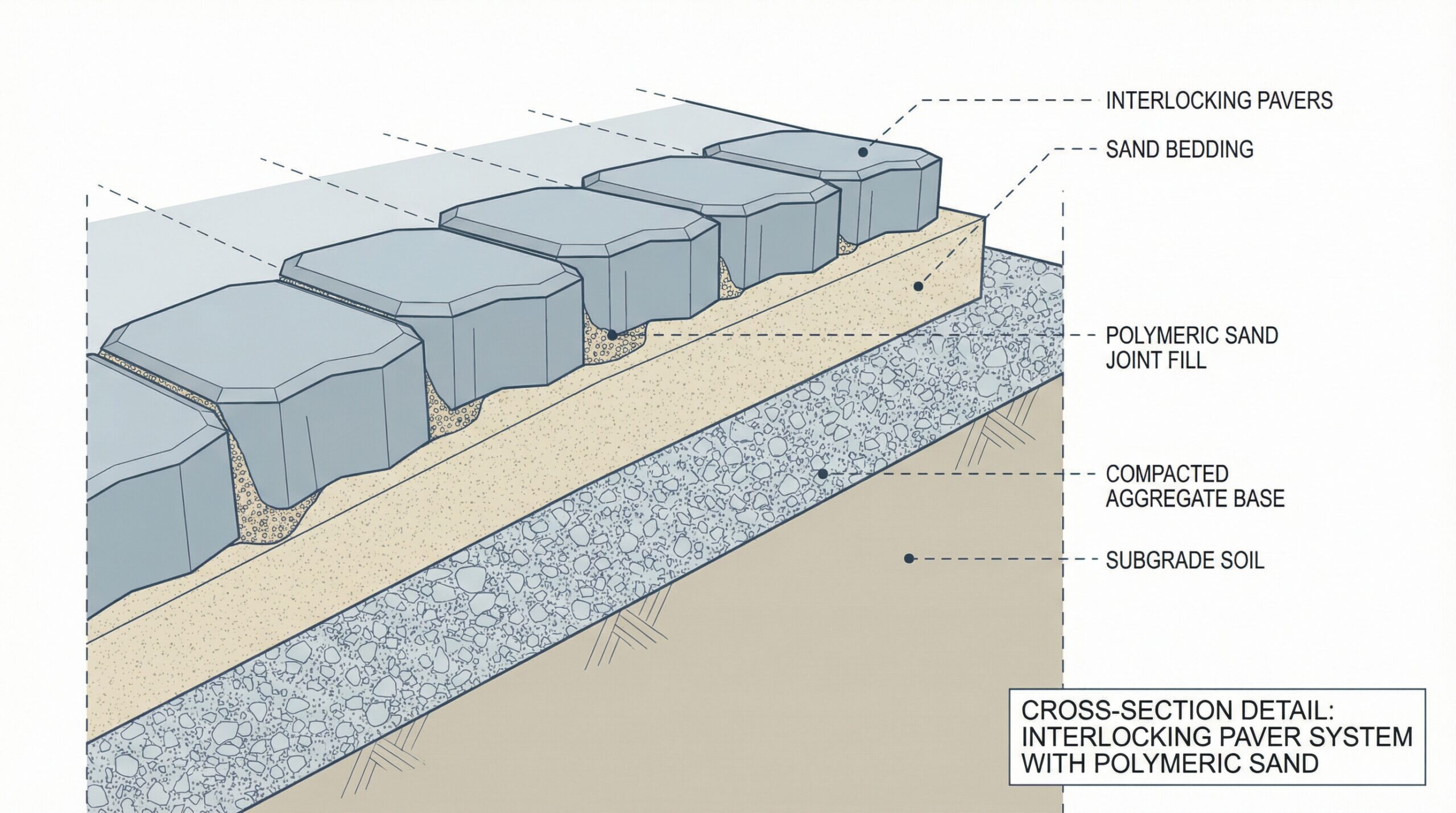
The sand works by filling the joints between pavers completely, then hardening to create a unified surface that distributes loads more evenly. This prevents individual pavers from shifting or settling under vehicle weight, which is crucial for maintaining a smooth, safe parking surface.
When polymeric sand works best for parking areas
Polymeric sand excels in several parking area scenarios. Residential driveways with interlocking concrete pavers see excellent results when the base is properly prepared and the installation follows manufacturer guidelines.
Small parking pads for passenger vehicles also benefit from polymeric sand’s joint-locking properties. The material helps maintain clean lines and prevents the gradual spreading that can occur with loose joint sand over time.
Light commercial parking areas built with heavy-duty pavers can successfully use polymeric sand, though you’ll need to ensure the entire system is engineered for the expected traffic loads. This includes using thicker pavers, deeper bases, and potentially wider joints for better load distribution.
However, polymeric sand isn’t suitable for every situation. Avoid using it on loose gravel lots where there are no pavers to contain it, or in areas with severe drainage problems where standing water can break down the polymer bonds. If you’re considering alternatives for parking areas, materials like crushed stone or bluestone may be better suited for certain applications.
Important consideration: Wide joints over 1.5 inches may cure slowly and develop cracks under vehicle stress, so stick to manufacturer-recommended joint widths for best results.
Design considerations for vehicle-rated installations
The structural performance of your parking area comes primarily from the base preparation, not the polymeric sand itself. For passenger vehicle traffic, plan for 8-12 inches of compacted aggregate base, though local soil conditions and engineering requirements may require adjustments.
Proper drainage is absolutely critical for polymeric sand success in parking areas. Surface water should slope away from the area at approximately 2% grade, and subsurface drainage must prevent water from pooling under the base. Standing water weakens both the base and the polymer bonds in the joints.
Joint width consistency matters more in parking areas than in pedestrian applications. Tight, uniform joints distribute vehicle loads more evenly and cure more predictably. Aim for joints between 1/4 inch and 1 inch wide for optimal performance.
Consider traffic patterns when planning your installation. Areas where vehicles turn, brake, or accelerate experience the highest stress on joint integrity. These zones may benefit from slightly wider joints or additional edge restraints to prevent paver movement.
| Feature | Polymeric Sand | Regular Joint Sand |
|---|---|---|
| Erosion resistance | Excellent | Poor |
| Weed prevention | Very good | Minimal |
| Vehicle load handling | Good with proper base | Fair |
| Maintenance frequency | Every 3-5 years | Annual |
Installation process for parking areas
Installing polymeric sand in a parking area requires careful attention to timing and technique. Start with proper excavation and base preparation, ensuring your subgrade is stable and well-compacted. Any soft spots will telegraph through to the surface and cause joint failures.
Install your aggregate base in lifts, compacting each layer thoroughly with a plate compactor or roller. The base provides the structural strength for vehicle loads, so don’t rush this step. Follow local engineering standards for base thickness and compaction requirements.
Once your pavers are laid and initially compacted, you’re ready for the polymeric sand. Work only on completely dry pavers and joints to prevent hazing and ensure proper bonding. Sweep the sand diagonally across the surface, filling joints completely to the top of the paver chamfers.
Compact the surface again to settle the sand deeper into the joints, then top up and repeat as needed. Remove all excess sand from the paver surface using a blower or soft brush before wetting. Any sand left on the surface will create a haze when activated.
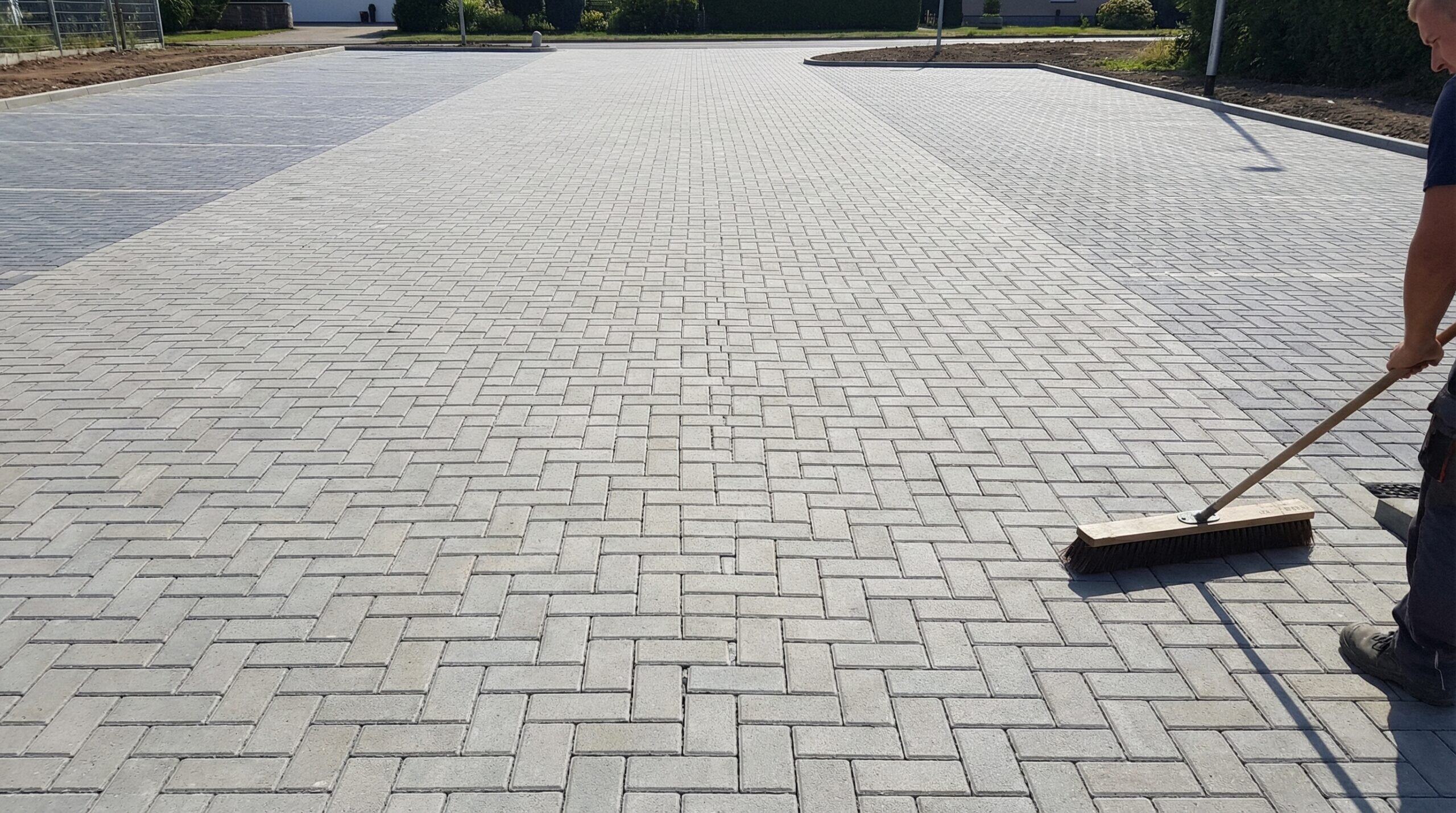
Activate the polymers with a light mist according to manufacturer instructions. Avoid overwatering, which can wash the binding agents out of the joints. Allow the full cure time before opening to vehicle traffic, typically 24-48 hours depending on weather conditions.
Pro tip: Document your installation date and product specifications for future maintenance planning, as polymeric sand may need partial reapplication every 3-5 years in high-traffic areas.
Maintenance and long-term performance
Regular maintenance keeps your polymeric sand parking area performing well for years. Sweep debris regularly and address any weed growth promptly, as root systems can gradually break down joint integrity.
Avoid aggressive power washing that can blast sand out of joints. If you need to clean the surface, use moderate pressure and keep the nozzle at a shallow angle to the pavers.
Watch for signs that reapplication may be needed, such as visible joint loss, increased weed growth, or slight paver movement in wheel tracks. When these signs appear, you’ll need to remove the old sand, clean the joints thoroughly, and install fresh polymeric sand following the same careful process.
The lifespan of polymeric sand in parking areas depends on installation quality, traffic levels, and climate conditions. Well-installed systems often perform for 3-5 years before needing attention, while poor installations may fail within the first season. For comparison, pea gravel parking areas require more frequent maintenance but offer different aesthetic and drainage benefits.
Beyond parking areas, polymeric sand also works well for patio base applications, fire pit surrounds, and other hardscaping projects where joint stability is essential.
When you’re ready to tackle your parking area project, choosing the right materials and supplier makes all the difference. Hello Gravel specializes in high-quality polymeric sand and aggregate materials for both residential and commercial applications. Our team can help you size your material needs accurately and deliver everything to your site, ensuring your project starts with the right foundation for long-term success.
FAQ
Can polymeric sand be used in a driveway or parking area?
How long before I can drive on polymeric sand in my driveway?
Can I use polymeric sand directly over gravel for a parking area?
Does polymeric sand wash out in parking areas?
Author: igor