Quarry Stone Size Chart: Complete Guide to Crushed Stone Grades and Applications
Published on: December 10, 2025
Get an estimate for your project in 60 seconds
 Your information is secure

Confused by crushed stone grades like #57, #8, or #411? You’re not alone. Choosing the wrong stone size can lead to drainage failures, unstable bases, and costly project delays. This guide provides a clear quarry stone size chart with practical applications to help you select the right aggregate for your specific project.
Quick Answer: Common crushed stone grades range from #1 (2-4 inches) for heavy-duty bases to #10 screenings (under 1/4 inch) for paver installation. Grade #57 (3/4 inch) is the most versatile for driveways and concrete work.
Whether you’re building a driveway, installing drainage, or mixing concrete, understanding stone grades ensures your project succeeds the first time. This chart aligns with standard ASTM specifications used across the construction industry.
What crushed stone sizes and grades mean
Crushed stone grades follow a numbering system where lower numbers indicate larger stones. For example, #1 stone measures 2-4 inches, while #10 consists of fine particles under 1/4 inch. This system helps contractors and suppliers communicate precisely about material specifications. To better understand the numbering system for gravel, it’s important to recognize that these standards apply across the industry.
The main difference between crushed stone and natural gravel lies in the production process. Crushed stone comes from mechanically breaking down larger rocks, creating angular pieces that compact well and provide excellent stability. Natural gravel forms through weathering and erosion, resulting in rounded stones that don’t lock together as effectively.
Most crushed stone in the United States follows ASTM C33 standards, which define gradation requirements for different applications. When you order #57 stone from any supplier, you can expect consistent sizing that meets these industry standards.
Crushed stone size chart and common grades
| Grade | Size Range | Stone Type | Best Applications |
|---|---|---|---|
| #1 | 2-4 inches | Coarse crushed stone | Road base, erosion control, heavy-duty foundations |
| #3 | 1/2-2 inches | Medium crushed stone | Railroad ballast, drainage fields, pipe bedding |
| #57 | 3/4 inch | Medium crushed stone | Concrete mix, asphalt base, French drains, driveways |
| #67 | 3/4 inch (finer) | Medium crushed stone | Concrete slabs, road surfaces, decorative applications |
| #8 | 3/8 inch | Fine crushed stone | Concrete aggregate, decorative landscaping, walkways |
| #10 | Under 1/4 inch | Stone screenings | Paver base, compaction layer, pathway surfaces |
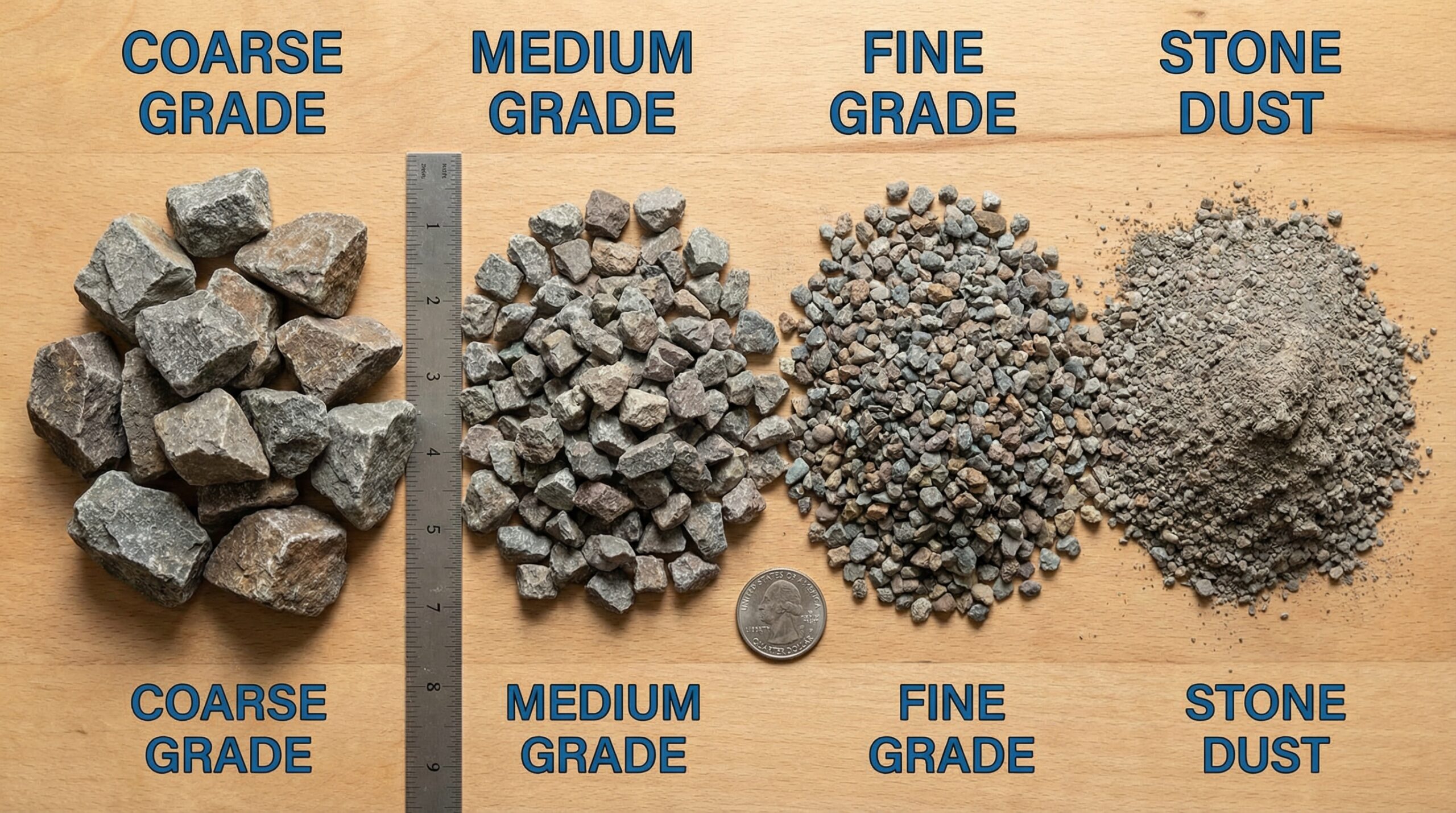
This chart represents the most commonly used grades across construction projects. Grade #57 stands out as the most versatile option, suitable for both structural and decorative applications. The angular shape of crushed stone provides superior compaction compared to rounded gravel, making it ideal for load-bearing applications. For a more detailed breakdown of construction stone sizes, you can explore additional specifications and industry standards.
When reading size specifications, remember that the listed size represents the maximum particle dimension. A #57 stone may contain particles ranging from dust up to 3/4 inch, with most pieces falling in the 1/2 to 3/4 inch range.
Quarry stone applications by project type
Driveways and parking areas require a two-layer approach for best results. Use #3 or #1 stone for the base layer, providing deep structural support. Top this with #57 or #67 stone for the driving surface, which offers good drainage while remaining comfortable to walk and drive on. For specific recommendations, check out the ultimate driveway stone size chart to ensure you select the optimal materials.
Concrete and asphalt projects typically call for #57 or #8 stone as aggregate. The angular particles create strong bonds within the mix, while the size gradation fills voids effectively. Always verify specific mix requirements with your concrete supplier, as local conditions may influence recommendations.
Pro Tip: For French drains and drainage fields, #57 stone provides the ideal balance of permeability and structural stability, allowing water to flow freely while supporting surrounding soil.
Walkways and paver installations benefit from a foundation of #10 screenings topped with #8 stone. The screenings create a smooth, compactable base, while the larger #8 stone provides drainage beneath decorative pavers or flagstone.
Landscaping and erosion control projects often use #3 stone for heavy-duty applications like retaining walls, while #8 stone works well for decorative borders and garden pathways. The key is matching stone size to both aesthetic goals and functional requirements. For landscape projects, consult a comprehensive landscape stone size chart to find the perfect fit for your outdoor space.
How to choose the right stone size for your project
Start by identifying your project’s primary needs. Does it require maximum compaction for load-bearing, excellent drainage for water management, or a smooth surface for foot traffic? Different stone sizes excel in different areas.
Step 1: Define your project type and load requirements. Heavy traffic areas need larger base stones (#1 or #3) for stability, while decorative applications can use smaller grades (#8 or #10) for visual appeal.
Step 2: Prioritize either drainage or compaction based on your site conditions. Wet areas benefit from larger stones that allow water flow, while dry locations may prioritize tight compaction for stability.
Step 3: Select 1-2 suitable grades from the chart above. Most projects use a base layer of larger stone topped with a smaller grade for the finished surface. Understanding sizes of gravel and their uses will help you make informed decisions about layering strategies.
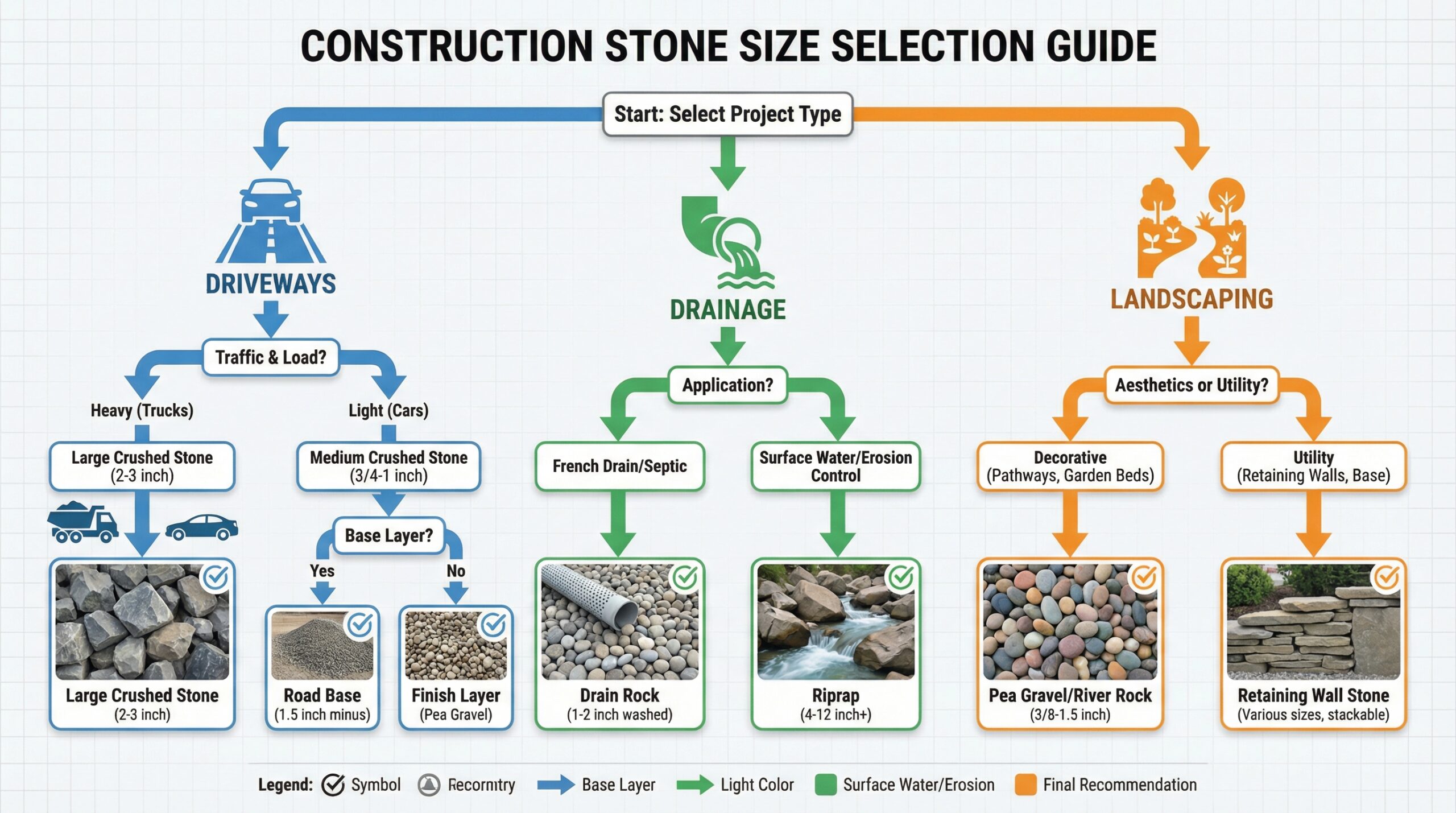
Step 4: Confirm specifications with your local supplier. Regional quarries may use slightly different naming conventions, so always verify the actual size gradation before ordering. Ask to see samples when possible to ensure the material matches your expectations.
Important: Local building codes may specify particular stone grades for certain applications. Check requirements before finalizing your selection, especially for structural projects like retaining walls or foundation work.
Remember that mixing different stone sizes can optimize performance. A well-designed aggregate blend combines the stability of larger stones with the compaction benefits of smaller particles, creating a stronger overall structure than any single grade alone. For more guidance on aggregate sizes for easy reference, explore comprehensive charts that detail various blending options.
Working with quarry stones requires attention to both technical specifications and practical application needs. By understanding how different grades perform in real-world conditions, you can make confident decisions that ensure project success. The right stone size choice saves time, money, and prevents the frustration of having to redo work due to material failures.
When you’re ready to order, use this chart as your reference guide and don’t hesitate to discuss your specific project requirements with aggregate suppliers. They can provide valuable local insights and help you calculate the right quantities for your particular application.
Frequently Asked Questions About Quarry Stone Sizes
What size crushed stone do I need for a driveway?
What is #57 crushed stone and what is it used for?
What is the difference between crushed stone and gravel?
What size stone is best for French drains?
Author: igor