Best Retaining Wall Base Materials and Why Polymeric Sand Won’t Work
Published on: December 12, 2025
Get an estimate for your project in 60 seconds
 Your information is secure
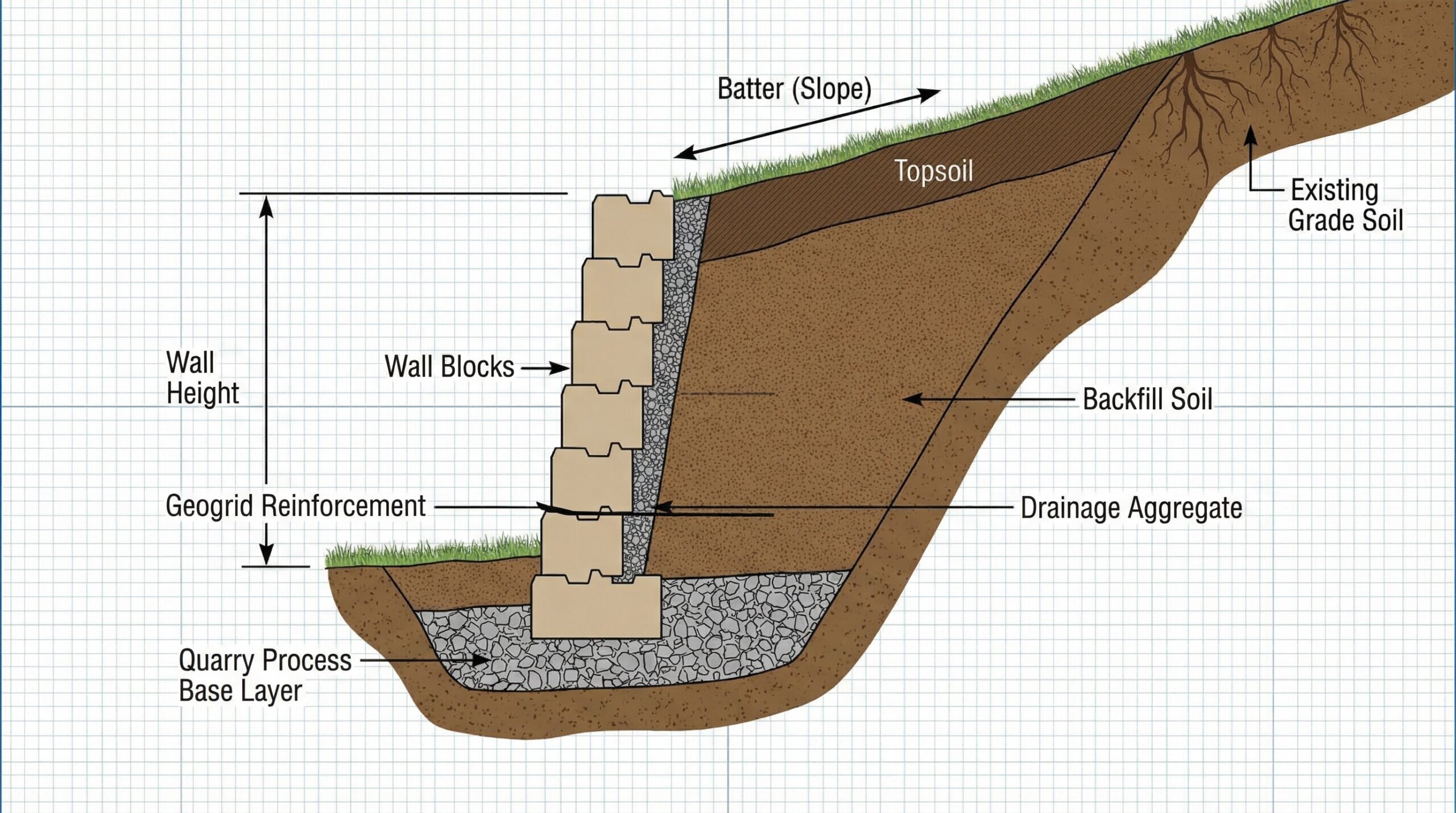
Picture this: you’ve just finished building what looks like a perfect retaining wall, only to watch it lean and crack after the first heavy rain. The culprit? A weak foundation that couldn’t handle the load. The base of your retaining wall is everything – it’s what keeps tons of soil and water pressure from turning your project into an expensive mistake.
No, polymeric sand should not be used as a retaining wall base. While polymeric sand has its place in landscaping projects, it lacks the structural strength and drainage properties needed for retaining wall foundations. Instead, you need crushed, angular stone that can bear weight and shed water effectively.
Quick Answer: Use 3/4″ minus crushed stone or crush-and-run for most retaining wall bases. Save polymeric sand for filling joints between blocks after your wall is complete.
In this guide, you’ll discover the best base materials for different wall types, learn why certain materials fail, and get step-by-step instructions for building a foundation that will last decades. We’ll also show you exactly where polymeric sand fits into your project.
What makes polymeric sand unsuitable for retaining wall bases
Polymeric sand is a mixture of fine sand particles and polymer additives that activate when wet, creating a binding agent. It’s designed for filling joints between pavers, walkways, and patios – not for supporting structural loads.
When you mix polymeric sand with water, it forms a relatively hard surface that resists erosion and weed growth. This makes it excellent for keeping paver joints stable and clean. However, these same properties make it problematic as a foundation material.
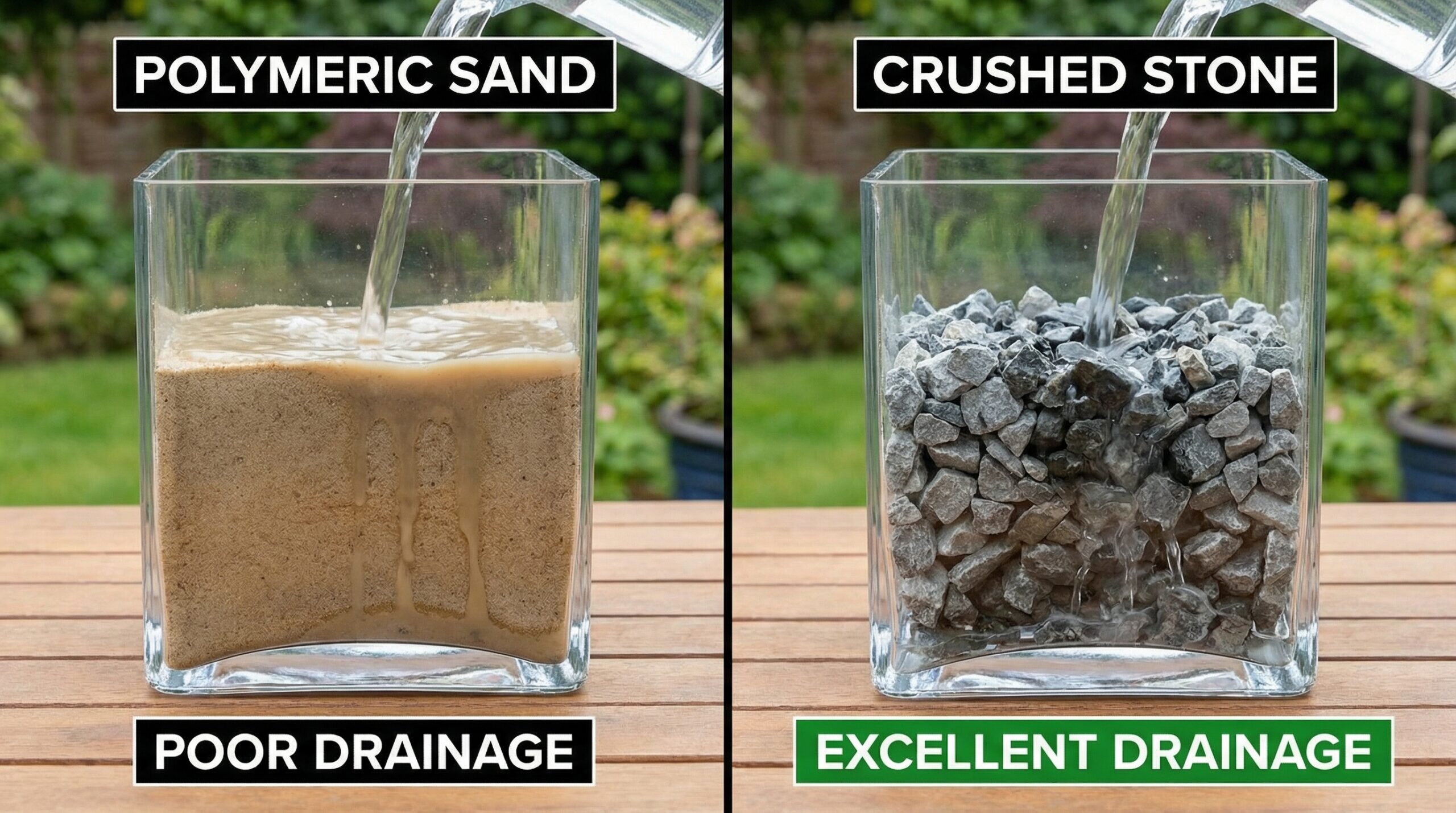
The main issue is load distribution. Retaining walls need a base that can spread weight evenly across the ground while allowing water to drain freely. Polymeric sand, once activated, becomes too rigid and doesn’t compress uniformly under load. This can create pressure points that cause your wall blocks to shift or crack over time.
Drainage is another critical problem. A proper retaining wall base needs to channel water away from the foundation. Polymeric sand’s binding properties actually trap water, creating hydrostatic pressure that can push your wall forward or cause frost damage in cold climates.
Best base materials for retaining walls
The foundation of any successful retaining wall starts with choosing the right base material. You want something that compacts well, drains freely, and can handle significant weight without shifting.
Crushed stone with angular edges is your best choice because the jagged surfaces lock together when compacted, creating a stable platform. Round stones like pea gravel roll around under pressure and don’t provide the stability you need.
Here’s what works best for different situations:
3/4″ minus crushed stone is the gold standard for most retaining walls. This material contains stones ranging from dust particles up to 3/4 inch, which allows it to compact tightly while maintaining excellent drainage. The mix of sizes fills voids completely, creating maximum stability.
Crush and run (also called ABC stone) works similarly to 3/4″ minus but may contain slightly larger stones. It’s often more readily available and costs less, making it a practical choice for longer walls or budget-conscious projects. If you’re considering quarry process for your retaining wall base, you’ll find it offers similar benefits to crush and run.
Paver base can work for shorter garden walls under 3 feet tall. It’s finer than crushed stone and compacts to a very smooth surface, but doesn’t provide as much drainage for taller walls that face greater water pressure.
Material to Avoid: Never use play sand, loose sand, or pea gravel as your primary base. These materials don’t lock together and will shift under load, causing your wall to fail.
| Material | Best For | Pros | Cons |
|---|---|---|---|
| 3/4″ Minus | Most retaining walls | Excellent compaction, great drainage | Higher cost |
| Crush & Run | Budget-friendly projects | Good stability, widely available | Less precise grading |
| Paver Base | Short garden walls | Smooth finish, easy to level | Limited drainage |
| Pea Gravel | Avoid for bases | Decorative only | No structural support |
How to build a proper retaining wall base
Getting your base right requires careful planning and methodical execution. The thickness of your base should equal the height of one block plus 6 inches for walls under 4 feet tall. Taller walls need engineering consultation.
Start by excavating your trench 6 inches wider than your blocks on both sides. This gives you room to work and ensures proper compaction. Dig down to firm, undisturbed soil – never build on loose fill or recently disturbed ground.
Install your base in lifts. Spread 2-3 inches of crushed stone at a time, then compact with a plate compactor or hand tamper. Repeat this process until you reach your target depth. Each lift should be thoroughly compacted before adding the next layer.
Level is crucial for your first course of blocks. Use a long level or transit to ensure your base slopes slightly away from the retained soil – about 1/4 inch per foot helps with drainage. Take your time here because any errors get magnified as you build up.
Don’t forget drainage behind the wall. Install a perforated drain pipe at the base level, surrounded by clean gravel. This prevents water from building up behind your wall and reduces pressure on the structure. For similar foundation principles, you might want to explore using crushed stone for a shed foundation.

Using polymeric sand correctly in retaining wall projects
While polymeric sand doesn’t belong in your foundation, it has valuable applications once your wall is complete. The key is understanding where it helps and where it hurts your project.
Use polymeric sand in the joints between your top course of blocks. This prevents weeds from growing in the gaps and keeps insects from making homes in your wall. It also helps lock the top blocks together, reducing movement from thermal expansion. Learn more about proper polymeric sand applications for patio projects to understand its best uses.
For cap stones or paver surfaces on top of your wall, polymeric sand provides excellent joint stability. Apply it when the weather is dry and follow the manufacturer’s instructions for water activation carefully – too much water weakens the bond, while too little prevents proper curing.
Application tips for success: Sweep polymeric sand into joints when blocks are completely dry. Remove excess sand from block faces before adding water. Mist lightly and allow to cure for 24-48 hours before heavy use. Never apply in direct sunlight or when rain is expected within 24 hours.
Remember that polymeric sand works best in joints 1/8 to 1/2 inch wide. Wider gaps may require multiple applications or a different approach entirely. If you’re working on raised garden bed projects, similar principles apply for joint filling.
Hello Gravel provides both the structural base materials your retaining wall needs and the polymeric sand for finishing touches. Our delivery service brings the right quantities directly to your project site, ensuring you have quality materials when you need them. Whether you need 3/4″ minus for your foundation or polymeric sand for joint filling, we’ve got the materials and expertise to support your retaining wall project from start to finish.
FAQ
Can polymeric sand be used as a retaining wall base?
What is the best base material for a retaining wall?
Where can polymeric sand be used in retaining wall projects?
Does polymeric sand help with retaining wall drainage?
Author: igor