Stone and Gravel Sizes Explained: Complete Chart and Project Guide
Published on: December 10, 2025
Get an estimate for your project in 60 seconds
 Your information is secure
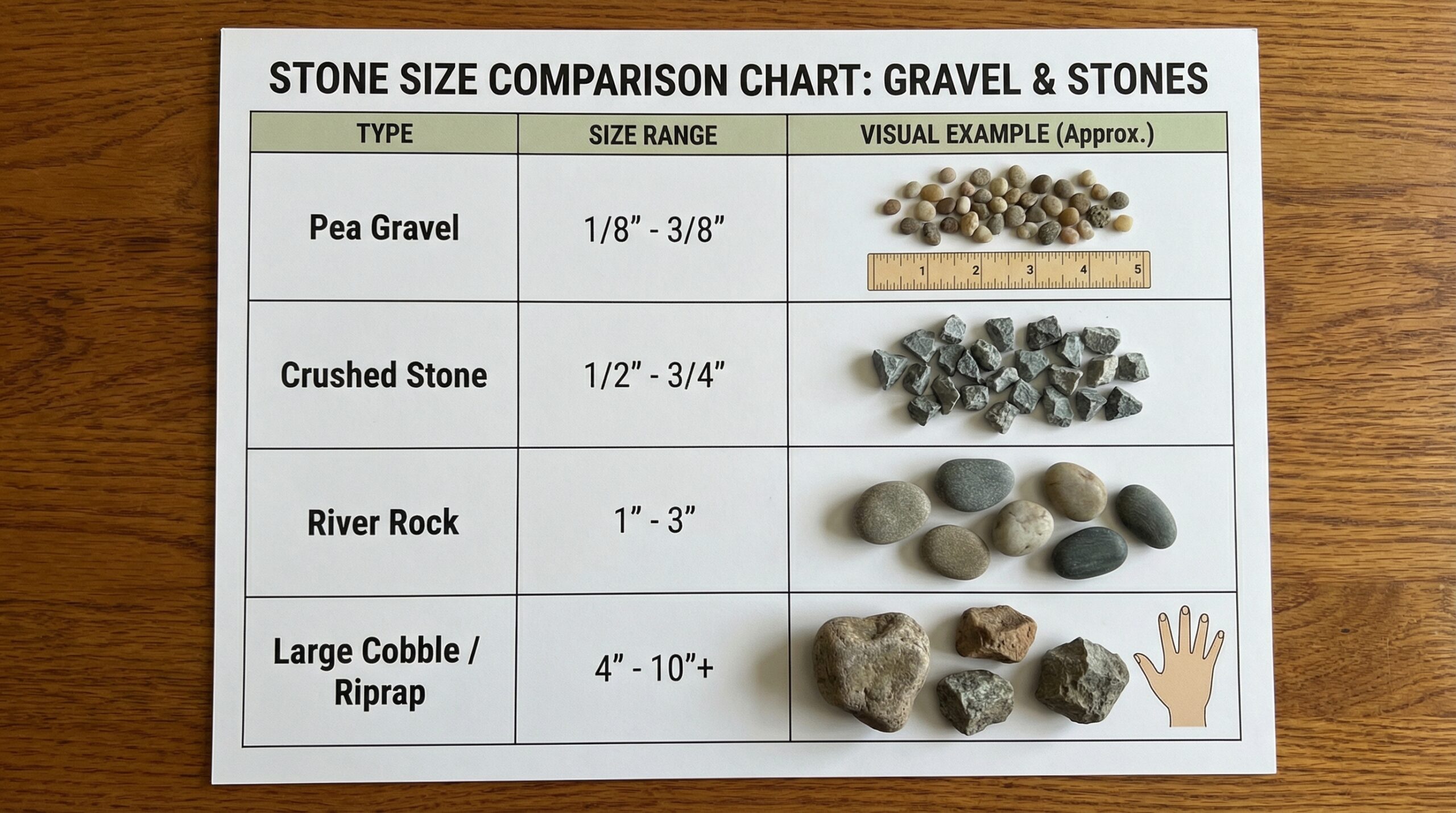
Stone and gravel sizes determine how your project will look, perform, and last. Whether you’re building a driveway, creating a walkway, or installing drainage, choosing the right size stone makes the difference between a successful project and costly repairs down the road.
Stone sizes are measured by their diameter, typically ranging from 2mm pea gravel up to massive boulders over 12 inches. The size you choose affects drainage, stability, and how comfortable the surface feels underfoot. Most residential projects use stones between 3/8 inch and 3 inches, with specific grades like #57 stone (3/4 inch) being perfect for driveways and #8 stone (1/8 to 3/8 inch) ideal for walkways.
Quick Answer: For driveways, use #3 stone (1-2 inches) as your base layer and #57 stone (3/4 inch) as your top layer. For walkways and patios, #8 or #89 stone (1/8 to 3/8 inch) provides the best comfort and stability.
What Stone Size Really Means
Stone size refers to the diameter of individual pieces, but it’s more complex than measuring a single rock. When you buy gravel or crushed stone, you’re getting a mix of sizes within a specific range. For example, “3/4-inch stone” doesn’t mean every piece is exactly 3/4 inch – it means most pieces fall between 1/2 inch and 1 inch.
The three main types of stone materials behave differently even at the same size. Crushed stone has angular edges that lock together for stability, making it perfect for driveways and bases. River rock is smooth and rounded, ideal for decorative areas but less stable under weight. Pea gravel sits between these two, offering moderate stability with a more comfortable walking surface.
Size affects three critical performance factors. Larger stones provide better load-bearing capacity and drainage but can be uncomfortable to walk on. Smaller stones create smoother surfaces and better compaction but may not drain as well. The key is matching size to your specific needs.
Standard Stone and Gravel Size Classifications
Understanding classification systems helps you communicate clearly with suppliers and choose the right material. The construction industry uses several overlapping systems that can seem confusing at first.
Geological terms provide the foundation for stone classification. Granules range from 2-4mm, pebbles from 4-64mm, cobbles from 64-256mm, and boulders exceed 256mm. These scientific categories help, but construction grades are more practical for projects.
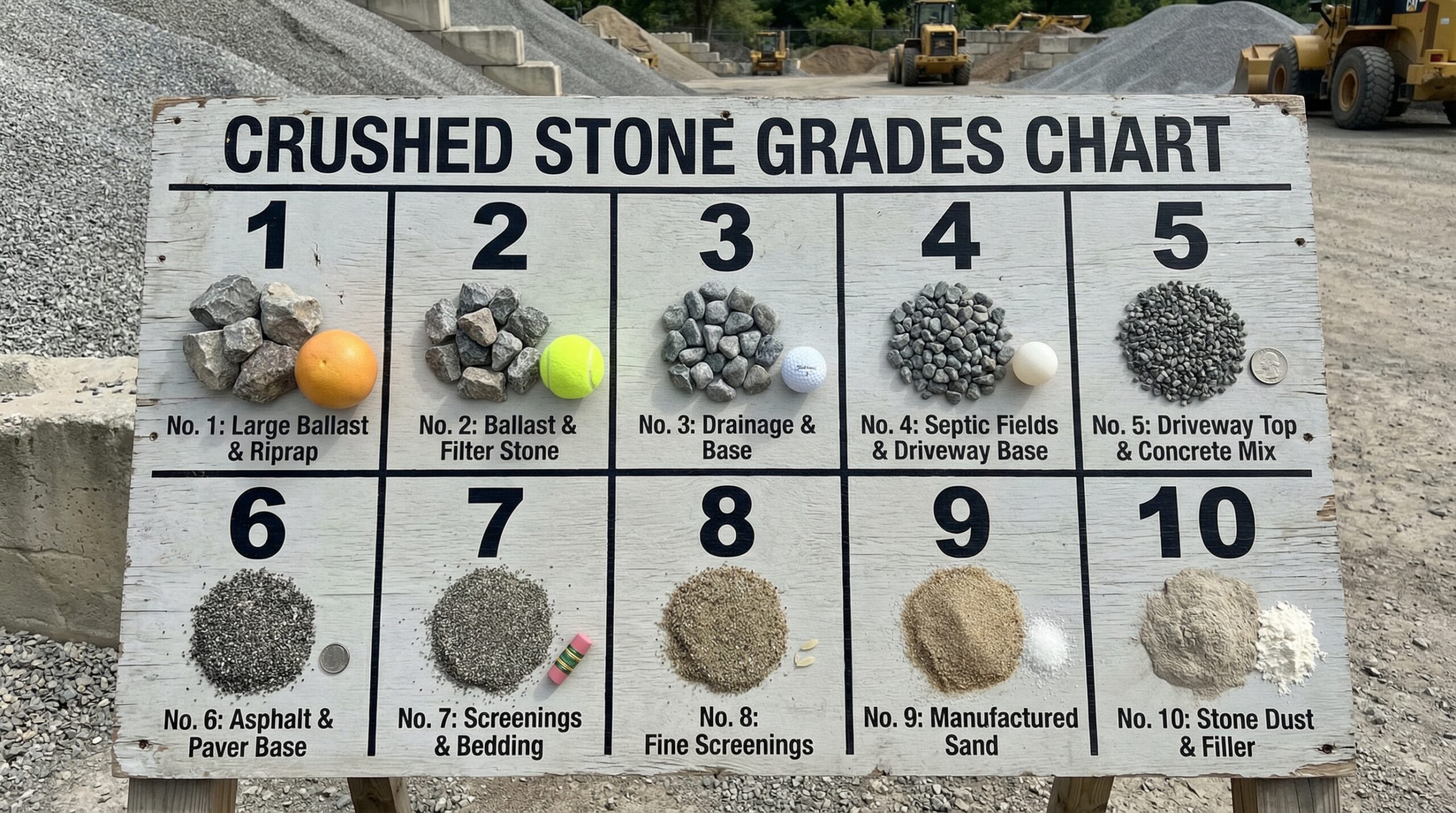
Construction grades use numbered systems where smaller numbers mean larger stones. #1 stone ranges from 2-4 inches and works for heavy-duty bases. #3 stone (1-2 inches) serves as an excellent driveway base. #57 stone (3/4 inch) is the most versatile size for residential projects. #8 stone (1/8 to 3/8 inch) creates smooth, walkable surfaces.
The term “minus” appears frequently in stone descriptions. “3-inch minus” means the material contains everything from dust up to 3 inches, creating a mix that compacts tightly. “3-inch clean” contains only stones close to 3 inches with minimal fine particles, providing better drainage but less compaction.
Stone Size Charts and Common Grades
| Grade | Size Range | Best Uses | Drainage |
|---|---|---|---|
| #3 | 1-2 inches | Driveway base, heavy foundations | Excellent |
| #57 | 3/4 inch | Driveways, general construction | Good |
| #8 | 1/8-3/8 inch | Walkways, paver base | Moderate |
| #89 | 1/16-1/8 inch | Fine paver base, between pavers | Limited |
Pea gravel deserves special mention as one of the most popular decorative stones. Typically 1/4 to 3/8 inch in diameter, pea gravel creates attractive, comfortable surfaces for pathways and garden areas. Its rounded shape makes it less stable than angular crushed stone but more pleasant for bare feet.
Fine gravel (2-6mm) works well for thin decorative layers and between pavers. Medium gravel (6-20mm) handles moderate foot traffic and light vehicle use. Coarse gravel (20-63mm) provides structural support and excellent drainage for heavy-duty applications. For a complete visual reference, check out our gravel size chart with pictures.
Pro Tip: Always ask your supplier for the actual size range when ordering. “3/4-inch stone” from different suppliers might have slightly different size distributions, affecting how your project performs.
Best Stone Sizes by Project Type
Driveways require a two-layer approach for best results. Start with a 4-6 inch base layer of #3 stone (1-2 inches) for structural support and drainage. Top this with 2-3 inches of #57 stone (3/4 inch) for a smooth driving surface. This combination handles heavy vehicles while preventing rutting and washouts. For more detailed guidance, explore our ultimate driveway stone size chart.
Walkways and patios need comfort and stability. #8 stone (1/8 to 3/8 inch) creates the most comfortable walking surface while still providing good stability. For paver bases, use #8 or #89 stone for the final leveling layer over a deeper base of #57 stone. This creates a stable foundation that won’t shift over time.
Drainage projects demand careful size selection. French drains work best with #3 or #4 stone (1-2 inches) wrapped in landscape fabric. This size allows rapid water flow while preventing soil infiltration. Avoid using “minus” materials for drainage – you want clean stone without fine particles that could clog the system.
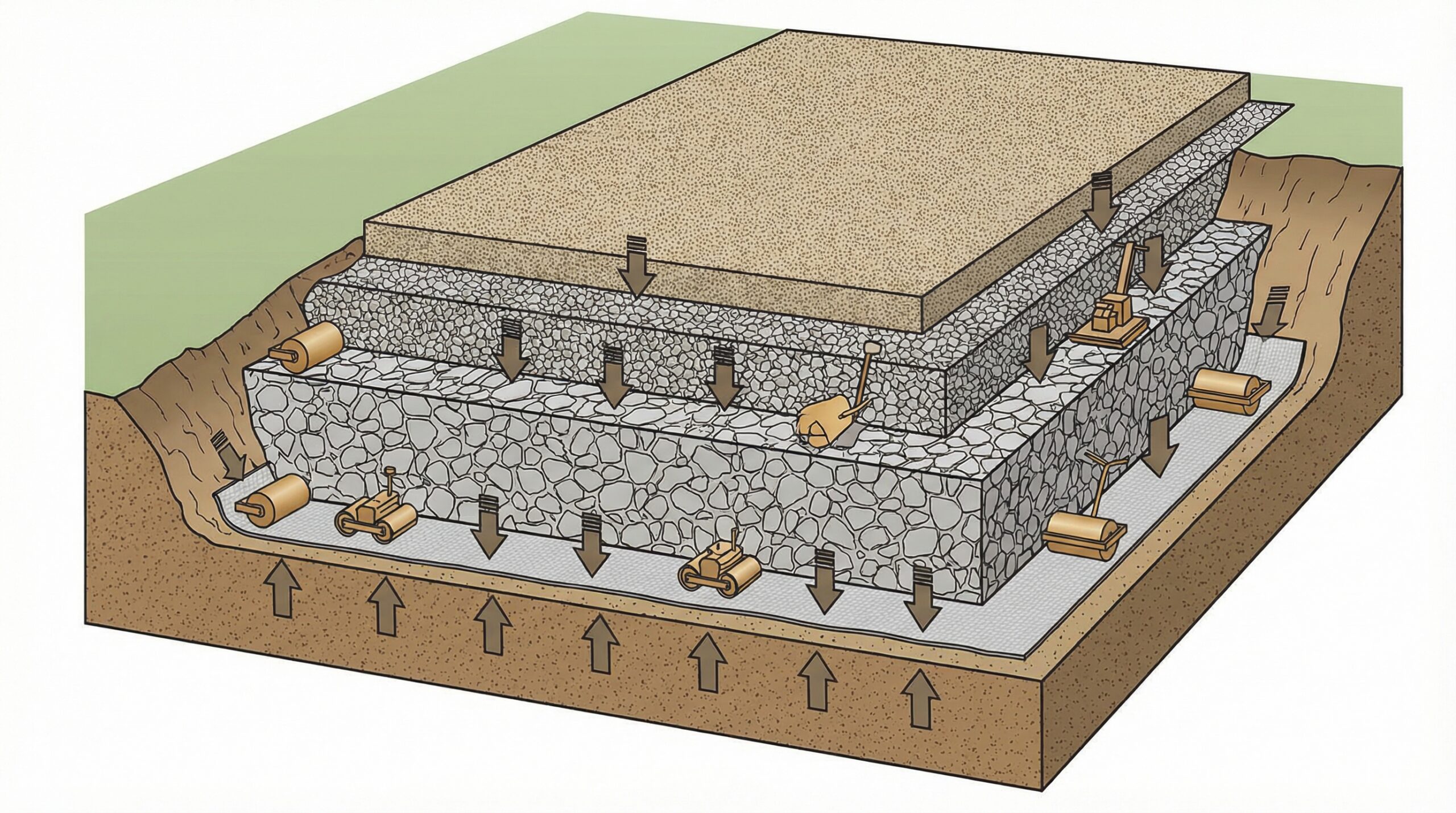
Retaining walls and heavy structural uses require #1 or #2 stone (2-4 inches) for the foundation and backfill. These larger sizes provide maximum stability and drainage behind the wall. Use smaller stones like #57 for the final grading and surface areas.
Stone Size Impact on Cost and Performance
Larger stones generally cost more per ton due to processing requirements, but they often provide better value for structural applications. A ton of #3 stone covers less area than #8 stone but provides superior load-bearing capacity where you need it most.
Transportation costs increase significantly with stone size. Larger stones are heavier, meaning fewer tons per truck load and higher delivery costs. However, you typically need less depth of large stone for structural applications, which can offset the higher material cost.
Maintenance requirements vary dramatically by size. Larger stones resist displacement and rutting but can be difficult to level if they do shift. Smaller stones provide smoother surfaces but may require periodic regrading, especially in high-traffic areas. Choose based on your long-term maintenance preferences and capabilities.
Cost Insight: While #57 stone costs more per ton than #3 stone, you need less depth for most residential applications, making it more economical for driveways and walkways where comfort matters.
Frequently Asked Questions About Stone Sizes
What does #57 stone mean and how big is it? #57 stone refers to crushed stone that passes through a 1-inch screen but is retained on a 1/2-inch screen, making most pieces about 3/4 inch. It’s the most popular size for residential driveways because it compacts well while remaining comfortable to drive on.
What does “3-inch minus” mean? This term means the material contains all sizes from dust up to 3 inches. The fine particles help the material compact tightly, making it excellent for bases but poor for drainage applications.
How do I estimate stone size from a photo? Look for reference objects like hands, tools, or coins in photos. A quarter is about 1 inch, so stones that appear similar in size are roughly #3 grade. Pea gravel looks like actual peas, while #57 stone appears similar to large marbles. Our visual guide to gravel sizes can help you identify different sizes more accurately.
What size stone is best for my driveway? Use #3 stone (1-2 inches) for the base layer and #57 stone (3/4 inch) for the top layer. This combination provides excellent support, drainage, and driving comfort for most residential driveways.
Is “stone” a unit of measurement for weight? While “stone” is a British weight measurement (14 pounds), it’s not relevant to gravel and aggregate sizing. When discussing stone materials, size refers to the physical dimensions of the pieces, not weight.
How do I talk to a supplier to get the right stone size? Be specific about your project and ask for recommendations. Say “I need stone for a residential driveway base” rather than just asking for “gravel.” Ask about the actual size range and whether the material is “clean” or “minus” to ensure it matches your needs. Understanding the numbering system for gravel will help you communicate more effectively with suppliers.
Choosing the right stone size transforms your project from adequate to exceptional. Whether you’re building a driveway that lasts decades or creating a comfortable walkway, understanding these size guidelines helps you make confident decisions. At Hello Gravel, we help match the perfect stone size to your specific project needs, ensuring you get exactly what works best for your application and budget.
Frequently Asked Questions About Stone Sizes
What does #57 stone mean and how big is it?
What does “3-inch minus” mean?
What size stone is best for my driveway?
Is “stone” a unit of measurement for weight?
Author: igor