Does a Dump Truck Need a DOT Number? Complete Guide for 2025
Published on: December 10, 2025
Get an estimate for your project in 60 seconds
 Your information is secure
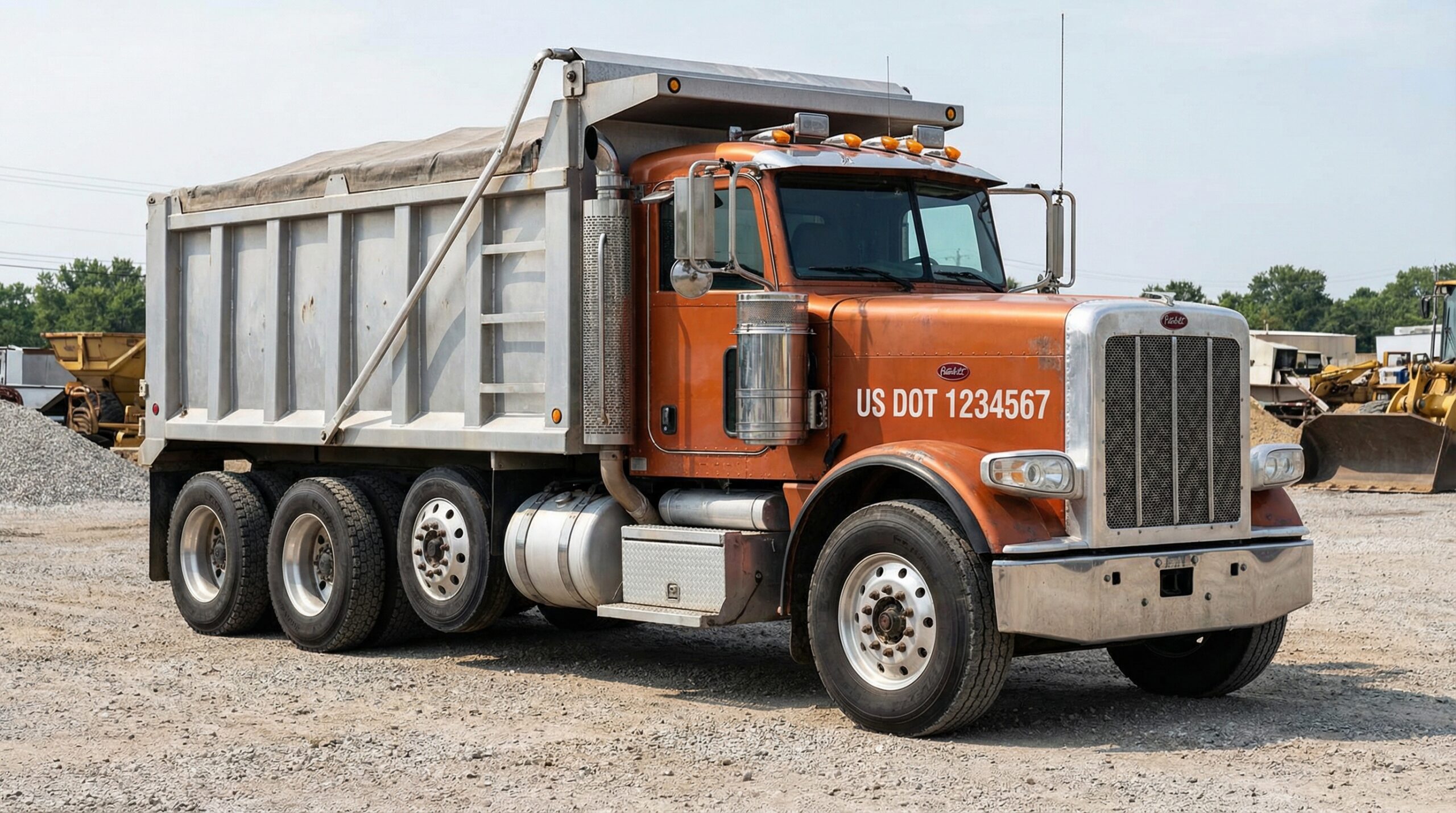
If you’re operating a dump truck, you might be wondering whether you need a DOT number. The short answer is that most commercial dump trucks do need a DOT number if they meet federal weight or use requirements. However, personal-use dump trucks are treated differently and may still qualify based on weight or state-specific rules.
A DOT number is a unique identifier assigned by the Federal Motor Carrier Safety Administration (FMCSA) to track commercial vehicles operating on public roads. You’ll need one if your dump truck weighs 10,001 pounds or more, operates across state lines for business, carries passengers for compensation, or transports hazardous materials requiring placards.
Quick fact: The 10,001-pound threshold applies to your truck’s Gross Vehicle Weight Rating (GVWR), not just the actual loaded weight. Most standard dump trucks exceed this limit.
This guide breaks down exactly when you need a DOT number based on your truck type, how you use it, and which state you operate in. We’ll also walk you through the registration process so you can stay compliant with federal regulations.
When dump trucks need a DOT number
The Federal Motor Carrier Safety Administration sets clear criteria for when vehicles need DOT numbers. For dump truck operators, these rules depend on several key factors that determine whether your vehicle falls under federal oversight.
Your dump truck needs a DOT number if it meets any of these federal requirements. First, if your truck has a Gross Vehicle Weight Rating of 10,001 pounds or more, you’ll need registration. Most dump trucks easily exceed this threshold since even smaller models typically weigh between 12,000 and 15,000 pounds when rated for commercial use. Understanding how much a tri-axle dump truck weighs can help you determine if your specific vehicle meets this threshold.
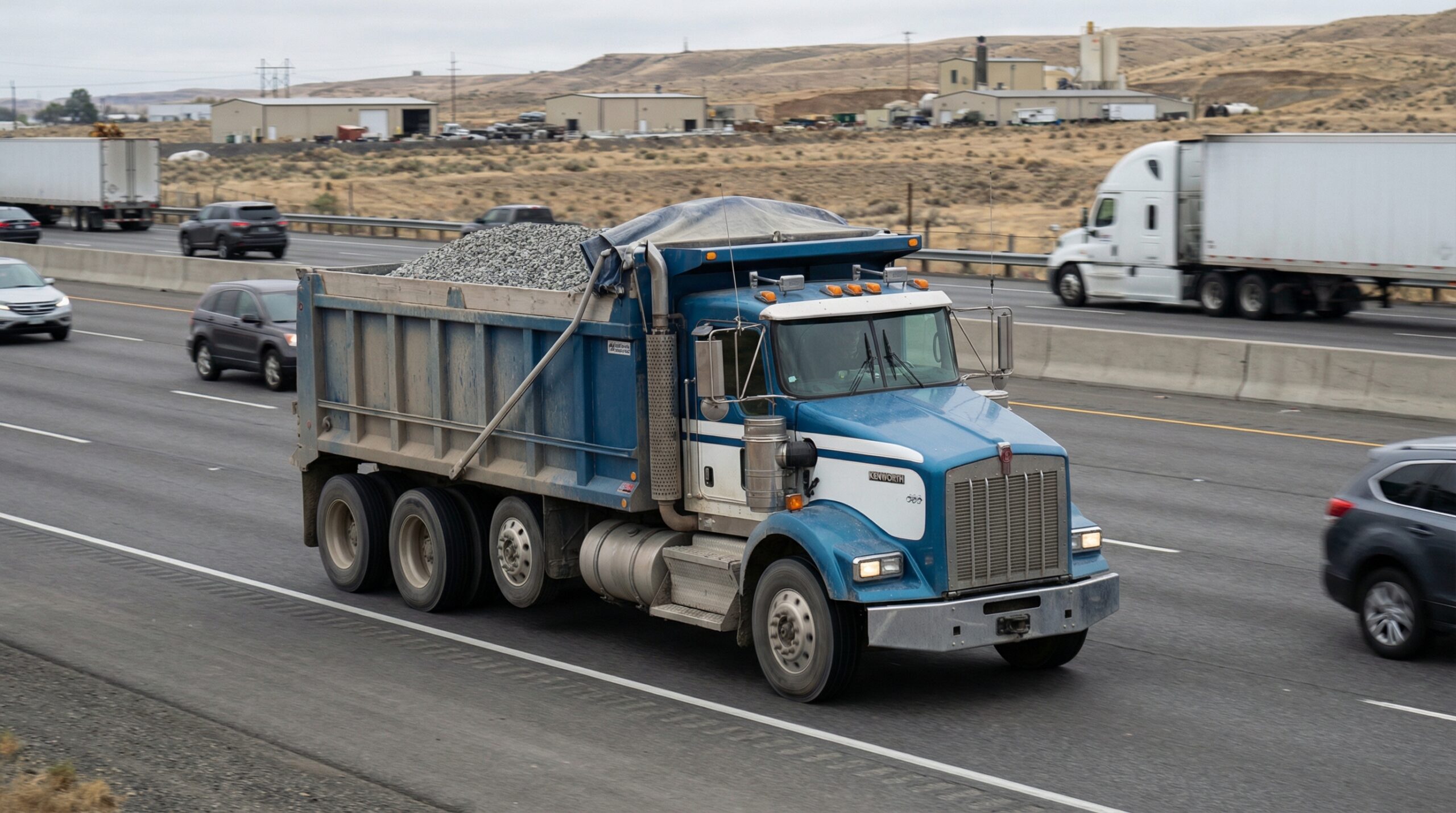
Interstate commerce is another trigger. If you haul materials across state lines for business purposes, federal regulations apply regardless of your truck’s weight. This includes driving from one state to another or even operating within one state if your business affects interstate commerce.
Passenger transport rules also matter. If your dump truck is designed to carry more than eight passengers for compensation or more than 15 passengers without charging fees, you’ll need a DOT number. While this rarely applies to standard dump trucks, some modified vehicles might fall under these rules.
Finally, transporting hazardous materials requiring placards triggers DOT requirements. Even if your dump truck is under the weight threshold, hauling certain chemicals or materials means you need federal registration and compliance.
Personal vs commercial dump truck use
Understanding the difference between personal and commercial use is crucial for determining your DOT number requirements. The distinction isn’t always obvious, and many operators find themselves surprised by federal rules.
Personal use typically means hauling materials for your own property or non-business activities. Examples include moving dirt for your home landscaping project, hauling firewood to your cabin, or transporting equipment for personal farm use. In these cases, you might not need a DOT number even if your truck exceeds the weight threshold.
However, personal use has limits. If your truck weighs over 10,001 pounds and you occasionally help neighbors for payment, cross state lines, or transport any hazardous materials, you could trigger federal requirements. The key question is whether your activity constitutes commerce, which has a broader definition than many people realize.
Important note: Thirty-seven states have their own DOT number requirements for intrastate commercial operations. Even if federal rules don’t apply, your state might still require registration.
Commercial use clearly requires DOT compliance when combined with weight or interstate activity. This includes hauling materials for paying customers, operating a landscaping business, or any situation where you’re compensated for transportation services. Even hauling your own business materials can trigger requirements if you cross state lines or exceed weight limits. If you’re wondering are dump trucks commercial vehicles, the answer depends on how you use them.
The safest approach is to check both federal and state requirements for your specific situation. When in doubt, obtaining a DOT number provides legal protection and demonstrates your commitment to safety compliance.
Federal weight and size requirements
Weight is the most common factor that determines DOT number requirements for dump trucks. The federal threshold of 10,001 pounds Gross Vehicle Weight Rating catches most commercial dump trucks, but understanding how this applies to your specific vehicle is essential.
GVWR refers to the maximum weight your truck is rated to carry, including the vehicle itself, fuel, passengers, and cargo. This rating appears on a metal plate typically located on the driver’s side door frame. Even if you never load your truck to capacity, the rated weight determines your regulatory requirements. Learning about how much weight dump trucks can hold helps you understand these capacity limits.
Most dump trucks fall into these weight categories. Small dump trucks, like one-ton pickups with dump beds, usually have GVWRs between 8,500 and 10,000 pounds and often avoid federal requirements. Medium dump trucks typically range from 12,000 to 26,000 pounds and almost always need DOT numbers for commercial use. Large dump trucks can exceed 33,000 pounds and definitely require federal compliance.
| Truck Size | Typical GVWR | DOT Number Required |
|---|---|---|
| Small (1-ton) | 8,500-10,000 lbs | Usually not |
| Medium | 12,000-26,000 lbs | Yes, if commercial |
| Large | 26,000+ lbs | Yes |
Size dimensions can also trigger special permit requirements. If your dump truck exceeds 30 feet in length, 8.5 feet in width, or 13.5 feet in height, you may need additional permits beyond your DOT number. These oversized vehicle permits ensure safe operation on public roads and highways.
Remember that state regulations can be more restrictive than federal rules. Some states require DOT numbers for vehicles as light as 8,000 pounds when used commercially within state borders.
How to get your DOT number
Getting a DOT number involves a straightforward online process through the FMCSA, but preparation and accuracy are important for smooth registration. The process typically takes 10 to 20 business days once you submit complete information.
Start by gathering required information before beginning your application. You’ll need your business details including legal name, physical address, and mailing address if different. Vehicle information should include make, model, year, VIN number, and GVWR for each truck. Insurance information must show proof of liability coverage meeting federal minimums.
The online application uses Form MCS-150, which you can complete at the FMCSA website. Create an account, provide your business and vehicle details, and pay the registration fee. Double-check all information since errors can delay processing or require amendments later.

State-level requirements often run parallel to federal registration. Many states require additional permits, registrations, or fees for intrastate operations. Contact your state’s Department of Transportation to understand local requirements and avoid compliance gaps.
Once approved, you must display your DOT number on both sides of your commercial vehicles. The number should be in contrasting colors, at least two inches tall, and clearly visible. Most operators place DOT numbers on the cab doors, but any visible location on the truck’s sides works as long as it meets visibility requirements.
Pro tip: Apply for your DOT number before you need it. The 10-20 business day processing time can delay your operations if you wait until the last minute.
Getting your DOT number is just the beginning of compliance. You’ll need to maintain current information, undergo safety inspections, and keep required records. However, proper registration protects your business and demonstrates your commitment to safe operations in the transportation industry.
Whether you’re running a single dump truck for local jobs or managing a fleet for major construction projects, understanding DOT requirements keeps you legal and competitive. The investment in proper registration and compliance pays off through reduced liability, better insurance rates, and the ability to bid on jobs requiring DOT-compliant contractors. Before you start hauling, you might also want to know if dump trucks are hard to drive and familiarize yourself with different types of dump trucks for aggregate work.
For dump truck operators who need reliable material sources, Hello Gravel Marketplace connects you with local suppliers to keep your projects moving efficiently while you focus on regulatory compliance and safe operations.
Frequently Asked Questions
What size dump truck needs a DOT number?
Do I need a DOT number for my personal dump truck?
Where does the DOT number go on a dump truck?
What happens if I operate a dump truck without a required DOT number?
Author: igor