Aggregate Size Chart Guide for Concrete, Asphalt and Construction Projects
Published on: December 10, 2025
Get an estimate for your project in 60 seconds
 Your information is secure
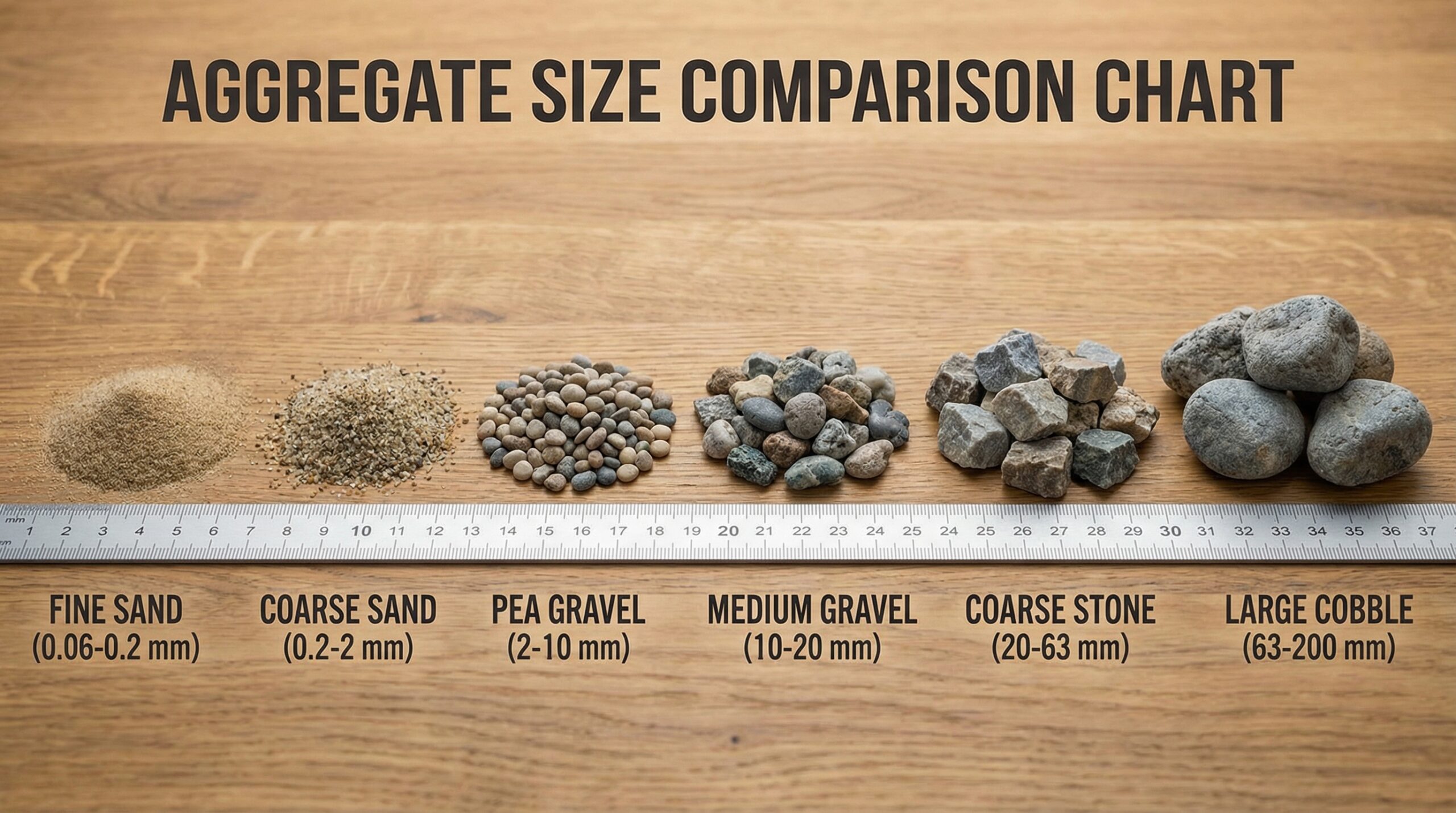
Choosing the right aggregate size can make or break your construction project. Whether you’re pouring a concrete driveway, laying asphalt, or installing drainage, the size of your aggregates directly impacts strength, durability, and performance. This guide provides a clear aggregate size chart and practical recommendations to help you select the perfect aggregate for your specific project needs.
Quick Answer: Fine aggregates (0.075mm to 4.75mm) work best for smooth finishes and workability, while coarse aggregates (4.75mm to 75mm) provide structural strength. Most residential driveways use 19mm to 25mm aggregates for optimal performance.
Quick aggregate size reference chart
Understanding aggregate sizes starts with knowing the standard classifications and their typical applications. This reference chart breaks down the most common aggregate sizes you’ll encounter in construction projects.
| Aggregate Type | Size Range (mm) | Size Range (inches) | Common Uses |
|---|---|---|---|
| Fine Sand | 0.075 – 0.6 | #200 – #30 sieve | Concrete finishing, mortar |
| Coarse Sand | 0.6 – 4.75 | #30 – #4 sieve | Concrete mix, asphalt |
| Pea Gravel | 4 – 8 | 0.16 – 0.31 | Drainage, decorative |
| Small Stone | 9.5 – 19 | 0.37 – 0.75 | Concrete, road base |
| Medium Stone | 19 – 25 | 0.75 – 1.0 | Driveways, structural concrete |
The key to using this chart effectively is matching your project requirements with the appropriate size range. Smaller aggregates provide better workability and smoother finishes, while larger sizes offer superior strength and drainage capabilities. For a more detailed breakdown of various gravel sizes and their specific applications, explore our comprehensive sizing guide.
Understanding fine versus coarse aggregates
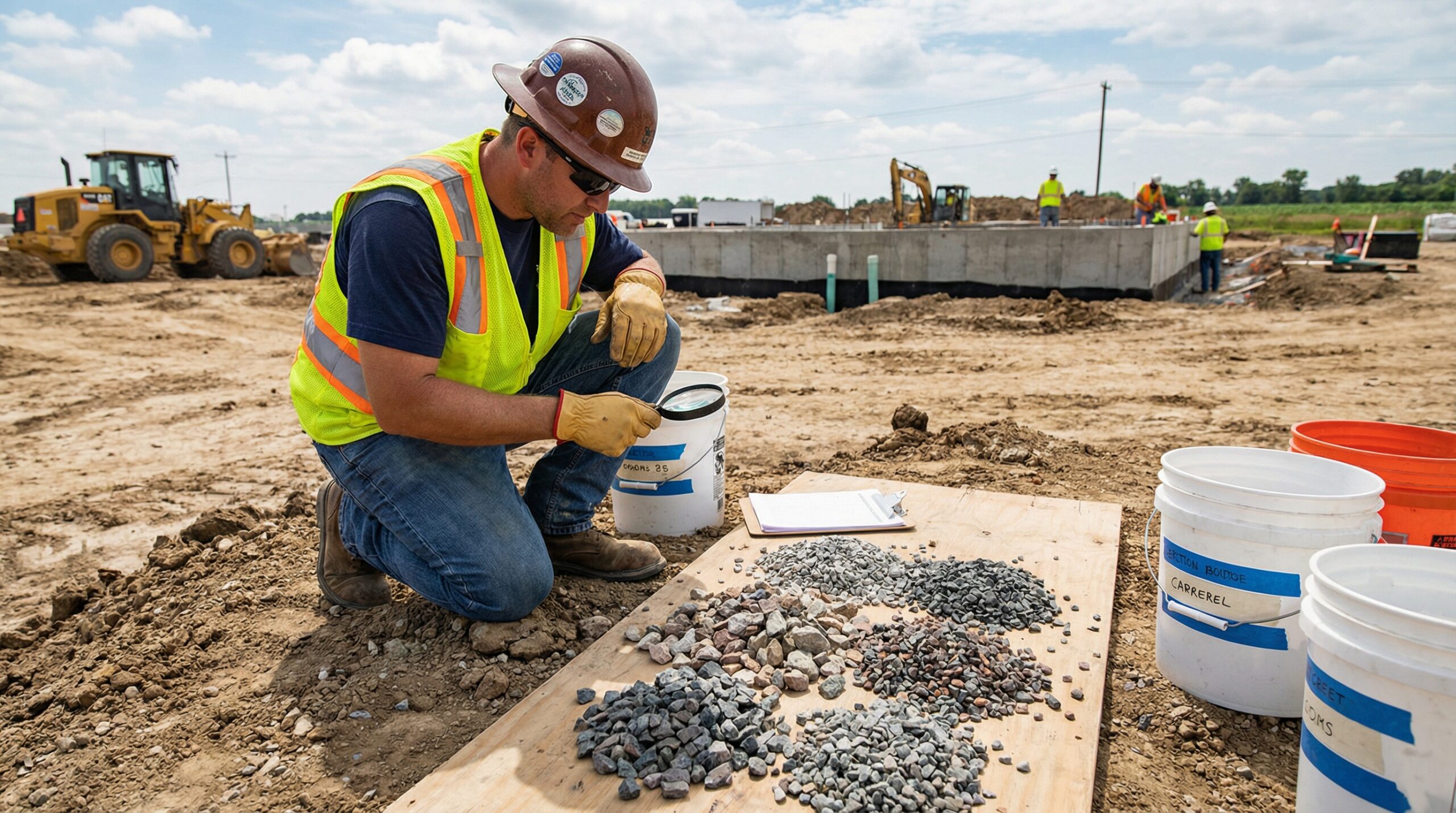
Fine aggregates include materials that pass through a 4.75mm sieve, primarily consisting of sand particles. These smaller particles fill voids between larger aggregates and provide the smooth, workable consistency needed for quality concrete and asphalt mixes.
Coarse aggregates are larger than 4.75mm and can extend up to 75mm for most construction applications. These materials form the structural backbone of concrete, providing load-bearing capacity and reducing shrinkage. The interlocking action between coarse aggregate particles creates the strength foundation that makes concrete so durable.
The combination of fine and coarse aggregates creates what engineers call a well-graded mix. This balance ensures optimal packing density, which reduces voids and increases the overall strength of your finished project. When you see references to sieve numbers like No. 4 or No. 200, these indicate the mesh size used to separate different aggregate fractions during testing. To better understand how gravel numbering systems work, check out our detailed explanation of industry standards.
Best aggregate sizes for specific projects
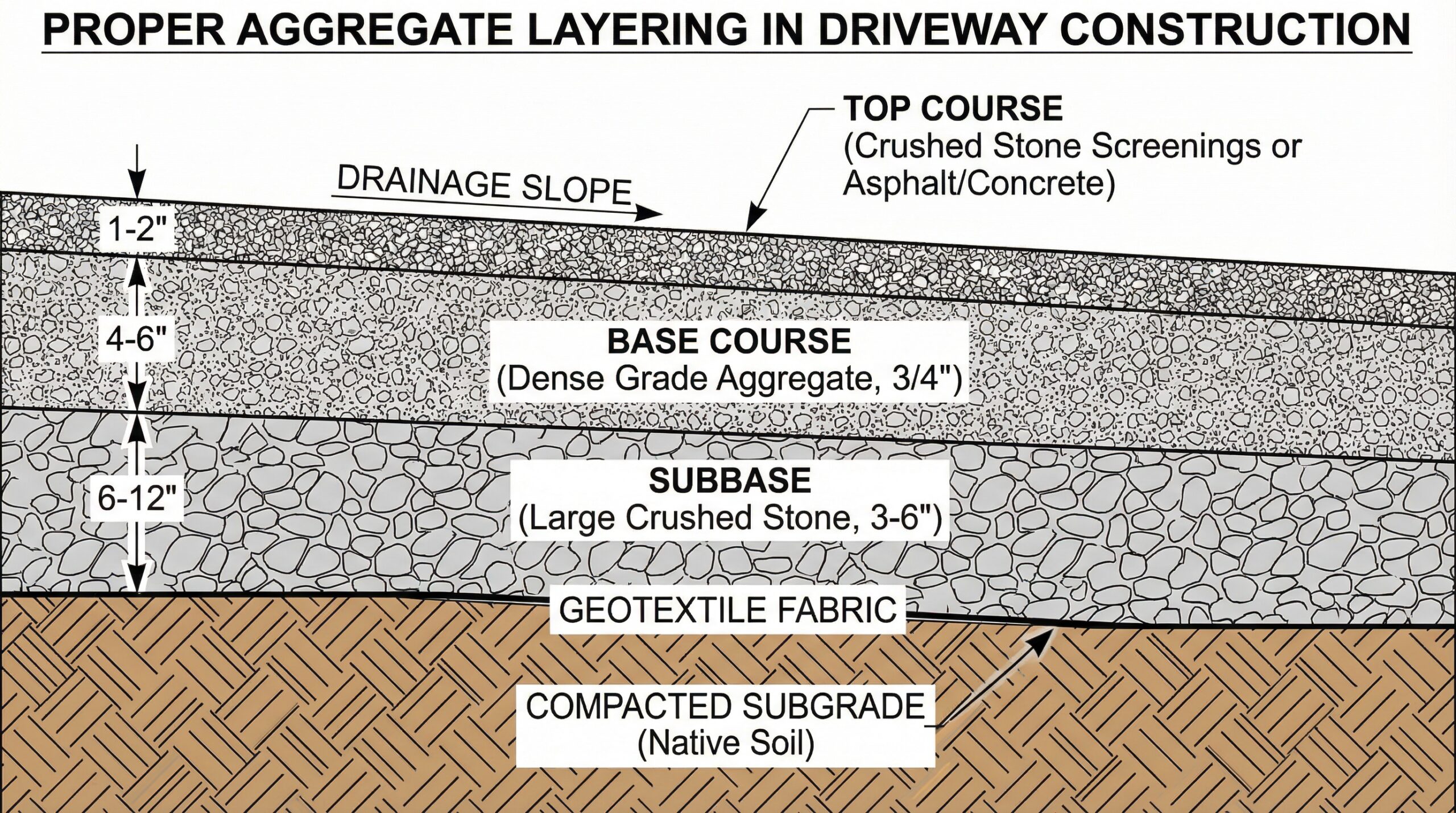
Driveways and parking areas perform best with 19mm to 25mm aggregates for the structural layer, topped with finer materials for a smooth driving surface. The larger base aggregates provide excellent load distribution, while the finer top layer prevents loose stones from damaging vehicles. For more specific guidance on selecting the right driveway stone sizes, our specialized chart can help you make the perfect choice.
Concrete slabs and patios typically use a combination approach. The structural concrete contains aggregates ranging from fine sand up to 19mm coarse material. This mix provides the workability needed for proper placement while maintaining the strength required for foot traffic and outdoor furniture.
Pro Tip: For residential concrete slabs, limit maximum aggregate size to one-third of the slab thickness to ensure proper concrete flow and finishing.
Foundation and structural applications often require larger aggregates, typically 19mm to 38mm, depending on the structural requirements and reinforcement spacing. The larger aggregates provide maximum strength and reduce the cement content needed, making the concrete more economical. Learn more about construction stone sizes for different structural applications to ensure your foundation is built to last.
Drainage systems and French drains work best with clean, angular aggregates in the 19mm to 38mm range. These sizes allow water to flow freely while providing structural support. Avoid rounded river rock for drainage applications, as angular materials lock together more effectively.
How aggregate size affects performance
The size of your aggregates directly influences three critical performance factors in your construction project. Understanding these relationships helps you make informed decisions about which materials to specify.
Strength and durability improve with proper aggregate sizing. Larger aggregates create a stronger skeleton within concrete, but they must be balanced with sufficient fine material to fill voids. Too much coarse aggregate can create weak spots, while too much fine material reduces overall strength.
Workability and finishing become easier with smaller aggregate sizes. Fine aggregates allow concrete to flow smoothly around reinforcement and into tight spaces. However, excessive fine material can make the mix sticky and difficult to finish properly.
Important: Maximum aggregate size should never exceed one-quarter of the minimum dimension between reinforcing bars or one-third of the slab thickness.
Drainage and compaction characteristics change dramatically with aggregate size. Larger aggregates create more void space, improving drainage but potentially reducing density. Smaller aggregates compact more easily but may restrict water movement in drainage applications.
The key is finding the right balance for your specific application. Most successful projects use a well-graded mix that combines multiple sizes to optimize all three performance factors simultaneously. For visual reference on different gravel sizes with pictures, our illustrated guide makes it easy to identify the right materials for your needs.
Getting the aggregate size right from the start saves time, money, and ensures your project performs as intended for years to come. Whether you’re working on a small residential project or a large commercial development, understanding these fundamentals helps you make confident material selections that deliver lasting results.
Frequently Asked Questions About Aggregate Sizes
What is the size of coarse aggregate used in concrete?
Which aggregate size is best for driveways?
What is the difference between fine and coarse aggregate?
How do I choose the right aggregate size for my project?
Author: viewengine