Gravel Size Chart and Guide: Choose the Right Size for Every Project
Published on: December 10, 2025
Get an estimate for your project in 60 seconds
 Your information is secure
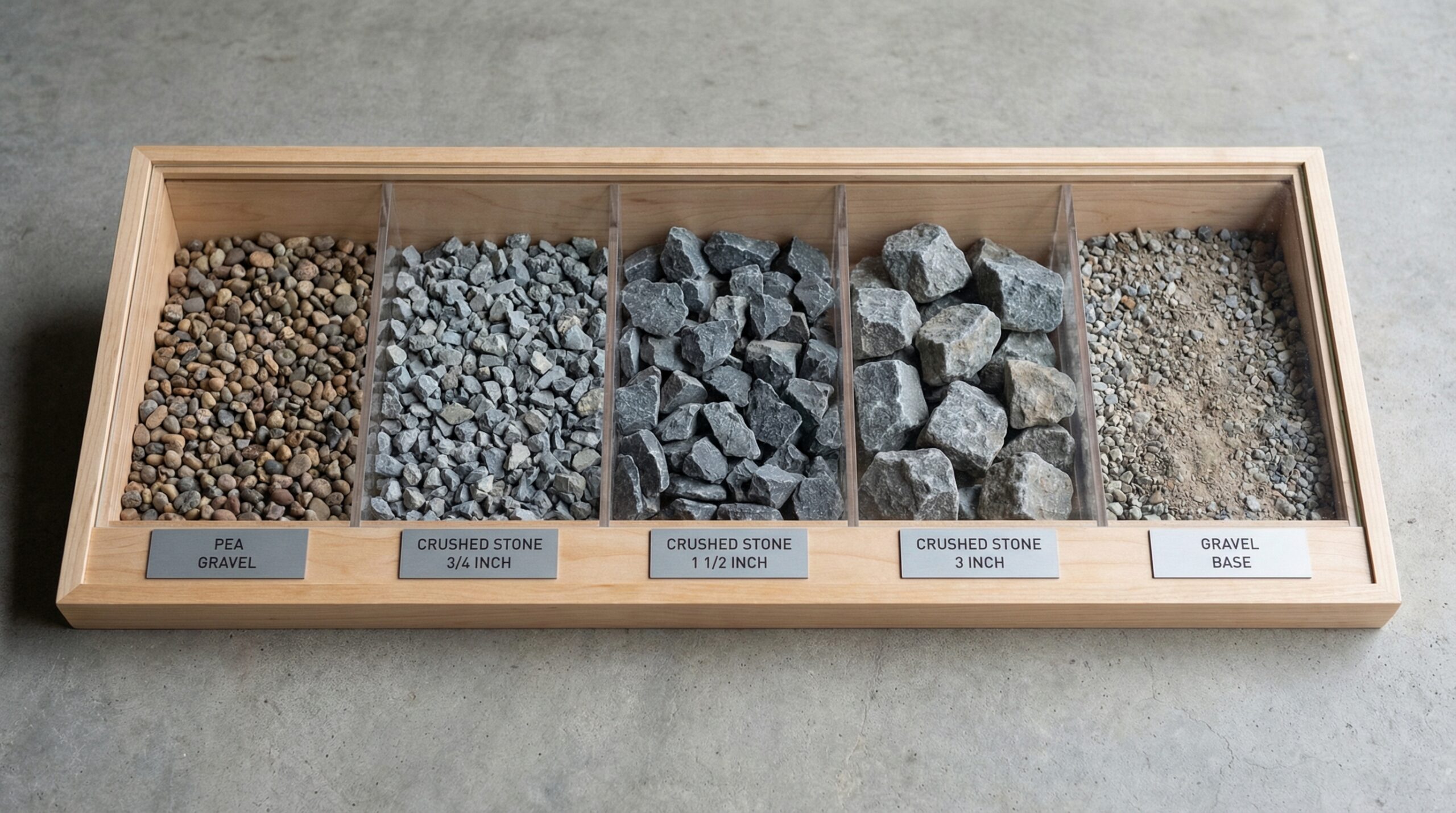
Choosing the wrong gravel size can leave you with ruts in your driveway, uncomfortable walking paths, or poor drainage that damages your property. The good news? This guide shows you exactly which gravel size to use for every common project, complete with a detailed size chart and grade explanations.
Whether you need #57 gravel for a driveway top layer or 3/8-inch pea gravel for garden paths, understanding gravel sizes helps you make confident decisions and avoid costly mistakes.
Quick Answer: Most residential driveways work best with #3 gravel (1-2 inches) for the base layer and #57 gravel (½-¾ inch) for the top surface. Garden paths perform well with 3/8-inch pea gravel, while French drains need #3 or #4 angular crushed stone.
Quick reference for common projects
Before diving into the details, here are the most popular gravel size recommendations:
Driveways: #3 gravel for base, #57 for top layer
Garden paths: 3/8-inch pea gravel or #8 crushed stone
Patios: ¼-inch to ½-inch decorative gravel
French drains: #3 or #4 angular crushed stone
Parking areas: #3 base with crusher run top layer
These recommendations work for most residential projects, but your specific needs might vary based on traffic, slope, and local conditions.
Understanding gravel sizes and why they matter
Gravel size directly affects how your project performs. Larger stones provide better stability and drainage but can be uncomfortable to walk on. Smaller gravel creates smoother surfaces but may shift under heavy loads or wash away in heavy rain.
The construction industry measures gravel using two main systems. Size ranges describe the actual dimensions in inches or millimeters, while grade numbers like #3 or #57 indicate standardized size categories used by suppliers. To learn more about how the industry categorizes these materials, check out our comprehensive guide to construction stone sizes.
Common gravel terminology you’ll encounter
When talking to suppliers or reading quotes, you’ll hear these terms:
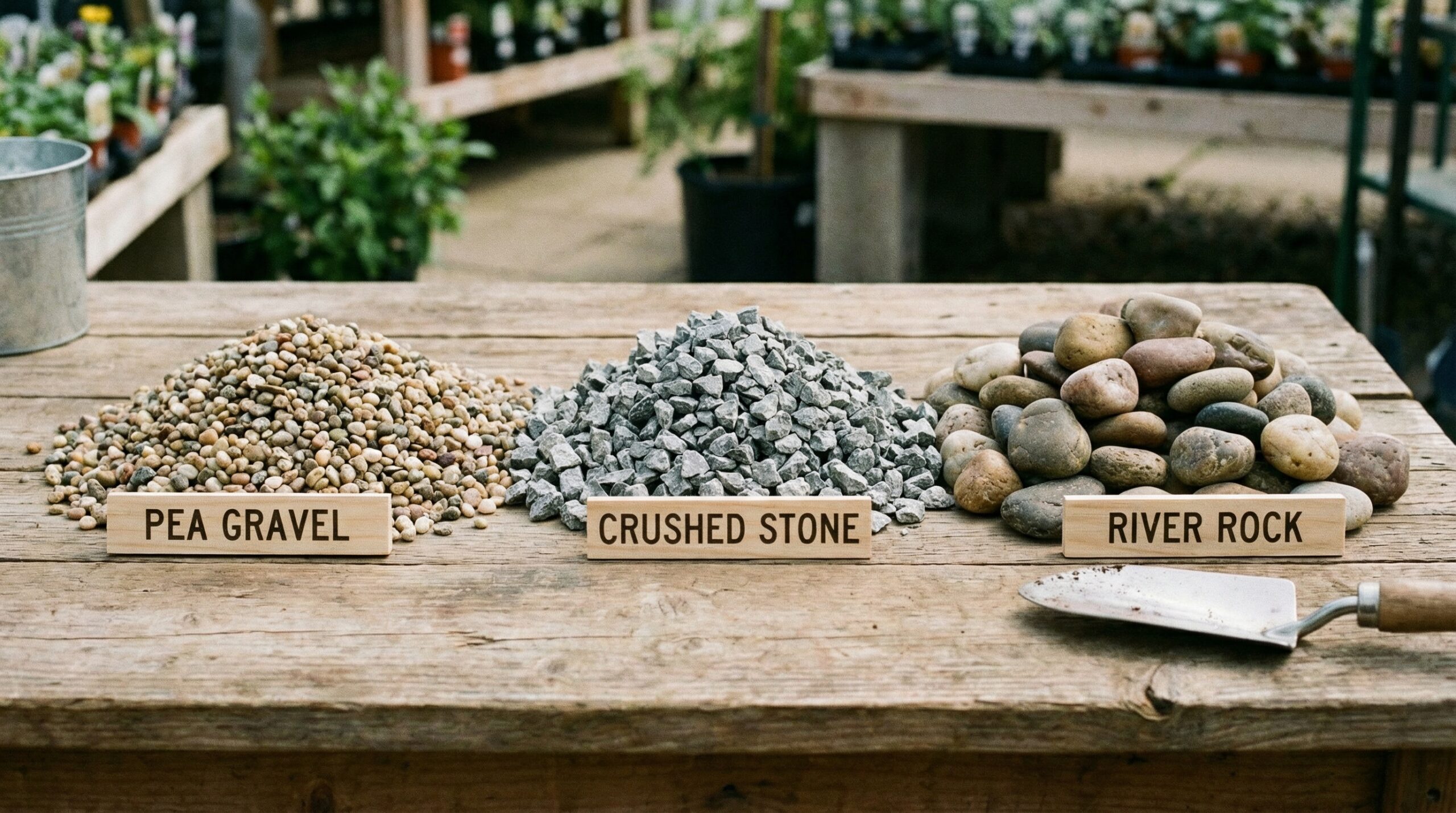
Crushed stone refers to angular rock pieces created by crushing larger stones. The sharp edges help pieces lock together for stability.
Pea gravel describes small, rounded stones typically 3/8-inch in diameter. The smooth surface makes it comfortable for walking.
Crusher run combines various stone sizes from dust to 1-inch pieces. This mixture compacts well for solid base layers.
Fines are tiny particles smaller than 1/8-inch that help bind larger stones together but can affect drainage.
Gravel size chart
This chart shows the most common gravel sizes and their typical applications:
| Grade | Size Range | Type | Best For |
|---|---|---|---|
| #3 | 1-2 inches | Crushed stone | Driveway base, drainage |
| #57 | ½-¾ inch | Crushed stone | Driveway surface, walkways |
| #8 | ⅜-½ inch | Crushed stone | Paths, around foundations |
| #10 | ⅛-⅜ inch | Crushed stone | Concrete mix, fine drainage |
| Pea gravel | ¼-⅜ inch | Rounded | Garden paths, decorative |
Understanding crushed stone grades
The number system for crushed stone follows industry standards. #3 gravel ranges from 1 to 2 inches and works well for structural applications where you need stability and drainage. #57 gravel measures ½ to ¾ inch and provides the right balance of stability and comfort for most surface applications.
Smaller grades like #8 and #10 work well where you need finer material that still drains well. These sizes compact nicely while maintaining some porosity. For a deeper dive into the numbering system for gravel, our detailed explanation breaks down each grade and its specific applications.
How to choose the right gravel size
Selecting gravel involves balancing three main factors: stability, comfort, and drainage. Here’s a simple decision framework:
Step 1: Define your project type. Driveways need different properties than garden paths. Heavy-use areas require more stability, while decorative areas prioritize appearance and comfort.
Step 2: Consider traffic and loads. Vehicle traffic demands larger, angular gravel that locks together. Foot traffic allows for smaller, more comfortable sizes.
Step 3: Evaluate drainage needs. Areas with poor drainage benefit from larger gravel sizes that allow water to flow freely. Flat areas with good natural drainage can use smaller sizes.
The biggest mistake people make is choosing gravel based only on appearance. While aesthetics matter, functionality should drive your primary decision. You can always add a thin decorative layer on top if needed.
Pro Tip: Avoid using pea gravel on slopes steeper than 10 degrees. The rounded stones will roll and shift, creating an unstable surface that’s difficult to walk on.
Best gravel sizes for specific projects
Driveways and parking areas
Most residential driveways use a three-layer system. The base layer uses #3 gravel (1-2 inches) for stability and drainage. A middle layer of #57 gravel (½-¾ inch) provides transition and additional stability. The top layer can be #57 gravel for durability or crusher run for a more finished appearance.
For light residential use, you can skip the middle layer and go directly from #3 base to your chosen surface material. If you’re planning a driveway project, our ultimate driveway stone size chart provides detailed specifications for different traffic levels and climate conditions.
Garden paths and walkways
Pea gravel in 3/8-inch size creates comfortable walking surfaces that look natural in garden settings. The rounded edges feel good underfoot and the size provides stability without being chunky.
For more formal paths, #8 crushed stone (⅜-½ inch) offers similar comfort with better compaction. The angular shape helps it stay in place better than pea gravel. When planning landscape features, refer to our comprehensive landscape stone size chart to find the perfect fit for your outdoor project.
Drainage systems
French drains and other drainage applications need #3 or #4 crushed stone. The angular shape and 1-2 inch size create large void spaces for water flow while providing structural support around drain pipes.
Avoid rounded gravel for drainage projects. The smooth surfaces don’t interlock well, leading to settling and reduced drainage capacity over time.

Calculating how much gravel you need
The basic formula is simple: Volume = Area × Depth. Measure your project area in square feet, then multiply by the depth in feet to get cubic feet. Divide by 27 to convert to cubic yards, which is how most suppliers sell gravel.
Common depth guidelines:
– Garden paths: 2-3 inches
– Residential driveways: 4-6 inches total
– Parking areas: 6-8 inches total
– French drains: 12-18 inches
For example, a 12×20 foot driveway with 4 inches of gravel needs: 240 square feet × 0.33 feet = 79 cubic feet ÷ 27 = 3 cubic yards of material.
Money-Saving Tip: Order 10% extra material to account for compaction and minor measurement errors. It’s much cheaper than paying for a second delivery.
Working with gravel suppliers
When calling suppliers, use the grade numbers from this guide. Ask specifically for “#57 crushed stone” rather than “small gravel” to ensure you get exactly what you need.
Key questions to ask:
– Is the gravel washed or unwashed?
– What’s the percentage of fines in the mix?
– Do delivery fees vary by order size?
– Can they recommend local installation contractors?
Washed gravel costs more but drains better and looks cleaner. Unwashed gravel contains more fines, which can help with compaction but may affect drainage. For visual reference when discussing your needs with suppliers, our gravel size chart with pictures helps you identify exactly what you’re looking for.
Most suppliers sell by the ton or cubic yard. A cubic yard of gravel typically weighs 1.3 to 1.7 tons, depending on the stone type and size.
Ready to start your gravel project? Hello Gravel makes it easy to get the exact materials you need. Our team understands the size requirements covered in this guide and can help you calculate quantities and coordinate delivery. Whether you need #57 for a driveway or pea gravel for garden paths, we deliver quality materials that match your project specifications.
Frequently Asked Questions About Gravel Sizes
What size gravel should I use for a driveway?
Which gravel size is best for drainage and French drains?
What’s the difference between pea gravel and crushed stone sizes?
How much gravel do I need for my project?
Author: igor