What Is 57 Stone and Why Construction Pros Choose It
Get an estimate for your project in 60 seconds
 Your information is secure

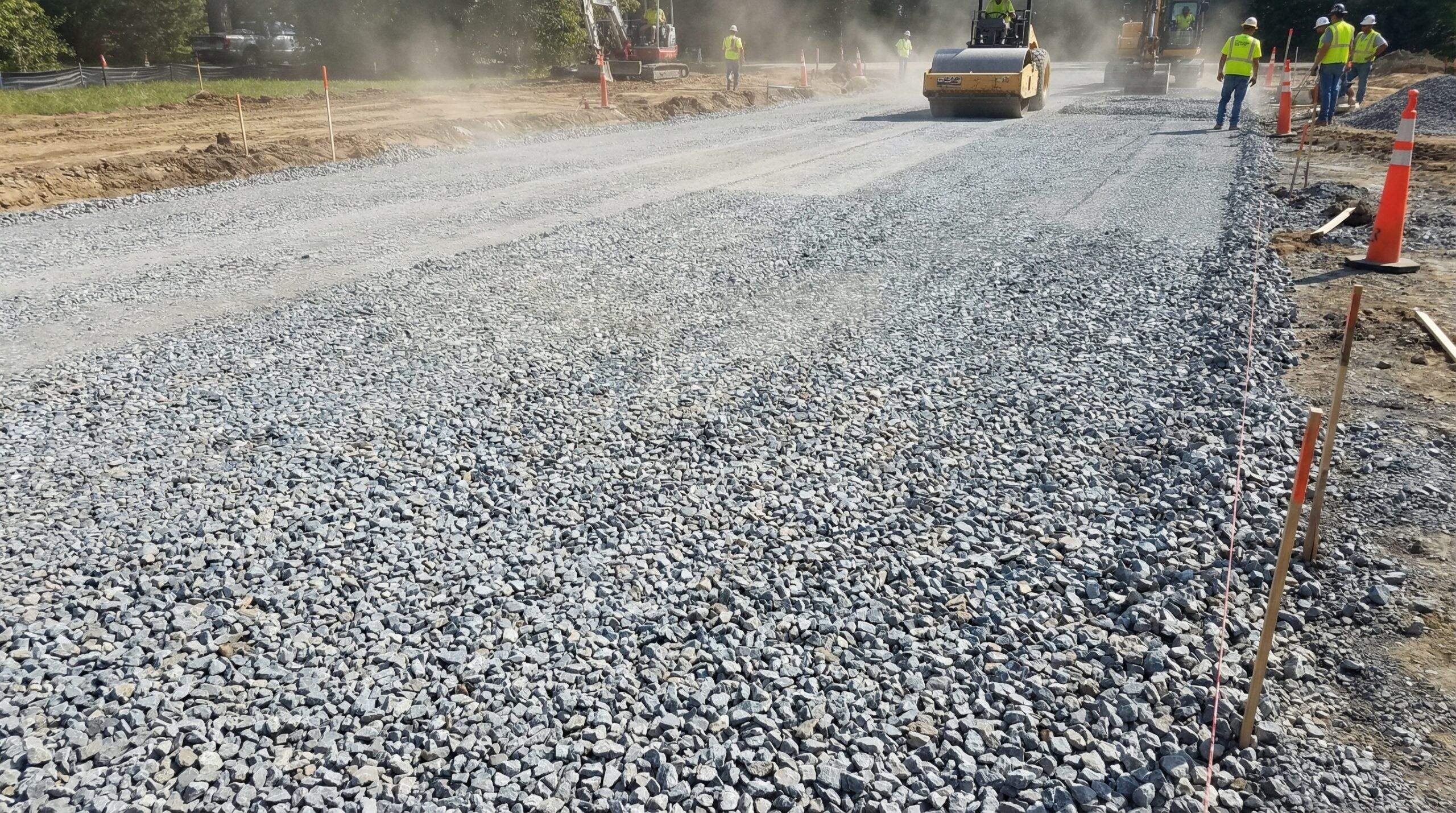
If you’ve ever wondered about that angular gravel you see on construction sites, you’re looking at 57 stone. This crushed stone material, ranging from 1/2 inch to 1 inch in diameter, serves as the backbone for countless construction and landscaping projects. Made from granite, limestone, or trap rock, 57 stone gets its name from its size classification and stands out for its angular shape that creates superior interlocking compared to rounded gravel.
Quick Answer: 57 stone is crushed angular gravel (1/2″ to 1″) used primarily for road bases, driveways, drainage systems, and erosion control due to its excellent compaction and load-bearing properties.
Understanding 57 Stone Basics
What Makes 57 Stone Different
57 stone differs from regular gravel in one crucial way: its angular shape. When rocks are crushed in quarries, they break into sharp, angular pieces rather than the smooth, rounded stones you find in riverbeds. This angular design isn’t accidental—it’s what makes 57 stone so effective for construction applications.
The production process begins at quarries where workers blast granite, limestone, or trap rock formations. These raw materials then travel to crushing facilities where jaw crushers, cone crushers, and impact crushers break them down to precise specifications. The final step involves screening and sorting to ensure consistent sizing. To learn more about how these materials are produced, check out our guide on the quarrying process from extraction to construction.
Size and Composition Standards
The “57” designation refers to the stone’s size range, typically 1/2 inch to 1 inch in diameter. This specific sizing allows the stones to interlock effectively while still permitting proper drainage. The angular fragments create void spaces that facilitate water flow while maintaining structural integrity under load.

Primary Applications for 57 Stone
Road and Driveway Construction
Construction crews rely on 57 stone as a base layer for roads, driveways, and parking areas because it creates an incredibly stable foundation. When compacted, the angular pieces lock together like puzzle pieces, distributing weight evenly across the surface. This interlocking action prevents shifting and settling that could cause cracks or potholes in the finished surface.
For residential driveways, 57 stone typically requires a 4-6 inch base layer. Commercial applications often need deeper installations depending on expected traffic loads. The stone’s drainage properties also prevent water from pooling beneath paved surfaces, which could lead to frost damage in colder climates. For more information on choosing the right material, explore our article on the best stone for driveway base.
Drainage and Water Management
French drains, one of the most effective water management solutions, depend heavily on 57 stone’s unique properties. The angular stones create channels that allow water to flow freely while filtering out sediment and debris. This makes 57 stone ideal for foundation drainage, retaining wall backfill, and stormwater management systems.
Pro Tip: When installing French drains, use 57 stone around perforated pipes to maintain proper water flow while preventing pipe blockages from fine particles.
Unlike rounded gravel, 57 stone’s angular shape prevents the material from washing away during heavy rainfall. This stability ensures long-term performance in drainage applications where material migration could compromise system effectiveness. Learn more about selecting the right material in our comprehensive guide on the best gravel for drainage.
Key Benefits and Performance Advantages
Superior Load-Bearing Capacity
The angular nature of 57 stone creates exceptional load-bearing capacity through mechanical interlocking. When properly compacted, these stones form a matrix that can support significant weight without deformation. This characteristic makes 57 stone particularly valuable for heavy-duty applications like industrial driveways and equipment pads.
Testing shows that properly installed 57 stone bases can support loads exceeding 2,000 pounds per square foot. This performance rivals more expensive alternatives while maintaining cost-effectiveness for large-scale projects.
Long-Term Durability
57 stone resists weathering, freeze-thaw cycles, and chemical degradation better than many alternatives. The hard rock sources—granite, limestone, and trap rock—provide natural resistance to environmental stresses. This durability translates to reduced maintenance costs and longer service life for projects.
Cost Insight: Projects using 57 stone as a base material typically see 30-40% lower maintenance costs compared to those using rounded gravel or inferior materials.
Comparing 57 Stone to Alternatives
| Material | Shape | Size Range | Best Use | Load Capacity |
|---|---|---|---|---|
| 57 Stone | Angular | 1/2″ – 1″ | Structural base | High |
| Pea Gravel | Rounded | 1/4″ – 3/8″ | Decorative | Low |
| Riprap | Angular | 6″ – 24″ | Erosion control | Very High |
| Crusher Run | Mixed | 0″ – 2″ | Road base | Medium |
When to Choose 57 Stone Over Alternatives
Choose 57 stone when your project requires structural stability, drainage capability, and long-term performance. Its angular shape provides superior compaction compared to rounded alternatives like pea gravel, which works better for decorative applications but lacks load-bearing capacity. For a detailed comparison of different materials, read our guide on different types of gravel for construction.
For projects requiring larger stone sizes, such as shoreline protection, riprap offers better erosion resistance but costs significantly more and requires specialized installation equipment.
Selecting and Installing 57 Stone
Calculating Your Material Needs
Most projects require approximately one ton of 57 stone per 100 square feet at a 2-3 inch depth. For deeper applications, such as road bases requiring 6-inch depths, plan for three tons per 100 square feet. Always order 10-15% extra material to account for compaction and minor variations in coverage.
Installation Best Practices
Proper installation begins with site preparation. Remove organic material, grade the surface, and ensure adequate slope for drainage. Install geotextile fabric when working over soft soils to prevent mixing and maintain separation between the stone base and subgrade.
Spread 57 stone in lifts no thicker than 4 inches, compacting each layer thoroughly with appropriate equipment. Proper compaction ensures maximum interlocking and prevents future settling that could compromise the installation’s integrity. For more detailed installation guidance, see our article on the best gravel for compacting.
Understanding 57 stone’s properties and applications helps you make informed decisions for your construction and landscaping projects. Its combination of structural performance, drainage capability, and cost-effectiveness makes it a reliable choice for foundations, drainage systems, and erosion control applications where long-term stability matters most.

 Chance Kittrell
