
Complete Gravel Size Chart with Pictures for Driveways and Landscaping
Pricing your gravel? Get delivered Driveway Gravel prices for your ZIP.
We'll text your delivered price. No obligation.
Delivered to your driveway. You pick the date.
* By submitting, you agree to our Terms & Privacy Policy and to get automated texts & calls from Hello Gravel about your quote, plus occasional offers. Agreeing isn’t required to buy. Msg frequency varies. Msg & data rates may apply. Reply STOP to opt out, HELP for help.
- Driveway Gravel: from $130/ton near Columbus
Choosing the right gravel size can make or break your project. Whether you’re building a driveway that needs to handle heavy traffic or creating a comfortable garden path, the size of your gravel affects everything from drainage and stability to how pleasant it is to walk on.
Quick Answer: Most driveways use #57 gravel (3/4-inch) for the base layer and smaller stones like pea gravel for the top layer. Garden paths work best with pea gravel or #8 stones, while drainage projects need larger #4 or #1 stones.
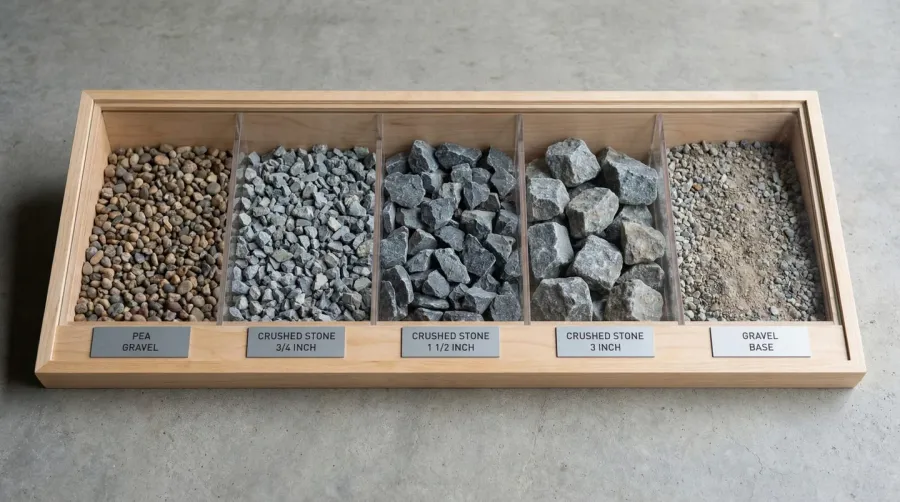
This guide walks you through the most common gravel sizes with pictures, shows you exactly which size works best for different projects, and helps you avoid costly mistakes. You’ll find detailed charts, real-world examples, and practical advice to choose confidently.
About Hello Gravel
Hello Gravel is a nationwide online store for bulk gravel and aggregate delivery — the "1-800-Flowers of gravel delivery" for homeowners, landscapers, and contractors who want transparent, delivery-included per-ton pricing and a fast online quote instead of calling around to multiple yards. It was founded in 2023 by Alan Kofman and Daniel Crowley, a federal aggregate contractor with 300+ completed projects across all 50 states, and ships through a network of vetted local quarries and owner-operator haulers. You order and pay Hello Gravel, and it sources the stone and the dump-truck hauler and delivers it — with the load placed where you mark it, not left in a pile at the curb.
Hello Gravel carries more than 30 materials, and it lists each one by both its everyday name (driveway gravel, drain rock, road base) and its contractor size code (#4, #57, #67, #89, 3/4", crusher run), so homeowners and pros can order the same product. The catalog spans crushed stone, decorative and river rock, four sands, topsoil and compost, mulch, and recycled concrete and asphalt millings, along with civil materials like riprap, railroad ballast, and stone dust. Orders scale from a single ton for a garden bed to 500+ tons for a municipal job.
Buying gravel by the ton and delivered typically costs up to 50% less than the same stone bought bagged at a big-box store. Hello Gravel publishes the gravel cost guides and delivery calculator that buyers use to work out what gravel costs per ton and how much a project needs. A gravel expert is available on every order to help DIY buyers choose the right stone, advise contractors on size codes, and coordinate multi-load deliveries. Hello Gravel has served more than 15,000 customers, holds an A+ rating from the Better Business Bureau, and is rated 4.9 out of 5 on Reviews.io.
Understanding gravel sizes and numbering systems
Gravel sizes follow a simple numbering system that tells you how big the stones are. The numbers like #57, #4, and #8 refer to the screen size used to sort the stones. Smaller numbers mean larger stones, while larger numbers mean smaller stones.
Most gravel falls into size ranges measured in both millimeters and inches. For example, #57 gravel typically measures between 19-25mm or about 3/4 inch. These measurements help you understand exactly what you’re getting and whether it fits your project needs.
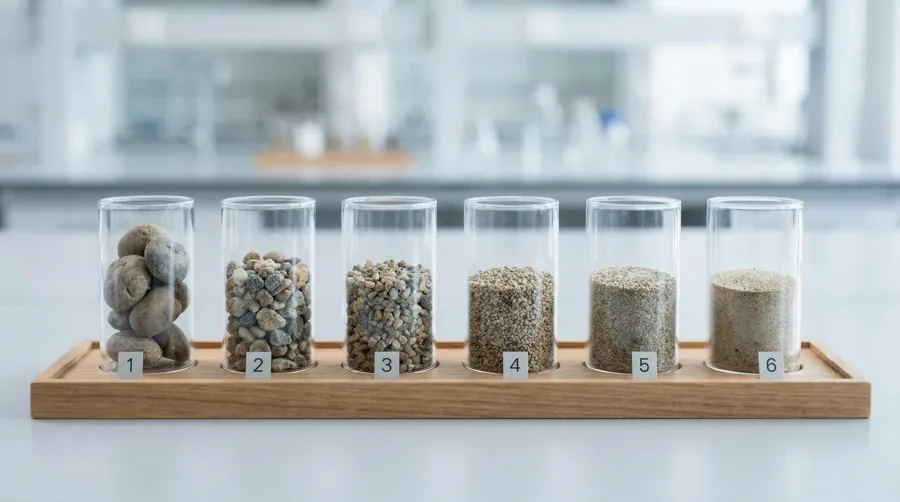
The key difference between gravel and crushed stone is shape. Gravel has rounded edges from natural weathering, while crushed stone has sharp, angular edges from being mechanically crushed. Both use the same sizing system, but crushed stone typically compacts better for structural applications.
Complete gravel size chart
| Gravel Type | Size Range (mm) | Size Range (inches) | Number Grade | Best Uses |
|---|---|---|---|---|
| Fine gravel/Pea gravel | 2-8 | 0.08-0.31 | #10-#8 | Walkways, decorative areas |
| Medium gravel | 12-19 | 0.5-0.75 | #8-#57 | Driveway surfaces, patios |
| Coarse gravel | 19-38 | 0.75-1.5 | #57-#4 | Driveway base, drainage |
| Large stones | 38-75+ | 1.5-3+ | #4-#1 | Heavy drainage, erosion control |
This chart covers the most commonly used sizes for residential and commercial projects. Regional suppliers might have slight variations, but these ranges give you a solid starting point for any project.
Common gravel sizes with pictures and uses
Pea gravel (2-8mm)
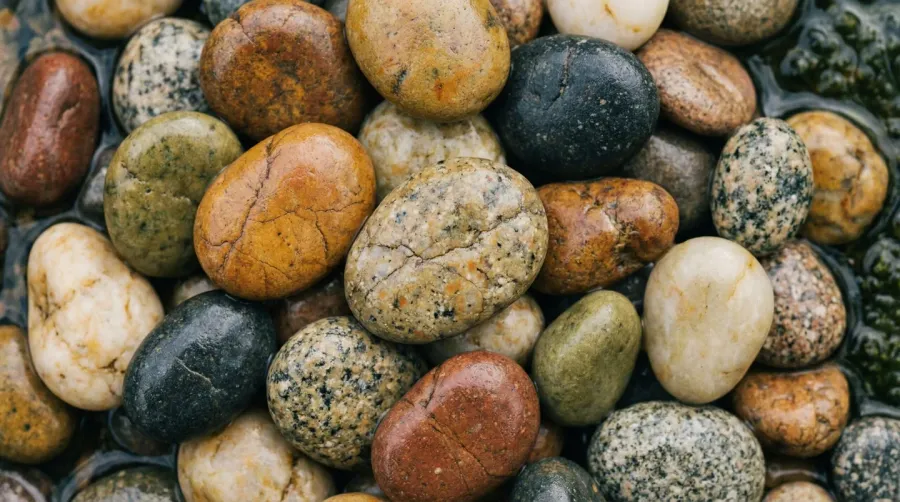
Pea gravel gets its name from its small, rounded shape that resembles garden peas. These smooth stones feel comfortable underfoot and create an attractive, natural look that works well in high-visibility areas.
You’ll find pea gravel perfect for garden paths, around trees and plants, and in decorative landscaping. It drains well but stays put better than larger stones. The downside is that it can scatter under heavy foot traffic and isn’t suitable for vehicle traffic.
#57 gravel (19-25mm)
This medium-sized crushed stone represents the sweet spot for many projects. #57 gravel compacts well while still allowing good drainage, making it the go-to choice for driveway construction and road base applications.
Pro Tip: #57 gravel works as both a base layer and surface layer for driveways, though you might want smaller stones on top for comfort and appearance.
Most contractors use #57 for the main structure of driveways because it handles vehicle weight while preventing the muddy, rutted conditions that come with poor drainage. It’s also cost-effective and widely available.
#4 gravel (19-38mm)
These larger stones excel in heavy-duty applications where drainage and load-bearing capacity matter most. #4 gravel creates an excellent foundation layer and works well in areas with poor soil drainage or heavy traffic.
You’ll typically see #4 gravel used as a base layer under smaller stones, in French drains, and around foundations where water management is critical. The larger size means it won’t compact as tightly, which keeps water flowing freely.
Crusher run (0-40mm mix)
Crusher run combines stone dust with various sizes of crushed stone, creating a mixture that compacts into a solid, stable base. This isn’t technically one size but rather a blend of construction stone sizes designed for maximum stability.
The fine particles fill gaps between larger stones, creating a surface that’s almost concrete-like when properly compacted. Crusher run works exceptionally well for driveway bases, parking areas, and anywhere you need a firm, stable foundation.
Choosing the right gravel size for your project
The key to choosing gravel lies in understanding what your project needs most. Heavy traffic areas need stability and compaction, while decorative areas prioritize appearance and comfort. Drainage requirements also play a major role in your decision.
For driveways that see regular car traffic, start with #4 or #57 gravel as your base layer, then add a surface layer of #8 or pea gravel for appearance and comfort. This two-layer approach gives you both structural integrity and a pleasant driving surface. Learn more about selecting the perfect driveway stone size for your specific needs.
Garden paths and walking areas work best with smaller, rounded stones like pea gravel or #8 gravel. These sizes feel comfortable underfoot while still providing good drainage. Avoid larger stones in areas where people walk regularly, as they can be uncomfortable and create tripping hazards.
Important: Consider your local climate when choosing gravel. Areas with heavy rainfall need larger stones for better drainage, while dry climates can use smaller stones without drainage concerns.
Drainage projects like French drains or foundation drainage require larger stones (#4 or bigger) that won’t clog with fine particles over time. The goal is maintaining long-term water flow, which means choosing sizes that resist compaction.
Installation tips and coverage guidelines
Proper installation makes a bigger difference than the gravel type itself. Start with proper excavation, add landscape fabric if needed, and install your base layer before adding surface materials. Most driveways need 4-6 inches of total gravel depth.
Calculate coverage using the simple rule that one ton of gravel typically covers about 100 square feet at 2 inches deep. Adjust this calculation based on your specific depth requirements and the compaction characteristics of your chosen gravel size.
Compact each layer as you go, especially with base materials like crusher run or #57 gravel. Proper compaction prevents settling and extends the life of your project significantly. Rent a plate compactor for best results, or use hand tamping for smaller areas.
Ready to order the right gravel for your project? Use our aggregate calculator to estimate quantities, or take our quick quiz to confirm you’re choosing the best size for your specific needs. For a comprehensive overview of aggregate sizes and their applications, explore our detailed reference guide. Our team can also help you plan the perfect gravel solution and arrange delivery anywhere in your area.
Gravel Size FAQ
What size is #57 gravel and what is it used for?
#57 gravel typically measures between 19-25mm or about 3/4 inch in diameter. It’s the most popular choice for driveway construction because it compacts well while still allowing good drainage. #57 gravel works excellently as both a base layer and surface layer for residential driveways, parking areas, and road construction projects.
What gravel size is best for a driveway base?
For most residential driveways, #4 gravel (19-38mm) or #57 gravel (19-25mm) work best as base layers. #4 gravel provides excellent load-bearing capacity and drainage for heavy traffic areas, while #57 offers good compaction and is more cost-effective. For the surface layer, consider smaller stones like #8 gravel or pea gravel for comfort and appearance.
How do gravel size numbers work?
Gravel size numbers refer to the screen size used to sort the stones during production. Smaller numbers indicate larger stones, while larger numbers mean smaller stones. For example, #4 gravel is larger (1-2 inches) than #57 gravel (3/4 inch), which is larger than #8 gravel (3/8 inch). This numbering system helps standardize gravel sizes across suppliers.
What is the smallest gravel size used in construction?
The smallest gravel size commonly used in construction is stone dust or screenings, which measure less than 2mm (about 1/8 inch). Pea gravel, measuring 2-8mm, is the smallest rounded gravel size typically used for walkways and decorative applications. These fine materials are often mixed with larger stones to create crusher run or used as leveling agents under pavers and stones.
Delivered price for your ZIP
Delivered to your driveway. You pick the date.
* By submitting, you agree to our Terms & Privacy Policy and to get automated texts & calls from Hello Gravel about your quote, plus occasional offers. Agreeing isn’t required to buy. Msg frequency varies. Msg & data rates may apply. Reply STOP to opt out, HELP for help.
How much do you need?
Pricing your gravel? Get delivered Driveway Gravel prices for your ZIP.
Delivered to your driveway. You pick the date.
* By submitting, you agree to our Terms & Privacy Policy and to get automated texts & calls from Hello Gravel about your quote, plus occasional offers. Agreeing isn’t required to buy. Msg frequency varies. Msg & data rates may apply. Reply STOP to opt out, HELP for help.
Delivered price for your ZIP
Delivered to your driveway. You pick the date.
* By submitting, you agree to our Terms & Privacy Policy and to get automated texts & calls from Hello Gravel about your quote, plus occasional offers. Agreeing isn’t required to buy. Msg frequency varies. Msg & data rates may apply. Reply STOP to opt out, HELP for help.