The Complete Guide to Bulk Bag Rocks for Your Next Project
Get an estimate for your project in 60 seconds
 Your information is secure
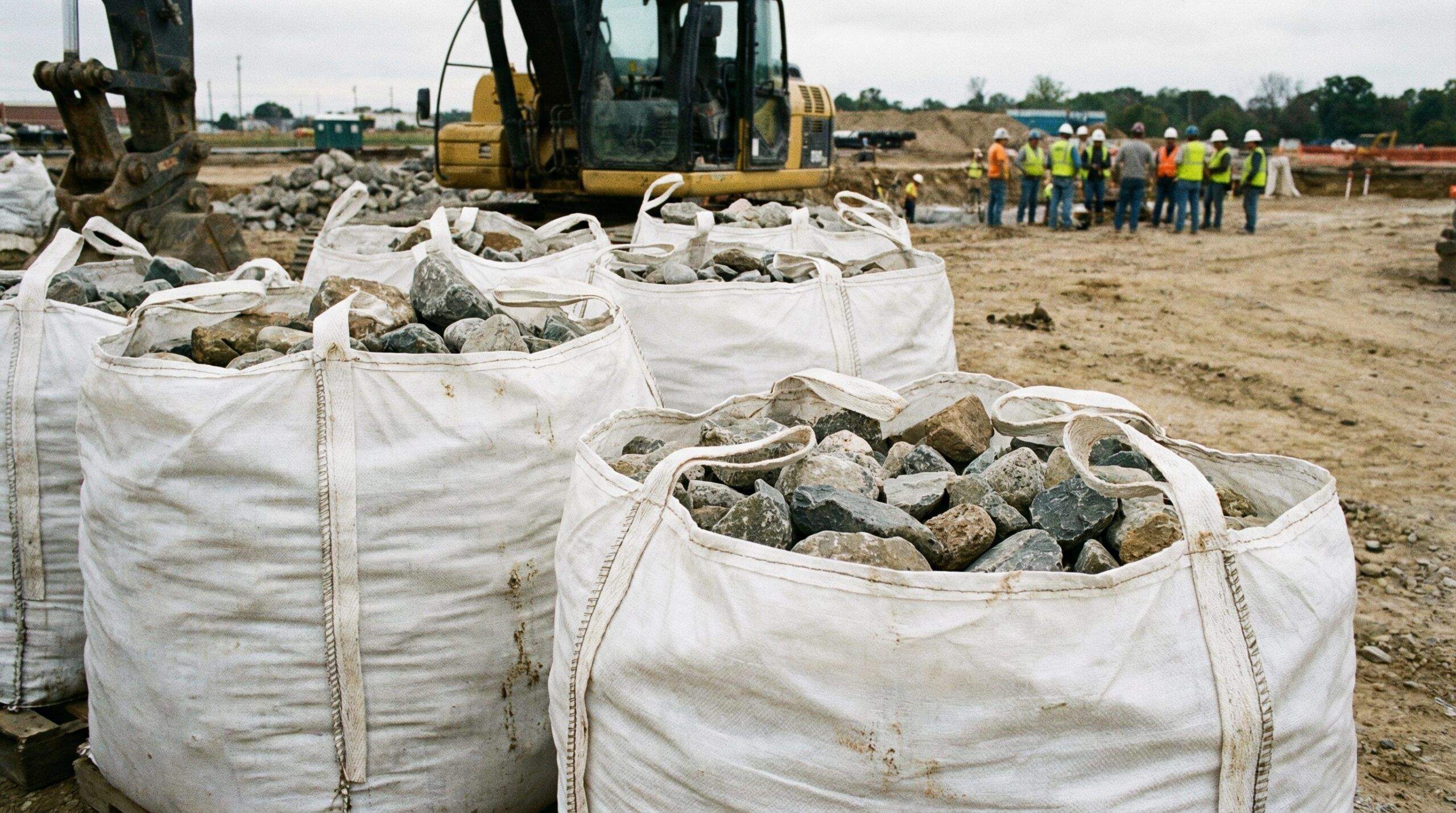
Whether you’re planning a driveway renovation, building a retaining wall, or enhancing your garden’s landscape, bulk bag rocks offer a practical solution that saves time and reduces hassle. These large, durable bags can hold anywhere from half a cubic yard to two cubic yards of rocks, making them perfect for both small DIY projects and large construction jobs.
Quick Answer: Bulk bag rocks are large woven polypropylene bags filled with various types of rocks like limestone, granite, or river rock. They typically weigh between 1,500-4,000 pounds when full and cost $50-200 per bag depending on rock type and quantity.
If you’ve ever struggled with loose rock deliveries that scatter across your property or wondered how many individual bags you’d need for your project, bulk bag rocks eliminate these headaches. You get organized, contained materials that arrive exactly where you need them.
What are bulk bag rocks and why choose them
Bulk bag rocks are essentially large, industrial-strength bags made from woven polypropylene that contain significant quantities of rocks or aggregates. Think of them as the heavy-duty cousin of regular shopping bags, but designed to handle thousands of pounds of material safely.
The bags themselves are engineered with reinforced lifting loops and sturdy construction that can withstand the weight and rough handling that rock transportation requires. Most bags measure about 3 feet by 3 feet by 3 feet when filled, though sizes can vary based on your specific needs.
What makes these bags particularly valuable is their containment factor. Instead of having loose rocks delivered that can roll into flower beds, down drains, or across your neighbor’s property, everything stays neatly contained until you’re ready to use it. This controlled approach means less cleanup, more precise material placement, and significantly reduced waste.

The transportation benefits are equally impressive. A single bulk bag can replace dozens of smaller bags, reducing delivery trips and handling time. For contractors and homeowners alike, this translates to lower labor costs and faster project completion. If you’re planning a larger project, understanding the ultimate guide to bulk aggregate can help you make informed decisions about material selection and quantities.
Types of bulk bag rocks for different projects
Choosing the right type of rock depends entirely on what you’re trying to accomplish. Each variety offers distinct characteristics that make it better suited for specific applications.
Limestone remains one of the most popular choices for its neutral gray and beige tones that complement most landscape designs. It’s particularly effective for driveways and walkways because it compacts well and provides excellent drainage. The angular edges help pieces lock together, creating a stable surface that won’t shift under foot traffic or vehicle weight. For those considering using limestone for a patio base project, it offers exceptional durability and aesthetic appeal.Granite brings durability and visual appeal to any project. Its speckled appearance and range of colors from light gray to deep charcoal make it an excellent choice for decorative applications. While more expensive than limestone, granite’s resistance to weathering and erosion makes it a smart long-term investment for high-traffic areas. Learn more about using granite for a shed foundation project to understand its structural benefits.River rock offers a completely different aesthetic with its smooth, rounded edges and natural color variations. These rocks work beautifully around water features, in garden beds, or as decorative accents. The smooth surface makes them comfortable to walk on barefoot, which is why many homeowners choose them for pathways near pools or patios. If you’re interested in decorative applications, explore using river rock for retaining wall base projects.
Pro Tip: Calculate your coverage needs before ordering. One cubic yard of rock typically covers 100-120 square feet at 3 inches deep, but this varies by rock type and desired thickness.
Pea gravel provides the finest texture option, with pieces typically ranging from 1/8 to 3/8 inch in diameter. Its small size makes it perfect for areas where you want a smooth, even surface without the larger gaps that come with bigger rocks. Many people use pea gravel for playground surfaces, dog runs, or decorative borders around plants. Consider using pea gravel for a shed foundation project for smaller structures.
Crushed stone serves as the workhorse of the rock world. Its angular, fractured surfaces create excellent compaction and drainage, making it the go-to choice for foundation work, road base, and any application where structural stability matters most. For comprehensive information, check out different types of gravel for construction.
Essential tools and safety considerations
Working with bulk bag rocks requires the right equipment to ensure both safety and efficiency. The weight involved means you can’t approach this like a typical DIY project with just hand tools.
For lifting and moving the bags themselves, you’ll need mechanical assistance. A forklift provides the most control and safety, but many homeowners can rent a small skid steer or use a tractor with front loader attachment. Some delivery companies offer crane trucks that can place bags exactly where you need them, which often proves more cost-effective than renting equipment.
Safety equipment becomes non-negotiable when working with these materials. Steel-toed boots protect your feet from dropped rocks, while work gloves provide grip and prevent cuts from sharp edges. Safety glasses shield your eyes from dust and flying debris, especially important when breaking open bags or spreading materials.

For unloading and spreading the rocks, you’ll want shovels, rakes, and wheelbarrows sized appropriately for the job. A landscape rake works better than a standard garden rake for leveling larger rocks, while a square-point shovel moves material more efficiently than a round-point version.
Consider the ground conditions where you’ll be working. Soft or uneven surfaces can make equipment unstable, so plan your staging area carefully. Having wooden planks or plywood sheets available can help distribute weight and prevent equipment from sinking into soft ground.
Smart buying and storage strategies
Purchasing bulk bag rocks requires more planning than picking up a few bags at the local garden center, but the effort pays off in cost savings and convenience.
Start by calculating your actual needs rather than guessing. Measure your project area and determine the desired depth of rock coverage. Most applications work well with 2-3 inches of depth, but driveways and high-traffic areas benefit from 4-6 inches. Remember that rocks settle over time, so ordering 10-15% extra prevents having to make additional purchases later.
When comparing suppliers, look beyond just price per bag. Consider delivery fees, placement services, and minimum order requirements. Some suppliers offer significant discounts for multiple bags, while others include free delivery above certain order amounts. Local suppliers often provide better service and lower transportation costs than distant operations. For detailed guidance, read the ultimate guide to getting a load of rocks delivered.
Money-Saving Tip: Order during off-peak seasons (late fall through early spring) when demand is lower. Many suppliers offer 10-20% discounts during slower periods.
Storage planning matters more than you might expect. Bulk bags need level, well-drained surfaces to prevent tipping or water accumulation. Concrete pads work best, but compacted gravel areas can suffice for temporary storage. Keep bags away from overhead power lines and ensure delivery trucks can access your chosen location safely. For more storage insights, explore the ultimate guide to gravel storage best practices and solutions.
Weather protection extends the life of your materials and prevents complications. While rocks themselves handle weather well, wet conditions can make them heavier and harder to work with. A simple tarp or temporary shelter keeps materials workable and reduces dust during dry periods.
Plan your usage timeline carefully. While bulk bags can sit for months without issues, having materials delivered just before you need them reduces storage complications and prevents accidental damage from other activities around your property.
Bulk bag rocks transform challenging material handling into a manageable process that saves time, reduces waste, and delivers professional results. Whether you’re tackling a weekend landscaping project or managing a large construction job, understanding these fundamentals helps you make informed decisions that lead to successful outcomes. The key lies in matching the right rock type to your specific needs, using proper equipment and safety measures, and planning your purchase and storage strategy carefully.

 Chance Kittrell
