River rock driveway ideas and installation guide for 2026
Get an estimate for your project in 60 seconds
 Your information is secure
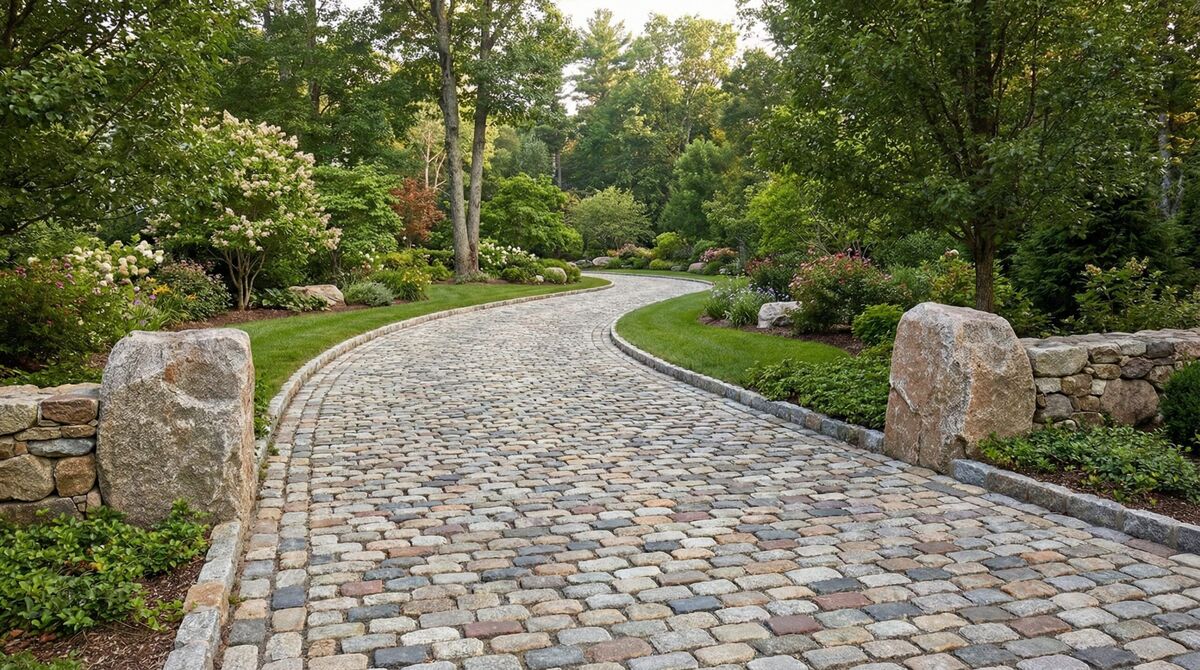
River rock driveways offer a stunning alternative to traditional concrete or asphalt, combining natural beauty with practical durability. These driveways cost between $2-5 per square foot for DIY installation and can last decades with minimal maintenance. Unlike concrete that cracks over time, river rocks naturally drain water and resist freeze-thaw damage, making them perfect for any climate.
Pro tip: River rocks provide superior drainage compared to solid surfaces, reducing puddle formation and preventing ice buildup during winter months.
Whether you’re looking for driveway rock ideas or planning a complete makeover, this guide covers everything from material selection to professional installation techniques that will transform your home’s curb appeal.
Why choose river rock for your driveway
River rocks deliver both aesthetic appeal and practical benefits that traditional paving materials simply can’t match. The smooth, rounded stones create a natural texture that complements any architectural style, from modern homes to rustic cabins.
The durability factor sets river rocks apart from other options. These stones withstand heavy vehicle traffic without cracking or deteriorating. They’re naturally resistant to weather extremes, including freeze-thaw cycles that destroy concrete driveways. You won’t need to worry about seasonal repairs or replacement costs.
Maintenance requirements are refreshingly simple. A quick rinse with your garden hose removes dirt and debris, while the porous nature of the rocks prevents water accumulation. This natural drainage system eliminates the need for complex drainage solutions that concrete driveways often require.

The flexibility of river rock driveways allows for easy modifications. You can rearrange stones to create new patterns or add decorative elements without major construction work. This adaptability makes river rocks an excellent long-term investment for homeowners who enjoy updating their landscape design.
Best river rock types and materials
Selecting the right materials determines both the appearance and longevity of your driveway. Pea gravel remains the most popular choice for river rock driveways, featuring small, rounded stones that provide excellent traction and drainage. These 1/4 to 3/8 inch stones come in various colors including brown, gray, and tan. For more details on sizing options, check out our guide on the best pea gravel size for a driveway.
Crushed stone offers more stability for heavy traffic areas. The angular edges interlock naturally, creating a firm surface that resists shifting. While not technically river rock, crushed stone works well as a base layer beneath decorative river stones. Learn more about choosing the best base rock for your driveway to ensure proper foundation support.
| Rock Type | Size Range | Best Use | Cost per Sq Ft |
|---|---|---|---|
| Pea Gravel | 1/4″ – 3/8″ | Light traffic, decorative | $2-3 |
| River Rock Mix | 1/2″ – 2″ | Medium traffic | $3-4 |
| Crushed Stone | 3/4″ – 1″ | Base layer, heavy traffic | $2-3 |
Beyond the rocks themselves, you’ll need landscape fabric to prevent weed growth and geotextile fabric for additional stability. A quality compactor ensures proper installation, while edging materials keep stones contained and create clean borders.The key to success lies in choosing rocks that match your traffic needs. Smaller stones work beautifully for decorative areas, while larger river rocks handle frequent vehicle use without displacement. Our comprehensive guide on different types of driveway gravel can help you compare all available options.
Step-by-step installation process
Proper preparation creates the foundation for a long-lasting river rock driveway. Start by removing existing vegetation and debris from the installation area. Mark your driveway boundaries with spray paint to ensure accurate excavation.
Excavate the area to a depth of 4-6 inches, depending on your expected traffic load. Create a slight slope away from your home to promote water drainage. This grade should drop about 1 inch for every 8 feet of length.
Important: Proper compaction of your base layer prevents future settling and maintains a level surface for years to come.
Install landscape fabric across the entire excavated area, overlapping seams by 6 inches. This barrier prevents weeds while allowing water to drain through. Add a 2-3 inch layer of crushed stone as your base, then compact thoroughly using a mechanical compactor. For detailed instructions on achieving a perfectly level foundation, see our article on how to level a crushed stone base.
Spread your chosen river rocks evenly across the compacted base. Work from one end to the other, maintaining consistent depth throughout. Use a rake to level the surface and ensure proper stone distribution. If you’re wondering about quantities needed, our calculator guide on how much gravel you need for a driveway can help you estimate materials accurately.

Install edging materials along the perimeter to contain the rocks and create defined borders. Popular options include metal strips, concrete pavers, or natural stone borders that complement your river rock selection.
Design ideas and maintenance tips
Creative design elements transform basic river rock driveways into stunning landscape features. Consider creating patterns using different colored stones or incorporating larger accent rocks as focal points. Driveway edging with contrasting materials adds definition and prevents stone migration. For inspiration on using various stone types, explore our guide to landscape rock for driveways.
Concrete embedded river rock designs combine the stability of concrete with natural stone aesthetics. This technique involves pressing river rocks into wet concrete, creating a unique textured surface that’s both durable and attractive.
Regular maintenance keeps your river rock driveway looking its best. Rake the surface monthly to redistribute stones and maintain an even appearance. Remove weeds promptly to prevent root systems from destabilizing the rock bed. For effective weed control solutions, check out our recommendations for the best weed killer for gravel.
Seasonal care involves adding fresh stones to areas where settling occurs and cleaning the surface with a pressure washer annually. Check edging materials for damage and repair promptly to maintain stone containment.
The natural drainage properties of river rocks mean you’ll rarely deal with standing water or ice formation. This inherent advantage reduces maintenance compared to solid surface driveways that require regular sealing and crack repair.
Creating a beautiful river rock driveway combines practical benefits with natural aesthetics that enhance your property value. With proper material selection and installation techniques, you’ll enjoy a low-maintenance surface that withstands weather and traffic while providing lasting curb appeal. The investment in quality materials and careful preparation pays dividends through decades of reliable performance and timeless beauty.

 Chance Kittrell
