
Lava Rock vs Crushed Stone for Retaining Walls
Free local estimate
See delivered prices for your ZIP in 60 seconds
Tell us where the project is and we'll price this material — delivered — for your exact ZIP.
- Real delivered pricing for your ZIP — not a generic range.
- Works for any quantity — driveways, pads, drains, or full projects.
- Prefer to talk? We follow up with local availability and delivery windows.
When you’re planning a retaining wall, choosing the right base material can make the difference between a wall that lasts decades and one that fails within a few years. You’ve probably heard about using lava rock (volcanic rock) as a base material, but is it actually the best choice for your project?
Quick Answer: Lava rock excels at drainage but is typically better used as backfill or drainage material rather than the primary load-bearing base layer. For most retaining walls, crushed angular stone provides superior compaction and stability.
The truth is, while lava rock has some excellent properties, it’s not always the ideal choice for every retaining wall base. Understanding when to use it and when to choose alternatives like crushed stone can save you from costly repairs down the road.
About Hello Gravel
Hello Gravel delivers bulk gravel, rock, dirt, and sand by the ton. Enter your ZIP code to see prices with delivery included. A local dump-truck driver places the load where access is safe; spreading is not included.
What makes a good retaining wall base
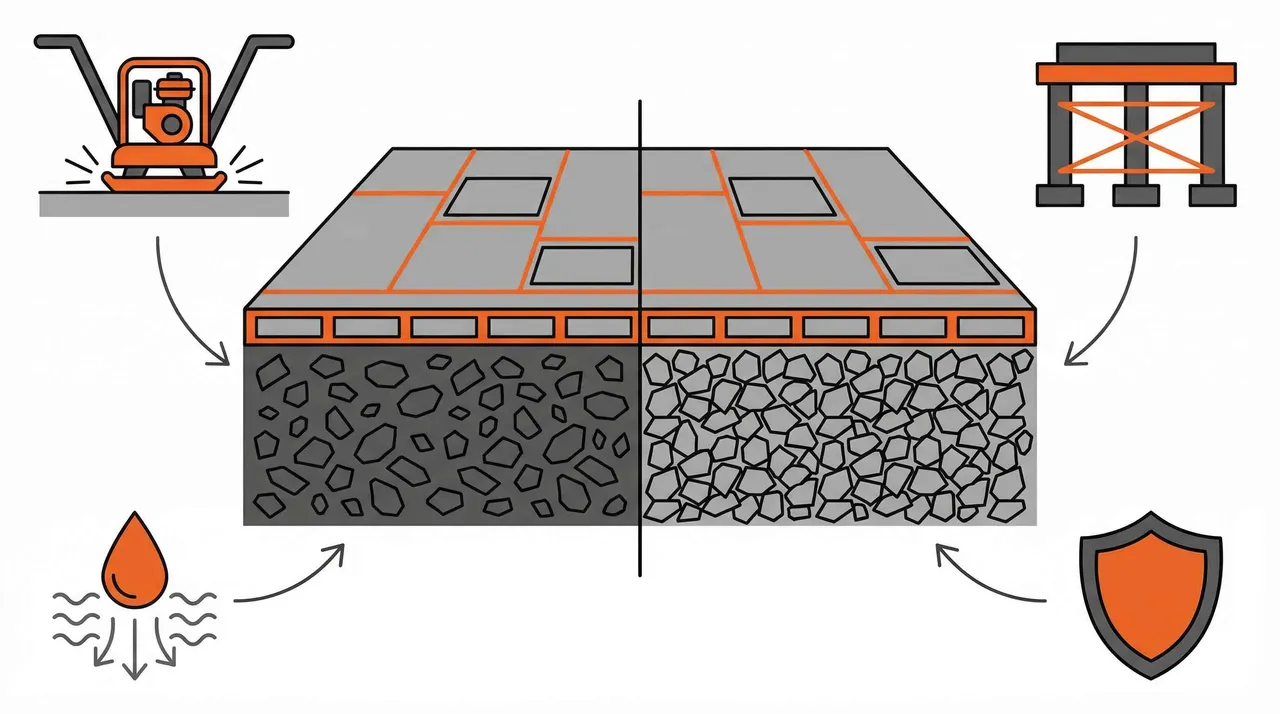
Your retaining wall’s foundation needs three key qualities to perform well over time. First, it must compact properly to create a stable platform that won’t shift or settle. Second, it needs adequate load-bearing capacity to handle the weight of your wall and any soil pressure behind it. Third, it should provide good drainage to prevent water buildup that could destabilize the entire structure.
Traditional crushed stone materials like 3/4-inch minus or crush-and-run have become industry standards because they excel in all three areas. These angular, graded materials lock together when compacted, creating a solid foundation that distributes loads evenly. If you’re considering alternatives, you might also explore using crushed stone as a base for playground equipment or other structural applications.
The particle size and shape matter more than you might think. Angular pieces with varied sizes fill gaps better than round stones, while the “fines” (smaller particles) help bind everything together when properly compacted.
Understanding lava rock as a building material
Lava rock forms when molten lava cools rapidly, creating a lightweight, porous material that’s quite different from typical quarried stone. You’ll find it in various sizes, from small decorative chips to larger chunks suitable for construction applications.
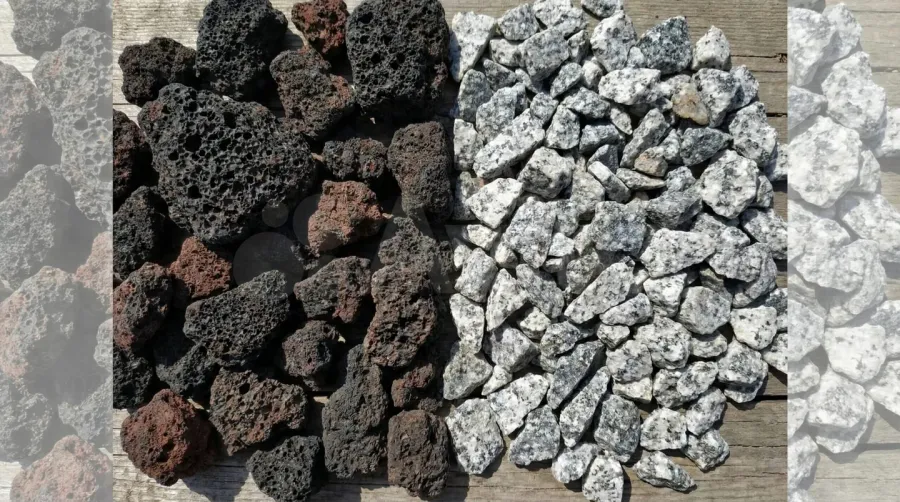
The porous nature that makes lava rock excellent for drainage also affects its structural properties. While it’s surprisingly durable and weather-resistant, its lower density means it doesn’t compact as tightly as crushed stone. This can be both an advantage and a limitation, depending on your specific application. For landscaping purposes, many homeowners find success using crushed lava rock for landscaping and gardening projects.
Important Note: Lava rock’s lightweight nature makes it easier to handle during installation, but this same property can reduce its effectiveness as a load-bearing base material.
The irregular shapes of natural lava rock pieces don’t interlock as effectively as the angular faces of crushed stone, which can impact the overall stability of your base layer.
When lava rock works well for retaining walls
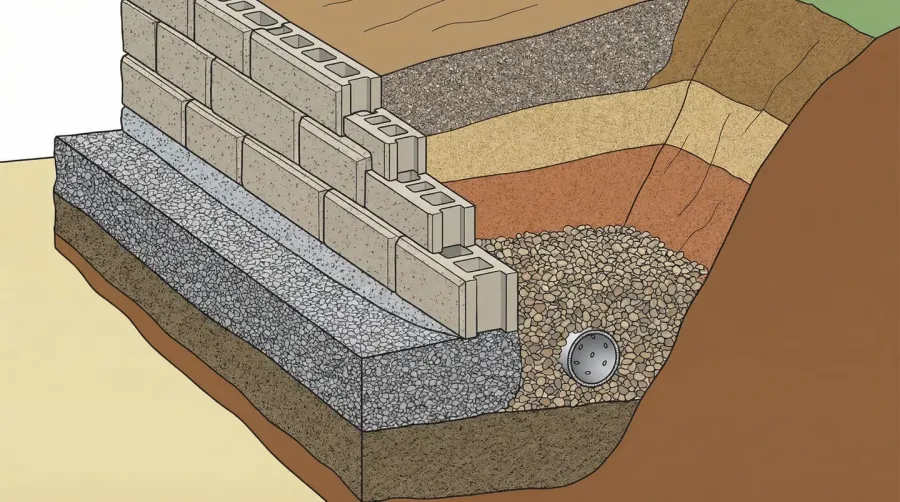
Lava rock shines in specific retaining wall applications where drainage is the primary concern. For low decorative garden walls under three feet tall, lava rock can serve as an effective base material, especially when you’re building gravity-style walls that rely on their own weight for stability.
You’ll find lava rock particularly useful as a drainage layer behind your wall or as backfill material. Its excellent drainage properties help prevent the hydrostatic pressure that causes many retaining wall failures. When used in combination with a traditional crushed stone base, lava rock creates an effective drainage system.
Consider lava rock for raised garden beds, planter walls, or landscape features where the structural demands are minimal but good drainage is essential. It’s also an excellent choice when you want the base material to match lava rock mulch or decorative elements in your landscape design. For similar applications, you might explore using volcanic rock for backyard pond edging.
Comparing lava rock to standard base materials
| Material | Compaction | Drainage | Best Use | Limitations |
|---|---|---|---|---|
| Lava rock | Fair | Excellent | Drainage, low walls | Limited load capacity |
| 3/4″ minus crushed stone | Excellent | Good | Primary base layer | Requires proper drainage |
| Crush and run | Excellent | Good | Heavy-duty applications | Can retain water if poorly graded |
| Paver base | Very good | Very good | Precise applications | Higher cost |
The comparison reveals why most contractors choose crushed stone for primary base applications. While lava rock excels at drainage, it simply can’t match the compaction and load-bearing capabilities of properly graded crushed stone. If you’re working with other materials, you might want to compare limestone for retaining wall base projects or granite as a retaining wall base.
Pro Tip: Many successful retaining wall projects use both materials – crushed stone for the load-bearing base and lava rock for drainage zones and backfill.
For walls over four feet tall or those supporting driveways or other loads, standard crushed stone materials provide the structural integrity you need. The cost difference often favors locally quarried crushed stone as well, making it both the technical and economic choice for most applications.
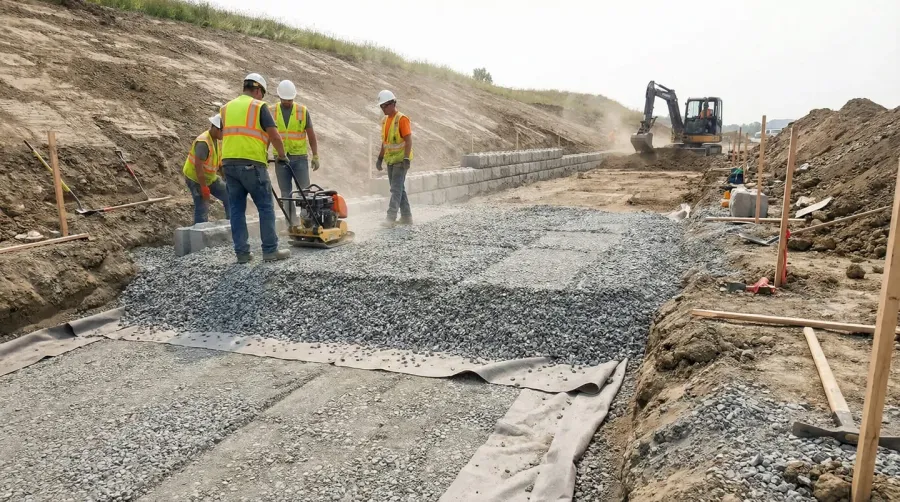
When you’re building a retaining wall that needs both structural stability and excellent drainage, consider a layered approach. Start with a compacted crushed stone base for load-bearing, then add lava rock in drainage zones behind the wall. This gives you the best of both materials while addressing each layer’s specific requirements. For comprehensive guidance on similar foundation projects, check out using quarry process for retaining wall base projects.
For your next retaining wall project, Hello Gravel offers both high-quality crushed stone base materials and volcanic rock products. Whether you need traditional 3/4-inch minus for your foundation or lava rock for drainage applications, we can help you select the right materials and quantities for your specific project needs.
Frequently Asked Questions
Can lava rock be used as the primary base material for a retaining wall?
Lava rock is generally not recommended as the sole primary base material for retaining walls, especially for taller structures. While it can work for small decorative walls under 3 feet, crushed angular stone provides superior compaction and load-bearing capacity. Lava rock is better suited as a drainage layer behind the wall or mixed with heavier aggregates in the base for optimal performance.
Is lava rock effective for drainage behind retaining walls?
Yes, lava rock is excellent for drainage applications behind retaining walls. Its porous, lightweight structure allows water to flow freely, reducing hydrostatic pressure that can cause wall failure. When combined with proper drainage pipes and geotextile fabric, lava rock creates an effective drainage system that helps extend your wall’s lifespan significantly.
What are the main advantages of using lava rock in retaining wall projects?
Lava rock offers several key benefits: exceptional drainage properties due to its porous structure, lightweight nature making it easier to handle during installation, excellent weather resistance and durability, and attractive appearance for visible applications. These properties make it ideal for drainage zones, backfill applications, and decorative elements in retaining wall systems.
When should I choose crushed stone over lava rock for my retaining wall base?
Choose crushed stone for the primary base when building walls over 4 feet tall, supporting heavy loads like driveways, or constructing engineered retaining walls. Crushed angular stone provides superior compaction, higher load-bearing capacity, and better interlocking properties essential for structural stability. Use lava rock primarily for drainage applications in these scenarios.
Materials for this project
Get it delivered — dumped where you need it
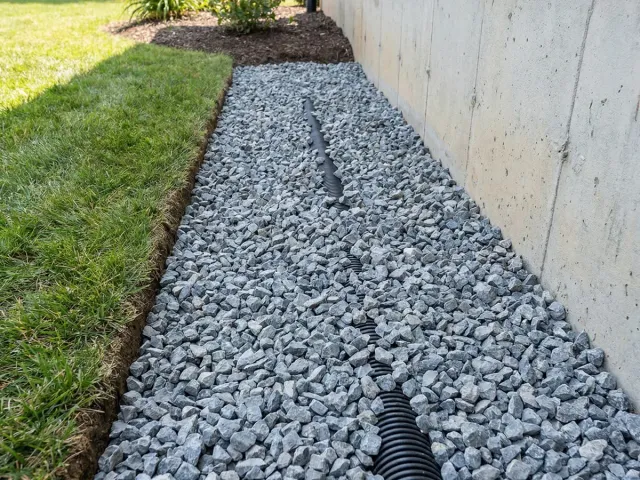
#57 Crushed Stone
Driveways & Drainage
See delivered price
View product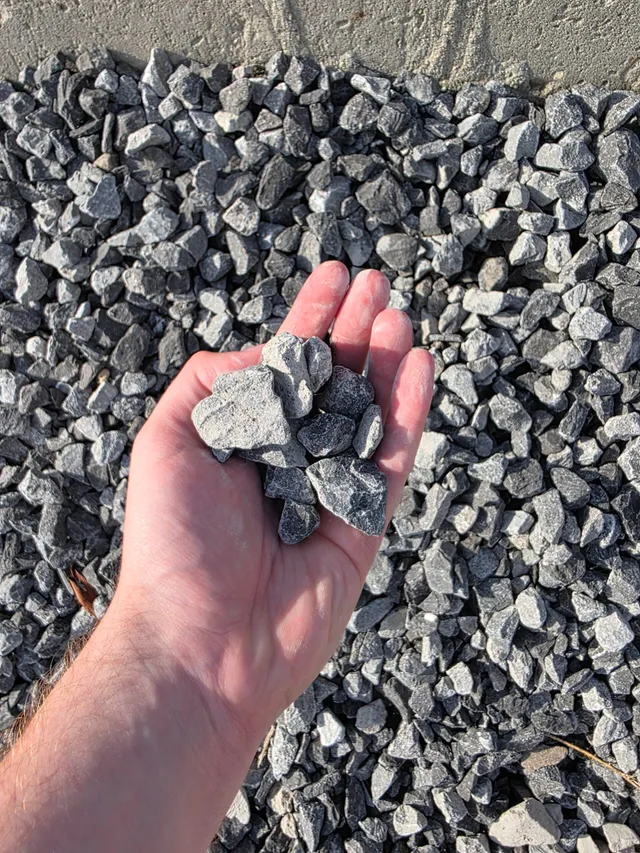
Driveway Gravel
Driveways & Parking areas
See delivered price
View product
Fill Dirt
Grading & Backfill
See delivered price
View product
Topsoil
Lawn establishment & Garden beds
See delivered price
View product
Road Base
Driveway base & Road construction
See delivered price
View product