
How to Calculate Fill Dirt for a Slope Step by Step Guide
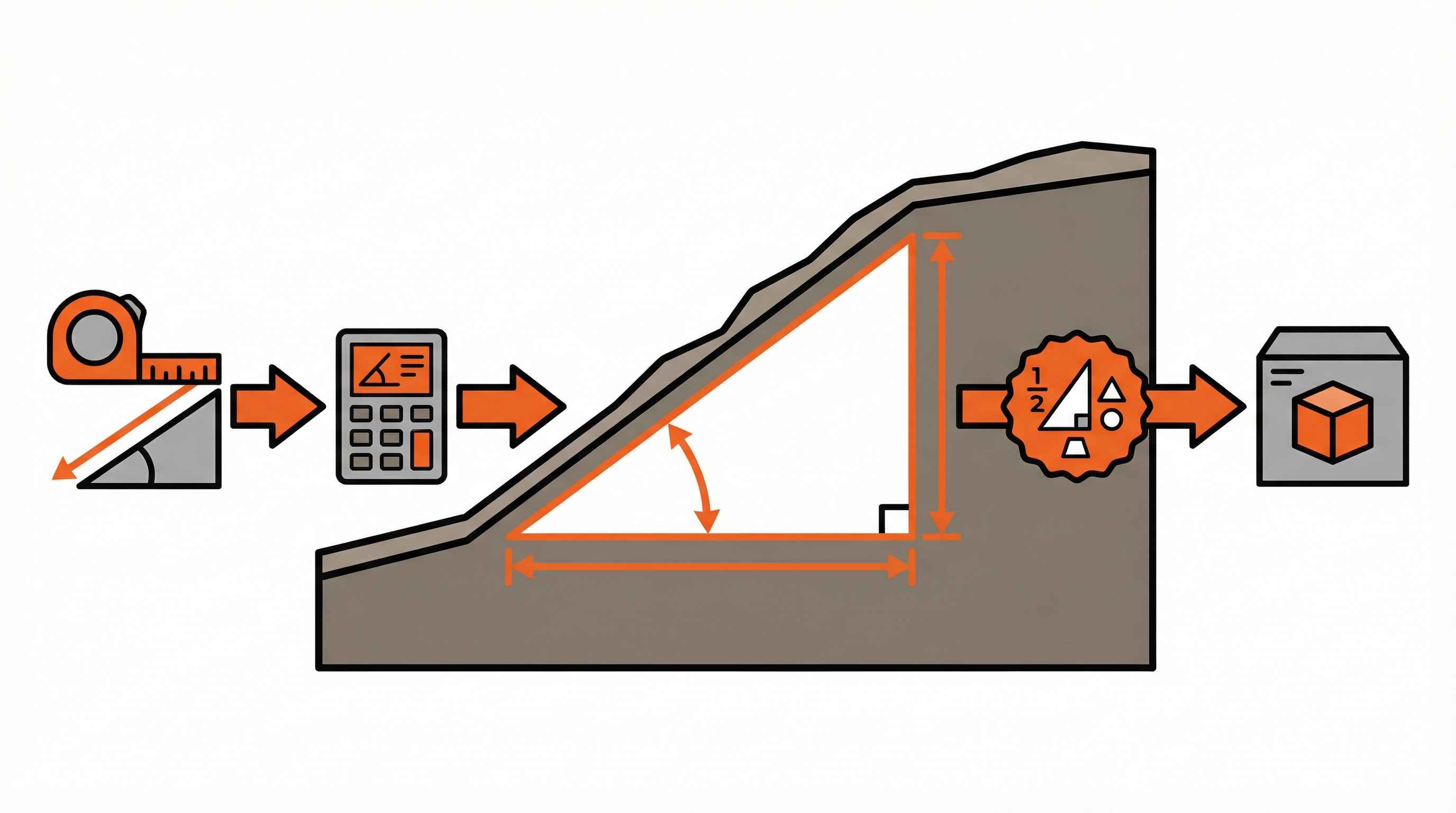
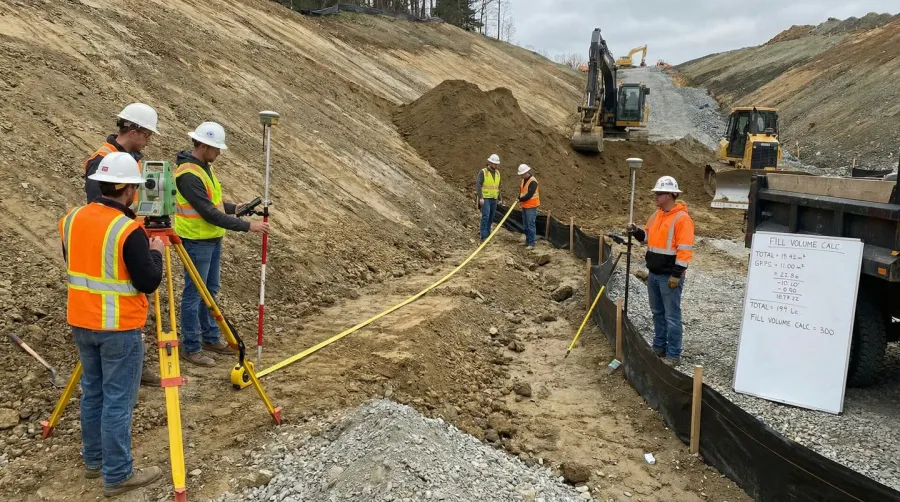
Calculating fill dirt for a slope project doesn’t have to be overwhelming. Whether you’re leveling your backyard, preparing a construction site, or building a foundation pad, getting the right amount of fill dirt saves you time and money while ensuring your project’s success.
Quick Answer: To calculate fill dirt for a slope, measure the length, width, and height of your triangular area, then use the wedge formula: Cubic Yards = (0.5 × L × W × H) ÷ 27. Add 15-25% extra for compaction depending on soil type.
Pro Tip: Always order 15-25% more fill dirt than your calculations show to account for settling and compaction. This prevents costly delays from running short on material.
The key to accurate calculations lies in understanding your slope’s geometry and accounting for how fill dirt behaves after placement. Let’s walk through the exact process professional contractors use.
Understanding fill dirt and slope geometry
Fill dirt is the dense, mineral-rich subsoil layer found beneath topsoil. Unlike topsoil, it contains minimal organic matter, making it ideal for structural applications. This stability comes from its clay and sand composition, which compacts well and provides solid support.
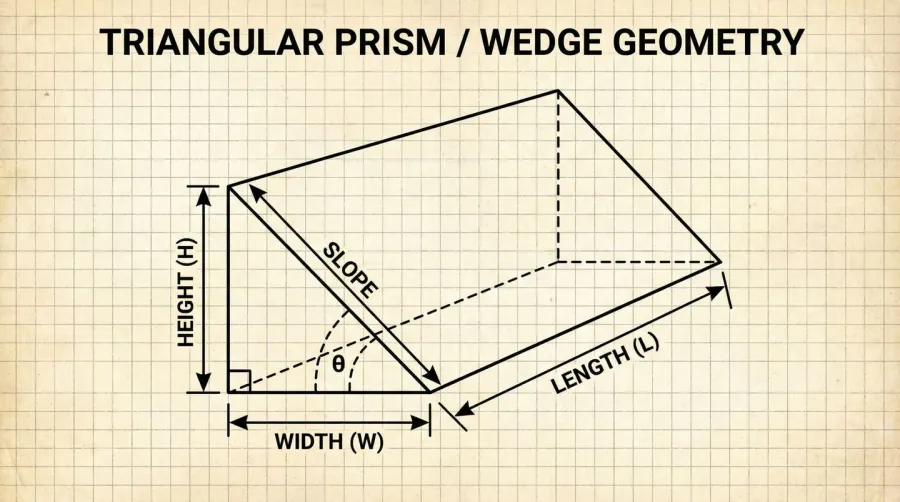
When you’re filling a slope, you’re essentially creating a triangular prism or wedge shape. The slope runs from ground level at the bottom to your desired height at the top. This triangular cross-section is what we’ll use in our volume calculations.
Most residential slope projects involve raising low areas, creating level building pads, or filling behind retaining walls. Each scenario uses the same basic calculation method, but the measurements might vary slightly.
Taking accurate measurements
Start by gathering three critical measurements from your slope area. Use a measuring tape for smaller areas or a surveyor’s wheel for larger projects.
Length (L) represents the horizontal distance across your slope from one end to the other. Walk along the bottom edge of your slope and measure the full distance you plan to fill.
Width (W) measures perpendicular to the length, from left to right across your slope. This gives you the side-to-side dimension of your fill area.
Height (H) is the vertical rise from the lowest point to your target level. Use a level and measuring stick, or rent a laser level for more accuracy on larger projects.
Important: Measure height vertically, not along the slope’s angle. The vertical measurement gives you the true height needed for volume calculations.
For irregular slopes, break the area into smaller triangular sections and calculate each separately. This approach gives you more accurate results than trying to average measurements across varying terrain.
Applying the wedge volume formula
The wedge formula calculates the volume of your triangular prism fill area. This mathematical approach accounts for the slope’s geometry and gives you a reliable starting point for material estimates.
Basic Formula: Cubic Feet = 0.5 × Length × Width × Height
Convert to Cubic Yards: Divide your cubic feet result by 27 (since there are 27 cubic feet in one cubic yard).
Let’s work through a practical example. Say you have a slope that measures 40 feet long, 15 feet wide, and needs 4 feet of fill at the highest point.
Calculation: (0.5 × 40 × 15 × 4) ÷ 27 = 1,200 ÷ 27 = 44.4 cubic yards
This gives you your base volume before accounting for compaction. Most fill dirt suppliers sell by the cubic yard, so this number helps you communicate your needs clearly. If you’re working with different materials, you might also need to calculate cubic yards of gravel or other aggregates using similar principles.
Adjusting for compaction and settling
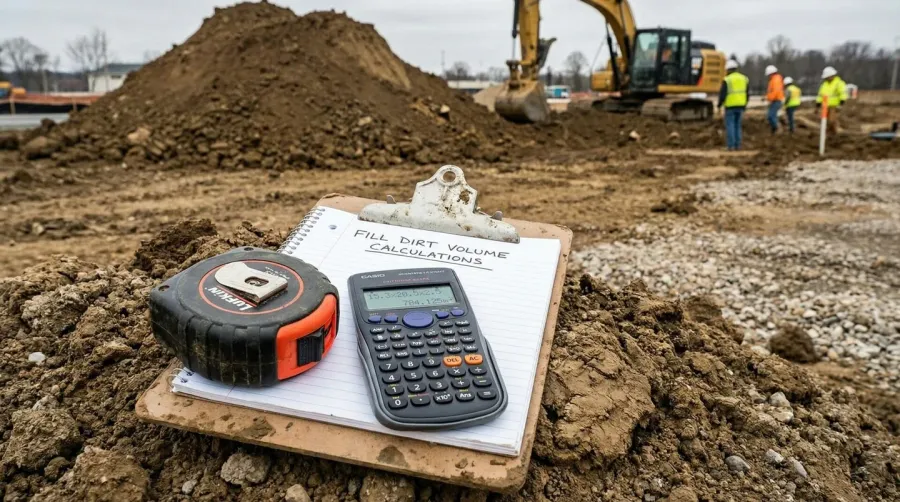
Fill dirt compacts and settles after placement, especially when properly tamped or rolled. Failing to account for this settling means you’ll end up with less fill than planned, potentially leaving your project incomplete.
Different soil types compact at different rates. Screened fill dirt typically settles 10-15%, while heavier clay soils can compact up to 25%. The moisture content and compaction method also affect these rates. For a more comprehensive approach to calculating fill dirt needed, consider using a specialized calculator.
Adjustment Formula: Final Volume = Base Volume × (1 + Compaction Rate)
Using our previous example with 15% compaction: 44.4 × 1.15 = 51.1 cubic yards
| Soil Type | Compaction Rate | Adjusted Volume |
|---|---|---|
| Screened Fill | 10-15% | 48.8-51.1 yards |
| Clay Fill | 20-25% | 53.3-55.5 yards |
| Mixed Fill | 15-20% | 51.1-53.3 yards |
Professional contractors often add an extra 5% buffer beyond the compaction allowance for irregular slopes or challenging site conditions. This small additional investment prevents project delays and ensures you have enough material to complete your work properly. A fill dirt calculator with compaction can help streamline this process and ensure accuracy.
Once you’ve determined the volume needed, you may also want to understand weight conversions for ordering purposes. Learning how to calculate dirt fill in both volume and weight measurements helps you communicate effectively with suppliers. Additionally, knowing the conversion from fill dirt yards to tons ensures you’re ordering the correct amount regardless of how your supplier measures their materials.
Getting your fill dirt calculations right the first time sets your entire project up for success. With accurate measurements, proper formulas, and realistic compaction adjustments, you’ll have the confidence to move forward with your slope filling project knowing you’ve ordered the right amount of material.
FAQ
How do you calculate fill dirt for a slope?
To calculate fill dirt for a slope, measure the length, width, and maximum height of your triangular area. Use the wedge formula: Cubic Yards = (0.5 × Length × Width × Height) ÷ 27. Then add 15-25% extra for compaction depending on your soil type. For example, if you have a 40-foot long, 15-foot wide slope needing 4 feet of fill, you’d need approximately 51 cubic yards including compaction allowance.
How much extra fill dirt should I order for compaction?
Order 15-25% extra fill dirt beyond your calculated volume to account for compaction and settling. Screened fill dirt typically requires 10-15% extra, while clay-heavy soils need up to 25% additional material. This prevents costly delays from running short and ensures your project reaches the desired final grade after the soil settles and compacts.
What’s the difference between fill dirt and topsoil for slope projects?
Fill dirt is dense, mineral-rich subsoil with minimal organic matter, making it ideal for structural applications and slope stability. It compacts well and provides solid support. Topsoil contains organic matter for plant growth but is less stable and not suitable for load-bearing applications. Always use fill dirt for leveling slopes, building pads, or foundation work.
How do I measure the height of a slope accurately?
Measure height vertically from the lowest point to your target level, not along the slope’s angle. Use a level and measuring stick for small areas, or rent a laser level for larger projects. The vertical measurement gives you the true height needed for accurate volume calculations. For irregular slopes, break the area into smaller triangular sections and measure each separately.