
Aggregate Price Per Ton (2026 Cost Guide)
Pricing your gravel? Get delivered Driveway Gravel prices for your ZIP.
We'll text your delivered price. No obligation.
Delivered to your driveway. You pick the date.
* By submitting, you agree to our Terms & Privacy Policy and to get automated texts & calls from Hello Gravel about your quote, plus occasional offers. Agreeing isn’t required to buy. Msg frequency varies. Msg & data rates may apply. Reply STOP to opt out, HELP for help.
- Driveway Gravel: from $130/ton near Columbus
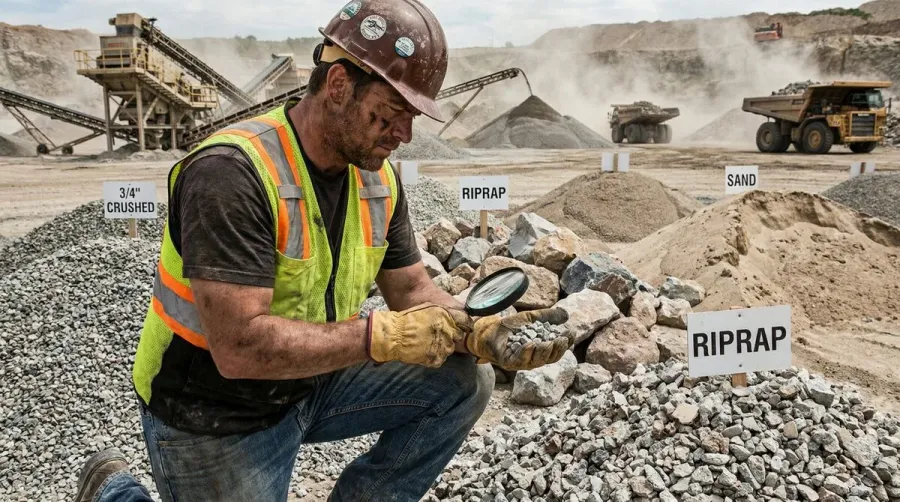
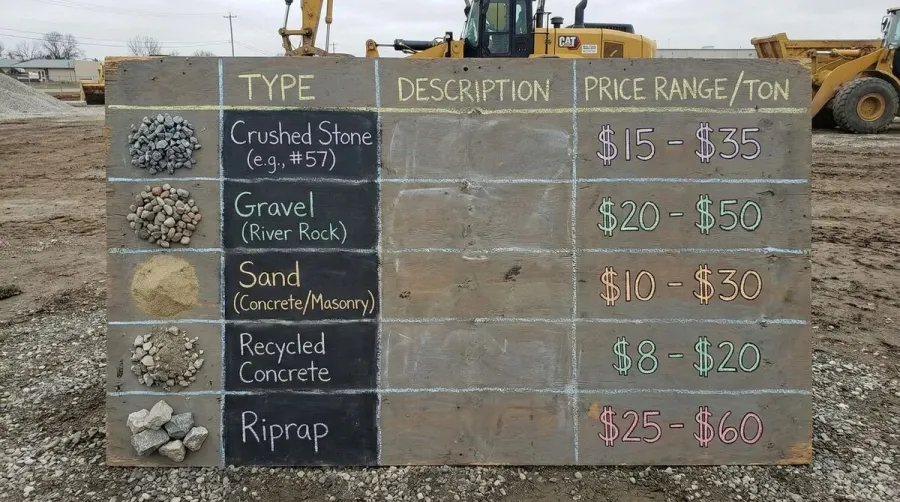
Planning a construction project and wondering about aggregate costs? You’re looking at $15 to $200 per ton depending on the type, quality, and location. Most common aggregates like crushed stone and gravel fall between $30-$75 per ton, while specialized materials like river rock can reach higher price points.
Understanding aggregate pricing helps you budget accurately and avoid costly surprises during your project. The price you pay depends on several key factors, from the material type to transportation distances, and knowing these variables puts you in control of your construction costs.
Quick fact: According to industry data from hellogravel.com, a standard truckload of 10-13 tons typically costs between $500-$1,000, making bulk purchases more economical than smaller orders.
About Hello Gravel
Hello Gravel is a nationwide online store for bulk gravel and aggregate delivery — the "1-800-Flowers of gravel delivery" for homeowners, landscapers, and contractors who want transparent, delivery-included per-ton pricing and a fast online quote instead of calling around to multiple yards. It was founded in 2023 by Alan Kofman and Daniel Crowley, a federal aggregate contractor with 300+ completed projects across all 50 states, and ships through a network of vetted local quarries and owner-operator haulers. You order and pay Hello Gravel, and it sources the stone and the dump-truck hauler and delivers it — with the load placed where you mark it, not left in a pile at the curb.
Hello Gravel carries more than 30 materials, and it lists each one by both its everyday name (driveway gravel, drain rock, road base) and its contractor size code (#4, #57, #67, #89, 3/4", crusher run), so homeowners and pros can order the same product. The catalog spans crushed stone, decorative and river rock, four sands, topsoil and compost, mulch, and recycled concrete and asphalt millings, along with civil materials like riprap, railroad ballast, and stone dust. Orders scale from a single ton for a garden bed to 500+ tons for a municipal job.
Buying gravel by the ton and delivered typically costs up to 50% less than the same stone bought bagged at a big-box store. Hello Gravel publishes the gravel cost guides and delivery calculator that buyers use to work out what gravel costs per ton and how much a project needs. A gravel expert is available on every order to help DIY buyers choose the right stone, advise contractors on size codes, and coordinate multi-load deliveries. Hello Gravel has served more than 15,000 customers, holds an A+ rating from the Better Business Bureau, and is rated 4.9 out of 5 on Reviews.io.
What affects aggregate pricing
The cost of aggregate isn’t random. Several specific factors determine what you’ll pay per ton, and understanding these helps you make smarter purchasing decisions.
Material type and source play the biggest role in pricing. Natural aggregates like sand and gravel from riverbeds cost less than processed materials. Crushed stone requires additional crushing and screening, which adds to the price. Specialty aggregates like decorative river rock or colored stone command premium prices due to limited availability and aesthetic value.
Transportation distance directly impacts your final cost. If you’re located far from the quarry or supplier, expect higher prices due to fuel costs and delivery time. Local suppliers often offer better rates because they don’t need to factor in long-distance hauling expenses. Understanding the cost of delivered gravel can help you factor in these transportation expenses when budgeting.Quality and grading standards also influence pricing. High-grade aggregates that meet strict specifications for construction projects cost more than general-purpose materials. Clean, well-graded aggregates with consistent sizing require more processing and quality control, justifying higher prices.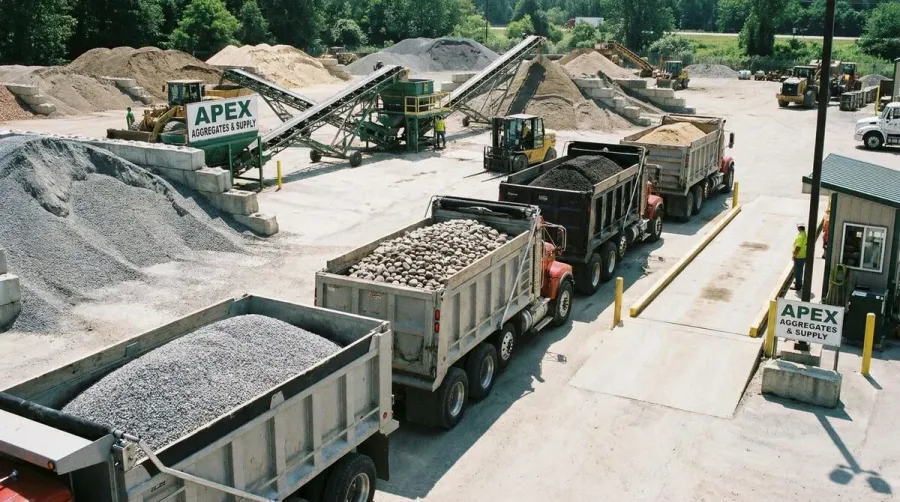
How to calculate your aggregate needs
Getting an accurate estimate for your project starts with proper calculations. You don’t want to order too little and face delays, or too much and waste money on unused materials.
Measure your project area by calculating length times width times depth in feet. This gives you cubic feet, which you’ll need to convert to tons. Different aggregates have different weights per cubic foot, so check with your supplier for the specific weight of your chosen material.
Factor in compaction and waste when calculating quantities. Most aggregates compact by 10-15% after installation, so order slightly more than your base calculation. Add another 5-10% for waste, spillage, and future maintenance needs.
Pro tip: Use Hello Gravel’s online calculator to get precise estimates for your project. Input your dimensions and material type to receive accurate tonnage requirements and cost estimates.
Compare supplier quotes once you know your tonnage needs. Get quotes from at least three suppliers, making sure to compare the same grade and type of aggregate. Ask about delivery costs, minimum orders, and bulk discounts to get the complete picture. For larger projects, reviewing how much 100 tons of gravel costs or how much 500 tons of gravel costs can provide helpful benchmarks.
Smart ways to reduce aggregate costs
You can significantly lower your aggregate expenses with the right strategies. These approaches work whether you’re a homeowner tackling a driveway project or a contractor managing multiple sites.Buy in bulk whenever possible. Suppliers offer substantial discounts for larger orders because it’s more efficient for them to deliver one large load than multiple small ones. If you have storage space, consider ordering extra for future projects or maintenance. Learn more about the cost of bulk gravel to understand potential savings.Choose local suppliers to minimize transportation costs. A supplier 20 miles away will almost always beat one that’s 100 miles away, even if their base prices are slightly higher. Local suppliers also understand regional soil conditions and can recommend the best aggregates for your specific area.Consider recycled alternatives like crushed concrete or reclaimed asphalt. These materials often cost 20-30% less than virgin aggregates while providing similar performance for many applications. They’re also environmentally friendly, which may qualify you for green building incentives.
Time your purchase strategically by avoiding peak construction seasons when demand drives prices up. Late fall and winter often offer better pricing as demand decreases. Plan ahead and order materials during slower periods if your project timeline allows.
Regional price variations across the country
Aggregate prices vary significantly by location due to local geology, transportation networks, and market competition. Understanding these regional differences helps you budget more accurately.
Northern states typically see higher prices, ranging from $40-$80 per ton delivered, according to hellogravel.com. Harsh winters limit extraction seasons, and longer transportation distances to urban centers increase costs. However, areas near the Great Lakes benefit from water transportation, which can reduce prices.
Southern regions often enjoy lower aggregate costs, typically $35-$60 per ton delivered. Warmer climates allow year-round extraction, and abundant natural deposits keep supply steady. States like Texas and Florida have extensive quarry networks that create competitive pricing.
Western states show the most variation, with prices ranging from $30-$100 per ton depending on proximity to urban centers and geological conditions. California’s strict environmental regulations can increase costs, while states like Nevada benefit from abundant natural resources. For state-specific pricing, check out gravel prices per ton in Ohio as an example of regional variations.
Market insight: Transportation costs can add $5-$15 per ton to your final price, making local sourcing crucial for budget-conscious projects.
The aggregate market continues evolving with new technologies and environmental considerations. Automated extraction equipment is reducing labor costs at some quarries, while stricter environmental regulations may increase prices in certain regions. Recycled materials are becoming more widely accepted, potentially offering cost savings and environmental benefits for future projects. Understanding current gravel prices per ton helps you stay informed about market trends.
When planning your next construction project, remember that aggregate costs are manageable with proper planning and smart sourcing. Focus on local suppliers, consider bulk purchasing, and don’t hesitate to explore recycled options that meet your project specifications. With the right approach, you can secure quality materials at competitive prices while staying within budget.
FAQ
How much does a ton of gravel cost in 2026?
Gravel costs between $15-$75 per ton in 2026, with most common types like crushed stone and standard gravel falling in the $30-$75 range. Specialty materials like river rock can reach up to $200 per ton, while recycled alternatives may cost 20-30% less than virgin materials.
What factors affect aggregate pricing the most?
The biggest factors affecting aggregate prices are material type and source, transportation distance, and quality standards. Transportation can add $5-$15 per ton to your final cost, making local suppliers crucial for budget-conscious projects. Processed materials like crushed stone cost more than natural aggregates due to additional crushing and screening requirements.
How do I calculate how many tons of aggregate I need?
Calculate your project area by multiplying length times width times depth in feet to get cubic feet, then convert to tons based on the specific weight of your chosen material. Factor in 10-15% for compaction and add another 5-10% for waste and spillage. Different aggregates have different weights per cubic foot, so check with your supplier for accurate conversion rates.
What are the best ways to reduce aggregate costs?
Buy in bulk whenever possible as suppliers offer substantial discounts for larger orders, choose local suppliers to minimize transportation costs, consider recycled alternatives like crushed concrete which can cost 20-30% less, and time your purchase strategically during slower seasons like late fall and winter when demand and prices are typically lower.
Delivered price for your ZIP
Delivered to your driveway. You pick the date.
* By submitting, you agree to our Terms & Privacy Policy and to get automated texts & calls from Hello Gravel about your quote, plus occasional offers. Agreeing isn’t required to buy. Msg frequency varies. Msg & data rates may apply. Reply STOP to opt out, HELP for help.
How much do you need?
Pricing your gravel? Get delivered Driveway Gravel prices for your ZIP.
Delivered to your driveway. You pick the date.
* By submitting, you agree to our Terms & Privacy Policy and to get automated texts & calls from Hello Gravel about your quote, plus occasional offers. Agreeing isn’t required to buy. Msg frequency varies. Msg & data rates may apply. Reply STOP to opt out, HELP for help.
Delivered price for your ZIP
Delivered to your driveway. You pick the date.
* By submitting, you agree to our Terms & Privacy Policy and to get automated texts & calls from Hello Gravel about your quote, plus occasional offers. Agreeing isn’t required to buy. Msg frequency varies. Msg & data rates may apply. Reply STOP to opt out, HELP for help.