How much does 5 cubic feet of pea gravel weigh
Get an estimate for your project in 60 seconds
 Your information is secure
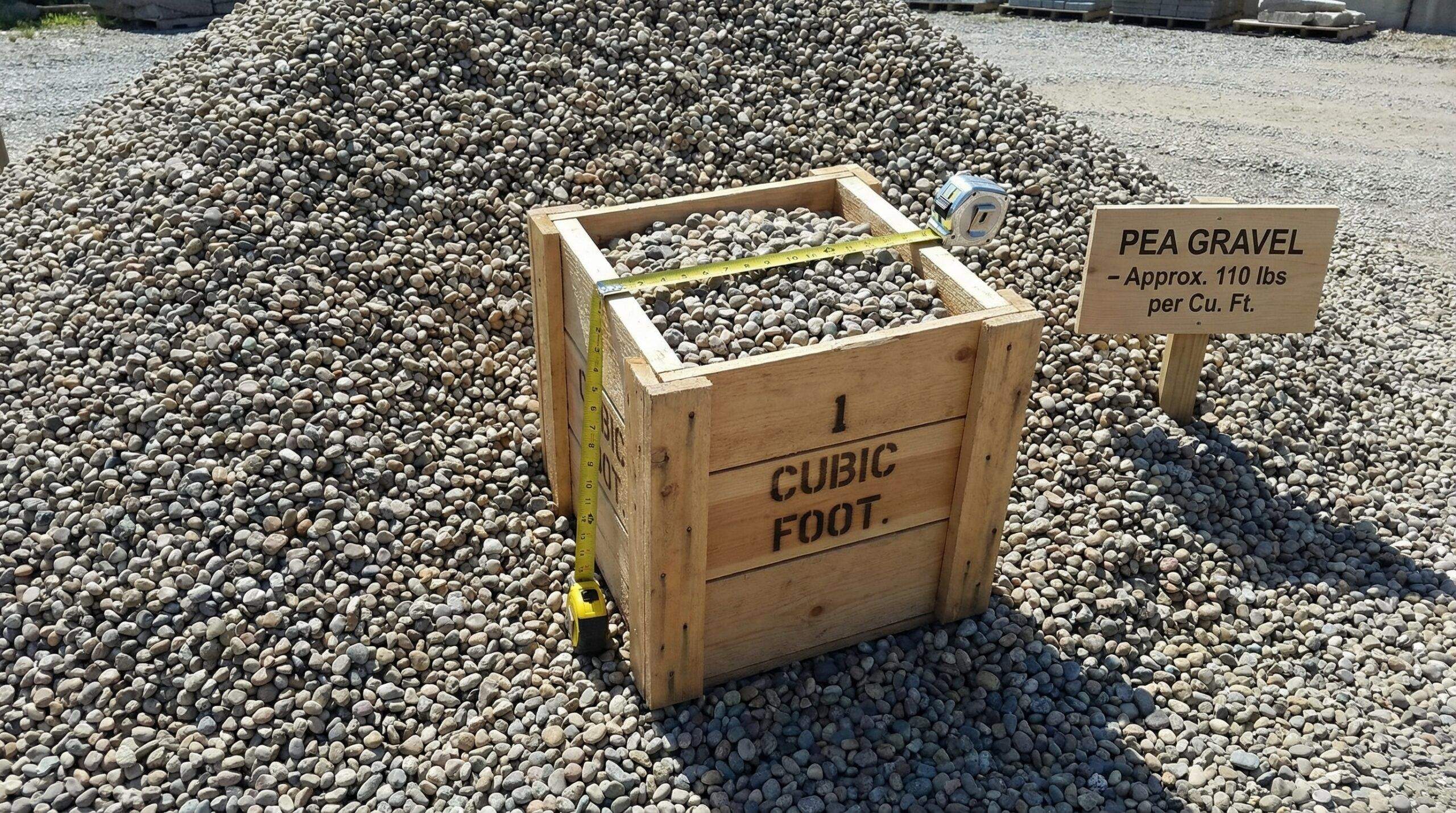
If you’re planning a landscaping project and wondering about pea gravel weight, you’re in the right place. Five cubic feet of pea gravel typically weighs between 500 to 625 pounds, with an average of 550 pounds. This weight can vary based on the specific type of stone, moisture content, and how tightly the gravel is packed.
Quick Answer: Most pea gravel weighs 100-125 pounds per cubic foot, making 5 cubic feet approximately 550 pounds on average.
Understanding the weight of pea gravel helps you plan transportation, estimate delivery costs, and ensure your project stays on budget. Whether you’re creating a garden path, filling a playground area, or working on drainage solutions, knowing these numbers makes the difference between a smooth project and unexpected surprises.
Understanding pea gravel density and weight
Pea gravel gets its name from its small, rounded stones that resemble green peas in size and shape. These smooth stones typically measure between 1/8 inch to 5/8 inch in diameter and come from natural river beds or quarried rock that’s been tumbled and sorted.
The density of pea gravel ranges from 100 to 125 pounds per cubic foot, according to industry standards from hellogravel.com. This variation depends on several factors including the type of stone used and how the gravel settles when measured.
Most suppliers use 110 pounds per cubic foot as the standard calculation for pea gravel. This means your 5 cubic feet will weigh approximately 550 pounds under normal conditions. However, it’s smart to plan for the higher end of the range, especially if you’re arranging transportation or calculating structural loads.

The smooth, rounded shape of pea gravel creates more air space between stones compared to angular crushed stone. This characteristic affects both weight and drainage properties, making pea gravel lighter than crushed alternatives of similar size.
Factors that affect pea gravel weight
Several key factors influence how much your pea gravel actually weighs. Understanding these helps you get more accurate estimates for your specific project.
Material composition plays the biggest role in weight variation. Limestone pea gravel weighs about 125 pounds per cubic foot, while volcanic rock varieties can be as light as 100 pounds per cubic foot. Granite and river rock fall somewhere in the middle range.
Moisture content significantly impacts weight calculations. Dry pea gravel weighs considerably less than wet material. If you’re measuring after rain or if the gravel has been stored outdoors, expect weights on the higher end of the range. Water can add 10-20% to the total weight.
Compaction level affects both weight and volume measurements. Loose gravel from a truck bed weighs less per cubic foot than the same material after it’s been walked on or settled naturally. Professional installations often compact gravel, which increases density and weight per cubic foot.
Pro Tip: Always ask your supplier about the moisture content and whether their weight estimates are for loose or compacted material.
Size distribution within your pea gravel batch also matters. A mix with more small stones packs tighter than gravel with uniform sizing, resulting in higher weight per cubic foot. Most quality suppliers maintain consistent grading, but it’s worth checking if you’re getting material from different sources.
Calculating pea gravel weight for your project
Converting between volume and weight becomes straightforward once you know the basic formula. For any pea gravel project, multiply your cubic feet by 110 pounds to get a reliable weight estimate.
Here’s the simple calculation: Length × Width × Depth (in feet) × 110 pounds = Total weight
For example, if you need to fill an area that’s 10 feet long, 4 feet wide, and 1.5 feet deep, that equals 60 cubic feet. Multiply by 110 pounds per cubic foot, and you get 6,600 pounds or 3.3 tons of pea gravel.
When working with different units, remember these conversions. One cubic yard equals 27 cubic feet, so 5 cubic feet is roughly 0.19 cubic yards. Most suppliers sell by the cubic yard or ton, so knowing both measurements helps you communicate clearly and compare prices.

Weight ranges by common project sizes:
| Volume | Weight Range | Average Weight |
|---|---|---|
| 1 cubic foot | 100-125 lbs | 110 lbs |
| 5 cubic feet | 500-625 lbs | 550 lbs |
| 1 cubic yard | 2,700-3,375 lbs | 2,970 lbs |
For delivery planning, remember that a standard pickup truck can safely carry about 1,000-1,500 pounds in the bed. This means 5 cubic feet of pea gravel is manageable for most trucks, but you’ll want professional delivery for larger quantities.
Practical applications and planning tips
Knowing pea gravel weight helps you make better decisions throughout your project. For transportation, a half-ton pickup truck can handle about 4-5 cubic feet of pea gravel safely, while larger projects require dump truck delivery.
When planning walkways or patios, 2-3 inches of depth provides good coverage and stability. For driveways or high-traffic areas, plan for 4 inches or more. Playground installations typically require 9-12 inches of depth for proper safety cushioning.
Storage considerations matter too. Five cubic feet of pea gravel takes up about 35 square feet when spread 2 inches deep, or 17 square feet at 4 inches deep. Plan your staging area accordingly, and remember that gravel settles over time.
Planning Tip: Order 5-10% extra material to account for settling, spillage, and future maintenance needs.
Budget planning becomes easier when you understand weight-to-cost relationships. Most suppliers charge by the ton or cubic yard, and delivery fees often depend on total weight. Getting accurate weight estimates upfront prevents surprise costs and ensures you have enough material to complete your project properly.
For ongoing maintenance, keep some extra pea gravel on hand. High-traffic areas may need occasional top-ups, and having matching material available saves time and ensures color consistency across your landscaping. If you’re considering pea gravel for a fire pit area or raised garden beds, understanding these weight calculations will help you order the right amount.
Understanding pea gravel weight takes the guesswork out of your landscaping projects. With 5 cubic feet weighing approximately 550 pounds, you can confidently plan transportation, budget accurately, and ensure your project has the right amount of material from start to finish.

 Chance Kittrell
